Compressor or thermoelectric, dual zone or single, built-in or freestanding. Get those three right and the rest is cabinet finish.
Updated October 2026 · By Stephen V.
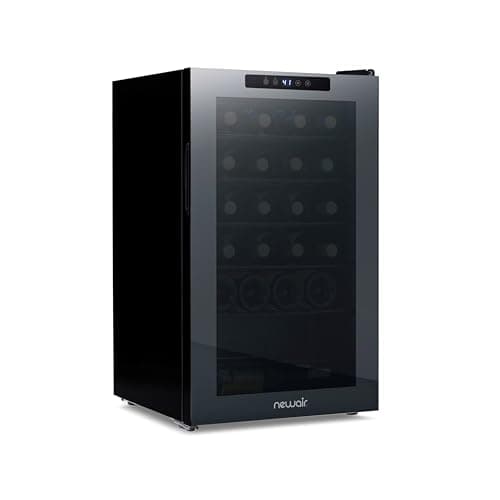
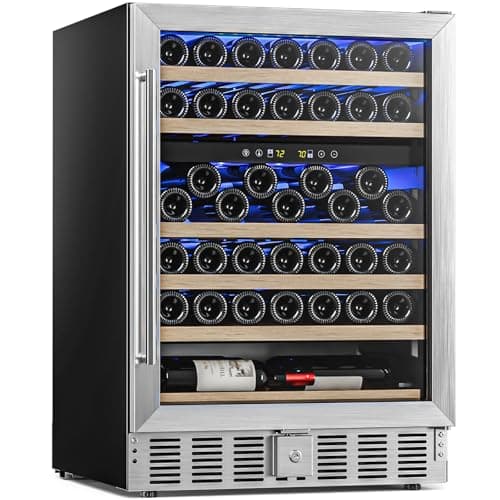
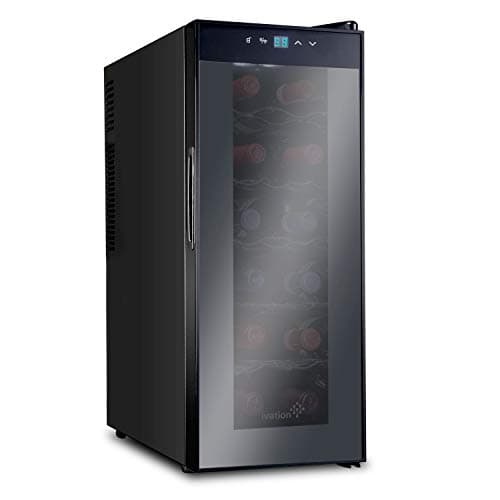
The NewAir 17-inch 24-bottle is the wine fridge most home bars should buy. It is a compressor unit, so it holds a real set temperature in a room that is not climate-controlled; 24 bottles is the capacity most people actually need; and a 17-inch footprint fits beside a bar without rebuilding anything. For a serious collection the Antarctic Star 24-inch 52-bottle dual-zone is the step up; for a flush cabinet install the BODEGA 15-inch is the one to buy; and the Ivation 12-bottle is the right answer for a bedroom or study where silence matters more than capacity.
Three specifications decide this purchase and nothing else comes close: the cooling mechanism, whether the cabinet is split into independently controlled zones, and whether the unit is rated to be built in. Everything below is organised around those three, because getting any one of them wrong produces a fridge that cannot do the job in your room.
We have not tested these units. The ranking is built from published cooling type, temperature ranges, zone counts, bottle capacities, venting and installation ratings, and owner-review consensus reported as other people's experience — see how we pick. Prices come live from Amazon with the date we verified them.
The short answer
In a hurry? These are the picks we'd buy. Prices are live; tap a card below for the full reasoning.
A 30-bottle dual-zone compressor unit rated for built-in installation, which is the specification that decides whether a fridge can sit flush in cabinetry.
$499.9920% offPrice as of October 7, 2026·#addisclosure
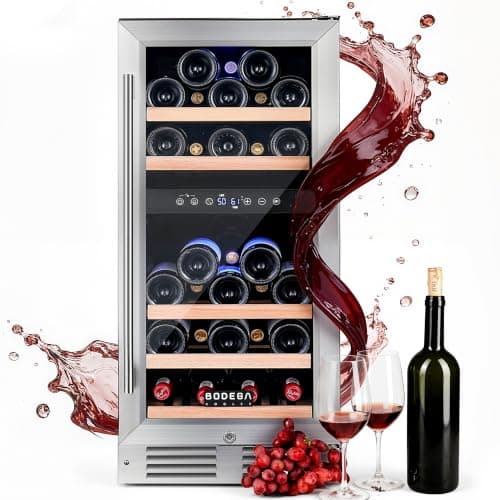
BODEGA 15-in 30-Bottle Dual-Zone Wine Fridge
A 30-bottle dual-zone compressor unit rated for built-in installation, which is the specification that decides whether a fridge can sit flush in cabinetry.
Capacity
30 bottles
Zones
Dual
Range
41-72°F
Width
15 in
Install
Built-in capable
Pros
Rated for built-in, so it front-vents and can sit flush with zero side clearance
Dual zone in a 15-inch width is unusual and genuinely useful
41 to 72°F is the widest range here
Cons
30 bottles in 15 inches means tight racking — fat Burgundy bottles cut the real count
Priced above single-zone units of similar capacity
Built-in installs need the opening measured precisely
Best for: A flush 15-inch cabinet opening in a built bar.
A 12-bottle thermoelectric cooler with no compressor — silent, vibration-free, and limited to roughly 20°F below room temperature.
Capacity
12 bottles
Cooling
Thermoelectric
Noise
Near-silent
Install
Freestanding
Pros
Silent and vibration-free, which genuinely matters for long-term wine storage
Cheapest unit here
Small enough to sit on a sideboard
Cons
Can only pull about 20°F below ambient — unusable in a warm garage or a hot summer room
12 bottles only
Single zone
Best for: A bedroom, study or office where noise matters most.
Skip this
The budget traps that look cheap and cost you twice. We'd skip these.
A thermoelectric cooler for a garage or an uninsulated room
Thermoelectric units can typically only reach about 20°F below the surrounding air. In an 85°F garage that is 65°F at best, which is not wine storage. Any wine fridge in an uncontrolled space needs a compressor.
Building a freestanding unit into cabinetry
Freestanding wine fridges vent out of the back. Boxed in, they run constantly, miss their set temperature and fail early. For a cabinet opening you need a unit specified as built-in or front-venting — and that spec is printed on the listing.
How to choose (and what to skip)
Compressor or thermoelectric
Compressor units work like any refrigerator: real cooling power, a true held set point, and they work in a warm room, at the cost of a faint hum and slight vibration. Thermoelectric units use a solid-state plate: silent, vibration-free, and limited to roughly 20°F below ambient. Small, quiet, under 18 bottles, in a conditioned room: thermoelectric. Anything in a garage, anything larger, anything that must hold a precise temperature: compressor.
Single zone or dual zone
Wine is served across a wide range — sparkling and crisp whites around 45°F, full reds around 60 to 65°F. A single-zone fridge holds everything at one temperature, which means compromising on one or the other. Dual zone splits the cabinet into two independently controlled compartments. If you keep both reds and whites, dual zone is the feature that makes the appliance genuinely useful.
Built-in or freestanding is a hard constraint
Freestanding units exhaust from the back and need several inches of clearance behind and above. Built-in (front-venting) units exhaust through the toe grille and sit flush in a cabinet opening with no clearance. Units labelled for both do both. If your plan involves a cabinet cutout, check this first — it is the most common cause of a disappointing installation.
Treat bottle counts as optimistic
Published capacities assume standard Bordeaux bottles stacked in the ideal pattern. Burgundy and champagne bottles are fatter and can reduce the real count by a quarter or more. If you drink a mixed range, assume the real figure is meaningfully below the label and buy a size up from what the arithmetic suggests.
UV, vibration and humidity, in that order of importance
Tinted or dual-pane glass blocks the UV that degrades wine in clear-glass cabinets near a window. Vibration disturbs sediment over years, which is why thermoelectric units are preferred for genuine long-term storage. Humidity control matters only for multi-year cellaring; for wine you will drink within a year or two it is a non-issue.
What temperature a wine fridge should hold
Long-term storage wants a steady 55°F, and steady matters more than the exact number — swings are what damage wine. Serving temperatures differ: sparkling and light whites around 45°F, fuller whites around 50°F, light reds around 55°F, and full-bodied reds around 60 to 65°F. A single-zone fridge set to 55°F is a reasonable compromise for everything; a dual-zone fridge lets you actually serve at the right temperature, which is what the second zone is for.
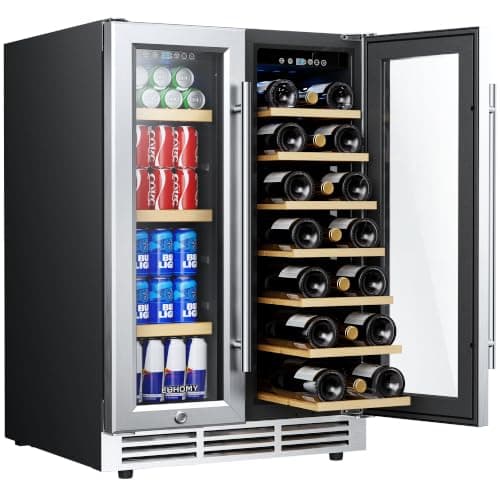
Note that a wine fridge is deliberately warm by refrigerator standards. This is why it cannot double as a drinks fridge: a can of beer at 55°F is unpleasant. If you want both from one appliance, buy a dual-zone wine-and-beverage unit and set the zones accordingly — our comparison covers the trade-offs.
Where to put it
Three practical rules. Keep it out of direct sunlight, both because UV degrades wine through glass and because solar gain makes any cooler work harder. Keep it away from an oven or a dishwasher, which cycle heat into the cabinet beside them. And give a freestanding unit its specified clearance — typically a few inches at the back and above — because that clearance is how it rejects heat, and losing it is the fastest way to shorten the compressor's life.
For a built bar, a 15-inch built-in wine fridge beside a 15-inch beverage fridge under a 30-inch counter run is the standard pairing and leaves a working surface above both. If you have one opening and have to choose, the beverage fridge is the more-used appliance in most households.
What goes wrong, and what it tells you
The two common complaints in reviews across every brand are "it will not reach the set temperature" and "it is louder than expected". The first is nearly always a thermoelectric unit in a room warmer than it was designed for, or a freestanding unit with its vents obstructed. The second is nearly always a compressor unit bought by someone who wanted silence. Both are specification mismatches rather than faults, which is why the three decisions at the top of this page matter more than brand.
The genuine fault to watch for is condensation and door-seal performance on glass-door units in humid rooms. A door that does not seal cleanly sweats, and a cabinet that sweats will eventually grow mould on the racking. Check the door closes square on delivery — shipping knocks hinges out of alignment and it is adjustable.
Frequently asked questions
What temperature should a wine fridge be set to?+
For storage, a steady 55°F — consistency matters more than the exact figure. For serving, sparkling and light whites want about 45°F, fuller whites about 50°F, and full-bodied reds about 60 to 65°F. A single-zone fridge at 55°F is a workable compromise; a dual-zone fridge lets you store and serve properly at the same time.
Compressor or thermoelectric wine cooler?+
Compressor for anything larger than about 18 bottles, anything in a garage or warm room, or anywhere a precise temperature matters — it has real cooling power but hums faintly. Thermoelectric for a small, silent, vibration-free cooler in a conditioned room; it can only reach roughly 20°F below the surrounding air, so it fails in warm spaces.
Can a wine fridge go in a garage?+
Only a compressor model, and check its rated ambient range. Thermoelectric coolers cannot cope with garage temperatures because they only pull about 20°F below ambient. Even with a compressor, an unheated garage in winter can get cold enough to confuse the thermostat, so look for a unit rated for a wide ambient range.
How many bottles does a wine fridge really hold?+
Fewer than the label. Published counts assume standard Bordeaux bottles in an ideal stacking pattern; fatter Burgundy and champagne bottles can cut the real figure by a quarter or more. If you keep a mixed range, buy one size larger than your arithmetic suggests.
Prices and availability shown here come from Amazon's live data and change often; we re-verify them regularly. Bar Bumper is an Amazon Associate and earns a commission on qualifying purchases at no extra cost to you. Read our full disclosure.