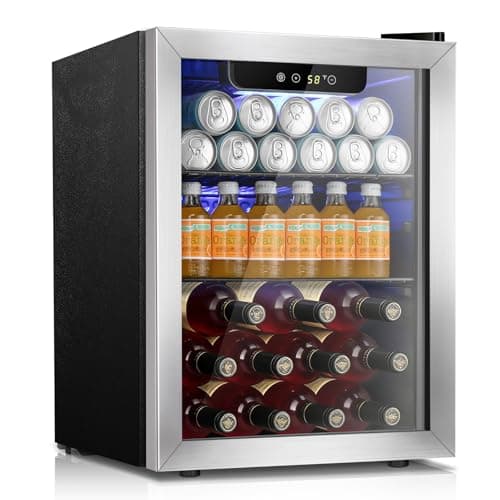
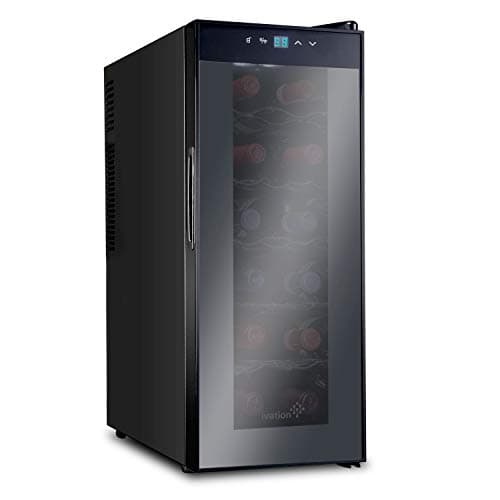
Written for a small apartment. Six compact wine coolers judged on footprint and noise first, because in a small space those are the specs you live with.
Updated October 2026 · By Stephen V.
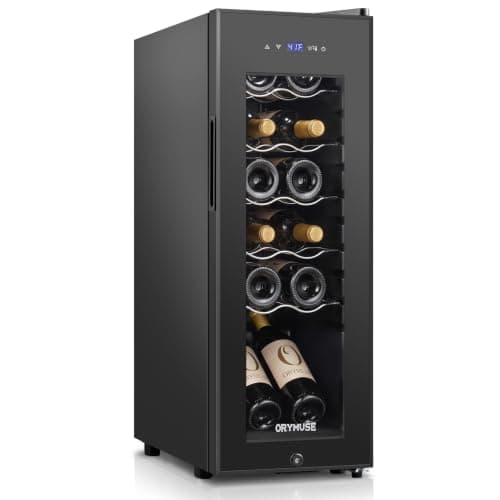
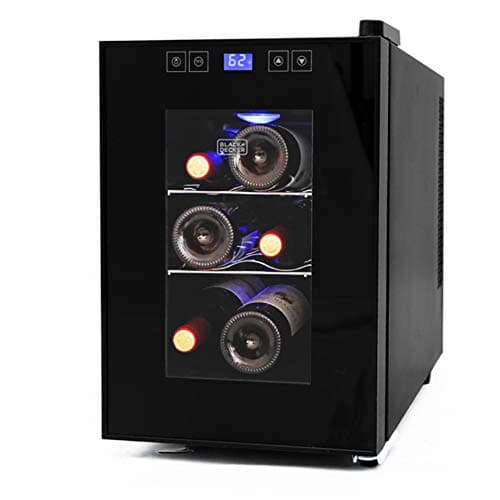
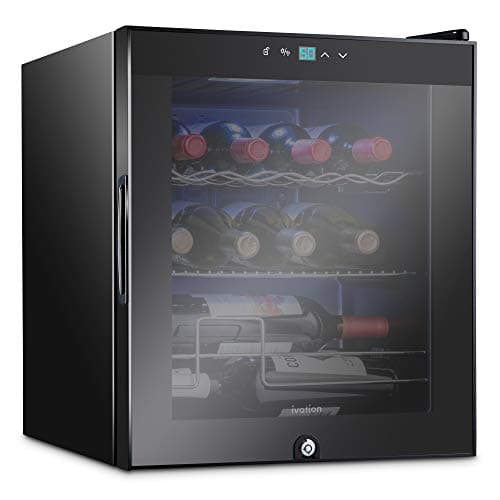
For a small space, the ORYMUSE 12-bottle compressor cooler is the best small wine fridge: 10.7 inches wide, twelve bottles, a real compressor that holds temperature, and a lock. If it needs to sit on a counter rather than the floor, the BLACK+DECKER 6-bottle thermoelectric is the quietest and smallest option here; the Ivation 12-bottle compressor is the better-built version of the top pick; the Wine Enthusiast 12-bottle slimline is the narrowest branded unit; and the Kismile 18-bottle is the most wine you can fit in a small-apartment footprint.
This page is written from the constraint. In a small apartment or a one-room bar, a wine fridge has to earn its floor, and two specs decide whether it does: width, and noise. Width, because 10 to 11 inches fits beside a counter run or in a gap where a 15-inch unit does not. Noise, because in a studio or an open-plan room the compressor is in the room with you, which is a very different proposition from a basement bar.
That second point drives the one genuine technology choice here. Thermoelectric coolers have no compressor: near-silent, no vibration, and weak — they can only pull the interior a certain number of degrees below the room, so in a warm apartment they struggle. Compressor coolers hold a set temperature properly in any room and make a low hum with occasional cycling. For a bedroom or a studio, thermoelectric. For anywhere else, compressor.
We have not installed these units. The ranking is built from published external dimensions, rated bottle capacity, cooling type, temperature range, door glazing and shelf layout, plus owner-review consensus reported as other people's experience — see how we pick. Prices come live from Amazon with the date we verified them.
The short answer
In a hurry? These are the picks we'd buy. Prices are live; tap a card below for the full reasoning.
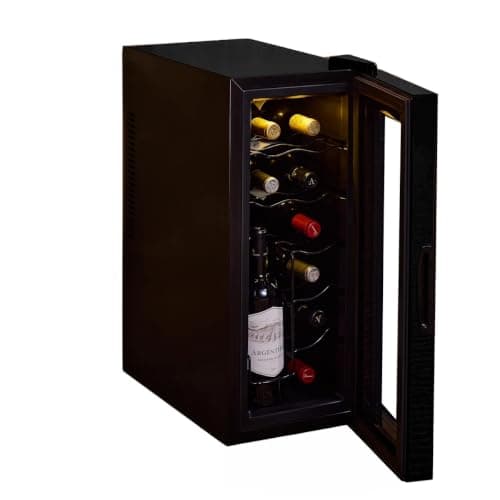
A thermoelectric 12-bottle cooler — twice the capacity of the countertop units with the same near-silence, provided the room stays cool.
Capacity
12 bottles
Cooling
Thermoelectric
Placement
Freestanding
Finish
Black
Pros
Silent and vibration-free at twice the capacity of the countertop thermoelectrics
No compressor cycling, so nothing to hear at night
Simple mechanism with very little to fail
Cons
Thermoelectric performance depends on room temperature — a warm room defeats it
Not suitable for long-term cellaring
Needs clear air behind and above it
Best for: Twelve bottles in a room where a compressor would be intrusive.
Skip this
The budget traps that look cheap and cost you twice. We'd skip these.
A thermoelectric cooler in a room that gets warm
Thermoelectric cooling can only pull the interior a fixed number of degrees below the ambient temperature. In a 78 F apartment in summer, a unit that manages a 30-degree differential cannot reach the high 40s, and the wine sits warmer than it should all season. If the room is not reliably cool, buy a compressor unit and accept the hum.
Any compact cooler pushed into a cabinet gap with no clearance
Every unit on this page is freestanding: it rejects heat out of the back and needs a few inches of air behind and above. Slotted tightly between cabinets it will run continuously and fail early. If the fridge has to be enclosed, you need a front-venting built-in unit — see our <a href="/bar-fridges/best-undercounter-wine-fridge">undercounter wine fridge picks</a>.
How to choose (and what to skip)
Measure the gap, then add clearance
Width is the headline, but the number that decides the purchase is width plus the clearance behind and above. A 10.7-inch unit needing 2 to 3 inches of rear air wants a 13-inch-deep slot, not a 10.7-inch one. Measure the gap, subtract the clearance the manufacturer specifies, and shop to what is left.
Compressor or thermoelectric, decided by the room
Thermoelectric: silent, no vibration, cannot hold a set point in a warm room, best for a bedroom or studio and for serving rather than storing. Compressor: holds temperature in any room, audible hum with cycling, right for a kitchen, a living room or a bar. This choice matters more in a small space than anywhere else, because you are in the room with it.
Count bottles honestly
Rated capacities assume standard Bordeaux bottles. A 12-bottle rack holds roughly nine or ten if some of the wine is Burgundy or champagne, which are fatter. In the smallest units that difference is a quarter of the fridge, so if the collection is varied, size up one step.
Single zone is usually right at this size
Splitting a 12-bottle cabinet into two zones leaves six bottles in each, which is rarely useful. In a compact cooler, set a single zone around the mid-50s — correct for long-term storage of either color and a reasonable serving temperature for reds, with whites finished in the kitchen fridge for an hour. Our <a href="/guides/wine-fridge-temperature">wine fridge temperature guide</a> has the numbers.
Look for a lock if the space is shared
Several of the picks here are lockable, which sounds like a luxury and is not: in a shared apartment or a home with teenagers, it is the feature that decides whether the fridge can live in a common room. It costs almost nothing and cannot be retrofitted.
How small can a wine fridge be and still be useful?
Six bottles is the practical floor, and it is a serving fridge rather than storage: enough to keep what you are drinking this fortnight at the right temperature. Twelve bottles — one case — is the size most small-apartment buyers should get, because it holds a rotating selection without dominating the room. Eighteen is the point at which a compact fridge starts behaving like a small cellar, and it is still a footprint an apartment can absorb.
What does not work is buying six bottles when you drink a bottle a week. The fridge is then permanently full of the wine you are about to open and never holds anything resting, which is most of the reason to own one.
Wine fridge for an apartment: the three real problems
Noise. In an open-plan apartment, a compressor cycling at night is noticeable. Either put it in the kitchen where appliance noise already lives, or buy thermoelectric and accept the temperature limits. Heat. Every fridge dumps its heat into the room it is in, so a cooler in a small warm room makes that room slightly warmer, which makes the cooler work harder. Give it air. Floor space. A countertop unit costs no floor at all, and in a studio that is worth more than six extra bottles.
Compact wine fridge versus using the kitchen fridge
A kitchen fridge runs around 37 to 40 F, which is too cold for almost all wine, dries corks over months, and vibrates. For a bottle you will open tonight it is fine. For anything resting more than a couple of weeks it is actively bad, and that is the honest case for even a six-bottle dedicated cooler — it holds the mid-40s to mid-50s band that wine wants and does not shake.
Where to put a small wine fridge
Away from a window, away from an oven or a radiator, and not in a cupboard. Direct sun through a glass door both heats the cabinet and degrades the wine; heat from a neighboring appliance makes the compressor run constantly. A gap at the end of a counter run with air behind it is ideal. If the only available spot is genuinely enclosed, the right purchase is a front-venting built-in unit rather than a compact freestanding one.
What else fits in a small bar
If the room is small enough that this page is relevant, the same logic applies to everything else in it. A small beverage fridge handles cans in the same footprint class, a bar cart gives you a serving surface that rolls out of the way, and wall-mounted racking stores bottles at room temperature without using any floor at all.
The cheapest ones worth buying
Small and cheap overlap heavily in this category, and the trap is the same in both: a thermoelectric cooler cannot hold temperature in a warm room. Our cheap wine fridge picks explain that limit properly and show why an 18-bottle compressor unit often costs about the same as an 8-bottle countertop one.
Frequently asked questions
What is the best small wine fridge?+
For most small spaces, a 12-bottle compressor cooler around 10 to 11 inches wide — it fits a narrow gap, holds its set temperature in any room, and twelve bottles is a useful rotating selection. If the fridge has to go in a bedroom or studio where noise matters, a 6-bottle thermoelectric countertop unit is the quieter answer.
How small do wine fridges get?+
Six-bottle countertop units are the practical smallest, at around 10 inches wide and a foot and a half tall. Below that you are into single-bottle chillers, which are a different product. Six bottles is a serving fridge rather than storage; twelve is the size most small-apartment buyers actually want.
Are thermoelectric wine fridges any good?+
In a cool room, yes — they are silent, vibration-free and simple. Their limitation is real though: they can only cool a fixed number of degrees below the ambient temperature, so in a warm apartment they cannot reach the high 40s at all. If the room is not reliably cool, buy a compressor unit.
Can I keep wine in a small fridge in a bedroom?+
Yes, if it is thermoelectric. Compressor units hum and cycle, which is intrusive at night in a quiet room. A thermoelectric countertop cooler has no compressor and no vibration, which is exactly why they exist — provided the bedroom stays cool enough for the cooling to work.
How many bottles does a compact wine fridge really hold?+
Slightly fewer than the rating. Capacities assume standard Bordeaux bottles; Burgundy and champagne bottles are fatter and do not nest to the rack design, so a mixed collection loses roughly a fifth to a quarter of the rated count. In a 12-bottle unit that is two or three bottles, which is worth planning for.
Can a small wine fridge be built into a cabinet?+
Not the units on this page — they are freestanding and vent from the back, so they need a few inches of air behind and above. Enclosing one makes the compressor run constantly and shortens its life. For an enclosed installation you need a front-venting built-in cooler.
Prices and availability shown here come from Amazon's live data and change often; we re-verify them regularly. Bar Bumper is an Amazon Associate and earns a commission on qualifying purchases at no extra cost to you. Read our full disclosure.