Slate or MDF, 7 foot or 8, and the room-size arithmetic that decides it for you. Six tables ranked on play bed, cabinet and what actually comes in the box.
Updated October 2026 · By Stephen V.
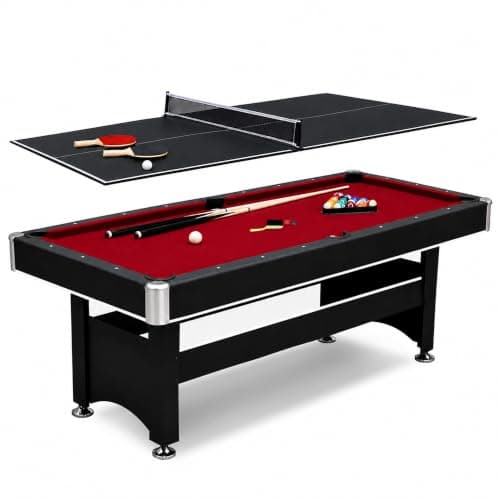
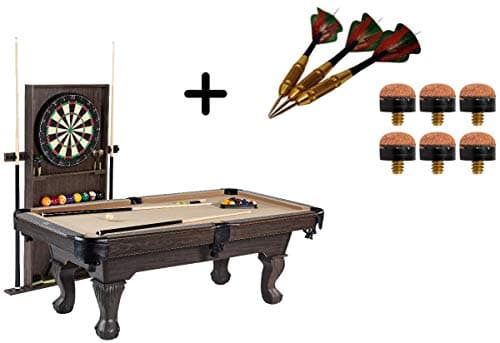
For most home game rooms the Hathaway Spartan 7 ft is the pool table to buy — it is a full 7-foot table with a ping pong top included, which means the room gets two games for one footprint. If you have genuine space and want the table that still plays true in twenty years, the Barrington 90-inch Ball & Claw is the better long-term buy and arrives with a cue rack and dartboard set. If the room is tight, the Mizerak Dynasty Space Saver at 6.5 feet is the honest answer.
Before any of that: measure. A pool table needs its own length and width plus a full cue length of clearance on every side. With a standard 58-inch cue that is 4 feet 10 inches of clear floor around the entire table. For a 7-foot table (78 x 39 inches of playing surface, about 84 x 48 inches overall) that means roughly a 17 by 13 foot room. If you do not have that, read the room-size guide before you spend anything — a correctly sized smaller table is far better than a cramped bigger one.
We have not played these tables. The ranking is built from published specifications, playing dimensions, cabinet and leg construction, what ships in the box, and owner-review consensus reported as other people's experience. Prices are pulled live from Amazon with the date we verified them.
The short answer
In a hurry? These are the picks we'd buy. Prices are live; tap a card below for the full reasoning.
$599.9915% offPrice as of October 7, 2026·#addisclosure
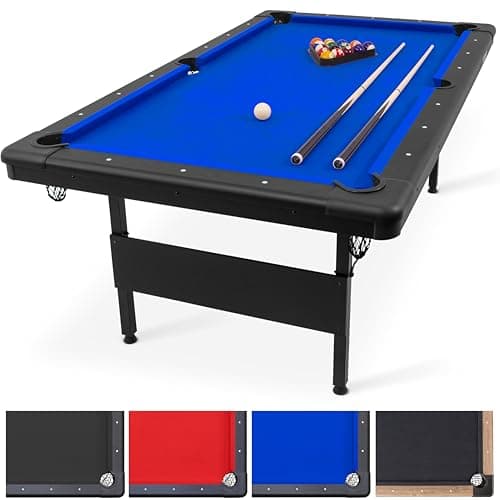
GoSports 6 ft / 7 ft Portable Billiards Table
A portable 6 or 7-foot table with a full ball and cue set — the only option here that can be put away, at the cost of real play quality.
Size
6 ft or 7 ft
Type
Portable
Includes
Full ball set, 2 cue sticks
Pros
Can genuinely be moved or stored — unique in this list
Cheapest entry to a full-size playing surface
Complete accessory set included
Cons
Portability costs rigidity; this is not a table for serious play
Lightest build here
A permanent table is a better buy if you have the room
Best for: A room that needs the table to disappear.
Skip this
The budget traps that look cheap and cost you twice. We'd skip these.
Any 8-foot table in a room under 18 by 13 feet
You will spend the life of the table using a shortened cue on rail shots. A 7-foot table played properly is a far better game than an 8-foot table played badly, and the smaller table costs less.
Tables with particleboard pedestal legs
A 300 lb table on particleboard pedestals sags and racks over time, and the bed follows it. Solid wood legs with levelers are the spec worth insisting on, and levelers are what keep the table true on an uneven floor.
How to choose (and what to skip)
The room-size formula
Table length plus twice your cue length, by table width plus twice your cue length. With a standard 58-inch cue: a 7-foot table (about 84 x 48 inches overall) needs roughly 17 x 13 feet. An 8-foot table needs about 18 x 13.5 feet. A 6.5-foot table needs about 16 x 12.5 feet. Shorter 52-inch cues buy back about a foot in each direction if one side is tight.
Slate versus MDF, honestly
Slate is honed flat, stays flat for decades, and roughly doubles a table's weight. MDF is lighter, much cheaper, and can develop a slow roll as humidity cycles — a roll that cannot be corrected. For a family table that gets played a few times a month, MDF is a defensible buy. For a table you expect to still be playing in fifteen years, slate is the only answer and it is worth saving for.
Legs and levelers decide how long it stays true
Solid hardwood legs with adjustable levelers keep the bed flat on a basement slab that slopes to a drain — which most do. This is the most underrated specification in the category. If the listing does not mention levelers, assume there are none, and budget for shims.
Count what is in the box
Cues, a full ball set, a rack, chalk, a brush and a bridge add up to $80 to $150. Some tables here include a ping pong top or a dartboard set, which is real money. Compare the total package rather than the sticker price, and check cue length — some bundles ship 52-inch cues, which tells you something about the room the maker expects.
Plan the delivery and the light
These tables arrive as 200 to 400 lb of curbside freight. Measure doorways and stair turns first. Separately, budget for a light: a hanging pool table light over the bed removes the shadows that a ceiling fixture casts across a 7-foot surface, and it is the cheapest upgrade that makes the table feel finished.
What size pool table should you buy?
Home tables come in 6.5, 7, 7.5 and 8-foot sizes (the figure is the length of the table, not the playing surface). Bars use 7-foot tables, which is why a 7-footer feels familiar to most casual players. Tournament play uses 9-foot tables, which almost no home can hold. The useful rule: buy the largest table your room can take with full cue clearance on every side, and if that is smaller than 6.5 feet, buy bumper pool instead and enjoy the game you can actually play.
There is a quiet argument for the 7-foot table beyond space: it is the size you can still get a decent game on with three people in the room and a drink on a side table. An 8-foot table in a room sized for an 8-foot table is better pool. An 8-foot table in a room sized for a 7-foot table is worse pool than either.
Cloth, cushions and the things that wear out
Pool table cloth is a wear item. Budget tables ship with a woollen blend that plays slower and pills in the high-traffic areas; it can be replaced, and re-clothing a table is a well-documented job that costs a fraction of the table. Cushions (the rubber under the rails) are the other wear item, and they are what make a ball rebound predictably. Hard, plasticky cushions are the clearest tell of a cheap table and the hardest thing to fix later.
If you buy an MDF table and play a lot, assume the cloth is a consumable and the table is otherwise fine. If you buy slate, the slate will outlive the cloth several times over, which is most of the long-term argument for it.
Combo tables: when two games beat one
A pool-and-ping-pong combo gives a room a second real game for no extra floor. The honest trade-offs: the conversion top is a large panel that needs storage, the bed underneath is MDF rather than slate (a slate bed will not take a conversion top), and ping pong played on a 7-foot pool table is a smaller game than regulation. For a family room, the compromise is almost always worth it. For a dedicated pool room, buy a proper table and put the ping pong somewhere else.
Budget for the room, not just the table
Three things turn a table into a game room, and all three are cheap next to the table itself: a hanging light over the bed, a wall cue rack (which stops cues warping against a wall), and a cover. A cover matters more than people expect in a basement or garage — dust and sunlight both age cloth, and sunlight fades it unevenly. A dartboard on the wall is the other obvious addition, because it uses the one part of a game room a pool table leaves empty.
Frequently asked questions
What size room do I need for a 7 ft pool table?+
About 17 by 13 feet with standard 58-inch cues. The formula is the table's overall footprint plus a full cue length of clearance on all four sides. A 7-foot table is roughly 84 by 48 inches overall, so adding 4 feet 10 inches on each side gives you that figure. Shorter 52-inch cues buy back about a foot in each direction.
Is a slate pool table worth it?+
For a table you want to still play well in fifteen years, yes — slate is honed flat and stays flat, while MDF can develop a roll that cannot be fixed. For a family table played a few times a month, a good MDF table is a reasonable buy at a much lower price. Slate also roughly doubles the weight, which affects delivery and whether the table can ever move.
Are pool and ping pong combo tables any good?+
Yes for a family room, with real compromises: the conversion top needs storage, the bed must be MDF rather than slate, and ping pong on a 7-foot pool table is smaller than regulation. For two genuine games in one footprint it is usually worth it. For a dedicated pool room, buy a proper table.
What is the best pool table size for a home?+
Seven feet, for most homes. It is the size bars use, so it plays familiar; it needs about 17 by 13 feet, which a reasonable number of basements and bonus rooms can provide; and the full range of tables exists at that size. Buy 8 feet only if the room genuinely clears 18 by 13.5 feet.
Prices and availability shown here come from Amazon's live data and change often; we re-verify them regularly. Bar Bumper is an Amazon Associate and earns a commission on qualifying purchases at no extra cost to you. Read our full disclosure.