A tulip concentrates aroma; a tumbler lets it escape. Which matters depends entirely on whether you drink it neat or over ice.
Updated October 2026 · By Stephen V.
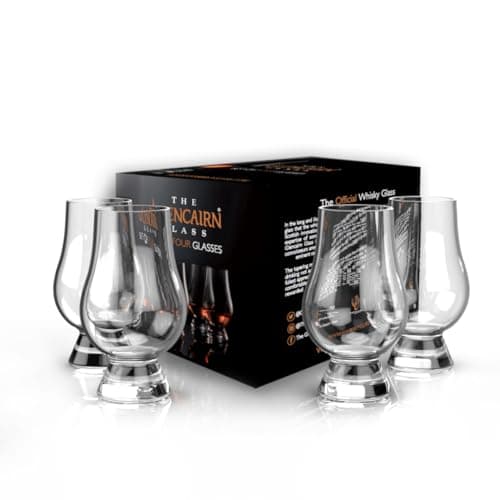
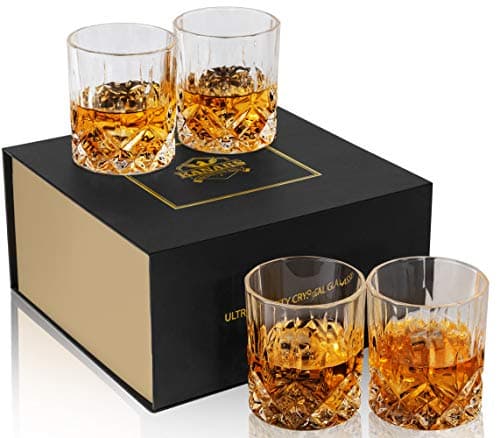
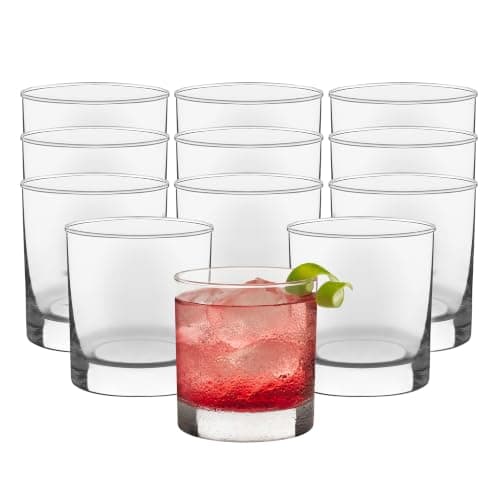
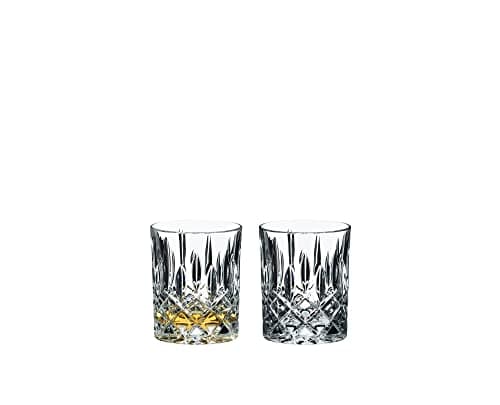
Buy Glencairn glasses if you drink whisky neat, and heavy-base rocks glasses if you drink it over ice. That is the whole decision. The Glencairn is the industry-standard nosing glass — a tulip bowl on a short base that funnels aroma to your nose, which is where most of what you call taste actually happens. The KANARS old fashioned set is our rocks pick for a home bar, the Libbey heavy-base set is the one to buy if glasses get broken, and the Riedel Spey tumbler is the upgrade that does both jobs reasonably.
Glass shape is not a flourish here. Most of flavour perception is olfactory, and a glass either delivers aroma to your nose or disperses it. A narrow rim concentrates; a wide rim dissipates. That is why the same whisky genuinely tastes different from a Glencairn and from a tumbler — and also why the tumbler is the right glass when you have added ice and water and want the drink to be refreshing rather than analysed.
We have not tested these glasses. The ranking is built from published shapes, capacities, materials and set sizes, together with owner-review consensus reported as other people's experience. Prices come live from Amazon with the date we verified them.
The short answer
In a hurry? These are the picks we'd buy. Prices are live; tap a card below for the full reasoning.
$65.9920% offPrice as of October 7, 2026·#addisclosure
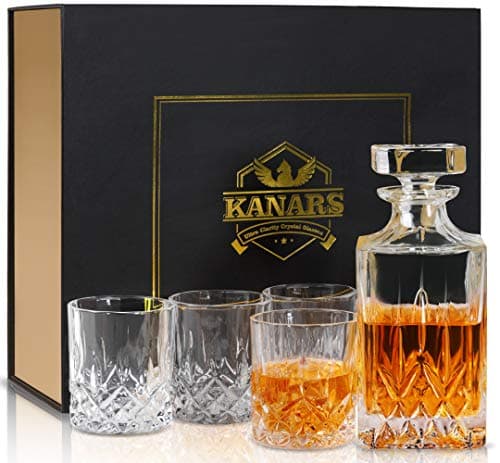
KANARS Whiskey Decanter & Glasses Gift Set
A crystal decanter with matching glasses in a presentation box — bought for how it looks on a cart, which is a legitimate reason.
Includes
Decanter + glasses
Material
Crystal
Packaging
Gift box
Pros
The most presentable object in this list, on a cart or as a gift
Glasses and decanter match
Boxed and ready to give
Cons
A decanter does nothing for whisky's flavour — unlike wine, spirits do not benefit from aeration
Decanted whisky loses provenance; you forget what is in it
Lead-free crystal still needs hand washing
Best for: A present, or a bar cart centrepiece.
Skip this
The budget traps that look cheap and cost you twice. We'd skip these.
Whisky glasses with built-in 'chilling' bases
Gel-filled or metal-cored bases chill the glass rather than the drink, warm up within minutes, and cannot be washed properly. A large clear ice cube or a set of soapstone cubes does the job better and costs less.
Decanting whisky for flavour reasons
Wine benefits from aeration; spirits do not. A decanter is decoration, and a poorly sealed one slowly oxidises and evaporates what is inside. Buy one because it looks good on a cart, and keep the whisky in its bottle if you care about the whisky.
How to choose (and what to skip)
Decide how you actually drink it
Neat, or with a few drops of water: buy a tulip-shaped nosing glass. The narrowed rim funnels aroma to your nose, and most of what you perceive as flavour is aroma. Over ice: buy a heavy-base rocks glass with a wide mouth that takes a large cube. Both: a tapered tumbler compromises reasonably, or buy four of each — they are not expensive.
Capacity: 10 to 12 oz for rocks glasses
A 2-inch clear cube plus a double pour needs about 10 oz of glass to look right and leave room to stir an old fashioned. Smaller 8 oz glasses crowd a large cube; larger 14 oz glasses make a single pour look lost. Nosing glasses are different — they are deliberately small, around 6 oz, because you are pouring an ounce or two.
Weight and base thickness
A heavy base is functional in a rocks glass: it lowers the centre of gravity so the glass does not tip while you stir or muddle, and it survives being set down firmly. It also feels like a bar glass. In a nosing glass, weight is irrelevant and thin walls are preferable.
Set size, and assume breakage
Buy in fours or sixes, in a pattern that will still be available in two years. Glassware in a bar that gets used does get broken, and a set of two expensive glasses becomes a set of one. This is the strongest argument against premium crystal for everyday use and for commercial-stock glasses in a working bar.
Crystal versus pressed glass
Lead-free crystal is thinner, clearer and has a finer rim, which genuinely feels better to drink from. It is also more fragile and usually needs hand washing. Pressed glass is tougher, dishwasher-safe and considerably cheaper. For a bar that entertains, pressed glass for the working set and crystal for a couple of special glasses is the sensible split.
Why glass shape changes the whisky
Aroma is most of flavour. When whisky sits in a glass, alcohol evaporates and carries aromatic compounds with it; where those go depends on the shape above the liquid. A tulip bowl with a narrowed rim collects them into a column that arrives at your nose when you lean in. A straight-sided tumbler with a wide mouth lets them spread and dissipate into the room.
The practical consequence is that a complex whisky shows far more of itself in a nosing glass, and a simple one does not suffer much in a tumbler. It is also why the narrowed rim can concentrate alcohol vapour uncomfortably with a high-proof spirit — which is the real reason a few drops of water "opens up" a whisky: it lowers the alcohol at the surface so the other aromatics can get through.
What to drink it over, if you use ice
A single large cube or sphere is the goal, because it has the least surface area per volume and so melts slowly. Several small cubes chill faster and dilute much more, which turns a whisky into something watery within ten minutes. This is the one place where clear cube ice genuinely matters: dense, slow-melting ice keeps the drink a drink.
You do not need an ice machine for this. A directional-freezing clear ice tray makes a handful of large clear cubes or 2-inch spheres in your own freezer for a few dollars, which is exactly the quantity a whisky drinker needs. Soapstone or steel cubes chill without diluting at all, though they chill less.
The four-glass home bar
If whisky is one part of a wider bar rather than the whole point, you do not need a cabinet of specialist shapes. Four shapes cover essentially everything: a heavy rocks glass, a tall highball, a stemmed coupe for drinks served up, and a wine glass. Add Glencairns only if you taste whisky deliberately. Our glassware guide works through the full set and the quantities.
Frequently asked questions
What is the best glass for drinking whiskey?+
For whisky drunk neat, a tulip-shaped nosing glass like a Glencairn — the narrowed rim concentrates aroma, and aroma is most of flavour. For whisky over ice, a heavy-base rocks glass with a wide mouth that takes a large cube. The two shapes do genuinely different jobs, and neither is a substitute for the other.
Are Glencairn glasses worth it?+
If you drink whisky neat and pay attention to it, yes — and they are inexpensive, so the barrier is low. The tulip bowl noticeably increases how much aroma reaches you, which is why distilleries and competitions use them. They are not the glass for ice: the bowl is too narrow for a large cube.
What size should a whiskey rocks glass be?+
Around 10 to 12 oz. That takes a 2-inch cube plus a double pour with room to stir, which is what an old fashioned needs. Smaller 8 oz glasses crowd a large cube, and larger glasses make a single pour look sparse.
Does a whiskey decanter improve the whiskey?+
No. Unlike wine, spirits do not benefit from aeration, and a decanter with an imperfect seal slowly oxidises and evaporates what is in it. Buy a decanter because it looks good on a bar cart — which is a perfectly good reason — and keep whisky you care about in its original bottle.
Prices and availability shown here come from Amazon's live data and change often; we re-verify them regularly. Bar Bumper is an Amazon Associate and earns a commission on qualifying purchases at no extra cost to you. Read our full disclosure.