Nearly every wine fridge under $1,000 comes from a handful of brands. What each one is actually good at, with the model that represents it best.
Updated October 2026 · By Stephen V.
NewAir is the best wine fridge brand for most buyers: a broad range of compressor units at sensible capacities, with the parts and support network that import brands do not have. Kalamera is the one to choose for a built-in cabinet, Ivation for dual-zone value, Antarctic Star for large capacity per dollar, BLACK+DECKER when you want a name you already trust, and Wine Enthusiast when the opening is an awkward shape and you need a specialist's catalog.
It helps to know how this market is actually built. Below roughly $1,000 almost nothing is manufactured by the brand on the door: a handful of Chinese factories build the cabinets and cooling assemblies, and brands specify capacity, shelving, glass and controls on top. That is why so many wine fridges look alike and why spec sheets read similarly. What genuinely differs between brands is the part you cannot see from a photo: whether anyone answers the phone in two years, and whether a shelf, a door seal or a control board can be bought.
So judge a brand on three things. Cooling type across the range — brands that sell mostly thermoelectric units are selling quiet cabinets that cannot cope with a warm room, which is the single most common cause of disappointment in this category. Honest capacity figures, because a 28-bottle rating assumes slim Bordeaux bottles and real collections are mixed. And support: a US-registered brand with a warranty department beats an identical cabinet with a three-letter name, every time.
We have not disassembled these cabinets. The ranking is built from each brand's published range, cooling technology, capacity and temperature specifications, warranty terms where stated, and owner-review consensus reported as other people's experience — see how we pick. One representative model is linked per brand, with prices live from Amazon and the date we verified them. Our main wine fridge roundup ranks individual models rather than brands.
The short answer
In a hurry? These are the picks we'd buy. Prices are live; tap a card below for the full reasoning.
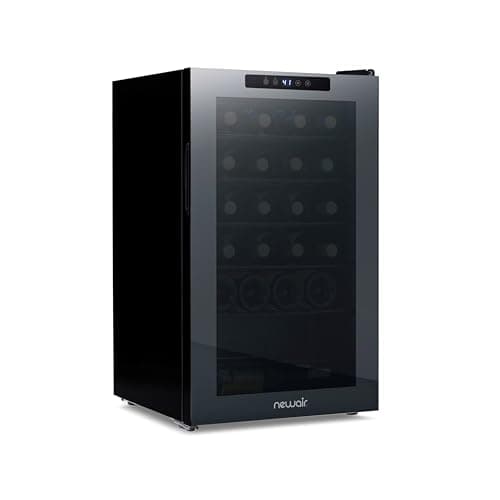
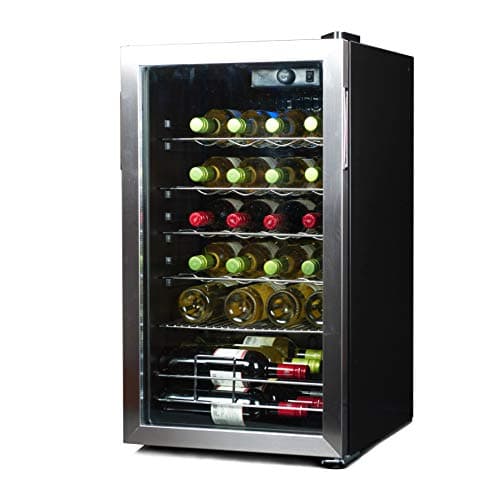
NewAir builds mostly compressor units at the capacities homes actually buy, and is one of the few brands in this price class with a genuine US support operation.
Most home bars — compressor cooling and real support
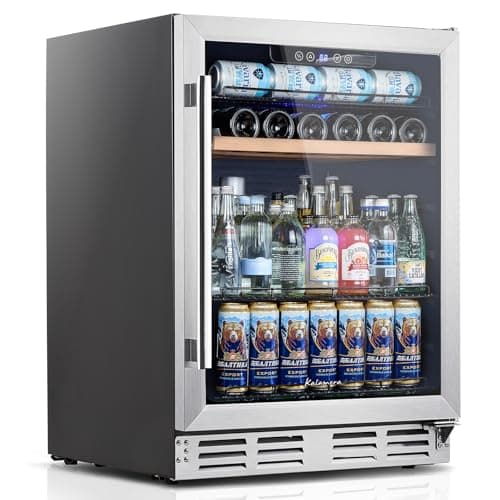
Kalamera concentrates on built-in and undercounter cabinets with front venting, which is the specification that decides whether a fridge can live in cabinetry at all.
NewAir builds mostly compressor units at the capacities homes actually buy, and is one of the few brands in this price class with a genuine US support operation.
Representative model
17-in, 24 bottles
Cooling
Compressor
Range breadth
Wide — 6 to 50+ bottles
Install options
Freestanding and built-in lines
Pros
Compressor cooling across most of the range, which copes with warm rooms
Both freestanding and built-in rated models, so one brand covers either plan
Easier warranty and parts experience than import-only brands
Capacity ratings that hold up reasonably well against real bottles
Cons
Costs more than an equivalent-spec import cabinet
Styling is functional rather than striking
Compressor units hum and vibrate slightly — the price of real cooling
Best for: Most home bars — compressor cooling and real support.
Kalamera concentrates on built-in and undercounter cabinets with front venting, which is the specification that decides whether a fridge can live in cabinetry at all.
Representative model
24-in undercounter
Holds
Cans + wine bottles
Install
Built-in / undercounter
Focus
Built-in cabinets
Pros
Built-in rated units with front venting, so they can be enclosed
Strong presence at the standard 15 and 24-inch cabinet widths
Dual-purpose cabinets that take cans as well as bottles
Specification sheets are unusually clear about install requirements
Cons
Narrower range at the small, countertop end
Built-in cabinets cost more than freestanding ones
Less brand recognition than NewAir or BLACK+DECKER
Best for: A bar being built with a cabinet opening to fill.
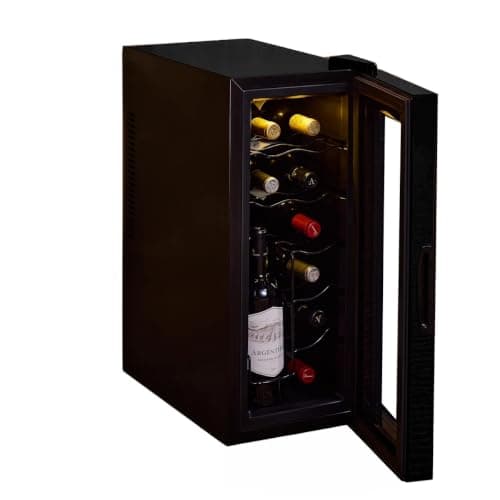
Wine Enthusiast sells nothing but wine storage, which shows in cabinet shapes and racking that the general appliance brands do not offer.
Representative model
12 bottles, slimline
Format
Slimline upright
Focus
Wine storage only
Placement
Freestanding
Pros
Cabinet formats built around bottles rather than around a standard fridge shell
Slimline and odd-size options for awkward gaps
A catalog of racking, accessories and larger cellars behind the small units
Advice and documentation written for wine rather than for appliances
Cons
Higher price per bottle of capacity
Smaller Amazon range than the big appliance brands
Some models are thermoelectric, which limits warm-room performance
Best for: An awkward opening, or a buyer who wants wine-first design.
Skip this
The budget traps that look cheap and cost you twice. We'd skip these.
Any brand whose range is mostly thermoelectric
Thermoelectric coolers have no compressor, which makes them silent and vibration free — genuinely nice in a bedroom or a quiet study. What they cannot do is pull temperature down against a warm room: most are specified to cool only around 20°F below ambient, so in an 80°F kitchen or a summer garage the cabinet simply never reaches wine temperature. A brand that sells mostly thermoelectric cabinets is selling for the wrong rooms. Check the cooling type on the specific model, because several brands sell both.
A three-letter brand with no US presence, bought for a long-term cellar
There is nothing wrong with the cabinets themselves — many come off the same production lines as the branded ones, and for a short-term or secondary fridge they are good value. The problem is the second and third years. Door seals perish, shelves break, control boards fail, and a brand that exists only as a storefront cannot supply any of them. If the fridge is going into cabinetry where replacing it means a joinery job, or it is holding wine you care about, pay the premium for a brand with a parts department.
How to choose (and what to skip)
Cooling type outranks the badge
Compressor cooling works in any normal room and is what you want for anywhere warm; thermoelectric is quiet, cheap and only cools around 20°F below ambient. This single specification matters more than which brand is on the door, and most brands sell both. Decide it first, then choose among the brands that do your preferred type well at your capacity.
Match the brand to the install, not the other way round
Freestanding cabinets vent through the back and overheat if enclosed; built-in units vent through the front and can sit flush in cabinetry. Kalamera and NewAir both have genuine built-in lines; several budget brands describe cabinets as built-in that only state rear ventilation. If the fridge is going under a counter, treat front venting as a hard requirement and shortlist accordingly.
Read capacity as a best case
Every bottle count assumes slim 750 ml Bordeaux bottles stacked neck to neck. Burgundy, champagne and heavy-glass bottles are wider, so a real mixed collection fills a 28-bottle cabinet at around 18 to 20 bottles. Brands that publish shelf dimensions rather than just a bottle count are being more honest, and removable shelving is what lets you store big bottles at all.
Check what the warranty actually covers
In this price class the usual pattern is one year on parts and labor, sometimes with a longer term on the sealed cooling system. What matters more is whether consumable parts — shelves, seals, hinges, control boards — can be bought at all in year three. A brand with a US phone number and a spares list is worth a real premium over an identical-looking cabinet without one.
Buy the size you need now, in the room it will live in
Wine fridges are bought for the collection people imagine rather than the one they have, and an underfilled cabinet costs more to run per bottle. Measure the opening, count your actual bottles, add a little room, and pick the brand that does that size well. If the room is a garage or an unconditioned basement, our <a href="/bar-fridges/best-garage-wine-fridge">garage wine fridge page</a> covers the ambient-range limit that quietly kills cabinets in those spaces.
Who actually makes wine fridges
Under about $1,000, very few brands manufacture anything. A small number of factories build cabinets and cooling assemblies and supply many brands, which specify capacity, shelving, glass, controls and finish on top. This is not a scandal — it is how most of the appliance market works, and it is why a $300 and a $400 cabinet can share a compressor. The consequences for a buyer are specific: spec sheets are less differentiated than they look, build quality clusters by price rather than by badge, and the brand's real value is distribution, documentation and support. Judge accordingly, and spend the difference on cooling type and install rating rather than on a logo.
Where the premium brands start
Above roughly $1,200, genuine engineering differences appear: Eurocave, Liebherr, Sub-Zero and Zephyr build their own cabinets, with better seals, quieter and more precisely controlled compressors, UV-treated glass, anti-vibration mounting and humidity control that actually holds a figure. If you are storing wine for a decade rather than chilling it for a month, that is where to look — and those are dealer and showroom products rather than Amazon ones, which is why this page covers the brands a home bar buyer can actually order. Where a brand is sold only through dealers, check the price with a dealer rather than trusting any number online.
What goes wrong, and which brand matters then
In rough order of frequency: door seals perish and the cabinet starts running constantly; shelves crack where a heavy bottle sat on a cantilevered edge; control boards fail and the display goes dark; fans get noisy; and thermoelectric modules simply stop keeping up. Every one of those is a cheap part and a twenty-minute job — if the part exists. That is the whole argument for brand, and it is why NewAir, BLACK+DECKER and Kalamera earn their premium over an identical-looking cabinet from a brand that will not exist next year.
Brand by use case, in one list
A first wine fridge in a normal room: NewAir. A cabinet opening in a built bar: Kalamera, with front venting confirmed. Reds and whites on a budget: Ivation dual zone. Fifty-plus bottles cheaply: Antarctic Star. A familiar name and easy returns: BLACK+DECKER. An awkward gap or wine-first design: Wine Enthusiast. A countertop chiller for four to six bottles: Koolatron or BLACK+DECKER, accepting thermoelectric cooling. If the cabinet also has to hold cans, read our wine fridge versus beverage fridge comparison first — the racking is the difference, and it is not a small one.
Getting the temperature right whatever you buy
Brand does not change the numbers. Serve whites and rosés around 45 to 50°F, reds around 55 to 65°F, and store anything long term at a steady 55°F — stability matters more than the exact figure, because it is temperature swing that ages wine badly. A single-zone cabinet set at 55°F is a reasonable compromise for a mixed collection; a dual-zone cabinet lets you serve from one side and store in the other. Our wine fridge temperature guide covers the full set of figures, including what to do with sparkling wine.
Frequently asked questions
What is the best wine fridge brand?+
NewAir, for most buyers: a wide range of compressor units at the capacities homes actually buy, plus a real US support operation. Kalamera is the better choice for built-in cabinets, Ivation for dual-zone value, Antarctic Star for the most bottles per dollar, and BLACK+DECKER if you want a familiar name with straightforward retail warranty handling.
Are expensive wine fridges worth it?+
Above roughly $1,200 you start buying genuine engineering — Eurocave, Liebherr, Sub-Zero and Zephyr build their own cabinets with better seals, quieter precisely controlled compressors, UV glass and real humidity control. That is worth it for storing wine over years. Below that, most cabinets come from a few shared factories, so pay for compressor cooling and the right install rating rather than for a badge.
Which wine fridge brands use compressor cooling?+
NewAir, Kalamera, Antarctic Star, Ivation and BLACK+DECKER all sell compressor units across most of their mid and large sizes. Several of the same brands also sell thermoelectric models at the small end, so check the specific model: thermoelectric cabinets only cool around 20°F below ambient and cannot hold wine temperature in a warm room.
Does the brand of wine fridge matter?+
Less than the specification, more than you would like in year three. Under about $1,000 a handful of factories build most cabinets, so cooling type, venting and capacity matter more than the logo. What the brand buys you is parts and support: seals, shelves and control boards are cheap and easy to replace, but only if someone still sells them.
How many bottles does a wine fridge really hold?+
Fewer than the rating, if your collection is mixed. Bottle counts assume slim 750 ml Bordeaux bottles stacked neck to neck; champagne and Burgundy bottles are wider with thicker glass, so a 28-bottle cabinet typically takes 18 to 20 real bottles. Look for published shelf dimensions and removable shelving if you own big bottles.
What is the most reliable wine fridge?+
Buy a compressor unit from a brand with a parts department, sized so it is not running flat out in a hot room. The common failures — perished seals, cracked shelves, dead control boards, noisy fans — are all cheap parts, so reliability in practice means repairability. That favors NewAir, Kalamera and BLACK+DECKER over identical-looking cabinets with no support behind them.
Prices and availability shown here come from Amazon's live data and change often; we re-verify them regularly. Bar Bumper is an Amazon Associate and earns a commission on qualifying purchases at no extra cost to you. Read our full disclosure.