Draft beer at home is a genuinely different drink. It is also the only appliance here with a cleaning schedule you cannot skip — here is what you are signing up for.
Updated October 2026 · By Stephen V.
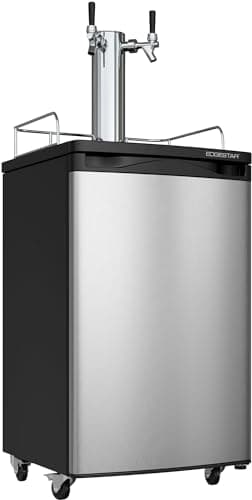
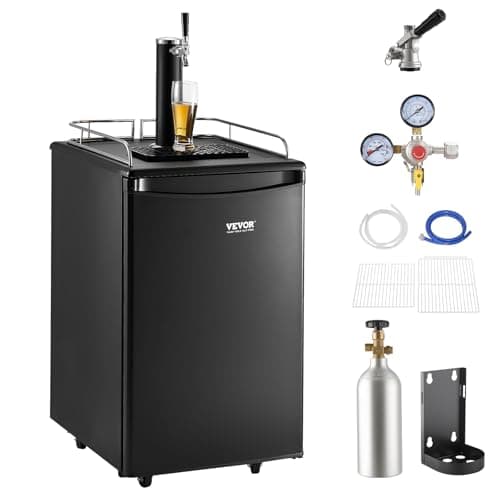
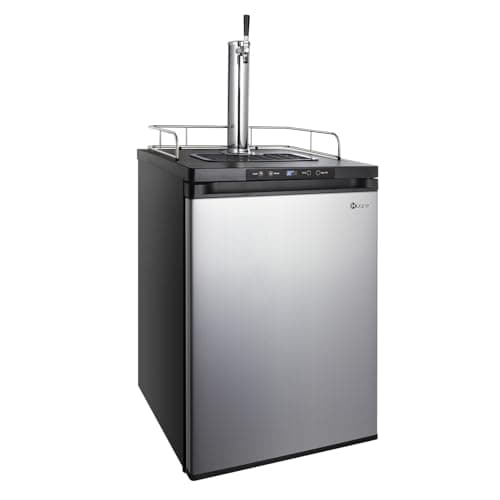
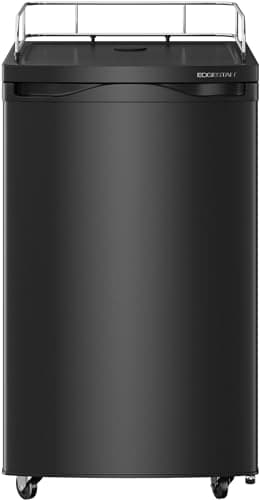
The EdgeStar KC2000SSTWIN is the kegerator to buy if you are serious about draft beer at home. It takes a full-size half-barrel keg, has two taps so you can keep two beers on at once, and EdgeStar is the brand with the deepest parts support in this category — which matters more here than in any other appliance on this site, because kegerators have consumable parts. The VEVOR single-tap is the value alternative; the Kegco K309SS-1 is the stainless mid-point; and the EdgeStar BR2001BL is the one to buy if you want to assemble your own setup.
Be clear about what a kegerator is before you buy one. It is a refrigerated cabinet sized for a keg, plus a CO2 cylinder, a regulator, gas and beer lines, a coupler and a tap. Draft beer at home genuinely tastes better than bottled, a half-barrel works out cheaper per pint than cans, and the setup looks the part. In exchange you are taking on a cleaning routine, a gas cylinder to refill, and the reality that a keg has a finite life once tapped.
We have not installed these units. The ranking is built from published keg capacities, tap counts, included hardware, temperature ranges and dimensions, plus owner-review consensus reported as other people's experience. Prices come live from Amazon with the date we verified them.
The short answer
In a hurry? These are the picks we'd buy. Prices are live; tap a card below for the full reasoning.
An ultra-low-temperature refrigerator built as a kegerator conversion base — buy it when you want to choose your own tower, taps and regulator.
Type
Conversion refrigerator
Temperature
Ultra low temp
Hardware
Not included — buy to suit
Pros
Cheapest route to full-size keg refrigeration
Lets you specify your own tower, taps, regulator and lines
The right base if the taps are going through a bar front rather than a tower on the lid
Cons
No dispensing hardware at all — budget for CO2, regulator, lines, coupler and tap
Requires you to understand the setup rather than follow instructions
Total cost can exceed a complete kegerator once well specified
Best for: Building your own setup, or putting the taps through a bar front.
Skip this
The budget traps that look cheap and cost you twice. We'd skip these.
Mini-keg-only countertop dispensers
Units that take only 5-litre mini kegs cost nearly as much as a real kegerator, and mini kegs are among the most expensive ways to buy beer per pint. The economics that justify draft beer at home only work with a full-size or sixth-barrel keg.
A kegerator if you drink a few beers a week
A tapped keg has a finite life — weeks, not months, before the beer noticeably declines. A half-barrel is roughly 165 pints. If you cannot work through a keg in that window, a beverage fridge full of cans is both cheaper and better beer.
How to choose (and what to skip)
Match the keg size to how much you drink
A half-barrel is about 165 pints, a quarter-barrel about 82, and a sixth-barrel about 55. A tapped keg stays good for roughly four to eight weeks depending on how well the gas and temperature are managed. Work out which size you can finish in that window — a kegerator holding a keg you cannot drink is a fridge full of beer going flat.
Single or dual tap
Dual tap means two beers on at once, or one beer and one cider, cold brew or soda. It also doubles the line cleaning and needs either a second regulator body or a splitter to run two kegs at different pressures. For a first kegerator, single tap is simpler and the better learning curve. For a bar you entertain at, dual is the one you end up wanting.
Check what hardware is actually included
A complete kegerator should arrive with a CO2 cylinder (often empty), a regulator, gas and beer lines, a keg coupler and a tap. Conversion refrigerators include none of it. Couplers are also beer-specific: most American domestic kegs use a D system coupler, but imports frequently need S, A or U types. Confirm the coupler matches what you actually drink.
Understand the CO2 side before you buy
You will need the cylinder filled or exchanged locally, which is easy but is an errand. Dispensing pressure is typically around 10 to 12 psi for most ales and lagers, adjusted for line length and temperature; too low and the pour is flat, too high and it is all foam. This is a setting you learn once and rarely touch again, but it is the main reason a new kegerator pours badly.
Line cleaning is not optional
Beer lines need cleaning every keg change, and a cleaning kit with a pump and the proper caustic solution is a necessary accessory rather than an upsell. Neglected lines grow biofilm, and the result is beer that tastes sour and a tap that cannot be rescued by rinsing. This is the ongoing commitment that distinguishes a kegerator from every other appliance in this hub.
Is a kegerator worth it?
The economics work if you drink enough. A half-barrel keg is roughly 165 pints, and the per-pint cost compares well with buying the same beer in cans — the saving is real but it is not dramatic, and it is only realised if you finish the keg while it is still good. The honest reasons to buy a kegerator are that draft beer tastes better than canned, that having it on tap is a genuine pleasure, and that it is the centrepiece of a bar. The reason not to is that it is the one appliance here with homework.
Our dedicated guide works through the arithmetic for different drinking rates. The short version: if two or more people in the house drink beer regularly, it adds up. If beer is occasional, a beverage fridge is the better appliance and much less work.
What a good pour depends on
Three variables, and all three have to be right. Temperature: most beer dispenses best around 36 to 38°F, and warm beer foams. Pressure: roughly 10 to 12 psi for typical ales and lagers, balanced against your line length — longer lines need slightly more pressure to overcome resistance, which is why a tower on the lid and taps through a bar front behave differently. Line length and diameter: too short and the beer arrives too fast and foams; this is why short-line setups foam and people blame the keg.
Almost every "my kegerator only pours foam" problem is one of those three, usually temperature or a freshly jostled keg that needs to settle. A keg that has been moved needs several hours cold and still before it pours cleanly.
Conversion kits and bar fronts
A conversion refrigerator is a keg-sized fridge with no dispensing hardware, and it is the right purchase in two cases: you want to choose better components than a packaged kegerator includes, or the taps are going through the front of a built bar rather than sitting on a tower on the lid. The second is the main reason enthusiasts go this route — a tap through a bar front with the keg hidden behind it is the look most home bars are actually after.
Budget honestly for it. A CO2 cylinder, a quality dual-gauge regulator, lines, a coupler, a shank and a tap add up, and a well-specified conversion can cost more than a complete kegerator. The payoff is component quality and a setup built around your bar instead of around a cabinet lid.
Frequently asked questions
How long does beer last in a kegerator?+
Roughly four to eight weeks once tapped, depending on the beer and how well temperature and CO2 pressure are maintained. Because it is dispensed under CO2 rather than exposed to air, it keeps far longer than an opened bottle — but it does decline. Size the keg to what you can finish in that window.
What pressure should a kegerator be set to?+
Typically around 10 to 12 psi for most ales and lagers, adjusted for your line length and dispensing temperature. Too low pours flat, too high pours foam. Longer beer lines need slightly more pressure to overcome resistance, which is why a tower on the lid and taps through a bar front need different settings.
How often do kegerator lines need cleaning?+
At every keg change as a minimum, using a pump cleaning kit and proper caustic line cleaner rather than just rinsing with water. Neglected lines grow biofilm that makes the beer taste sour and cannot be flushed out afterwards. This is the one ongoing commitment a kegerator demands that other bar appliances do not.
Why does my kegerator only pour foam?+
Almost always temperature, pressure or a disturbed keg. Beer above about 40°F foams; pressure set too high foams; and a keg that has just been moved needs several hours cold and still to settle. Check those three in that order before suspecting the hardware — beer lines that are too short also foam.
Do I need a special coupler for imported beer?+
Often yes. Most American domestic kegs use a D system coupler, which is what kegerators ship with, but many imports use S, A, G or U type couplers. Check what your usual beer needs before you buy, because the coupler is beer-specific and an extra one is an inexpensive purchase.
Prices and availability shown here come from Amazon's live data and change often; we re-verify them regularly. Bar Bumper is an Amazon Associate and earns a commission on qualifying purchases at no extra cost to you. Read our full disclosure.