Five hundred dollars is where dual-zone cooling and thirty-bottle capacity start, and where built-in installation becomes possible. Eight fridges under the cap, ranked by what each price step buys.
Updated November 2026 · By Stephen V.
Buy the BODEGA 15-inch 30-bottle dual-zone. It is the only pick under this cap that does all three of the things people pay more for - thirty bottles, two independent temperature zones, and a 15-inch width with front venting so it can be built into a cabinet run rather than standing in a corner. Everything above it in price is buying a bigger cabinet or a brand. For the most bottles under the cap, the Ivation 33-bottle dual-zone is the pick. The budget pick is the Kismile 18-bottle freestanding cooler, the cheapest fridge here with a live price and a published capacity in double figures.
Every price on this page is read live from Amazon, and the as of date sits under each buy button. The cap is checked against that live figure rather than a snapshot taken when the page was written, so a unit that moves above $500 stops qualifying and we will say so rather than leaving a stale claim in a heading. For the category ranked with no ceiling at all - where the picks run to full-height built-in cabinets - see our wine fridge roundup.
How we judged these
Published bottle capacity. Counts assume standard 750 ml Bordeaux bottles laid flat. Burgundy and champagne bottles are fatter and shorter, so a published 30-bottle rack holds roughly twenty of them. Every figure here is the published one, and the cons say where a shelf layout will not take wide bottles.
Zones. Reds want roughly 55 to 65 degrees Fahrenheit and whites roughly 45 to 50. A single zone cannot do both, so dual zone is the feature that turns a wine fridge from a cold box into two. Under this cap it is available but not universal, and it is the main thing the top picks have that the cheaper ones do not.
Freestanding or built-in. A freestanding unit vents out of the back and must have air space behind it. A built-in unit vents through the front grille and can sit flush in a cabinet run. Putting a freestanding unit in a tight cabinet is how they overheat and fail, and only one pick here publishes a built-in width and front venting.
Cooling type, where published. Compressor cooling holds a set point regardless of room temperature. Thermoelectric is silent and vibration-free and cannot pull far below ambient. One pick here publishes thermoelectric cooling and it is labelled; the rest are compressor units or do not publish a type.
We have not logged temperature stability across these cabinets, and no listing supports a claim that one holds its set point more tightly than another. The ranking is built from published capacities, zone counts, published widths and venting arrangements, published cooling types, lock and shelf specifications, and owner-review consensus reported as other people's experience — see how we pick. Prices come live from Amazon with the date we verified them.
What each step under $500 buys
Under $200: a single-zone freestanding cooler holding twelve to eighteen bottles. This is a serving fridge: it keeps what you are drinking this month at a sensible temperature and it will not pretend to be a cellar. It is also the right spend if you are finding out whether you want a wine fridge at all.
$200 to $350: capacity jumps. Twenty-five to thirty-three bottles, usually single zone, usually compressor, often with a glass door and interior lighting. This band is the value sweet spot on a per-bottle basis and it is where most people should buy if they are putting the fridge in a basement or a bar and do not need two temperatures.
$350 to $500: the features arrive. Dual zone, locks, better shelving, and - at the top of the band - a 15-inch built-in width with front venting, which is the only way to get a wine fridge flush into a cabinet run. That built-in capability is the single thing under this cap that genuinely cannot be had cheaper, and it is why the top pick sits where it does.
The short answer
In a hurry? These are the picks we'd buy. Prices are live; tap a card below for the full reasoning.
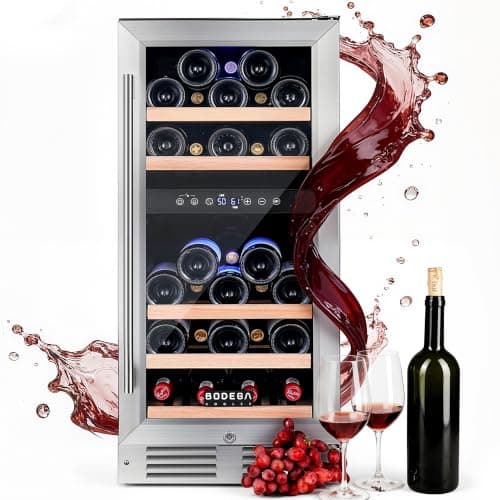
Thirty bottles, two independent zones and a 15-inch built-in width with front venting - the only pick under the cap that can be installed rather than just placed.
A wine fridge that has to sit flush in a cabinet run
$499.9918% offPrice as of November 22, 2026·#addisclosure
BODEGA 15-in 30-Bottle Dual-Zone Wine Fridge
Thirty bottles, two independent zones and a 15-inch built-in width with front venting - the only pick under the cap that can be installed rather than just placed.
Capacity
30 bottles (published)
Zones
Dual (published)
Width
15 in (published)
Install
Built-in or freestanding
Pros
Front venting and a published 15-inch width mean it fits a standard cabinet opening flush, which no cheaper pick here can do
Two independent zones at this price is the feature that stops a wine fridge being a compromise between red and white
Thirty bottles is enough to be storage rather than a serving fridge, which is the line most 12 and 18-bottle units sit below
15 inches is the standard undercounter module width, so it drops into the same opening as a beverage fridge or an ice maker if you change your mind later
Cons
Sits at the top of the cap, so a small price move takes it over - check the live figure and the as-of date before ordering
A built-in-capable cabinet is deeper than a freestanding one, which matters if it is actually going to stand free
The published thirty-bottle figure is for standard Bordeaux bottles; fat Burgundy bottles will cut it to around twenty
Dual zone means the compressor works harder, and the colder zone is the one that drifts first in a warm room
Best for: A wine fridge that has to sit flush in a cabinet run.
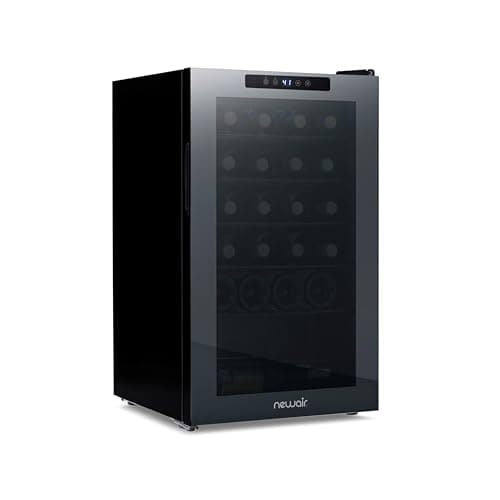
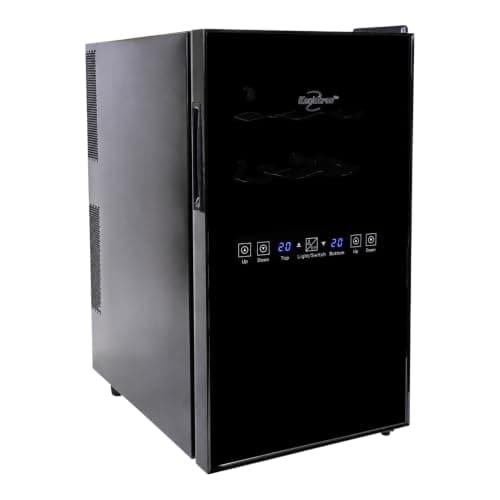
A published thermoelectric dual-zone 18-bottle cabinet - the only pick here with no compressor, and therefore the only silent one.
Cooling
Thermoelectric (published)
Capacity
18 bottles (published)
Zones
Dual (published)
Placement
Freestanding
Pros
No compressor means nothing cycles on in the middle of the night, which is the only reason to put a wine fridge in a room people sleep or watch television in
No vibration either, which is the one storage factor that genuinely matters for bottles held over years
Dual zone on a thermoelectric cabinet is unusual and useful
Koolatron has made thermoelectric coolers for decades, so this is core competence rather than a line extension
Cons
Thermoelectric cooling can only pull the cabinet a limited number of degrees below the room, so a warm room puts white-wine temperature out of reach
Eighteen bottles is well behind the 30 and 33-bottle picks at a similar price
Two modules sharing a limited heat budget means the cold zone drifts first
There is still a fan, so quiet is not the same as silent
Best for: A living room or bedroom where a compressor would be heard.
$169.9915% offPrice as of November 22, 2026·#addisclosure
Kismile 18-Bottle Freestanding Wine Cooler (1.7 cu ft)
Eighteen bottles in a 1.7 cubic foot freestanding cabinet at the lowest price here - a serving fridge that does not pretend to be more.
Capacity
18 bottles (published)
Volume
1.7 cu ft (published)
Zones
Single
Placement
Freestanding
Pros
The lowest price on this page with a published double-figure bottle count, which is the honest minimum for a wine fridge
Publishes both a bottle count and a cubic-foot volume, so you can sanity-check the capacity claim against the cabinet size
Small enough to sit at the end of a bar run or under a shelf without rearranging a room
Cheap enough to be the right way to find out whether you actually want a wine fridge
Cons
Eighteen bottles is a few weeks of drinking, not storage
Single zone, and at this price the temperature range is narrower than the bigger cabinets'
No lock, no published cooling type, no built-in capability
Light cabinet construction, so the door seal is the part most likely to be the weak point over years
Best for: The cheapest honest wine fridge with a real bottle count.
Skip this
The budget traps that look cheap and cost you twice. We'd skip these.
Building a freestanding wine fridge into a cabinet
This is the mistake that kills wine fridges, and it is entirely avoidable. A freestanding unit sheds its heat out of the back. Enclose it in a cabinet and that heat has nowhere to go, so the compressor runs continuously, the cabinet never reaches its set point, and the unit fails early - usually outside the warranty. Only a model that publishes front venting and a built-in rating can be installed flush. One pick on this page does; the other seven do not.
Single zone when you drink both reds and whites
A single-zone cabinet holds one temperature, and reds want 55 to 65 degrees while whites want 45 to 50. The usual compromise is to set a single zone around 55, which is slightly warm for a white and slightly cool for a big red. That is perfectly workable - but if you have the budget for dual zone under this cap, and three picks here do, take it rather than planning to live with the compromise.
Taking a published bottle count literally
Every capacity figure in this category assumes standard 750 ml Bordeaux bottles laid flat. Burgundy and champagne bottles are wider and shorter, so a published 30-bottle rack holds roughly twenty of them, and a cabinet of mixed shapes lands somewhere in between. If your collection is Burgundy-heavy, buy a size up and treat the number on the box as an upper bound.
A glass-door cabinet in direct sunlight
Glass doors make a wine fridge look like part of a bar, which is a good reason to want one. In a sunlit room they are the wrong choice twice over: the cabinet gains heat it then has to remove, and UV light is genuinely bad for wine over months. If the only spot available is by a window, buy a solid door or move the fridge.
How many bottles do you actually need?
Work backwards from how fast you drink rather than from how much you would like to own. A household that opens two bottles a week and buys by the case wants about twenty-four bottles of capacity - roughly three months of rotation, which is enough to always have something at the right temperature without turning the fridge into a cellar. Twelve bottles is a few weeks and will feel tight within a month.
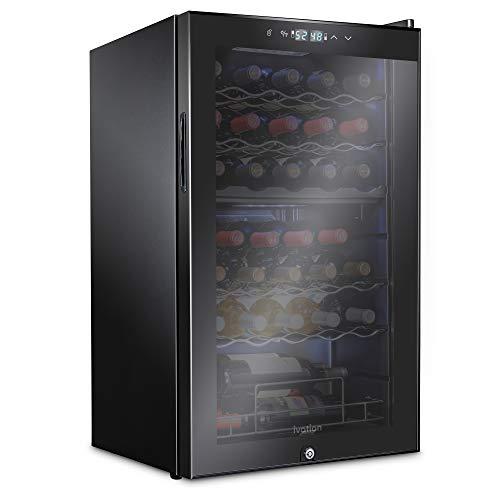
Above thirty bottles you are storing rather than serving, and the questions change: stability matters more than reach, vibration starts to count, and a lock stops being a gimmick. Under this cap, thirty-three bottles is the ceiling - the Bonnlo and Ivation both publish it. If you need more than that, you are above $500 and our uncapped wine fridge roundup is the page.
Dual zone: what it is actually for
A dual-zone cabinet is two cooled compartments in one box, each with its own thermostat. The point is not sophistication, it is that red and white serving temperatures are roughly ten to fifteen degrees apart and a single thermostat cannot hold both. Set the upper zone to 55 to 65 for reds and the lower to 45 to 50 for whites and sparkling, and every bottle in the cabinet is ready to pour.
Two caveats worth knowing. The cold zone always works harder, so it is the one that drifts first in a warm room - that applies to compressor and thermoelectric cabinets alike. And dual zone splits your capacity: a 30-bottle dual-zone cabinet is roughly fifteen bottles of each, which is not the same as thirty bottles of whatever you want. Our dual-zone wine fridge roundup goes deeper on the trade.
Built-in or freestanding, and why it is not optional
This is the most expensive thing to get wrong under this cap. A freestanding wine fridge vents its heat out of the back and needs clear air behind and above it. A built-in unit vents through a grille at the front, which is what lets it sit flush in a cabinet run with no gap. The two look nearly identical in a listing photograph and they are not interchangeable.
If the fridge is going into a cabinet opening, you need a published built-in rating and front venting - under this cap that means the BODEGA 15-inch, and 15 inches is the standard undercounter module width, so the same opening will later take a beverage fridge or an ice maker. If the fridge is standing free at the end of a bar, any pick here works and you can spend the money on bottles instead. Our undercounter wine fridge roundup covers installation in detail.
Our verdict
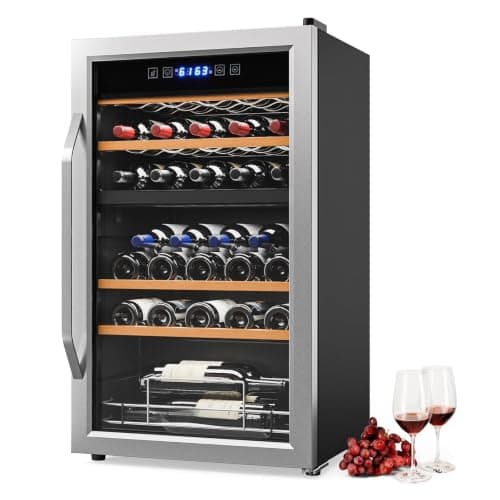
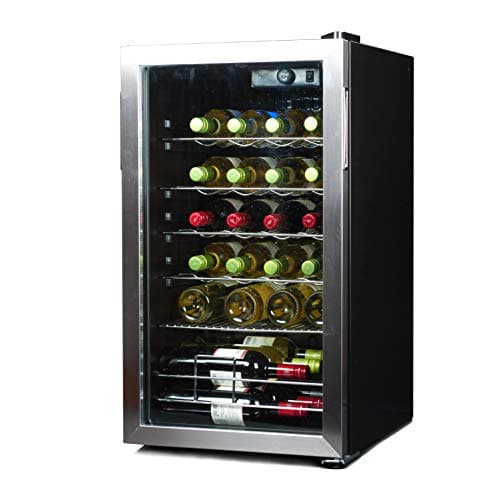
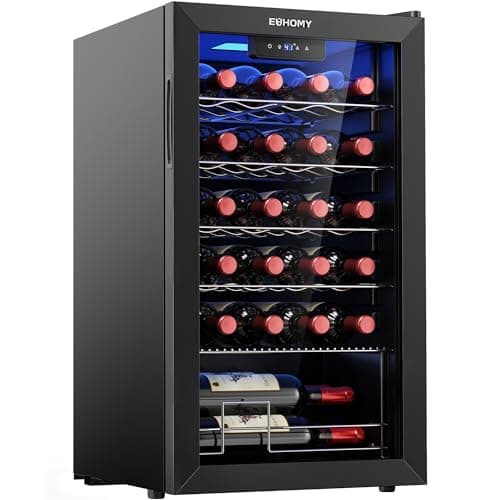
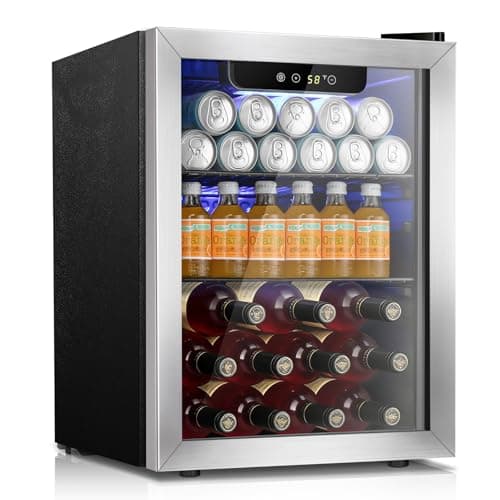
Buy the BODEGA 15-inch dual-zone if the fridge is going into a cabinet, because nothing cheaper under this cap can be installed. Buy the Bonnlo 33-bottle if you want the most wine per dollar, the Ivation 33-bottle if you want the same capacity with a lock and a bigger brand behind it, and the BLACK+DECKER 26-bottle if a single zone is fine and you would rather spend under $300. Buy the Koolatron only if silence is the requirement, the EUHOMY 25-bottle if the glass door matters more than the zone count, and the Kismile if you are finding out whether you want one at all.
Two related pages worth reading before you order. If the room the fridge is going in gets warm, garage-rated wine fridges are built for wide ambient swings and most cabinets here are not. And if what you actually want is cans rather than bottles, a beverage fridge under $500 holds far more drinks for the same money.
Frequently asked questions
What is the best wine fridge under $500?+
The BODEGA 15-inch 30-bottle dual-zone, because it is the only pick under the cap that publishes thirty bottles, two independent zones and a built-in rating with front venting. The built-in capability is the thing that genuinely cannot be bought cheaper - everything else at this price is freestanding. If you only need capacity, the Bonnlo 33-bottle dual-zone costs less and holds more.
How many bottles should a wine fridge hold?+
About twenty-four if you open roughly two bottles a week and buy by the case - that is three months of rotation. Twelve bottles is a few weeks and feels tight fast. Above thirty you are storing rather than serving, which changes the priorities: stability, low vibration and a lock all start to matter more than reach.
Can a freestanding wine fridge be built into a cabinet?+
No. A freestanding unit vents its heat out of the back, so enclosing it leaves that heat nowhere to go: the compressor runs constantly, the cabinet never holds its set point, and the unit fails early. Only a model that publishes front venting and a built-in rating can sit flush in a cabinet run.
Is a dual zone wine fridge worth it?+
If you drink both reds and whites, yes - the serving temperatures are roughly ten to fifteen degrees apart and a single thermostat cannot hold both. Three picks under this cap are dual zone. The trade is that dual zone splits your capacity roughly in half between the two zones, so a 30-bottle dual-zone cabinet is about fifteen bottles of each.
What temperature should a wine fridge be set to?+
Reds roughly 55 to 65 degrees Fahrenheit, whites roughly 45 to 50, sparkling at the cold end of the white range. On a single-zone cabinet the usual compromise is a single setting around 55 degrees, which is slightly warm for a white and slightly cool for a heavy red and perfectly drinkable for either after a few minutes in the glass.
Do wine fridge bottle counts include Burgundy bottles?+
No - every published capacity in this category assumes standard 750 ml Bordeaux bottles laid flat. Burgundy and champagne bottles are wider and shorter, so a published 30-bottle rack holds roughly twenty of them. If your collection is Burgundy-heavy, treat the number on the box as an upper bound and buy a size up.
Prices and availability shown here come from Amazon's live data and change often; we re-verify them regularly. Bar Bumper is an Amazon Associate and earns a commission on qualifying purchases at no extra cost to you. Read our full disclosure.