A cold cobbler shaker can seize shut. Boston tins never do. Five shakers ranked on seal, capacity and whether they are pleasant to hold at -4°C.
Updated October 2026 · By Stephen V.
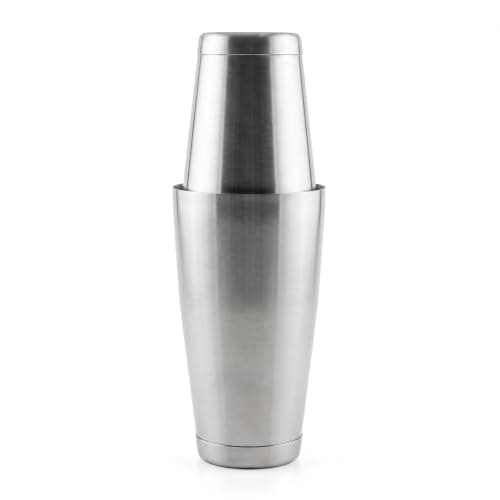
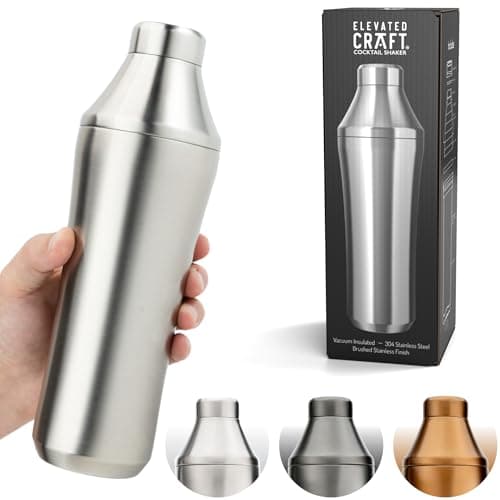
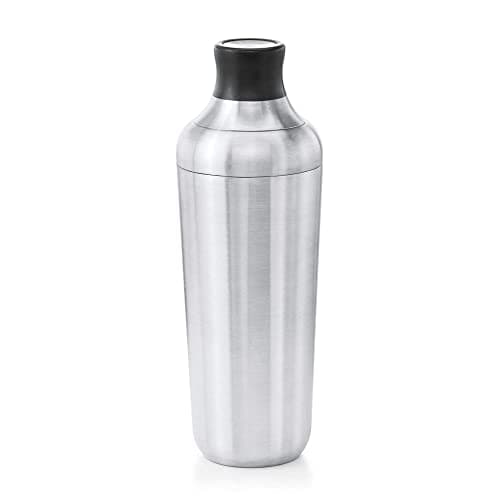
The Barfly two-tin set is the cocktail shaker to buy for a home bar. Two weighted tins in 18 oz and 28 oz seal against each other, break apart with one tap, hold enough for two drinks at once, and physically cannot jam the way a cold cobbler cap does. It needs a separate Hawthorne strainer. If you would rather not hold frozen metal, the Elevated Craft insulated hybrid is the pick; if you want a self-contained three-piece shaker with the strainer built in, the OXO Steel is the one; and the Mixology & Craft set is the best way to buy a shaker and the rest of the tools together.
This is the one genuinely consequential decision in bar gear, because the shaker is the tool you touch on every drink. The two designs behave differently in ways that only show up once the metal is cold:
Cobbler (three-piece) — tin, built-in strainer, cap. Self-contained and beginner-friendly. The cap seals by friction, and cold metal contracts, so a properly chilled cobbler shaker can stick shut hard enough that people run it under hot water to open it.
Boston (two-piece) — two tins, or a tin and a mixing glass, sealed against each other at a slight angle and broken with a tap at the join. What bars use. Faster, bigger, never seizes, and needs a separate strainer.
Insulated hybrid — a vacuum-walled shaker that keeps your hands off the cold and reduces melt. More expensive, heavier, and genuinely nicer to use.
We have not tested these shakers. The ranking is built from published capacities, construction and finish, seal design, and owner-review consensus reported as other people's experience — see how we pick. Prices come live from Amazon with the date we verified them.
The short answer
In a hurry? These are the picks we'd buy. Prices are live; tap a card below for the full reasoning.
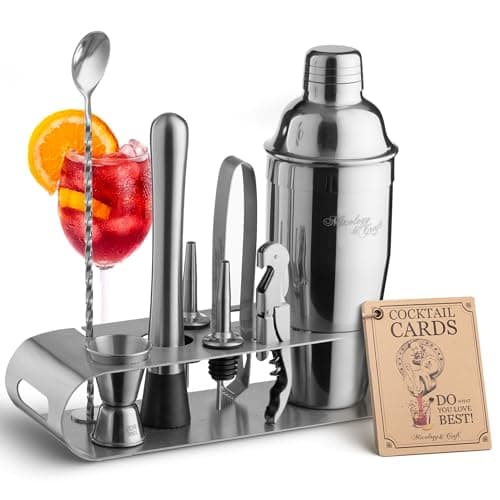
Mixology & Craft Cocktail Shaker Set with Metal Stand
A shaker plus the strainer, jigger, spoon and muddler on a stand, for roughly what a good shaker and jigger cost separately.
Type
Shaker + tool set
Includes
Shaker, strainer, jigger, spoon, muddler, stand
Brand
Mixology & Craft
Pros
Covers every tool you actually need in one purchase
The stand keeps tools visible and reachable rather than in a drawer
Best value route into a working bar
Cons
The shaker is not as good as a dedicated Barfly or insulated set
Kits economise somewhere, usually the jigger graduations
Stand takes counter space
Best for: A first bar that needs everything, not just a shaker.
Skip this
The budget traps that look cheap and cost you twice. We'd skip these.
Glass-bodied cocktail shakers
A glass shaker is a glass object you then shake hard while it is slippery with condensation. They break, and they break while full of ice. Glass belongs in a mixing glass for stirred drinks, not in a shaker.
Plastic shakers with screw-on lids
Plastic insulates, which is exactly wrong — you want the tin to chill fast so you can feel when the drink is ready. Screw threads also trap residue and strip. Stainless is cheaper than most plastic shakers anyway.
How to choose (and what to skip)
Boston or cobbler is the only real decision
Boston tins seal by friction at an angle and release with a firm tap at the join. They never seize, hold more, chill faster, and are what every bar uses. Cobbler shakers have a built-in strainer and a cap, which makes them self-contained but means a properly chilled shaker can stick hard. If you expect to make more than a couple of drinks at a time, buy tins and a strainer.
Capacity: 28 oz is the useful number
A single cocktail with ice occupies roughly 10 to 12 oz of shaker volume. An 18 oz shaker therefore makes one drink comfortably; a 28 oz shaker makes two. If you ever make drinks for two people at once, the larger tin is the one that matters, and the small tin becomes the lid.
Weighted tins seal better
A weighted bottom tin has a thicker base, which gives the whole shaker more mass and a more reliable seal, and makes it less likely to deform if dropped. It is a small price difference and the clearest marker of a professional-grade tin over a thin generic one.
Insulated shakers: what you gain and lose
You gain comfortable hands and less dilution. You lose the frosting cue — experienced bartenders judge a shake by feeling the outside of the tin ice over, which an insulated wall prevents. For a home bar the comfort is worth more than the cue, especially if you make several drinks in a row.
Do not forget the strainer
Boston tins need a Hawthorne strainer — the flat one with a coiled spring around the edge — to hold back ice and fruit. It costs very little and the shaker is unusable without it. A fine-mesh strainer for double-straining is optional and worth having if you shake anything with citrus pulp or egg white.
Shaking versus stirring, and why it changes your buying list
Drinks with citrus, cream, egg or fruit get shaken: shaking aerates, chills fast and integrates ingredients that will not combine otherwise. Drinks made only of spirits — a Manhattan, a Negroni, an old fashioned, a martini if you are traditional about it — get stirred, because shaking clouds them and bruises the texture.
That means a shaker alone does not cover a home bar. You also want a mixing glass and a bar spoon, which together cost less than most shakers. If the drinks you actually make are mostly stirred, buy a good mixing glass first and a modest shaker second — the reverse of how most kits are sold.
How to use Boston tins without spilling
The technique takes about three drinks to learn. Fill the large tin with ingredients and ice, place the small tin on top at a slight angle rather than straight down, and press firmly — the seal comes from the angle, not from force. Shake with the small tin pointing away from you, holding both. To open, find the widest point of the join, hold the large tin and strike the heel of your hand against the rim of the small one. It pops.
If a cobbler shaker does seize, do not run it under hot water with the drink inside — warm the cap only, or tap the rim of the cap sideways on a hard edge. The reason tins are recommended is precisely that this problem does not exist with them.
Care, and the one thing that ruins a shaker
Wash by hand and dry immediately. Dishwashers are hard on stainless finishes and will dull a polished tin, and standing water in a nested pair of tins leaves water marks and eventually corrosion at the seam. Nothing here is fragile, but the finish is what you paid for on a good set.
And the thing that genuinely ruins a shaken drink is not the shaker: it is the ice. Small, wet, half-melted freezer-tray ice waters a drink down before you have finished shaking it. Large, hard, dry cubes are what let you shake hard and long enough to properly chill and aerate. If your cocktails taste thin, the ice is a more likely culprit than the shaker.
Frequently asked questions
Boston or cobbler shaker: which is better?+
Boston tins, for anyone making more than one or two drinks at a time. They seal reliably, never seize shut, hold more and chill faster — which is why bars use them. Cobbler shakers have the strainer built in and are simpler for a beginner, but a properly chilled cobbler cap can stick hard.
What size cocktail shaker should I buy?+
A 28 oz shaker, or a tin set with an 18 oz and a 28 oz. One cocktail plus ice occupies roughly 10 to 12 oz of volume, so 28 oz makes two drinks at once while 18 oz makes one. The smaller tin doubles as the lid in a Boston set.
Why does my cocktail shaker get stuck?+
Cold metal contracts and the friction seal tightens, which is a known behaviour of cobbler-style shakers rather than a defect. Tap the rim of the cap sideways against a hard edge, or warm only the cap. Boston tins do not have this problem, which is the main practical reason to prefer them.
Are insulated cocktail shakers worth it?+
If you make several drinks in a row, yes — your hands stay comfortable and less ice melts into the drink. The trade-off is cost and that you lose the frosting cue, since you cannot feel the outside ice over. For most home bars the comfort wins.
Do I need a separate strainer?+
With Boston tins, yes — a Hawthorne strainer, the flat one with the coiled spring. It is inexpensive and the tins are unusable without it. A cobbler shaker has a strainer built into the lid. A fine-mesh strainer for double-straining is optional but useful for citrus pulp and egg white.
Prices and availability shown here come from Amazon's live data and change often; we re-verify them regularly. Bar Bumper is an Amazon Associate and earns a commission on qualifying purchases at no extra cost to you. Read our full disclosure.