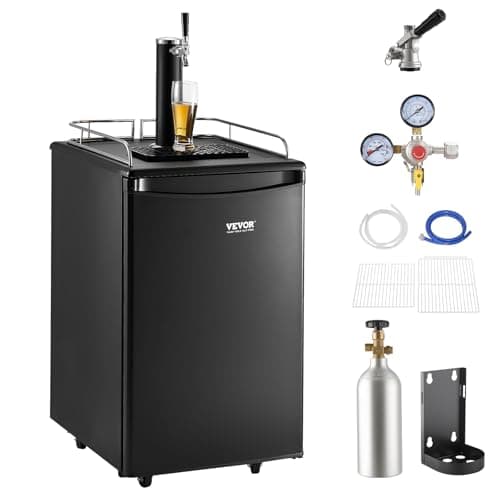
Draft beer at home is genuinely better beer. Whether it is worth it depends entirely on whether you can finish a keg before it declines.
Updated October 2026 · By Stephen V.
A kegerator is worth it if two or more people in the house drink beer regularly, and not worth it if beer is occasional. The deciding number is not the purchase price — it is whether you can finish a keg within the four to eight weeks it stays good after tapping.
A half-barrel keg is roughly 165 pints. If that takes you four months, the last half of the keg is beer past its best, and the per-pint saving that justified the purchase evaporates. If it takes you six weeks, the economics work and you get better beer the whole time.
The short answer
In a hurry? These are the picks we'd buy. Prices are live; tap a card below for the full reasoning.
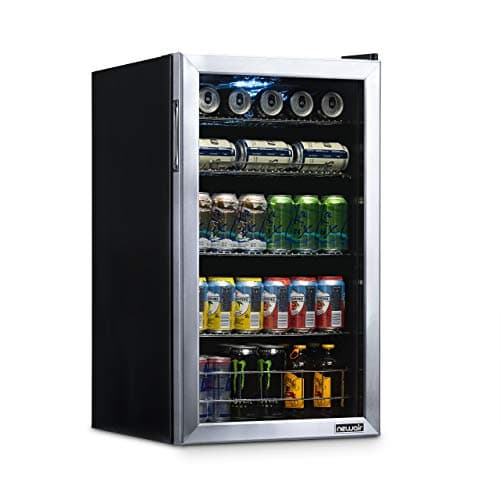
126 cans properly cold behind a glass door — the appliance to buy instead if the cleaning commitment gives you pause.
Capacity
Up to 126 cans
Maintenance
Wipe it out
Variety
Whatever you like
Pros
No lines, no CO2, no cleaning schedule
Every beer you feel like rather than one
Considerably cheaper
Cons
Canned beer rather than draft
Freestanding — needs clearance
Published can counts are optimistic
Best for: Variety, no maintenance, lower cost.
The case for
It is better beer. Draft beer dispensed under CO2 has not been pasteurised the way much canned beer has, has not sat on a shelf under light, and arrives at the right temperature and carbonation. This is the real reason to buy a kegerator, and it is not a marginal difference.
It is cheaper per pint, if you finish the keg. Buying a half-barrel of a beer you like generally works out below the same beer in cans. The saving is real rather than dramatic, and it is only realised on the pints you actually drink while the keg is good.
It is the centrepiece of a bar. A tap — particularly one through the front of a built bar — is the single thing that makes a home bar read as a bar rather than a cabinet with bottles. That is a legitimate reason to buy one, and worth being honest about.
The case against
A tapped keg has a clock on it. Four to eight weeks depending on the beer and how well you manage temperature and pressure. Much better than an opened bottle, because it is never exposed to air, but it does decline. Size the keg to your drinking rate: a sixth-barrel is about 55 pints, a quarter-barrel about 82.
Line cleaning is not optional. Beer lines need cleaning at every keg change with a pump kit and proper caustic cleaner, not a water rinse. Neglected lines grow biofilm, the beer turns sour, and rinsing will not rescue it. This is the ongoing commitment that distinguishes a kegerator from every other bar appliance, and the main reason they end up unused.
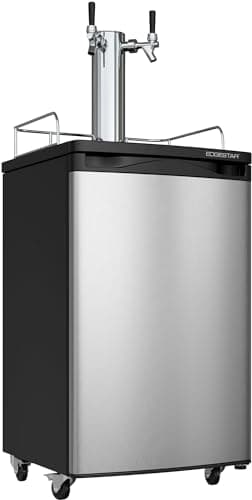
You are limited to one or two beers at a time. A fridge full of cans offers variety; a kegerator offers one beer, well. A dual-tap unit gives you two, at the cost of twice the cleaning. If variety matters to you more than quality, a beverage fridge is simply the better appliance.
CO2 is an errand. The cylinder needs exchanging or refilling locally. Easy, but it is a thing you have to do, and running out mid-keg is both annoying and bad for the beer left in it.
What a good pour actually depends on
Three variables, and new owners usually blame the hardware when one of them is off. Temperature: most beer dispenses best around 36 to 38°F, and warm beer foams. Pressure: roughly 10 to 12 psi for typical ales and lagers. Line length: short lines deliver beer too fast and foam, which is why a tower on a lid and a tap through a bar front behave differently and need different pressures.
Add one more: a keg that has just been moved needs several hours cold and still before it pours cleanly. Almost every "my new kegerator only makes foam" problem is one of those four.
The alternative worth considering
If you have read the cleaning paragraph and hesitated, buy a beverage fridge instead. It costs less, needs no maintenance beyond wiping it out, gives you every beer you feel like rather than one, and is the appliance a home bar opens daily. A kegerator is a better experience for a committed beer drinker and a worse appliance for everyone else, and there is no shame in the second answer.
If you do want draft, the one upgrade worth planning for is a conversion refrigerator rather than a packaged kegerator, so the taps can come through the front of a bar with the keg hidden behind it. Budget honestly: a cylinder, a dual-gauge regulator, lines, a coupler, a shank and a tap add up, and a well-specified conversion can cost more than a complete unit.
Frequently asked questions
Is a kegerator cheaper than buying cans?+
Per pint, generally yes — a half-barrel of a beer you like usually works out below the same beer in cans. The saving is real but modest, and it only applies to the pints you drink while the keg is still good, which is four to eight weeks after tapping.
How long does a keg last in a kegerator?+
Roughly four to eight weeks once tapped, depending on the beer and how well temperature and CO2 pressure are managed. It keeps far longer than an opened bottle because it is never exposed to air, but it does decline. Size the keg to what you can finish in that window.
How much work is a kegerator?+
The main commitment is cleaning the beer lines at every keg change with a pump kit and proper caustic cleaner — not a water rinse. Neglected lines grow biofilm that sours the beer permanently. Beyond that, exchanging the CO2 cylinder and keeping the temperature steady.
Should I buy a kegerator or a beverage fridge?+
A kegerator if two or more people drink beer regularly and you want genuinely better beer. A beverage fridge otherwise: it costs less, needs no maintenance, holds whatever you feel like rather than one beer, and is the appliance a home bar opens daily.
Prices and availability shown here come from Amazon's live data and change often; we re-verify them regularly. Bar Bumper is an Amazon Associate and earns a commission on qualifying purchases at no extra cost to you. Read our full disclosure.