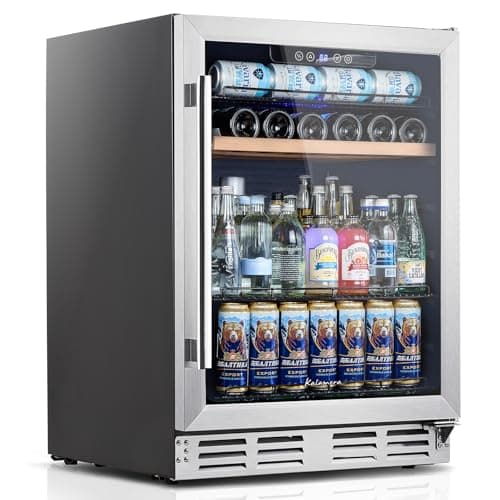
A wine fridge under the counter has to vent forwards and fit a standard opening. Five built-in coolers, from a 15-inch cutout to a 52-bottle dual zone.
Updated October 2026 · By Stephen V.
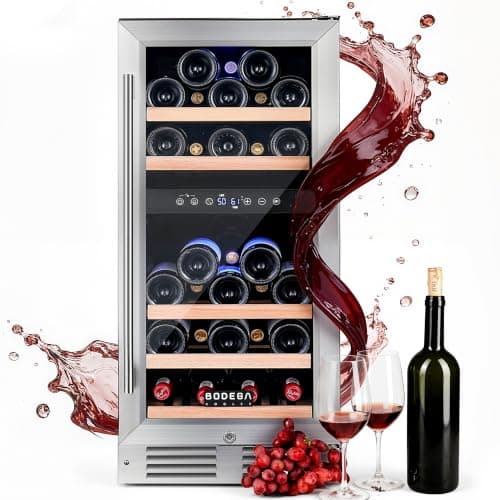
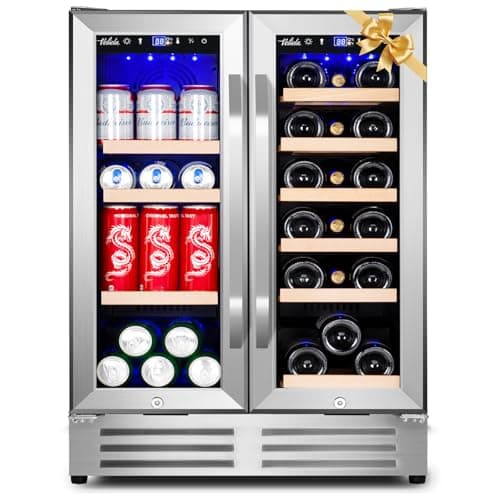
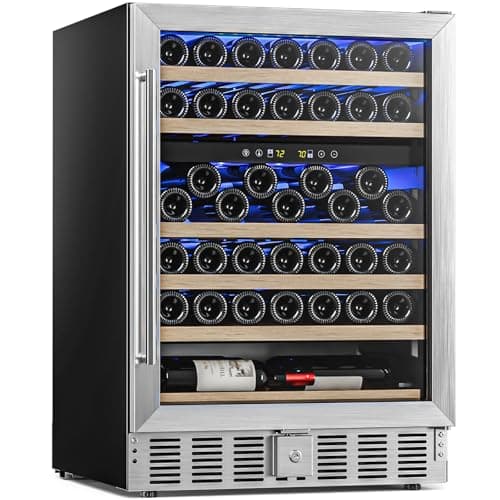
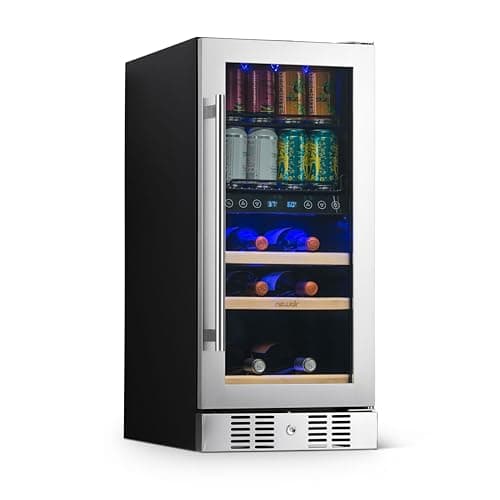
The BODEGA 15-inch dual-zone is the best wine fridge under the counter for most home bars: it fits the standard 15-inch cabinet opening, vents out of the front, holds 30 bottles and runs two temperature zones. For a 24-inch opening the Velieta 24-inch dual-zone is the pick, the Antarctic Star 52-bottle is the one to buy if bottle count is the priority, the NewAir 15-inch dual-zone handles both wine and cans, and the Kalamera 24-inch is the mixed beverage-and-wine option.
Everything about buying a wine fridge undercounter comes back to one spec. It must be a built-in, front-venting unit. A freestanding wine cooler exhausts heat out of the back and needs several inches of air behind and above; slide one under a counter or into a cabinet and the compressor never stops, the cabinet never holds its set temperature, and the unit fails early. A built-in unit exhausts through the front toe grille and is designed to sit flush with zero clearance on three sides.
After venting, two numbers decide the shortlist. The cabinet opening — 15 inches and 24 inches are the standard widths, and a 15-inch unit will not fill a 24-inch gap in any tidy way. And zones: a single-zone cooler holds one temperature, which is fine if you drink mostly reds or mostly whites. A dual-zone holds two, which is what you want if both live in the same cabinet. Our guide to wine fridge temperature covers which numbers to set.
We have not installed these units. The ranking is built from published venting type, external and cutout dimensions, rated bottle capacity, zone configuration, temperature range and shelf type, plus owner-review consensus reported as other people's experience — see how we pick. Prices come live from Amazon with the date we verified them.
The short answer
In a hurry? These are the picks we'd buy. Prices are live; tap a card below for the full reasoning.
Kalamera's 24-inch undercounter cooler takes bottles and cans and comes from the most established name on this page.
Width
24 in
Holds
Wine + cans
Install
Built-in / undercounter
Brand
Kalamera
Pros
The best-known brand here, which matters for parts and service
Flexible interior for mixed bottles and cans
Standard 24-inch cabinet width
Cons
Shared compartment is a compromise versus a true dual zone
24-inch opening required
Dearer than the 15-inch options
Best for: A built-in bar where long-term support matters.
Skip this
The budget traps that look cheap and cost you twice. We'd skip these.
A freestanding wine cooler installed under a counter
This is the single most common failure in the category. A rear-venting cooler boxed into a cabinet cannot reject heat, so it runs continuously, drifts above its set temperature and fails early — and because wine coolers hold a narrow temperature band, the drift shows up as spoiled wine before it shows up as a dead appliance. Check the listing says built-in or front-venting.
Thermoelectric coolers for an under-counter installation
Thermoelectric units are quiet and have no compressor, which sounds ideal under a bar. They are also weak at rejecting heat and depend heavily on ambient temperature, so in an enclosed cabinet they cannot hold a set point. They are a good choice freestanding in a cool room and a poor one built in.
How to choose (and what to skip)
Front venting is the whole decision
Confirm the listing says built-in, front-venting, or labeled for both. Everything else on this page is a preference; this is a requirement. A unit labeled for both freestanding and built-in use is the flexible choice if the bar is still being planned.
Measure the cutout, then subtract nothing
Width, height, depth, and the location of the power outlet. 15 inches and 24 inches are the standard widths and roughly 34 inches the standard height. Manufacturers quote a required cutout size separately from the cabinet's own dimensions — use the cutout figure, and do not plan to shave a cabinet rail to make it fit.
Single zone or dual zone
Single zone holds one temperature throughout: correct if you drink mostly one color, and it gives you more usable bottle space for the width. Dual zone holds two, typically around 40 to 50 F for whites and sparkling and 55 to 65 F for reds. If both live in the same cabinet, dual zone is the right answer even though it costs capacity.
Read bottle counts as a best case
Rated capacities assume standard Bordeaux bottles stacked to the shelves' design. Burgundy and champagne bottles are fatter and shorter, and a mixed cellar loses roughly a fifth to a quarter of the rated count. If the collection is varied, buy a size up or expect the real number to be lower.
Check shelf type and whether shelves slide
Wire shelves hold more bottles per inch; wooden or trimmed shelves look better behind glass and often slide out, which makes reaching the back row practical. In an under-counter unit you are reaching down and in, so sliding shelves are worth more here than they are in a tall freestanding cooler.
Wine fridge under cabinet versus under counter
The two phrases describe slightly different installations and the same requirement. Under-counter means set into a run of base cabinets with a worktop over it, flush with the cabinet faces. Under-cabinet usually means standing on the floor beneath wall cabinets, which is effectively a freestanding position with limited clearance above. The first demands a front-venting built-in unit. The second will tolerate a freestanding unit if there are a few inches of air behind and above it — measure, because that clearance is often smaller than it looks.
If there is any chance the fridge ends up truly enclosed, buy the built-in unit. It costs a little more and it removes the failure mode entirely.
How cold should an undercounter wine fridge be?
Reds want roughly 55 to 65 F, whites and rosés roughly 45 to 50, sparkling around 40 to 45. Long-term storage for anything is best in the mid-50s with as little fluctuation as possible — stability matters more than hitting a precise number. That is why a dual-zone unit is worth the lost capacity if you keep both reds and whites in the same cabinet. The full detail, including what to do with an opened bottle, is on our wine fridge temperature guide.
15 inches is enough for most people
Thirty bottles under a counter is about two and a half cases. For a household that drinks a bottle or two a week and likes a small rotating selection, that is comfortably more than enough, and the 15-inch opening is far easier to find in an existing kitchen or bar run. Twenty-four inches is for a collection, for a household that buys by the case, or for a bar that also needs cans in the same appliance.
Planning it into a bar run
In a built-in home bar the usual run is a wine fridge, a beverage fridge and an ice maker, with storage filling whatever is left. Two practical points: put the outlet inside the cabinet but not directly behind the unit, and keep the toe grille clear of kick boards and rugs. The ice maker is the appliance with the hard plumbing requirement, so decide its drain route before the cabinetry goes in.
Noise under a counter you sit at
Compressor coolers hum, and the hum is more noticeable at a bar counter where people are talking than it is across a kitchen. The cheapest units are the loudest. If the bar is in a quiet room and the stools are right above the fridge, paying up a tier for a quieter compressor is money better spent than on extra bottle capacity you will not use.
Frequently asked questions
Can a wine fridge go under the counter?+
Yes, as long as it is a built-in, front-venting unit. Those exhaust heat through the toe grille at the front and are designed to sit flush in a cabinet opening with no clearance. A freestanding wine cooler vents from the back and will overheat, drift off temperature and fail early if it is boxed in.
What is the difference between a built-in and a freestanding wine fridge?+
Where the heat goes. Built-in units vent forwards through a front grille so they can be surrounded by cabinetry; freestanding units vent backwards and need several inches of air behind and above. Some units are labeled for both, which is the flexible choice if you are not sure yet where the fridge will live.
What size opening does an undercounter wine fridge need?+
The standard widths are 15 inches and 24 inches, with a height around 34 inches. Use the manufacturer's stated cutout dimensions rather than the cabinet's nominal size, and check where the power outlet sits — behind the unit is the wrong place for it.
How many bottles does a 15-inch wine fridge hold?+
Around 30 standard Bordeaux bottles, which is about two and a half cases. Expect roughly a fifth less with a mixed collection, since Burgundy and champagne bottles are fatter and do not nest to the shelf design. For most households drinking a bottle or two a week, 30 is more than enough.
Do I need a dual-zone undercounter wine fridge?+
Only if you keep both reds and whites in it. Reds want roughly 55 to 65 F and whites 45 to 50, and a single-zone cooler can only hold one of those. A single zone set around the mid-50s is a reasonable compromise for long-term storage and gives you more usable capacity for the same cabinet width.
Are thermoelectric wine coolers suitable for built-in installation?+
No. They are quiet and have no compressor, but they reject heat poorly and track the ambient temperature, so in an enclosed cabinet they cannot hold a set point. Thermoelectric units are a good freestanding choice in a cool room and a poor built-in one.
Prices and availability shown here come from Amazon's live data and change often; we re-verify them regularly. Bar Bumper is an Amazon Associate and earns a commission on qualifying purchases at no extra cost to you. Read our full disclosure.