Written for a first wine fridge, not a cellar. Six affordable coolers, and the one specification that decides whether a cheap one works in your room at all.
Updated October 2026 · By Stephen V.
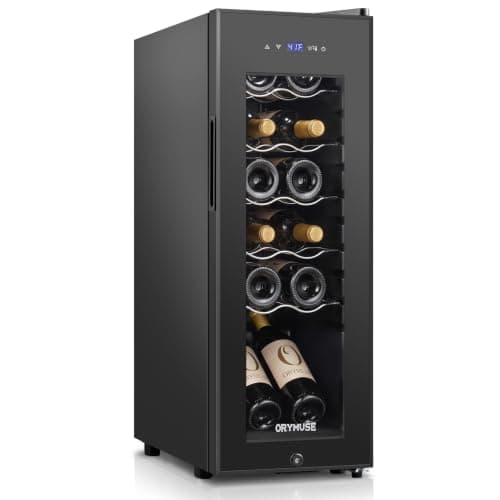
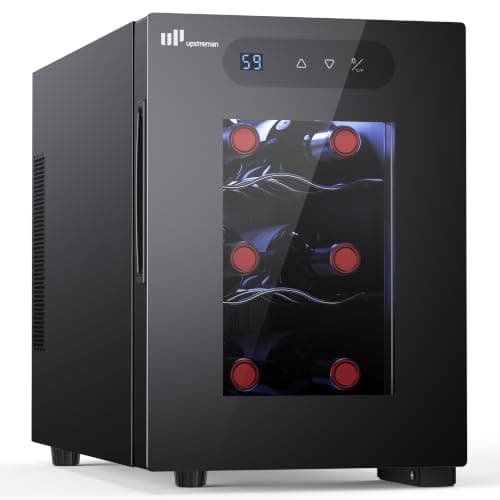
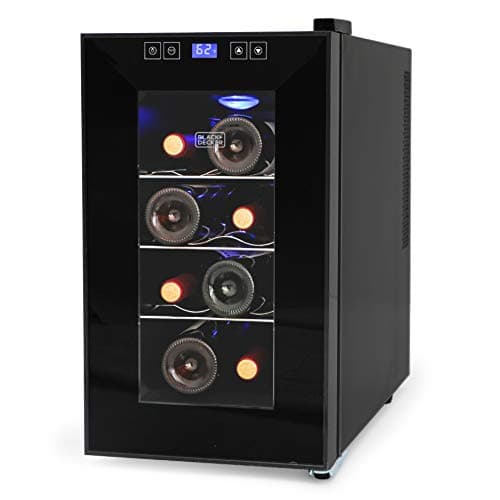
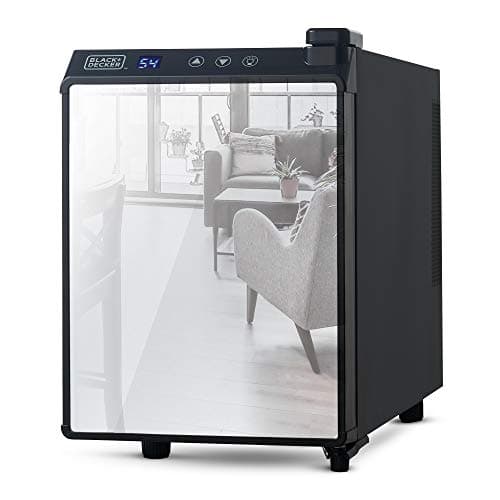
The best cheap wine fridge is the Kismile 18-bottle: it holds three times what the small countertop coolers do for a similar price, and it is a freestanding compressor unit, which means it will still hold temperature in a room that gets warm in summer. If you only need a few bottles chilled, the Upstreman 6-bottle and the BLACK+DECKER models are the quiet countertop options; the ORYMUSE is the narrow compressor pick; and the EUHOMY is the cheapest way in if you want cans as well as bottles.
There is one specification in this category that matters more than price, capacity or looks, and most listings bury it. A thermoelectric cooler can only pull the temperature down about 20°F below the room it sits in. In a 72°F room that means roughly 52°F at best, which is fine for whites. In a 78°F room in August it means about 58°F, which is not a wine fridge any more — it is a cupboard with a fan.
A compressor cooler works like a normal refrigerator, so it reaches its set temperature regardless of the room and holds it through a heatwave. It costs a little more, it hums, and it vibrates very slightly. For a kitchen, a garage, a conservatory or anywhere that gets above about 75°F, it is the only sensible choice. For a cool interior room and a handful of bottles drunk within weeks, thermoelectric is quieter and cheaper and perfectly adequate.
We have not temperature-logged these units. The ranking is built from published cooling type, capacity, temperature ranges, dimensions and installation type, plus owner-review consensus reported as other people's experience — see how we pick. Prices come live from Amazon with the date we verified them.
The short answer
In a hurry? These are the picks we'd buy. Prices are live; tap a card below for the full reasoning.
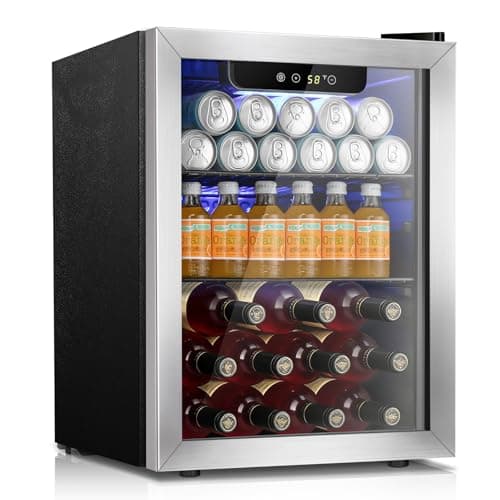
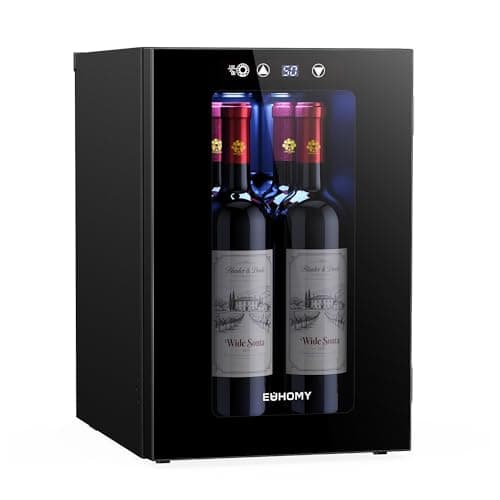
EUHOMY 18L Wine & Can Mini Fridge (4 bottle / 6 can)
An 18-liter mini fridge that takes four bottles or six cans with a 40 to 61F range — the cheapest unit here, and the most flexible about what goes in it.
EUHOMY 18L Wine & Can Mini Fridge (4 bottle / 6 can)
An 18-liter mini fridge that takes four bottles or six cans with a 40 to 61F range — the cheapest unit here, and the most flexible about what goes in it.
Capacity
4 bottles / 6 cans
Volume
18 L
Range
40-61F
Type
Countertop
Pros
The lowest price on this page
Takes cans as well as bottles, which no dedicated wine rack does
Wide temperature range covers whites, reds and soft drinks
Small enough for a bedroom, office or bar cart shelf
Cons
Four bottles is a very small supply
Thermoelectric, so the room temperature sets the floor
Not really a wine fridge — a mini fridge that suits wine
Best for: Wine and cans in the smallest, cheapest box.
Skip this
The budget traps that look cheap and cost you twice. We'd skip these.
A thermoelectric cooler for a garage or a warm room
This is the most common cheap wine fridge mistake and it produces the angriest reviews. Thermoelectric cooling only pulls about 20°F below the surrounding air, so a unit that holds a perfect 52°F in a cool hallway in March will sit at 58°F or higher in the same spot in August — and in a garage it will barely cool at all. If the room goes above about 75°F at any point in the year, buy a compressor unit and ignore the price difference.
A freestanding unit pushed into a cabinet recess
Freestanding coolers vent their heat out of the back or sides and need several inches of clearance to do it. Slide one into a tight cabinet opening and the heat has nowhere to go, so the unit runs constantly, fails to reach temperature and shortens its own life. Built-in or front-venting models exist specifically for this and cost more — see our <a href="/bar-fridges/best-undercounter-wine-fridge">undercounter wine fridge roundup</a> for those.
How to choose (and what to skip)
Decide thermoelectric or compressor first
Measure the warmest the room gets across the year, not today. Below about 75F, thermoelectric is quieter, cheaper and vibration-free, which genuinely suits wine. Above that, or anywhere with a summer, buy a compressor unit — it will reach its set point regardless of the room. This decision matters more than bottle count, brand or finish.
Buy more capacity than you think you need
A 6-bottle cooler sounds adequate and fills up the first time you buy a case. The jump from 6 bottles to 18 costs surprisingly little at this end of the market, which is exactly why our top pick is the 18-bottle unit — it is the cheapest route to a fridge that is still useful in a year.
Check the bottle count against real bottles
Published capacities assume standard 750 ml Bordeaux bottles. Burgundy and Champagne bottles are wider, so a rack rated for 18 might take 12 of them. If your drinking leans toward Champagne, Burgundy or anything in a heavy bottle, discount the stated capacity by around a quarter and buy accordingly.
Confirm freestanding versus built-in before you measure a gap
Freestanding units vent out the back and sides and need clearance. Built-in units vent through the front and can sit flush in a cabinet run. Almost every cheap wine fridge is freestanding, so if your plan involves a cabinet recess, that plan needs a different and more expensive product.
Ignore dual zone at this price
Dual-zone cooling — separate temperatures for reds and whites — is a genuinely useful feature and it does not exist in a working form at the bottom of the market. A cheap single-zone unit set around 52 to 55F is a reasonable compromise for both; a cheap dual-zone unit usually means two compartments that cannot hold distinct temperatures anyway. Our <a href="/guides/wine-fridge-temperature">wine fridge temperature guide</a> covers what to set it to.
Why thermoelectric coolers fail in summer
A thermoelectric cooler uses a Peltier element — a solid-state device that moves heat from one side to the other when current flows through it. It has no compressor, no refrigerant and no moving parts beyond a small fan, which is why these units are silent, vibration-free and cheap. The limitation is physics rather than quality: a Peltier element can only maintain a fixed difference between its two sides, so the cooler's floor temperature tracks the room. Roughly 20°F below ambient is the realistic figure. That is why the same unit is excellent in a cool interior room and useless in a garage, and why cheap wine fridge reviews are so wildly split.
What temperature a cheap fridge should hold
If you are storing wine for months, the target is around 55°F and stability matters more than the exact number — swings do more harm than being a few degrees off. If you are chilling wine to drink this month, serving temperatures are what count: 45 to 50°F for whites, 55 to 60°F for lighter reds, and 60 to 65°F for fuller reds. A single-zone budget unit set around 52 to 55°F is a workable compromise — whites come out slightly warm and reds slightly cool, both of which correct within minutes in the glass.
Where the cheap end stops being false economy
At about 18 bottles with a compressor. Below that, you are paying a surprisingly high price per bottle for a unit that will be full within a month of buying a case, and that will stop holding temperature every summer. The 18-bottle compressor unit costs roughly what an 8-bottle thermoelectric one does and solves both problems. That is the single most useful thing to know before buying a first wine fridge, and it is why the capacity math — not the brand — decides our top pick.
Vibration, and whether it matters
Thermoelectric units are completely still and compressor units vibrate slightly. For wine kept weeks to months, this is a non-issue — the effect of mild vibration over that timescale is not something anyone can taste. For bottles laid down for years, persistent vibration is genuinely thought to disturb sediment and accelerate aging, which is why serious cellaring units go to lengths to isolate the compressor. If you are buying a cheap wine fridge, you are almost certainly in the first category, so buy the compressor unit and do not worry about it.
Wine fridge or beverage fridge?
If a meaningful share of what you want to chill is beer, soft drinks or mixers, a beverage fridge is the better buy: shelves instead of bottle racks, a colder temperature range, and far more usable volume for the money. A wine fridge's racks are the point when you store wine and pure waste when you store cans. The EUHOMY unit on this page straddles both at a small scale; above that, pick a side. Our wine fridge versus beverage fridge comparison lays out the difference, and the small beverage fridge roundup covers the can side.
Frequently asked questions
What is the best cheap wine fridge?+
The Kismile 18-bottle. It holds roughly three times what the small countertop coolers do for a similar price, and it uses compressor cooling, so it reaches and keeps its set temperature even when the room gets warm in summer. That combination makes it the best value by a clear margin at the budget end.
What is the difference between a thermoelectric and a compressor wine fridge?+
A thermoelectric cooler uses a solid-state element and can only cool about 20F below the surrounding room, so it is silent and vibration-free but struggles in warm conditions. A compressor unit works like a normal refrigerator and reaches its set temperature regardless of the room, at the cost of a faint hum and slight vibration.
Will a cheap wine fridge work in a garage?+
Only if it is a compressor model. Thermoelectric coolers cool relative to the surrounding air, so in a garage that reaches 85F in summer they will sit around 65F at best — not a wine temperature. Garages, conservatories and warm utility rooms all need compressor cooling.
What temperature should I set a cheap single-zone wine fridge to?+
Around 52 to 55F. That is a workable compromise across whites and reds: whites come out a little warm and reds a little cool, and both correct within a few minutes in the glass. For longer storage, 55F with stable temperature is the target — swings matter more than the exact number.
How many bottles does a cheap wine fridge really hold?+
Usually fewer than advertised, because stated capacities assume standard 750 ml Bordeaux bottles. Burgundy and Champagne bottles are wider, so a rack rated at 18 may only take about 12 of them. If you drink a lot of Champagne or Burgundy, discount the stated figure by roughly a quarter.
Can you build a cheap wine fridge into a cabinet?+
No. Almost all budget wine fridges are freestanding and vent heat out of the back and sides, so they need several inches of clearance. Enclosed in a cabinet they run constantly, never reach temperature and wear out early. Built-in units vent through the front and cost considerably more.
Prices and availability shown here come from Amazon's live data and change often; we re-verify them regularly. Bar Bumper is an Amazon Associate and earns a commission on qualifying purchases at no extra cost to you. Read our full disclosure.