Four shapes cover every standard drink. Here is which four, what size, how many, and why the fifth shape can wait.
Updated October 2026 · By Stephen V.
Four shapes cover essentially every drink: a heavy-based rocks glass, a tall highball, a stemmed coupe, and a wine glass. Buy six of each and you can serve any standard cocktail to a table of six. Everything beyond those four is specialisation, and most of it can wait indefinitely.
Glass shape is not purely aesthetic. A stem exists so your hand does not warm a drink served without ice. A narrow rim concentrates aroma, which is most of what you perceive as flavour. A heavy base stops a glass tipping while you stir or muddle in it. Each of the four below is the right answer to a specific physical problem.
The short answer
In a hurry? These are the picks we'd buy. Prices are live; tap a card below for the full reasoning.
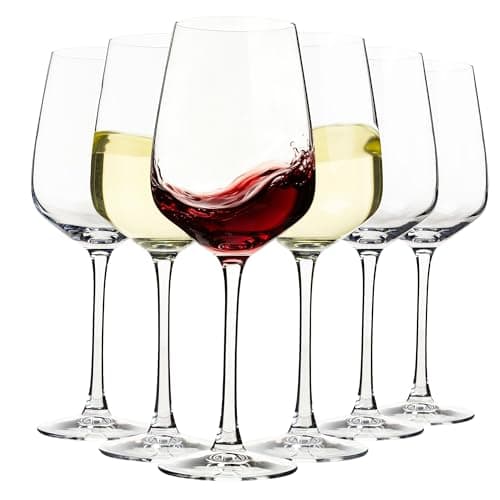
Six 15 oz universal stemmed glasses — one shape is enough for a home bar, and a set of six is the right number.
Shape
Universal wine
Capacity
15 oz
Set size
6
Pros
One universal shape covers reds, whites and spritzes
Set of six
Heavy base for a stemmed glass
Cons
Not specialised for any single wine style
Thicker than crystal
Best for: Wine, spritzes and wine-based cocktails.
The four shapes, and what each is for
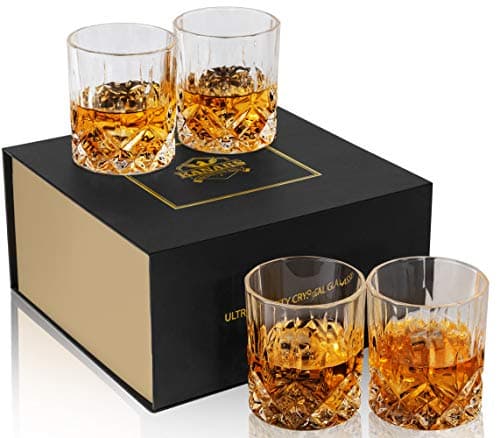
Rocks / old fashioned, 10 to 12 oz. The most useful glass in a bar. Spirits over ice, old fashioneds, negronis, anything short and strong. You want enough volume for a 2-inch cube plus a double pour with room to stir, and a heavy base so it does not skid. Below about 8 oz a large cube crowds the glass.
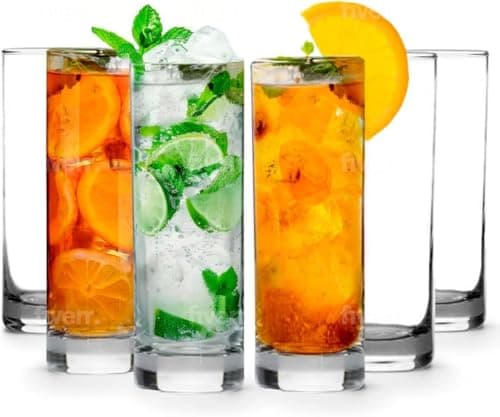
Highball / Collins, 12 to 14 oz. Anything lengthened with soda, tonic or juice: gin and tonic, Tom Collins, highballs, mojitos. Tall and narrow matters here — a narrow column holds carbonation longer than a wide glass, which is why a G&T in a tumbler goes flat faster.
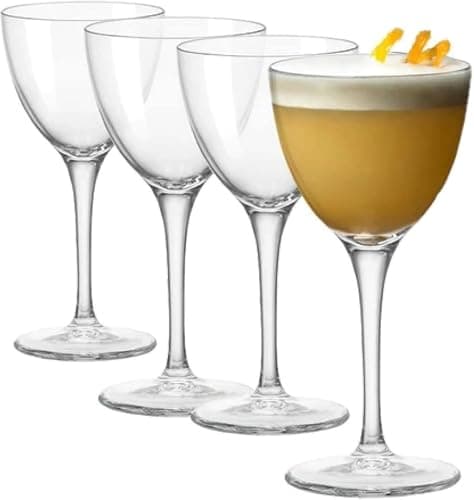
Coupe or Nick & Nora, 5 to 7 oz. For drinks served up, with no ice: martinis, daiquiris, manhattans, sidecars. The stem is functional, not decorative — an iceless drink warms from your hand within minutes otherwise. A coupe's inward curve also holds aroma better than the classic V-shaped martini glass, which spills if you look at it and dumps aroma straight into the room.
Wine glass, 12 to 15 oz. One universal shape is enough for a home bar; you do not need separate Bordeaux and Burgundy bowls. It also doubles for spritzes and wine-based cocktails.
How many of each
Six of each of the four is the sensible target, and six is deliberate: it covers a table of six, and it means losing one to breakage does not strand you with an odd number. If space or budget is tight, start with six rocks glasses and six highballs — those two cover the large majority of what most people drink — and add the coupes and wine glasses next.
Buy a pattern that will still be available in two years. Glasses break in a bar that gets used, and the ability to replace one rather than re-buy a set is worth more than a distinctive design. This is the practical argument for commercial glassware brands, whose patterns stay in production for years.
Crystal or pressed glass
Lead-free crystal is thinner, clearer and has a finer rim, and it genuinely feels better to drink from. It is also more fragile and generally wants hand washing. Pressed glass is tougher, usually dishwasher-safe, and considerably cheaper. The sensible split for a bar that entertains is pressed glass for the working set and a few crystal pieces for drinks you linger over.
The fifth shape: only if whisky is the point
A tulip-shaped nosing glass does something a tumbler cannot: the narrowed rim funnels aroma to your nose, and with whisky that is most of the experience. If you drink whisky neat and pay attention to it, this is the one specialist glass worth owning, and it is inexpensive. If you drink whisky over ice, a rocks glass is the correct glass and a nosing glass is the wrong one — the bowl is too narrow for a large cube. Our whiskey glass roundup covers both.
What to skip
Shot glasses (a jigger measures better and you probably do not need them), copper mugs (one drink, and the copper is usually a lining), hurricane glasses, and anything with a chilling gel in the base — those chill the glass rather than the drink, warm within minutes, and cannot be washed properly. A large clear cube does the job better.
Frequently asked questions
What glasses do I need for a home bar?+
Four shapes: a heavy-based rocks glass (10 to 12 oz), a tall highball or Collins (12 to 14 oz), a stemmed coupe or Nick & Nora (5 to 7 oz) for drinks served up, and a wine glass. Six of each covers a table of six and every standard cocktail.
How many cocktail glasses should I buy?+
Six of each shape. Six covers a table, and it means breaking one does not leave you with an awkward number. If budget is tight, start with six rocks glasses and six highballs — those two cover most of what people actually drink — and add stemware later.
Why do cocktail glasses have stems?+
So your hand does not warm the drink. Any cocktail served up — without ice — relies on being pre-chilled, and holding the bowl warms it within minutes. The stem is functional. A coupe or Nick & Nora is also better than a V-shaped martini glass, which spills easily and lets aroma escape straight up.
Is crystal glassware worth it for a home bar?+
For a few special glasses, yes — thinner walls and a finer rim genuinely feel better. For the working set, no: crystal is more fragile and usually needs hand washing, while pressed glass is tougher, dishwasher-safe and much cheaper. Assume breakage in a bar that gets used.
Prices and availability shown here come from Amazon's live data and change often; we re-verify them regularly. Bar Bumper is an Amazon Associate and earns a commission on qualifying purchases at no extra cost to you. Read our full disclosure.