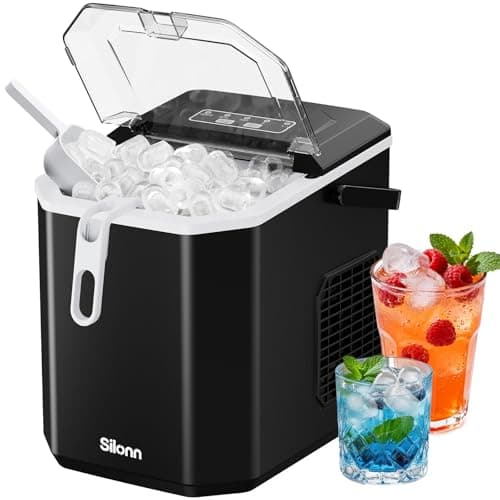
Output figures assume the machine runs all day and nobody opens it. Six ice makers ranked on what they actually deliver during an evening, by ice type and by budget.
Updated October 2026 · By Stephen V.
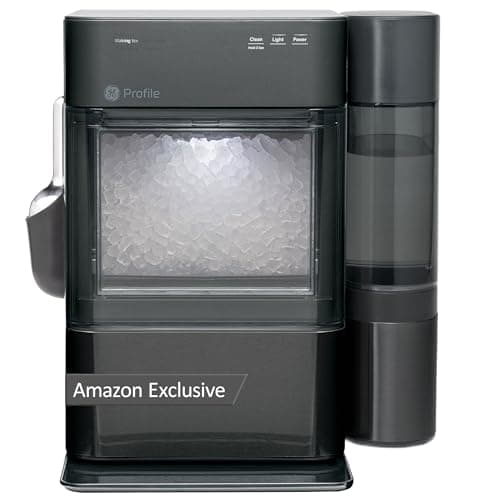
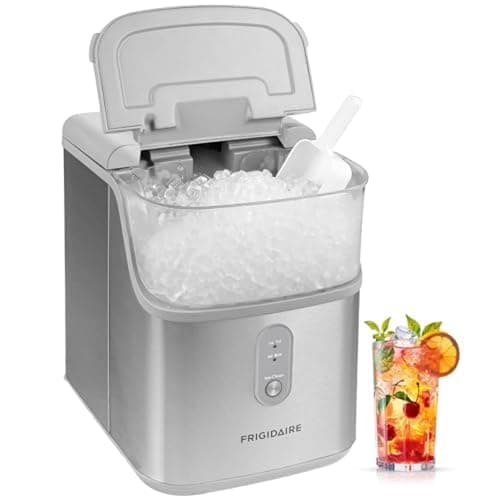
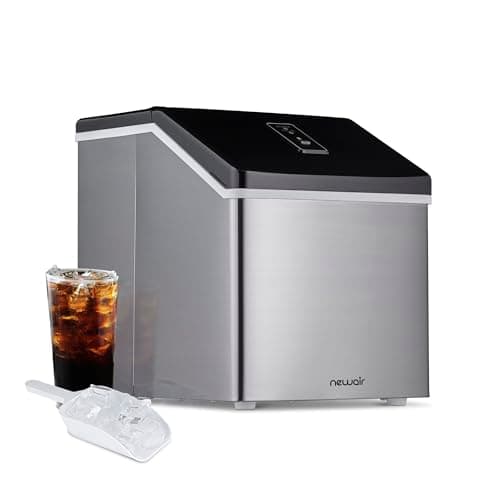
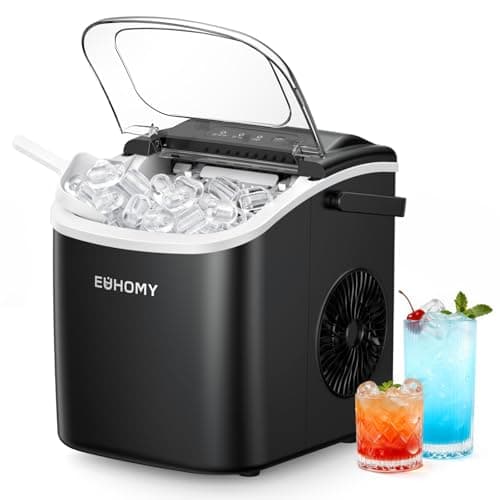
The GE Profile Opal Ultra is the best ice maker for a home bar, and the Frigidaire countertop nugget machine is the one to buy if that is more than you want to spend. The Opal makes soft chewable nugget ice at 38 lb a day, and its XL side tank is the feature that actually matters — it keeps the machine running through an evening instead of stopping to be refilled. If you want clear, slow-melting cubes for spirits instead, the Newair countertop clear ice maker is the pick; if you just want a lot of ice cheaply, the EUHOMY countertop machine is remarkable value.
Ice is the only bar supply you cannot stock up on, and it is the piece of equipment most people buy a year later than they should. Freezer-tray ice is rationed, cloudy and tastes like whatever else is in the freezer. A countertop ice maker is the cheapest single purchase that makes a home bar feel like a bar.
One thing to understand before you shop, because it is the source of nearly every disappointed review in this category: almost all countertop ice makers are makers, not freezers. The basket is insulated but not refrigerated, so ice slowly melts back into the reservoir and gets re-frozen. Read every output figure as "pounds per 24 hours while running" and plan to run the machine during your event, not before it.
We have not tested these machines. The ranking is built from published output ratings, reservoir and tank capacities, ice type, drain and installation requirements, and owner-review consensus reported as other people's experience — see how we pick. Prices come live from Amazon with the date we verified them.
The short answer
In a hurry? These are the picks we'd buy. Prices are live; tap a card below for the full reasoning.
The nugget machine the category is built around, and the XL side tank is what separates it from everything else — it keeps making ice instead of stopping to be refilled.
A home bar that wants nugget ice and will actually entertain
$549.0029% offPrice as of October 7, 2026·#addisclosure
GE Profile Opal Ultra Countertop Nugget Ice Maker
The nugget machine the category is built around, and the XL side tank is what separates it from everything else — it keeps making ice instead of stopping to be refilled.
Ice type
Nugget (chewable)
Output
38 lb / 24 h
Water
1 gal XL side tank
Install
Countertop, no plumbing
Pros
Nugget ice nothing else in the countertop class does as well
The 1-gallon side tank is the single most useful feature for a party
GE Profile is the established name in nugget ice, with real parts support
No plumbing or drain — it is a countertop appliance
Cons
The most expensive countertop machine here
Nugget ice melts faster than cube — that softness is the trade-off
Needs its descaling cycle run on schedule or it clogs
Best for: A home bar that wants nugget ice and will actually entertain.
$499.995% offPrice as of October 7, 2026·#addisclosure
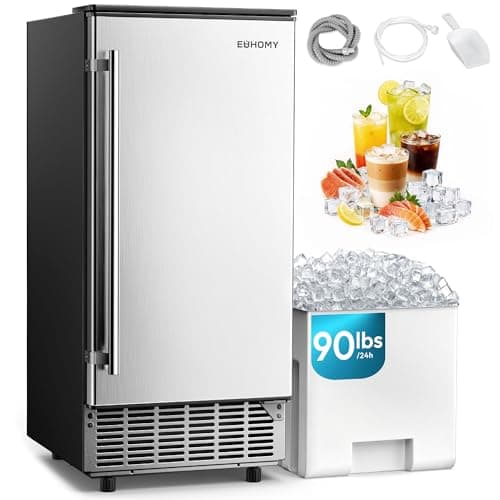
EUHOMY 15-in Undercounter Ice Maker (90 lb/day)
A 15-inch undercounter machine making 90 lb a day into a 24 lb bin — three times the ice of any countertop unit, without being touched.
Ice type
Cube
Output
90 lb / 24 h
Bin
24 lb storage
Width
15 in
Drain
Gravity drainage
Pros
Roughly three times the output of a countertop machine
A real storage bin, so ice is waiting when you want it
Fits a standard 15-inch cabinet opening and disappears into the bar
Cons
Needs a water line and a gravity drain — this is an installation, not an appliance
Gravity drain means it must sit above the drain point
Several times the price of a countertop machine
Best for: A permanent, plumbed home bar.
Skip this
The budget traps that look cheap and cost you twice. We'd skip these.
Any machine whose reservoir is smaller than its daily output suggests
A machine rated 38 lb per 24 hours with a small tank will stop and wait for a refill long before it approaches that figure. For entertaining, reservoir capacity and side-tank support limit you far more than the headline output number does.
Assuming a countertop machine will hold ice overnight
Almost none do. The basket is insulated but unrefrigerated, so ice melts back into the reservoir and is re-frozen. Machines that genuinely store ice say so explicitly and cost more. Treat this as the category's defining limitation, not a defect.
How to choose (and what to skip)
Pick the ice type by what you drink
Nugget ice is soft compacted flakes — chewable, absorbs the drink, melts fast. Right for sodas, iced coffee and long cocktails. Clear cube is slow-frozen, dense and transparent — melts slowly, barely dilutes. Right for spirits and anything you want to look good. Bullet ice is the hollow cloudy cylinder cheap machines make in six minutes — fine for a cooler or a highball, wrong for a good whisky.
Read reservoir and side-tank capacity, not just output
This is the spec that decides whether the machine keeps up at a party. A one-gallon tank runs for hours; a small internal reservoir needs attention every forty minutes. If the machine supports an auxiliary side tank, that is the single most useful feature in the category for anyone who entertains.
Countertop or undercounter
Countertop: pour water in, scoop ice out, tip the reservoir when done. No plumbing, portable, 26 to 38 lb a day. Undercounter: plumbed to a water line, drains by gravity or a pump, fits a 15 or 18-inch cabinet opening, 90 lb-plus a day with real storage. The step up is large in both price and installation. Undercounter is right for a built-in bar and wrong for a bar cart.
Check the drain requirement before you buy an undercounter unit
Gravity-drain models must sit above the drain point, which rules them out of some basement installations. Models with a built-in drain pump can push water upward and cost more. This single detail decides whether an undercounter machine can go where you want it, and it is the most common reason one gets returned.
Budget for descaling, and actually do it
Every machine here needs its cleaning cycle run on a schedule with a proper descaling solution. Mineral scale slows production, then clogs the pump, and the machines thrown out at eighteen months are overwhelmingly the ones that were never cleaned. If you suspect you will not keep up with it, buy a self-cleaning model and still run descaler through it.
How much ice do you actually need?
A useful planning figure is about 1 to 1.5 lb of ice per person for an evening of drinks — more in summer, more if people are drinking long mixed drinks rather than spirits neat. For a household of two to four, a 26 lb per day countertop machine is comfortably ample. For regular parties of eight or more, you want 33 to 38 lb a day plus the largest reservoir available, or a 15-inch undercounter unit.
The other half of the arithmetic is time. A countertop machine producing nine cubes every six minutes is making roughly a pound every twenty minutes. That is fine for a steady evening and useless for a sudden rush, which is why the practical trick is to start the machine an hour early and bag the first few batches into the freezer. The machine makes the ice; your freezer stores it.
Why clear ice is clear, and why it matters
Cloudiness is trapped air and dissolved minerals. When water freezes fast and from all sides, impurities get locked in the middle as white haze. Clear-ice machines freeze slowly in layers from one direction, which pushes impurities out ahead of the ice front. The result is denser ice with less surface area per unit volume, which is why it melts more slowly and waters a drink down less.
That is a real functional difference, not an aesthetic one. If you drink spirits over ice, clear ice genuinely changes the drink over twenty minutes. If you drink long mixed drinks that you finish quickly, it mostly does not, and nugget or bullet ice is perfectly good. For a whisky pour, a single large clear cube or a clear sphere from a mould is the ideal, and a clear ice tray gets you there for a few dollars without a machine.
Water quality changes everything
Ice tastes like the water it was made from, and it also takes on smells. Two practical consequences. First, use filtered water if your tap water is hard or heavily chlorinated — it improves the ice and dramatically slows scale build-up inside the machine, which is the main thing that kills them. Second, do not store ice uncovered in a freezer next to anything aromatic; ice absorbs odours readily, and this is the real reason freezer-tray ice has a reputation for tasting bad.
Where the machine goes
Countertop ice makers need air clearance around the vents — they reject heat, so pushing one into an alcove makes it work harder and produce less. They also drip when you scoop, so a surface you can wipe is better than wood. And they are not silent: the compressor hums and the harvest cycle clatters as ice drops into the basket, which is worth knowing before putting one in a room where people are watching television. On a bar cart, check the shelf weight rating — a full machine with a gallon of water in it is heavier than it looks.
Frequently asked questions
Do countertop ice makers keep ice frozen?+
Most do not. The storage basket is insulated but not refrigerated, so ice gradually melts back into the reservoir and is re-frozen. Read rated output as pounds per 24 hours of running time, and either run the machine during your event or bag the early batches into your freezer. A few models advertise genuine cold storage and cost more.
What is the best ice maker for a home bar?+
For most home bars, a 33 to 38 lb per day nugget machine with the largest reservoir you can get — nugget ice suits sodas and long drinks, and reservoir size is what keeps the machine running through an evening. If you mainly drink spirits over ice, a clear-cube machine is the better choice. For a permanently plumbed bar, a 15-inch undercounter unit makes roughly three times as much and actually stores it.
How much ice does a party need?+
Roughly 1 to 1.5 pounds per person for an evening, more in hot weather or if people are drinking long mixed drinks. Eight guests is therefore 8 to 12 pounds, which is within a day's output for most countertop machines but not within an hour's — so start the machine early and bag the first batches into the freezer.
Do ice makers need to be plumbed in?+
Countertop machines do not — you pour water into a reservoir and tip it out when finished. Undercounter machines do: they need a water supply line and either a gravity drain or a drain pump. Gravity-drain models must sit above the drain point, which is the detail that most often makes an undercounter unit unworkable in a basement.
Why has my ice maker stopped producing much ice?+
Mineral scale, almost always. Scale coats the evaporator and slows freezing, then clogs the pump. Run the machine's cleaning cycle with a proper descaling solution rather than just rinsing it, and switch to filtered water if your supply is hard. Neglected descaling is the single most common reason these machines are thrown away early.
Prices and availability shown here come from Amazon's live data and change often; we re-verify them regularly. Bar Bumper is an Amazon Associate and earns a commission on qualifying purchases at no extra cost to you. Read our full disclosure.