Two zones only earn their keep if the upper zone actually reaches red-wine temperature. Six fridges compared on published range, real capacity and whether the compartments are the sizes you need.
Updated October 2026 · By Stephen V.
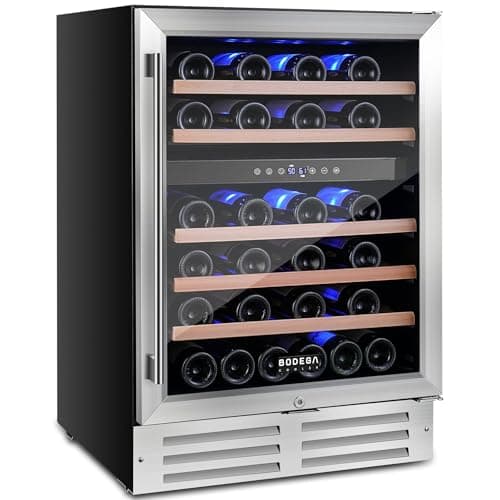
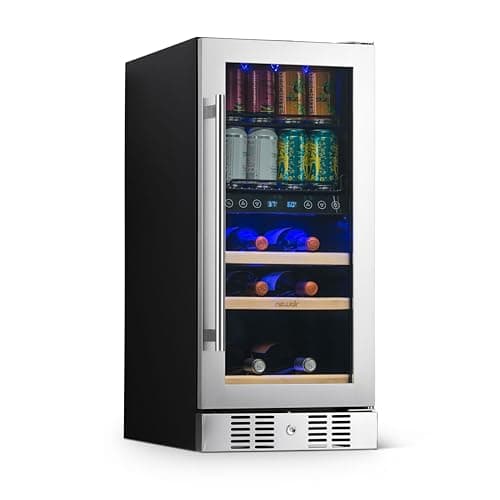
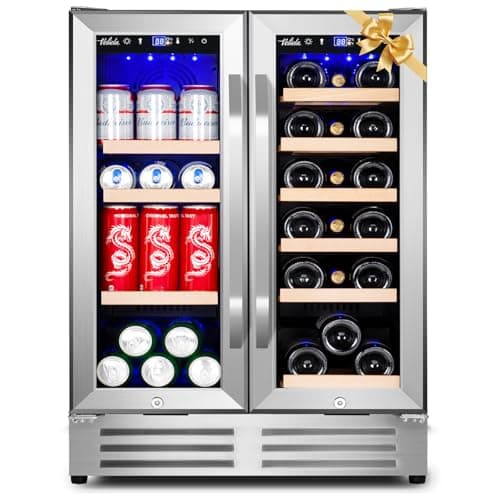
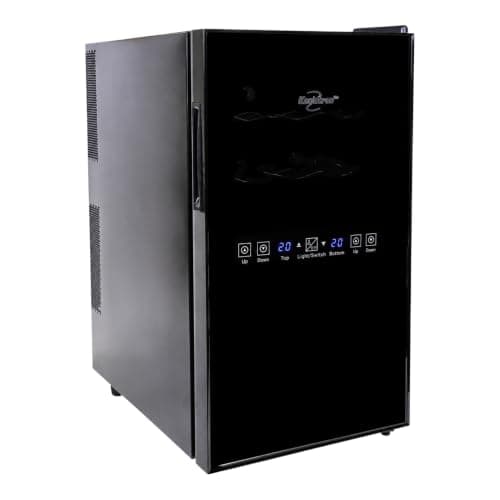
The best dual-zone wine fridge is the BODEGA 24-inch 46-bottle: it is the only cabinet here whose published range runs all the way from 41°F to 72°F, which means the warm zone can genuinely hold a red at cellar temperature rather than just slightly-less-cold-than-the-whites. The Ivation 28-bottle is the mid-size freestanding pick and it locks; the Bonnlo 33-bottle is the most bottles per dollar; the NewAir 15-inch is the one that fits a standard bar cabinet opening; the Velieta 24-inch splits wine and cans instead of reds and whites; and the Koolatron 18-bottle is the thermoelectric option for a room where compressor noise would be a problem.
Here is the thing nobody tells you about two zones. The point of dual zone is not storage, it is service temperature. Long-term storage wants one steady temperature around 55°F for everything, red and white alike — a single-zone cellar does that perfectly and costs less. Dual zone exists so that the bottle you are about to open is already at the temperature you want to drink it at: whites and sparkling around 45-50°F, lighter reds around 55°F, big reds around 60-65°F. If the bottles in your fridge get drunk within a few months, dual zone is worth the money. If you are laying wine down for years, it is not.
What the two zones should be — a cold zone in the 41-50°F band for whites, roses and sparkling, and a warm zone that reaches at least 60°F for reds. A cabinet whose warm zone tops out at 64°F is fine; one that tops out at 57°F is a single-zone fridge with a marketing claim.
Compressor vs thermoelectric — compressor units pull further below ambient and hold steady in a warm room; thermoelectric units are near-silent and vibration-free but can only manage a fixed offset from room temperature. In a garage or a hot room, compressor is the only honest answer.
Advertised capacity vs real capacity — bottle counts are measured with standard 750 ml Bordeaux bottles, laid flat, nothing else in the cabinet. Burgundy bottles, Champagne and anything in a heavy punted bottle cut the real number by a quarter or more.
Freestanding vs built-in — a freestanding unit vents out the back and must not be enclosed in cabinetry. A built-in or front-venting unit can sit flush in a run of cabinets. Putting a freestanding fridge in a tight cabinet is the most common way these fail early.
We have not run these cabinets on a datalogger. The ranking is built from published temperature ranges, stated bottle capacity, cooling type, venting and installation class, door and shelf construction, and owner-review consensus reported as other people's experience — see how we pick. Prices come live from Amazon with the date we verified them. Where a cheaper cabinet does the same job, it wins, and where a single zone would serve you better we say so.
The short answer
In a hurry? These are the picks we'd buy. Prices are live; tap a card below for the full reasoning.
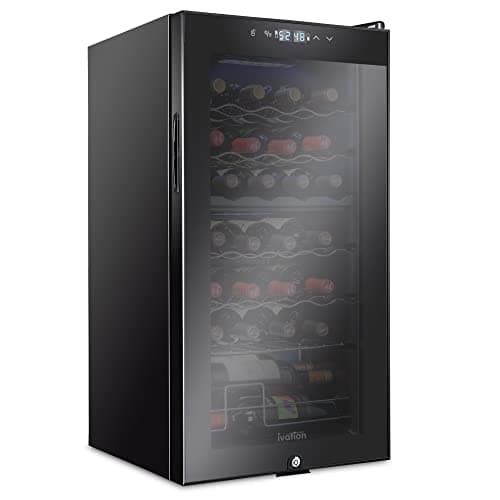
Twenty-eight bottles, two compressor-cooled zones and a lock — the sensible middle of the category and the one to buy if 46 bottles is more cabinet than you need.
A bar corner or dining room where the fridge stands on its own
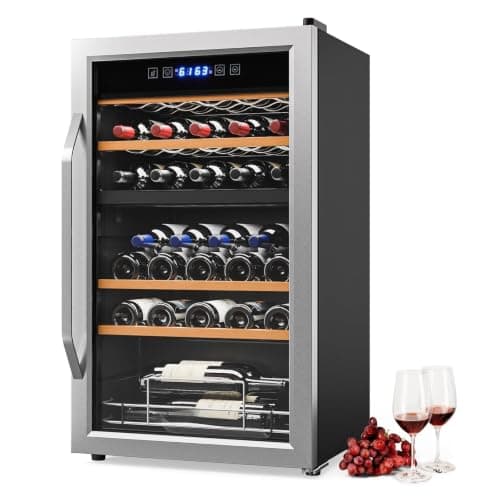
Thirty-three bottles of compressor-cooled dual-zone storage for less than most 28-bottle cabinets — the value pick, with a 41-64°F range that covers whites and lighter reds.
Getting the most dual-zone capacity for the smallest outlay
Twenty-eight bottles, two compressor-cooled zones and a lock — the sensible middle of the category and the one to buy if 46 bottles is more cabinet than you need.
Capacity
28 bottles
Zones
2, independently set
Cooling
Compressor
Install
Freestanding, lockable
Pros
Compressor cooling at a mid-range price, which is the right trade for most rooms
A real lock, which matters more in a house with teenagers than people admit
Twenty-eight bottles suits a bar that turns stock over rather than cellars it
Ivation sells this cabinet in several sizes, so the range is coherent
Cons
Freestanding only — do not bury it in cabinetry
No UV claim on the glass, so keep it out of direct sun
Shelf spacing is tuned to standard bottles; wide bottles waste a slot
Published range does not reach the high-60s a big red ideally wants
Best for: A bar corner or dining room where the fridge stands on its own.
Thirty-three bottles of compressor-cooled dual-zone storage for less than most 28-bottle cabinets — the value pick, with a 41-64°F range that covers whites and lighter reds.
Capacity
33 bottles
Zones
2, independently set
Range
41-64 F
Cooling
Compressor, freestanding
Pros
The lowest cost per bottle of any dual-zone cabinet here
Compressor cooling rather than thermoelectric at this price, which is unusual
41-64°F covers white service and light-red cellar temperature properly
Thirty-three bottles is a genuine step up from the usual 28
Cons
64°F is the ceiling, so a Cabernet served at 65°F needs ten minutes on the counter
Less brand history behind it than NewAir, Ivation or Kalamera
Freestanding only, with rear venting
Finish and shelf feel are where the cost saving shows
Best for: Getting the most dual-zone capacity for the smallest outlay.
A thermoelectric dual-zone cabinet with no compressor and no vibration — genuinely silent, and genuinely weaker in a warm room.
Capacity
18 bottles
Zones
2
Cooling
Thermoelectric
Finish
Black, slim profile
Pros
No compressor means near-silent running and no vibration through the bottles
Slim footprint that suits a hallway, an alcove or a small apartment bar
Nothing to cycle, so there is no clunk to wake anyone
Cheaper to run than a compressor cabinet of the same size
Cons
Thermoelectric cooling can only pull a fixed offset below room temperature — in a hot room it will not reach its set point
Not suitable for a garage, a conservatory or anywhere ambient swings widely
Eighteen bottles is small for the price
Recovery after the door has been open is slow compared with a compressor
Best for: A bedroom-adjacent bar or an apartment where noise carries.
Skip this
The budget traps that look cheap and cost you twice. We'd skip these.
A dual-zone cabinet whose warm zone stops at 57 F
Some cabinets advertise two zones where the warmer one only reaches the upper 50s. That is not useless, but it is not what you are paying for: a red served at 57°F is cold enough to flatten the fruit on anything substantial. Check the published range before you check anything else, and treat a ceiling below 60°F as a single-zone fridge with a divider. If the number is not printed, assume the worst.
Dual zone for long-term cellaring
If the plan is to lay bottles down for years, you want one steady temperature around 55°F, high humidity and darkness — and a single-zone cabinet does that better and cheaper, because every zone boundary is a place where temperature drifts. Two zones solve a service problem, not a storage problem. Our <a href="/bar-fridges/best-wine-fridge">wine fridge roundup</a> covers the single-zone cabinets, and <a href="/bar-fridges/best-undercounter-wine-fridge">undercounter wine fridges</a> covers the built-in versions.
A freestanding wine fridge built into cabinetry
This is the single most common cause of an early failure in this category. A freestanding cabinet vents its heat out of the back, and enclosing it traps that heat against the condenser, which makes the compressor run continuously and shortens its life considerably. If the fridge is going into a run of cabinets, it must be sold as built-in or front-venting. Nothing about the door or the finish tells you which it is; only the specification does.
How to choose (and what to skip)
Check the published range first, capacity second
A dual-zone cabinet is only as good as its warm zone. Look for a cold zone that reaches the low 40s and a warm zone that reaches at least 60F, and ideally into the mid-60s. That combination lets you serve a Chablis at 48F and a Barolo at 63F out of the same appliance, which is the entire reason to buy two zones. A cabinet that spans 41F to 64F is good; one that spans 41F to 72F covers everything including room-temperature service for a heavy red in a cold house.
Treat the bottle count as a best case
Published capacities are measured with standard 750 ml Bordeaux bottles, laid flat, filling every rack with nothing else in the cabinet. In practice people store Champagne, Burgundy bottles with wide shoulders, the odd magnum and a couple of bottles standing up. A realistic planning figure is about three quarters of the printed number, and less if you buy Burgundy. If the count matters, measure your widest bottle against the rack spacing rather than trusting the headline.
Compressor unless you have a specific reason not to
Compressor cabinets cool the way a refrigerator does and can hold a set point in a warm room. Thermoelectric cabinets move heat across a solid-state plate: they are silent and vibration-free, which is genuinely valuable in a bedroom wall or a small apartment, but they can only pull a limited number of degrees below ambient. Put a thermoelectric cabinet in a 85F room and it will simply not reach 45F. For a basement bar, a garage or anywhere seasonal, buy compressor.
Confirm the installation class before you order
Built-in or front-venting units expel heat through the front and can be enclosed flush in cabinetry. Freestanding units vent out the back and need air behind and above them. The two look identical from the front. If your fridge is going into a cabinet opening, the specification must say built-in, and you should check the opening width, the finished depth with the door shut, and the door swing clearance before anything is ordered. Our <a href="/bar-fridges/best-undercounter-wine-fridge">undercounter picks</a> are all built-in rated.
Shelves, light and vibration
Three details that separate a cabinet you keep from one you replace. Shelves: wooden or coated racks that slide out are easier to load and quieter than bare wire. Light: UV-filtered glass matters if the fridge sits anywhere daylight reaches, because light degrades wine faster than a couple of degrees of temperature error. Vibration: a compressor transmits a small amount of movement into the bottles, which is irrelevant over months and arguably matters over years — another reason serious cellaring wants a dedicated single-zone cabinet rather than a dual-zone service fridge.
Where it goes in a bar build
If the bar is a run of cabinetry, plan the appliances before the carcasses: a 15-inch dual-zone unit, a 24-inch wine fridge and a built-in kegerator are all standard widths and they determine the layout rather than fitting into it. If the bar is furniture rather than joinery, a freestanding cabinet next to a bar cabinet is the simpler and cheaper answer. Either way, decide whether you need cans cold as well as bottles, because that single question decides between a wine fridge, a beverage fridge and the dual-zone combination units on this page.
The temperatures the two zones are actually for
Sparkling wine and crisp whites show best in the mid-40s. Fuller whites and roses want the upper 40s to low 50s. Light reds — Beaujolais, Pinot Noir — are at their best around 55°F, which is also the classic cellar temperature. Big tannic reds want 60-65°F, which is cooler than most American rooms in summer and warmer than any single-zone wine fridge will hold. That spread is the case for two zones in one sentence: no single temperature serves a Champagne and a Cabernet, and nobody wants to plan their drinking an hour ahead.
Why the warm zone is the one that fails
Both zones are cooled by the same system, with the cold air directed mostly at the lower compartment and bled into the upper one. That architecture makes the cold zone easy and the warm zone hard: the manufacturer has to stop the warm zone getting too cold rather than cool it further. Cheap cabinets solve that by simply bleeding less air, which works until the room is warm and the warm zone drifts up. The specification to trust is a published upper limit in the 60s with independent digital control on each zone, not a dial marked red and white.
Dual zone or two fridges?
If you drink mostly one color, two fridges is the wrong answer and so is dual zone — buy one single-zone cabinet of the right size. If you drink both and entertain, dual zone is the efficient answer, because one cabinet, one plug and one footprint is worth something. The case for two appliances is when wine and cans are both in play and both need real capacity: a dedicated wine fridge next to a beverage fridge gives you more usable space than one combination unit of the same total width, because a combination unit spends shelf depth on racking you cannot use for cans. The comparison in wine fridge vs beverage fridge goes through that trade in detail.
Noise, and who should care
Every compressor cabinet makes a noise when it cycles. In a basement bar, a garage or a kitchen, nobody notices. Against a bedroom wall or in a studio apartment it is the thing that makes people sell the fridge. That is the one case where a thermoelectric cabinet earns its reduced performance, and it is why the Koolatron is on this page despite being the weakest cooler here. Judge it on where the cabinet is going, not on the specification sheet. If the room has a television in it, buy the compressor.
What to set the zones to
A sensible default for a working home bar is the cold zone at 46°F and the warm zone at 60°F. That puts whites and sparkling at service temperature straight out of the door, holds light reds exactly right, and leaves big reds a few minutes short of ideal — which is the correct way round, because wine warms in the glass and never cools. If the cabinet is mostly storage with occasional service, set both zones nearer 55°F and accept a short wait. Our wine fridge temperature guide has the full by-style table.
Where this sits in the rest of the bar
Cold storage is the second thing a home bar needs, after somewhere to put bottles and glasses. A dual-zone cabinet covers wine service completely and can cover cans too if you buy a combination unit. Beer on tap is a separate appliance — see the kegerator picks — and ice is a third, which the home bar ice maker roundup covers. For the order to buy things in, the home bar essentials list is the short version and home bar ideas is where to start if the room itself is not decided yet.
Frequently asked questions
What is the best dual-zone wine fridge?+
The BODEGA 24-inch 46-bottle, because its published 41F to 72F range is the only one here wide enough to serve a big red at proper temperature in the warm zone while holding whites in the low 40s in the cold zone. The Ivation 28-bottle is the better buy if you want a freestanding cabinet of ordinary size, and the Bonnlo 33-bottle gives you the most bottles for the money.
Is a dual-zone wine fridge worth it?+
If you drink both reds and whites and your bottles get opened within months, yes — it is the difference between pouring at serving temperature and waiting. If you are cellaring wine for years, no: a single steady temperature around 55F is better for storage and a single-zone cabinet holds it more reliably and costs less.
What temperature should each zone be set to?+
A good working default is the cold zone at about 46F for whites, roses and sparkling, and the warm zone at about 60F for reds. If the cabinet is mainly storage rather than service, set both zones closer to 55F. Wine warms in the glass and never cools, so erring a degree or two cold on reds is the safer mistake.
How many bottles does a dual-zone wine fridge actually hold?+
Around three quarters of the advertised number in real use. Published capacities assume standard 750 ml Bordeaux bottles laid flat in every slot. Champagne, Burgundy bottles and anything with wide shoulders or a deep punt takes up more than one slot, and most people also stand a couple of bottles up. Plan on 33 bottles from a 46-bottle cabinet if your cellar is mixed.
Compressor or thermoelectric for a dual-zone fridge?+
Compressor, unless silence matters more than performance. Thermoelectric cooling is quiet and vibration-free but can only pull a limited number of degrees below room temperature, so it will miss its set point in a warm room and is a poor choice for a garage or anywhere seasonal. Thermoelectric earns its place next to a bedroom or in a small apartment, and nowhere else.
Can a dual-zone wine fridge be built into cabinetry?+
Only if it is sold as built-in or front-venting. Freestanding cabinets vent heat out of the back, and enclosing one traps that heat against the condenser, which makes the compressor run continuously and shortens its life. The two types look identical from the front, so check the specification and confirm the opening width, finished depth and door swing before ordering.
Can you store beer in a dual-zone wine fridge?+
Yes, in the cold zone, though the racking wastes space that a beverage fridge would use for cans. If beer and soda are as important as wine in your bar, a wine-and-beverage combination unit like the Velieta is the better shape of cabinet, or run a separate beverage fridge alongside a single-zone wine cabinet.
Prices and availability shown here come from Amazon's live data and change often; we re-verify them regularly. Bar Bumper is an Amazon Associate and earns a commission on qualifying purchases at no extra cost to you. Read our full disclosure.