A thermoelectric cooler is silent, vibration-free and limited to about 15 to 20 degrees below room temperature. A compressor holds a set temperature regardless. Where the fridge lives decides which one is correct.
Updated October 2026 · By Stephen V.
Buy a compressor wine cooler if the cabinet lives anywhere that gets warm — a bar, a basement that heats up in summer, a kitchen, a garage — or if it holds more than about 20 bottles. Buy a thermoelectric one if it lives in a quiet room with stable temperature and silence matters more than capacity. The deciding question is not price, it is the air temperature around the cabinet.
The two technologies are genuinely different machines. A compressor cooler is a small refrigerator: a compressor, a refrigerant circuit and a condenser, running in cycles to pull the cabinet down to a thermostat setting. It will hold 55°F in a 90°F room, it scales to large cabinets, and it hums and vibrates slightly while running. A thermoelectric cooler has no compressor and no refrigerant — it uses a solid-state Peltier plate that moves heat across itself when current flows. It is nearly silent, has no vibration at all, and it can only hold the cabinet roughly 15 to 20°F below the air around it.
That last figure is the whole guide. In a climate-controlled 70°F room, a thermoelectric cooler reaches 50 to 55°F, which is correct cellar temperature — it works perfectly. In a 78°F room in August it reaches about 58 to 63°F, which is too warm for white wine and marginal for red. In an 85°F sunroom or a 95°F garage it is not a wine cooler at all. A compressor unit does not care, because it makes cold rather than moving it a fixed distance.
The four units below are a compressor and a thermoelectric cooler at the same bottle count, so the trade is visible, plus a larger compressor cabinet and a small thermoelectric one. Prices come live from Amazon with the date we verified them.
The short answer
In a hurry? These are the picks we'd buy. Prices are live; tap a card below for the full reasoning.
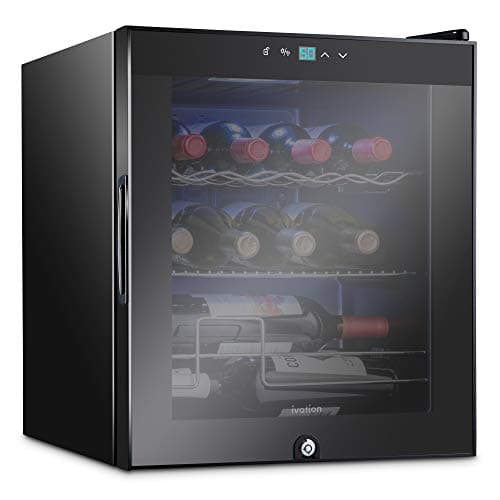
A 12-bottle countertop compressor cooler — the same capacity as the thermoelectric below, in the technology that holds temperature regardless of the room.
A bar, a warm room, or anywhere the temperature is not controlled
A 12-bottle countertop compressor cooler — the same capacity as the thermoelectric below, in the technology that holds temperature regardless of the room.
Cooling
Compressor
Capacity
12 bottles
Install
Countertop, freestanding
Extra
Lockable
Pros
Holds its set temperature in a warm room, which is the whole point of buying a compressor
Will reach proper white wine temperature in summer, which thermoelectric cannot
Lockable, which matters on a bar in a shared space
Same bottle count as the thermoelectric unit below, so the comparison is clean
Cons
Audible cycling, and a faint vibration — noticeable in a quiet room
Costs more than the thermoelectric equivalent
Needs air clearance around the condenser
Best for: A bar, a warm room, or anywhere the temperature is not controlled.
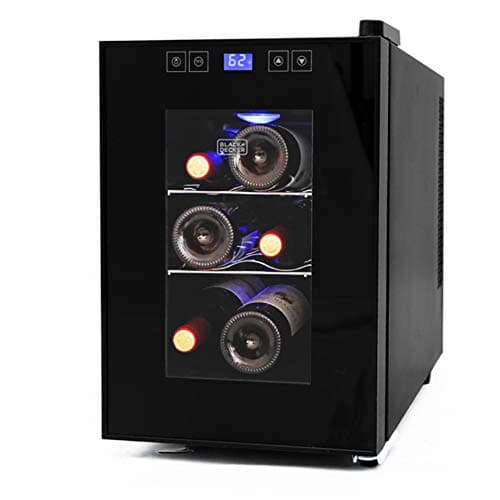
A 6-bottle thermoelectric countertop cellar — the least expensive honest wine cooler here, and fine in a room that stays around 70 degrees.
Cooling
Thermoelectric
Capacity
6 bottles
Install
Countertop
Brand
BLACK+DECKER
Pros
The cheapest route into a dedicated wine cooler
Small enough to sit on a counter or a bar cart's lower shelf
Silent, with no vibration, like all thermoelectric units
A sensible test purchase before committing to a 24-bottle cabinet
Cons
Six bottles goes quickly if you actually drink wine
Thermoelectric, so the room temperature limit applies in full
Small cabinets swing more with each door opening
Best for: Six bottles, a cool room, and a small budget.
Skip this
The budget traps that look cheap and cost you twice. We'd skip these.
A thermoelectric cooler in a garage, sunroom or uncooled basement
This is the mistake the technology invites, because the listings do not lead with the limitation. A Peltier plate holds the cabinet a fixed distance below ambient; in a space that reaches 90°F it will sit around 70 to 75°F, which is warm storage, not cold. Worse, a space with big swings pushes wine in and out of the cork. If the fridge is going anywhere uncooled, you need a compressor unit — and if it is going in a garage specifically, read our <a href="/bar-fridges/best-garage-wine-fridge">garage wine fridge</a> page, because the ambient rating matters as much as the technology.
A compressor cooler in a bedroom, if you are a light sleeper
This is the opposite mistake and it is less expensive but more annoying. A compressor cycles on and off through the night, and in a quiet bedroom the start-up is audible. There is nothing wrong with the appliance; it is simply the wrong room for it. This is the single genuine, non-marketing reason thermoelectric coolers exist, and in a stable 70°F bedroom a thermoelectric unit is the better product.
How to choose (and what to skip)
Measure the room before you compare the units
Leave a cheap thermometer where the cooler will stand, and read it at the hottest part of the hottest day you can wait for. If that figure is 72 degrees or below, thermoelectric will reach cellar temperature and you get silence for free. If it is 78 degrees or above, or if it swings by more than 10 degrees across the year, buy compressor. That one measurement settles this decision more reliably than any spec comparison.
Capacity decides it on its own above about 20 bottles
Thermoelectric does not scale. Peltier plates move a limited amount of heat, and the bigger the cabinet the longer a plate takes to pull it down and the less able it is to recover after the door opens. That is why thermoelectric wine coolers cluster at 6 to 18 bottles and essentially disappear above 20 to 24. If you want a cabinet bigger than that, the decision is already made.
Dual zone almost always means compressor
If you want reds at 55 to 60 degrees and whites at 45 to 50 in the same cabinet, you are looking for a dual-zone unit, and those are overwhelmingly compressor machines — holding two different temperatures with enough separation needs more cooling capacity than a Peltier plate provides. Our <a href="/bar-fridges/best-dual-zone-wine-fridge">dual-zone wine fridge roundup</a> covers that category, and every unit on it is a compressor.
The vibration argument is real but small
Long-term wine storage dislikes vibration, because it is thought to disturb sediment and accelerate chemical reactions in the bottle. A thermoelectric cooler has literally none, and that is a legitimate advantage for wine you intend to keep for years. For wine you will drink within a year or two — which is nearly all wine in a home bar — the effect is far smaller than the effect of storing it 10 degrees too warm. Temperature stability beats vibration every time.
Check the ambient rating, not just the technology
Compressor units have operating limits too. Every cooler publishes an ambient operating range, and a standard indoor compressor cabinet in a 100-degree garage will also struggle — it will just struggle at a much higher threshold than a Peltier plate does. If the location is unusual, read the range on the listing rather than assuming compressor means invincible.
How each one actually makes cold
A compressor cooler is the same vapor-compression cycle as your kitchen fridge, shrunk. A compressor squeezes refrigerant into a hot high-pressure gas, a condenser sheds that heat to the room, the refrigerant expands and gets very cold, and an evaporator inside the cabinet absorbs heat from the air and the bottles. Because it is making a temperature difference rather than borrowing one, the cabinet temperature is set by the thermostat and the room temperature only affects how hard it works. A thermoelectric cooler uses the Peltier effect: run current across a junction of two dissimilar semiconductors and heat is carried from one side to the other. There is no refrigerant, no compressor and no moving part except a small fan. But the amount of heat a plate can move is fixed, so the cabinet settles at the point where heat leaking in equals heat being pumped out — which is a fixed offset below the room, not a set temperature.
The 15 to 20 degree rule, in practice
65°F room — thermoelectric reaches about 45 to 50°F. Correct for whites and sparkling. Fine.
70°F room — about 50 to 55°F. Correct cellar temperature. This is the condition the technology is designed for.
75°F room — about 55 to 60°F. Acceptable for reds, too warm for whites.
80°F room — about 60 to 65°F. Too warm for any wine you intend to serve without further chilling.
90°F+ room — about 70 to 75°F. Not a wine cooler. This is the garage and sunroom case.
Noise, and how much it really matters
A compressor wine cooler is not loud — it is roughly a quiet kitchen fridge, and in a room with any activity in it you will not notice. What you notice is the cycling: the step change when the compressor starts in a silent room. That is why the thermoelectric category exists and why it sells well for bedrooms, home offices and open-plan apartments. On a home bar with a television, music or conversation in the room, the noise argument essentially evaporates and you should buy on temperature control instead.
What temperature wine actually wants
Long-term storage wants 55°F and, more importantly, wants it steady — swings are harder on wine than a slightly wrong constant. Serving temperatures are different: reds are usually best at 60 to 65°F, whites at 45 to 50°F, sparkling at 40 to 45°F. That spread is the argument for a dual-zone cabinet, and it is also the reason a single-zone cooler set to 55°F is a compromise that works for everything and is ideal for nothing. Our wine fridge temperature guide has the full numbers by style.
Beverage fridges, and why this guide applies to them too
Exactly the same split exists in beverage fridges, and it causes more problems there because people put beverage fridges in garages and on patios far more often than they put wine cabinets in them. A thermoelectric beverage cooler in a hot garage holds drinks at about 75°F, which is not a cold drink. If that is your situation, our garage beverage fridge page is the one to read, and the short version is the same as here: compressor, without exception.
Our verdict
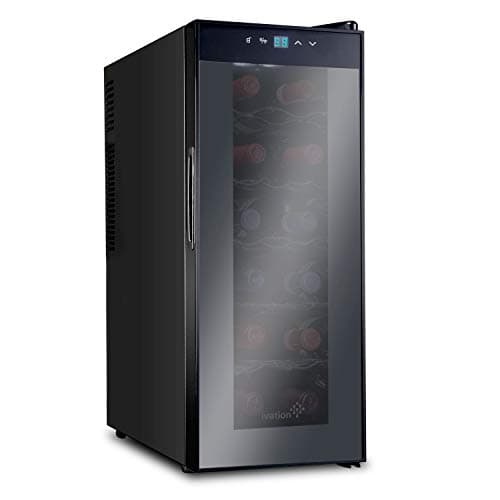
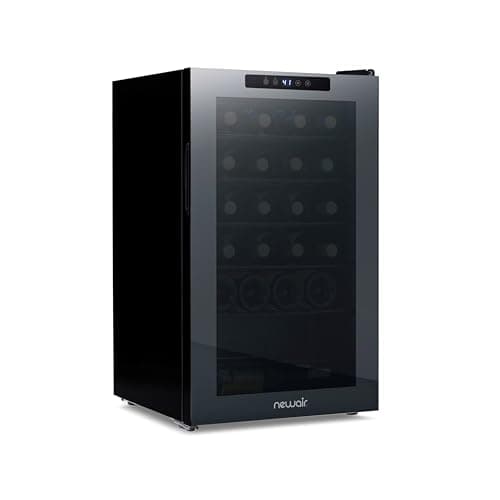
For a home bar, buy compressor. A bar is a room that gets used, warms up with people in it, and is rarely silent — so the one advantage of thermoelectric does not apply and its one limitation does. The Ivation 12-bottle compressor is the clean comparison pick, and the Newair 24-bottle is the one to buy if you store more than a case. Buy thermoelectric only for a quiet, climate-controlled room, and then the Ivation thermoelectric is the better product in that room than its compressor twin.
Frequently asked questions
What is the difference between a compressor and a thermoelectric wine cooler?+
A compressor cooler is a small refrigerator with a refrigerant circuit, and it cools the cabinet to a thermostat setting regardless of the room. A thermoelectric cooler uses a solid-state Peltier plate with no compressor and no refrigerant, and it can only hold the cabinet about 15 to 20 degrees below the surrounding air. One makes cold; the other moves it a fixed distance.
Which is better, compressor or thermoelectric?+
Compressor, for almost every home bar — it holds temperature in a warm room and it scales to larger cabinets. Thermoelectric is better in one specific case: a quiet, climate-controlled room where silence and zero vibration matter more than capacity, such as a bedroom or a home office.
How cold does a thermoelectric wine cooler get?+
About 15 to 20 degrees below the air around it. In a 70-degree room that is 50 to 55 degrees, which is correct cellar temperature. In an 80-degree room it is 60 to 65 degrees, which is too warm to serve whites from, and in a hot garage it is not a wine cooler at all.
Are thermoelectric wine coolers reliable?+
They have fewer moving parts than a compressor unit — just a fan — so there is less to fail mechanically. The common complaint is not reliability but performance: a unit judged to be failing is usually working exactly as designed in a room that is simply too warm for the technology.
Does a wine fridge need to be quiet?+
It depends entirely on the room. In a bar, den or game room with people, music or a television in it, compressor cycling is inaudible in practice and you should choose on temperature control. In a bedroom or a quiet study, the cycling is the main thing you will notice, and that is the case where thermoelectric is the right answer.
Can a thermoelectric wine cooler go in a garage?+
No. A garage is the worst possible location for the technology: it is far too hot in summer for a fixed 15 to 20 degree offset to reach wine temperature, and in winter the swings are hard on the wine. A garage needs a compressor unit with an ambient operating range that covers your actual extremes.
Do dual-zone wine fridges use compressors?+
Almost always. Holding reds at 55 to 60 degrees and whites at 45 to 50 in the same cabinet needs more cooling capacity and more control than a Peltier plate provides, so dual-zone cabinets are overwhelmingly compressor machines.
Prices and availability shown here come from Amazon's live data and change often; we re-verify them regularly. Bar Bumper is an Amazon Associate and earns a commission on qualifying purchases at no extra cost to you. Read our full disclosure.