Floor to the underside of the counter, minus 10 to 12 inches. That is the whole formula, and it is why most bar stools get returned.
Updated October 2026 · By Stephen V.
Measure from the floor to the underside of your counter, then subtract 10 to 12 inches. That is your seat height. Ten inches is snug, twelve is roomy, and under nine inches your knees hit the apron. It takes thirty seconds and it prevents the single most common furniture return in a home bar.
The reason this goes wrong so often is that online listings call every tall stool a "bar stool", whether its seat is 24 inches or 30. Those two stools belong at surfaces six inches apart in height, and neither works at the other's counter.
The short answer
In a hurry? These are the picks we'd buy. Prices are live; tap a card below for the full reasoning.
$149.9924% offPrice as of October 7, 2026·#addisclosure
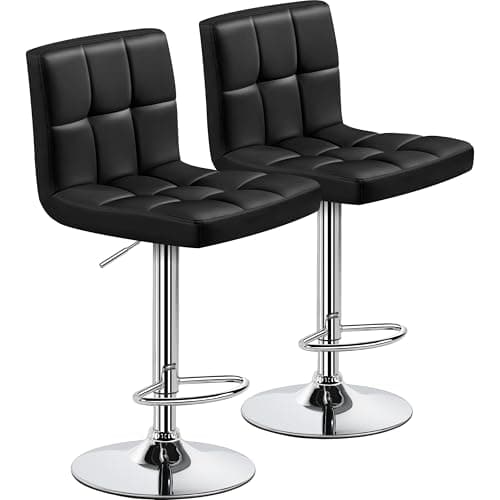
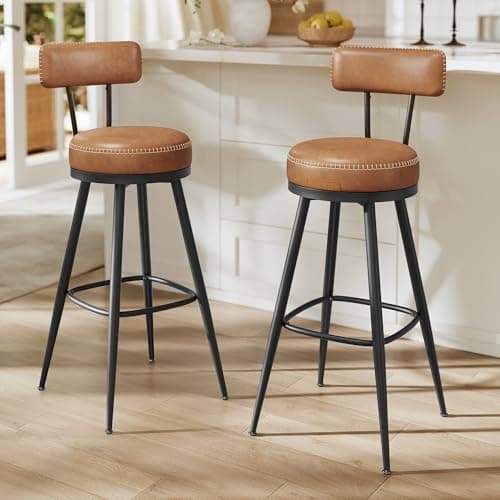
VASAGLE 30-in Swivel Bar Stools with Back (set of 2)
A pair of 30-inch swivel stools with backs — the correct bar height, with the two features that make people linger.
Seat height
30 in
Suits top
40-42 in
Swivel
Yes
Back
Yes
Pros
Correct seat height for a standard raised bar
Swivel plus a back is the comfort combination
Sold as a pair
Cons
Fixed height — wrong for a kitchen counter
Backs mean they do not tuck fully under
Assembly required
Best for: A raised bar top where people stay a while.
The height chart
Dining height — a 28 to 30-inch table takes a 17 to 19-inch seat. (A normal chair.)
Counter height — a 34 to 36-inch counter, which is a standard kitchen island, takes a 24 to 26-inch seat.
Bar height — a 40 to 42-inch bar, which is a raised bar top or a pub bar, takes a 29 to 31-inch seat.
Extra-tall / spectator — a 44 to 47-inch top takes a 33 to 36-inch seat. Rare, and the reason some stools look absurdly tall in photographs.
Measure the underside, not the surface
This is the subtlety that catches careful people. A 36-inch counter with a 2-inch butcher-block top gives you only 34 inches of clearance underneath, which means a 24-inch seat rather than a 26-inch one. If your counter has an apron, a support rail or a cabinet frame below the top, measure to the lowest thing your knees will meet.
Also measure where the stool will actually sit. A bar with a footrail or a toe kick at floor level can change how far a stool can tuck in, and an overhang shorter than about 10 inches leaves no knee room regardless of stool height.
How many stools fit
Allow 26 to 30 inches of bar width per stool, measured along the counter edge. That is elbow room, not seat width — a 17-inch-wide stool still needs about 28 inches of bar to be comfortable. So a 72-inch bar seats three people comfortably, not four, and a 48-inch bar seats two.
Squeezing in one more stool than fits is the second most common mistake in home bar furniture, and it makes the bar less pleasant rather than more sociable. If you want a fourth seat, the answer is usually a chair at the end rather than a fourth stool.
Adjustable or fixed
Gas-lift adjustable stools cover a range, and they are the right answer in three situations: the bar is not built yet, the counter is a non-standard height, or the same stools need to work at two different surfaces. The trade-offs are that adjustable frames are less rigid than fixed ones and the gas lift is the component most likely to sag after several years.
Fixed-height stools are sturdier, usually cheaper at the same build quality, and have one fewer thing to fail. If you know your measurement, fixed is the better buy.
What else decides comfort
A footrest is functional on any stool over about 26 inches — feet that cannot reach the floor become uncomfortable within twenty minutes, and a ring or bar footrest is the difference between a stool people sit on and one they stand beside. A back is what lets someone sit for an hour; backless stools tuck fully under a counter and look cleaner, and nobody lingers on one. Swivel makes a narrow bar feel twice as sociable because people can turn to talk without shuffling the stool.
In a narrow room, backless stools that tuck fully away are genuinely valuable — a stool pulled out occupies about 2 feet of depth, and someone sitting on it closer to 3. Our bar stool roundup ranks the options across both height tiers.
Frequently asked questions
What height bar stool for a 36 inch counter?+
A 24 to 26-inch seat. Measure to the underside of the counter and subtract 10 to 12 inches — and note that a thick top reduces the clearance, so a 36-inch counter with a 2-inch butcher-block top wants a 24-inch seat rather than a 26-inch one.
What height bar stool for a 42 inch bar?+
A 29 to 31-inch seat, which is what is usually sold as bar height. The same formula applies: floor to the underside of the bar top, minus 10 to 12 inches. If the bar has a lower apron or support rail, measure to that instead.
What is the difference between counter height and bar height stools?+
Counter height stools have 24 to 26-inch seats, for a standard 34 to 36-inch kitchen counter. Bar height stools have 29 to 31-inch seats, for a raised 40 to 42-inch bar. Listings call both 'bar stools', which is why the stated seat height matters more than the product name.
How many bar stools fit at a 72 inch bar?+
Three, comfortably. Allow 26 to 30 inches of bar width per stool measured along the counter edge — that is elbow room rather than seat width. Fitting a fourth makes the bar less pleasant to sit at, and a chair at the end is usually a better answer.
Prices and availability shown here come from Amazon's live data and change often; we re-verify them regularly. Bar Bumper is an Amazon Associate and earns a commission on qualifying purchases at no extra cost to you. Read our full disclosure.