5 feet 8 inches to the bullseye, 7 feet 9.25 inches to the throw line. Two numbers, fixed worldwide — plus the diagonal check that catches an uneven floor.
Updated October 2026 · By Stephen V.
Hang the board so the centre of the bullseye is 5 feet 8 inches (173 cm) from the floor, with the throw line 7 feet 9.25 inches (237 cm) from the face of the board measured along the floor. Those two measurements are fixed worldwide, for steel-tip and soft-tip alike, and every published scoring average assumes them.
Getting them right costs nothing and matters more than most people expect: hang a board two inches high or set the line a foot short and you are not playing the same game as everyone else, and nothing you learn transfers to a pub board.
The short answer
In a hurry? These are the picks we'd buy. Prices are live; tap a card below for the full reasoning.
$125.9946% offPrice as of October 7, 2026·#addisclosure
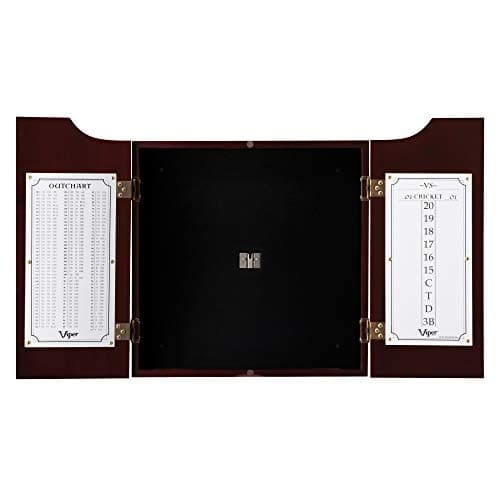
Viper Hudson Solid Wood Dartboard Cabinet
A solid wood cabinet with a dry-erase scoreboard in the doors — protects the wall, closes up, and gives darts somewhere to live.
Type
Solid wood cabinet
Fits
Sisal / bristle steel-tip boards
Extras
Dry-erase scoreboard
Pros
Closes, so the board disappears between games
Scoreboard built into the doors
Storage for darts and flights
Cons
Needs proper wall anchors — it is heavy
Board sold separately
Deeper off the wall, so measure the throw from the board face
Best for: Protecting the wall and hiding the board between games.
The two numbers, and the third one
Height: 5 ft 8 in (68 in / 173 cm) from the floor to the centre of the bullseye.
Distance: 7 ft 9.25 in (93.25 in / 237 cm) from the face of the board to the near edge of the throw line, measured horizontally along the floor.
The diagonal check: 9 ft 7.375 in (115.375 in / 293 cm) from the centre of the bullseye diagonally down to the throw line.
That third figure is the one nobody mentions and the one that saves you. If the floor is uneven, or you cannot get a clean horizontal measurement past furniture, measuring the diagonal from bullseye to line verifies both numbers at once — if the diagonal is right, the height and distance are right. A tape measure and a helper is all it takes.
Marking the throw line
The throw line — the oche — is where your front foot may not cross. Measure from the board's face, not from the wall: a board plus a cabinet can stand 3 to 5 inches off the wall, and measuring from the wall is a common error that makes the throw too long.
Mark it with a strip of low-tack tape, a thin wooden batten, or a purpose-made oche marker. A raised batten has the advantage of being something you can feel through your shoe, which stops the line creeping forward over an evening.
Fixing it to the wall
A sisal board is heavier than it looks, and a board in a wood cabinet is heavier still. Drywall plugs are not adequate. Find a stud and screw into it, or use proper toggle or snap-toggle anchors rated well above the load. A board that works loose will also sit slightly off-square, and on an electronic board that causes miscounting because the scoring matrix depends on the segments sitting square.
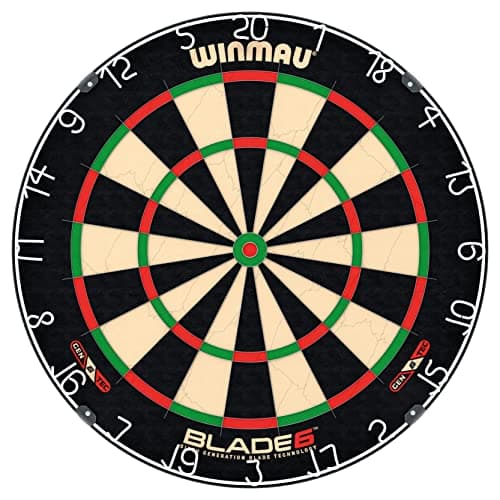
Most boards hang on a central bracket with three small locating points, which lets you rotate the board. Fit the bracket so the 20 segment is at the top — and plan to rotate the number ring every few weeks, because sisal wears fastest in the treble twenty and rotating spreads that wear over the whole board. It genuinely multiplies the board's life.
Protect the wall before the first throw
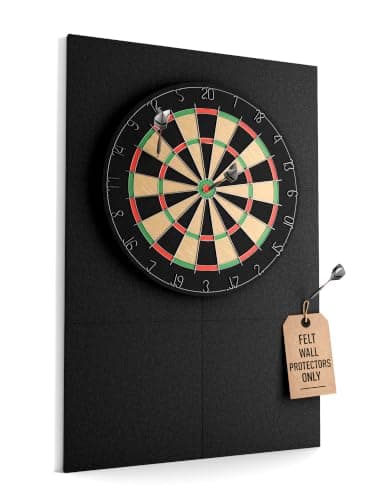
Missed darts spread wider than beginners expect, and a bristle board on bare drywall will leave a constellation of pinholes within a month. Two options: a surround, which is a dense foam or felt ring that fits round the board for very little money, or a cabinet, which also hides the board and holds a scoreboard. Treat whichever you choose as part of the board's cost.
Think about what is beside the board as well as behind it. Do not hang a board where a stray dart can reach a window, a television or a doorway people walk through. And put something on the floor in front of the board — a mat or an offcut of carpet — because dropped darts land point-first and will mark a hard floor.
Light it properly
The most overlooked part of hanging a board. A ceiling fixture behind the thrower casts your own shadow across the scoring beds, which makes the wires and the treble segments hard to read. Light the board from the front and above — a dedicated dartboard light ring, a cabinet with built-in LEDs, or even a directional lamp aimed at the board — and your scoring improves immediately for very little money.
Finally, check the clear floor: the 7 feet 9.25 inches to the line plus about 3 feet of standing room behind it means you want roughly 11 feet of clear depth and a 3-foot-wide patch of wall. That is the smallest footprint of any real game in a home bar, which is most of why darts belongs in every one.
Frequently asked questions
How high should a dartboard be?+
5 feet 8 inches (68 inches / 173 cm) from the floor to the centre of the bullseye. This is the same for steel-tip and soft-tip boards worldwide, and every published scoring statistic assumes it.
How far should you stand from a dartboard?+
7 feet 9.25 inches (93.25 inches / 237 cm) from the face of the board to the throw line, measured horizontally along the floor. Measure from the board's face, not the wall — a board in a cabinet can stand several inches proud, and measuring from the wall makes the throw too long.
How do I check a dartboard is hung correctly?+
Measure the diagonal: it should be 9 feet 7.375 inches (293 cm) from the centre of the bullseye down to the throw line. If that figure is right, both the height and the distance are right — which makes it the quickest way to verify a setup on an uneven floor.
Do I need to protect the wall around a dartboard?+
On any finished wall, yes. Missed darts spread wider than beginners expect and will put pinholes in drywall within a month. A felt or foam surround is cheap; a cabinet also hides the board and holds a scoreboard. Budget for one as part of the board's cost.
How should a dartboard be lit?+
From the front and above, never from behind the thrower — a ceiling light behind you casts your own shadow across the scoring beds. A dartboard light ring, a cabinet with built-in LEDs or a directional lamp aimed at the board all work, and the improvement to your scoring is immediate.
Prices and availability shown here come from Amazon's live data and change often; we re-verify them regularly. Bar Bumper is an Amazon Associate and earns a commission on qualifying purchases at no extra cost to you. Read our full disclosure.