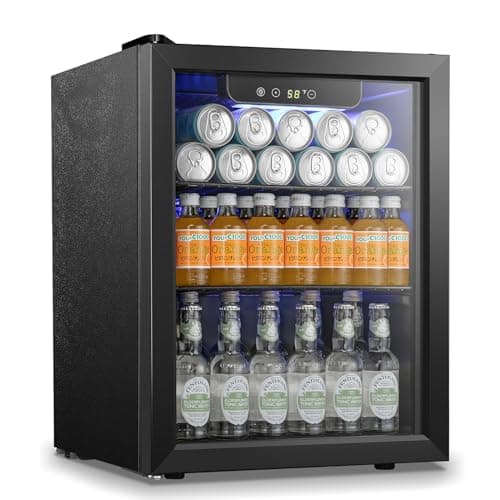
Can counts are fiction and venting is a hard constraint. Five drinks fridges ranked on what they really hold and where they can actually go.
Updated October 2026 · By Stephen V.
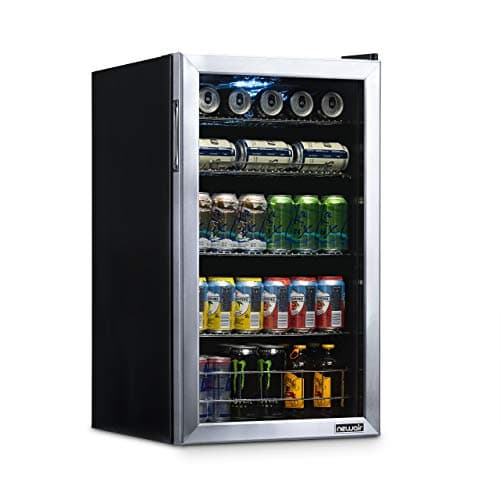
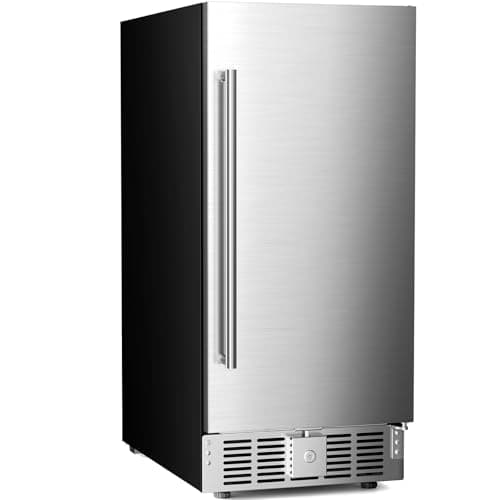
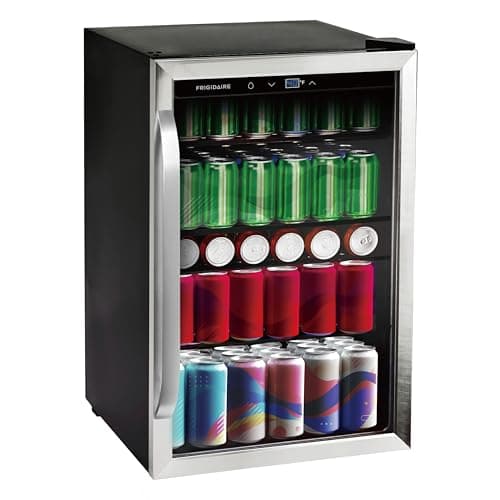
The NewAir 126-can is the beverage refrigerator to buy for most home bars — a freestanding glass-door unit with enough capacity that you stop thinking about it, at a price that does not require a bar remodel. If you are building the fridge into cabinetry, the Antarctic Star 15-inch undercounter is the pick because it is rated for built-in installation; the Frigidaire 126-can is the stainless alternative with a well-known service network; and the Antarctic Star 68-can is the right size for an apartment or a bar cart alcove.
A beverage fridge is the most-used appliance in a home bar, and the easiest one to buy badly. Two specifications cause nearly every regret: the can-capacity number, which is close to fiction, and the venting type, which decides whether the unit can sit in a cabinet at all. Get both right and this is a genuinely satisfying purchase.
We have not tested these units. The ranking draws on published capacities, temperature ranges, venting and installation ratings, shelf configurations, and owner-review consensus reported as other people's experience. Prices are pulled live from Amazon with the date we checked them.
The short answer
In a hurry? These are the picks we'd buy. Prices are live; tap a card below for the full reasoning.
A freestanding 126-can glass-door fridge with the capacity to stop being a constraint — the default choice for a home bar that is not built into cabinetry.
Most home bars with floor space beside the counter
A freestanding 126-can glass-door fridge with the capacity to stop being a constraint — the default choice for a home bar that is not built into cabinetry.
Capacity
Up to 126 cans
Door
Glass
Install
Freestanding
Cooling
Compressor
Pros
Large enough that you stop rationing shelf space
Glass door means you can see stock without opening it
NewAir is one of the established names in this specific category
Good value per can of capacity
Cons
Freestanding — needs rear and top clearance, cannot be boxed in
126 cans assumes standard 12 oz cans and nothing else inside
Takes real floor space
Best for: Most home bars with floor space beside the counter.
$159.996% offPrice as of October 7, 2026·#addisclosure
Antarctic Star 68-Can Beverage Refrigerator
A 68-can glass-door mini fridge at the lowest price here — the right size when the alternative is no dedicated drinks storage at all.
Capacity
68 cans
Door
Glass
Type
Compact / mini fridge
Pros
Cheapest unit here
Small footprint fits where a full-height fridge cannot
Glass door still gives the bar-fridge look
Cons
68 cans fills quickly once bottles and mixers go in
Smaller compressor works harder in a warm room
Freestanding only
Best for: An apartment, an office or a bar cart alcove.
Skip this
The budget traps that look cheap and cost you twice. We'd skip these.
Thermoelectric 'beverage coolers'
Drinks want to be properly cold, in the mid-30s°F. A thermoelectric unit can only reach about 20°F below the room, so in a 72°F room it tops out around 52°F. That is wine temperature, not beer temperature. Beverage fridges need a compressor.
Any unit with fixed shelves if you stock bottles
Fixed wire shelves spaced for 12 oz cans will not take a wine bottle, a growler or a 1-litre mixer upright. Removable or adjustable shelving is what makes the published capacity usable with a real mixed stock.
How to choose (and what to skip)
Halve the can count in your head
A '126 can' rating means 126 standard 12 oz cans stacked in the manufacturer's ideal pattern with nothing else inside. Add tall seltzer cans, a few bottles, a carton of juice and some mixers and the real figure is often nearer 70. Buy a size up from what your arithmetic suggests — nobody has ever regretted a beverage fridge being slightly too big.
Built-in or freestanding decides where it can go
Freestanding units vent out of the back and need clearance behind and above; enclosed, they run constantly and fail early. Built-in or front-venting units exhaust through the front grille and sit flush in a cabinet. Many units are rated for both, and those are the flexible buy. This is a hard constraint, not a preference.
Check the temperature range, not just 'cold'
A drinks fridge should reach the mid-30s°F. Some units marketed as beverage coolers bottom out around 40 to 45°F, which is fine for wine and disappointing for beer. The published minimum temperature is the spec to read, and it is also what distinguishes a true beverage fridge from a repurposed wine cabinet.
Glass door: good for display, worse for efficiency
A glass door is most of the appeal — you see the stock, the bar looks like a bar. It is also the least insulated part of the appliance, and in a hot garage a glass-door unit works noticeably harder than a solid-door one. Look for dual-pane or tinted glass, which improves both insulation and UV protection.
Door swing and reversibility
In a corner or beside a wall, which way the door opens decides whether the fridge is usable. Many units have reversible hinges; some do not, and it is rarely prominent on the listing. Work out the swing you need before ordering, because this is not something you can work around afterwards.
What size you actually need
A useful way to think about it: a beverage fridge should hold what you keep cold plus one party's worth of headroom. For two people with a regular stock of a dozen beers, a few seltzers and some mixers, a 68-can compact is genuinely adequate. For a household that entertains, 120 cans or more stops you having to triage the shelves before guests arrive, and that is the real benefit — not the raw number but never having to think about it.
The other half of sizing is the opening, if you have one. Fifteen inches is the standard undercounter width and the one with the most built-in-rated choice; 24 inches gives far more volume and is the standard for a dishwasher-sized slot. If the bar is not built yet, planning for a 15-inch opening is the most flexible decision, because 15-inch units exist in beverage, wine, dual-zone and ice-maker form.
Beverage fridge or wine fridge
They are not interchangeable, and the difference is temperature. A beverage fridge runs cold — mid-30s°F — with flat wire shelves for cans. A wine fridge runs warm — 41 to 65°F — with contoured shelves to lay bottles on their sides. You can keep wine in a beverage fridge, but it will be served too cold; you cannot keep beer in a wine fridge at any temperature anyone wants to drink it at.
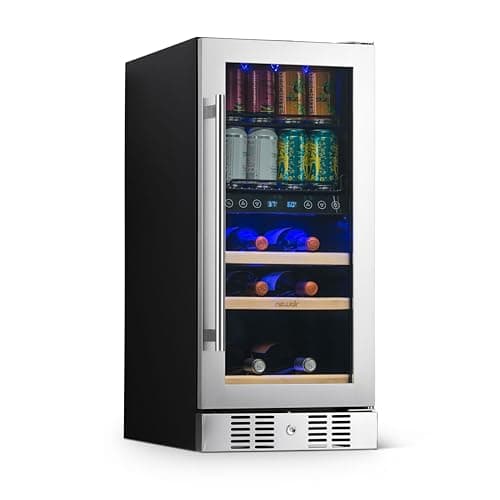
For most home bars the right answer is a beverage fridge, because cans and mixers are what you reach for daily, and the handful of bottles that need cellar temperature can live on a shelf. If you genuinely keep both seriously, a dual-zone unit is the appliance that exists precisely for this problem. Our full comparison walks through it.
Noise, heat and where it lives
Every compressor fridge hums and cycles, and a glass-door unit in an open-plan room is audible during quiet moments. More practically, every fridge rejects heat into the room it is in, which is why a freestanding unit in a tight alcove both runs hotter and warms the alcove. Give it its clearance.
If the fridge is going in a garage, check the rated ambient range in both directions. Garages get hot in summer, which makes any fridge work harder, and cold in winter, which can stop a thermostat calling for cooling at all and let the interior drift below freezing. Units specifically rated for garage use state a wide ambient range; most compact fridges do not.
Frequently asked questions
How many cans does a beverage fridge really hold?+
Usually around half to two thirds of the advertised figure once you load it realistically. Published capacities assume standard 12 oz cans in an ideal pattern with nothing else inside; tall cans, bottles and mixers reduce it substantially. Buy one size larger than your arithmetic suggests.
Can I build a beverage fridge into a cabinet?+
Only if it is rated as built-in or front-venting. Freestanding units vent from the back and need clearance; boxing one in makes it run constantly, miss temperature and fail early. Plenty of 15-inch units are rated for both built-in and freestanding use, and those are the safest purchase.
What temperature should a beverage fridge be set to?+
The mid-30s°F for beer, seltzer and mixers. Check the unit's published minimum temperature before buying — some products marketed as beverage coolers only reach about 40 to 45°F, which is wine temperature rather than drinks temperature.
Can a beverage fridge go in a garage?+
Check the rated ambient range both ways. Summer heat makes any fridge work harder, and a cold garage in winter can stop the thermostat calling for cooling, letting the interior drift. Units rated for garage use state a wide ambient range; most compact glass-door fridges do not, and glass doors insulate poorly in heat.
Prices and availability shown here come from Amazon's live data and change often; we re-verify them regularly. Bar Bumper is an Amazon Associate and earns a commission on qualifying purchases at no extra cost to you. Read our full disclosure.