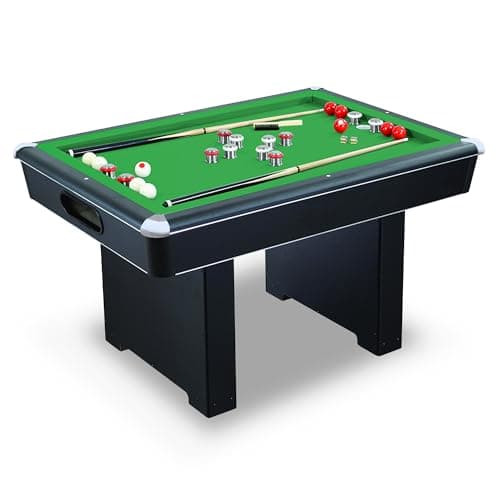
Bumper pool tables are 48 to 54 inches, played with 48-inch cues. That means about 11 by 11 feet — the figure that makes them fit where pool does not.
Updated October 2026 · By Stephen V.
Bumper pool tables come in 48 and 54-inch sizes, and both need roughly 11 by 11 feet of clear floor. The 54-inch is the common size and the one to buy if the room takes it; the difference in room requirement between the two is only about half a foot, so the decision is usually driven by whether you want a 3-in-1 convertible table rather than by space.
The reason bumper pool fits so many more rooms than pool is the cue, not the table. Bumper pool is played with 48-inch cues, which need about 4.5 feet of clearance, against the 4 feet 10 inches a 58-inch pool cue needs. Combine that with a much smaller table and the total requirement drops from roughly 17 by 13 feet to about 11 by 11.
The short answer
In a hurry? These are the picks we'd buy. Prices are live; tap a card below for the full reasoning.
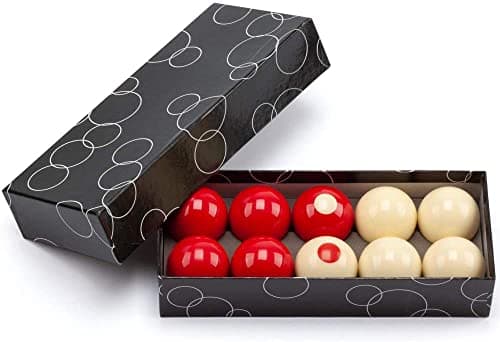
Champion Regulation Bumper Pool Ball Set (10 balls, 2-1/8 in)
A ten-ball set at the regulation 2-1/8 inches — not interchangeable with 2-1/4 inch pool balls.
Diameter
2-1/8 in (regulation)
Count
10 balls
Pros
Correct regulation size for bumper pool
Ten balls is a complete set
Bumper pool balls chip, so a spare set is sensible
Cons
Will not work on a pool table
Balls only — no cues
Best for: Replacing chipped balls, or confirming the size.
The sizes, and the room each needs
48-inch table — roughly 10.5 x 10.5 ft of clear floor. The compact option, usually a dedicated bumper table.
54-inch table — roughly 11 x 11 ft. The common size, and where most of the 3-in-1 convertibles sit.
Octagonal 3-in-1 tables — typically around 53 to 54 inches across; allow the same 11 x 11 ft, plus room to pull chairs out if you will use it for poker.
As with any cue game, measure the clear floor rather than the room. Subtract permanent obstructions, allow for door swings, and do not count space occupied by furniture you intend to move but will not. Our pool-table room guide covers the same arithmetic for full-size tables.
Why 3-in-1 changes the decision
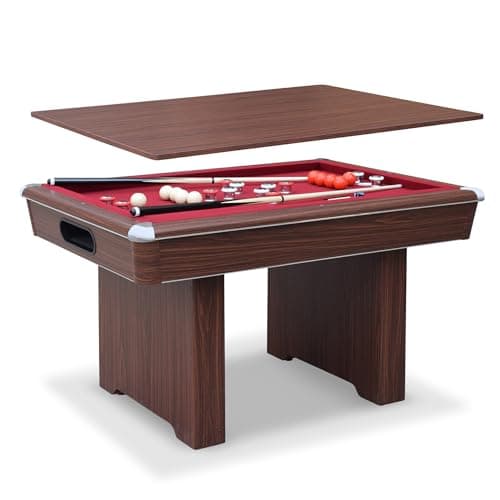
Most bumper pool tables above entry level are convertibles: a reversible or removable top gives you poker felt and a dining surface. This is not marketing padding. A game of bumper pool lasts ten to twenty minutes, so a dedicated bumper table spends most of its life as a large object in the middle of a room. A convertible table is used most evenings and plays bumper pool whenever someone suggests it.
The honest compromise is the bed. A reversible top cannot be slate, so convertible tables use laminated wood, which plays well and can eventually develop a very slight roll. If play quality is the only priority, buy a dedicated slate table. In a multi-use room, three uses from one footprint is worth more.
If poker matters, the octagonal designs seat more players around the same floor area than a rectangle does — but allow extra clearance for chairs being pulled out, which is more than the bumper-pool clearance you calculated.
Ball and cue sizes, which are not interchangeable
Bumper pool uses ten balls at 2-1/8 inches — five per player, with one of each colour marked. Pool uses sixteen balls at 2-1/4 inches. The sizes are close enough that people try to substitute and far enough apart that it does not work: bumper pool pockets and the gaps between bumper posts are cut for the smaller ball.
Cues are 48 inches as standard. You can use a 58-inch pool cue, but doing so reinstates the clearance requirement that made you choose bumper pool in the first place. Short cues are inexpensive, and a spare pair is worth having.
Ceiling, floor and delivery
Ceiling height is much less of a constraint than with pool, because a 48-inch cue is raised less. Anything over about 7.5 feet is fine. The floor matters more: these tables are heavy and most basements slope slightly to a drain, so level the table properly on delivery with a spirit level across both axes and shim until a ball sits still in the middle of the bed. An unlevel bumper table makes every bank shot lie to you, and it is the single most common reason people think a table plays badly.
Delivery is 150 to 250 lb of flat-pack for most convertibles, more for a slate bed. Measure the narrowest doorway and the tightest stair turn before ordering. Budget two people and two to four hours for assembly.
Frequently asked questions
What size is a standard bumper pool table?+
Most are 54 inches, with 48-inch models as the compact option. Because bumper pool is played with 48-inch cues, a 54-inch table needs about 11 by 11 feet of clear floor and a 48-inch table about 10.5 by 10.5 — roughly half the area a 7-foot pool table requires.
How much room do you need around a bumper pool table?+
About 4.5 feet on all four sides, which is the length of a standard 48-inch bumper pool cue plus a little stroke room. That is why bumper pool fits rooms a pool table cannot: a 58-inch pool cue needs 4 feet 10 inches, and the table itself is much larger.
What size balls does bumper pool use?+
Ten balls at 2-1/8 inches — five per player, one of each colour marked. Pool balls are 2-1/4 inches and will not work: bumper pool pockets and the gaps between the bumper posts are cut for the smaller ball.
Are 3-in-1 bumper pool tables worth it?+
In a multi-use room, yes. A game of bumper pool lasts twenty minutes, so a dedicated table spends most of its life unused, while a convertible is a poker and dining table the rest of the time. The compromise is that convertible beds are laminated wood rather than slate.
Prices and availability shown here come from Amazon's live data and change often; we re-verify them regularly. Bar Bumper is an Amazon Associate and earns a commission on qualifying purchases at no extra cost to you. Read our full disclosure.