A 750 ml bottle is 12 inches tall. Most carts photograph beautifully and cannot stand one upright — here are the ones that can.
Updated October 2026 · By Stephen V.
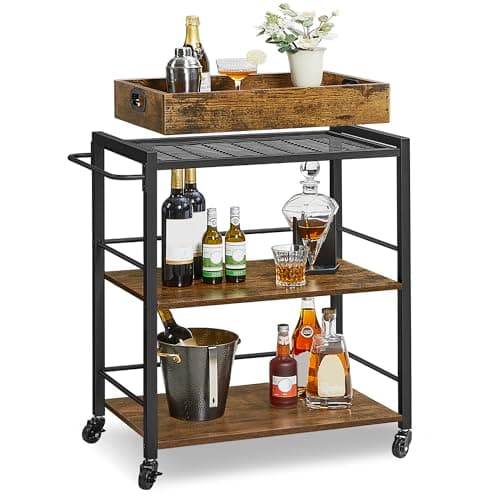
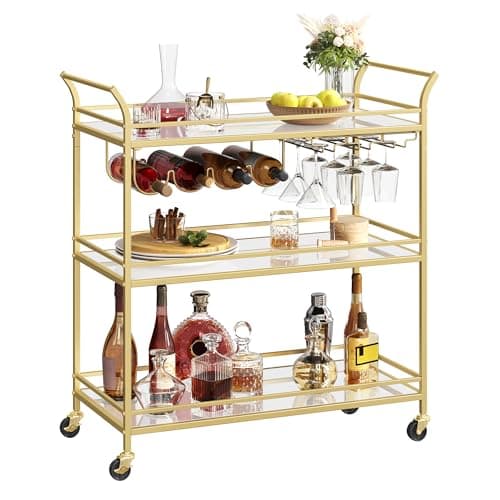
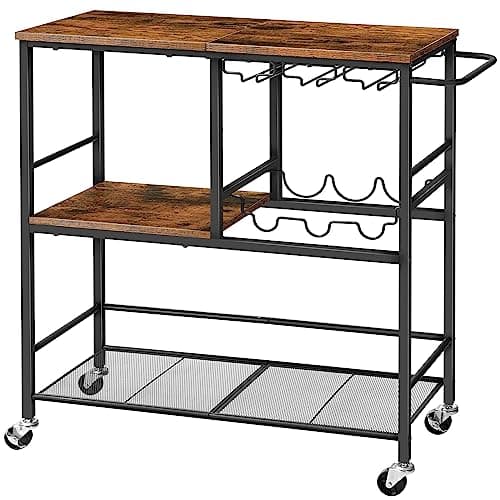
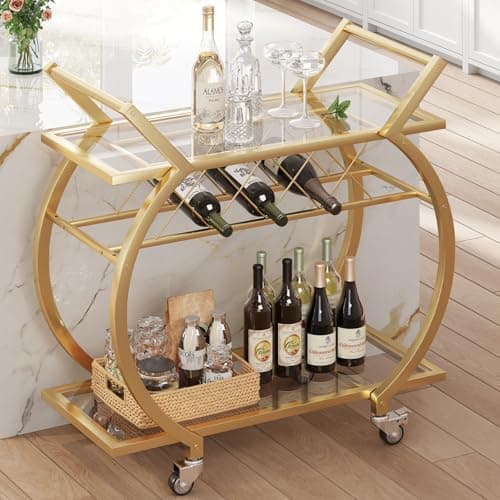
The VASAGLE bar cart with a wine rack and glass holder is the bar cart to buy. It has the three things most carts lack: an integrated rack that actually holds bottles, a stemware rail that holds glasses upside down, and wheels that let it move without everything on top shifting. The VASAGLE Gold three-tier is the larger version if you have a real bottle collection; the HOOBRO three-tier is the value pick; the LVB gold cart with glass shelves is the one to buy if looks come first; and the Homeiju cabinet is what to buy instead if the cart is never actually going to move.
Bar carts are the most style-led purchase in a home bar and the easiest to get wrong, because the thing that decides whether a cart is useful is not visible in a photograph: shelf clearance. A standard 750 ml spirits bottle is about 12 inches tall, and a wine bottle is about 12 to 13. A cart needs roughly 13 inches of vertical clearance to stand bottles upright on a shelf. Plenty of handsome carts have 10 inches, which means every bottle lies down or lives on the top surface only.
We have not loaded these carts. The ranking draws on published dimensions, shelf configurations, stated capacities, caster type and material, plus owner-review consensus reported as other people's experience. Prices come live from Amazon with the date we verified them.
The short answer
In a hurry? These are the picks we'd buy. Prices are live; tap a card below for the full reasoning.
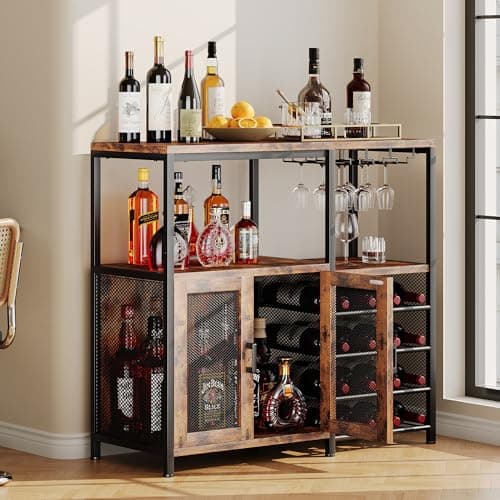
A bar cabinet with a wine rack and enclosed storage — considerably more capacity per square foot than any cart, with the mobility traded away.
Type
Bar cabinet
Wine rack
Integrated
Storage
Enclosed plus open
Mobility
None
Pros
Far more storage per square foot than an open cart
Enclosed sections keep bottles out of the light and out of sight
Reads as furniture in a living room, not as equipment
Cons
Does not move, which is the entire point of a cart
Takes a fixed footprint against a wall
Larger assembly job
Best for: A permanent bar in a corner, where storage beats mobility.
Skip this
The budget traps that look cheap and cost you twice. We'd skip these.
Carts with under about 13 inches of shelf clearance
A 750 ml bottle is roughly 12 inches tall. Below 13 inches of vertical clearance, bottles cannot stand on the shelf and the cart's usable capacity collapses to its top surface. This number is rarely in the listing and is the single most important thing to work out from the dimensions.
Carts with purely decorative wine racks
A lot of carts have a few curved wires that hold two bottles at an angle and prevent anything else going there. A real rack holds four or more; a decorative one costs you shelf space. Look at how many bottles the photographs actually show in it.
Carts with fixed, non-locking casters on a hard floor
A loaded cart that rolls when you lean on it to pour is genuinely annoying and occasionally expensive. Locking casters, or two fixed and two swivel wheels, are what keep a cart where you put it.
How to choose (and what to skip)
Work out the shelf clearance from the dimensions
This is the decisive spec and it is almost never stated directly. Take the overall height, subtract the shelf thicknesses, and divide by the number of gaps — or look at the manufacturer's photographs and see whether bottles are standing or lying. You want about 13 inches on at least one shelf so 750 ml bottles can stand upright. Carts that fail this test are side tables with wheels.
Count what you actually need to store
A working bar cart needs to hold roughly eight bottles, six glasses and a tool stand without rearranging. Add a mixing glass and an ice bucket and you need more area than most two-tier carts provide. Be honest about your collection: if it is twelve bottles, a cart is the wrong furniture and a cabinet or a wall rack is the right one.
Stemware rails and wine racks are what make a cart a bar cart
A rail that holds glasses upside down by the foot uses otherwise-dead vertical space under a shelf and keeps glasses dust-free and visible. A real wine rack does the same for bottles lying down. These two features are the practical difference between a bar cart and a trolley, and they cost nothing extra on the carts that have them.
Casters and the floor
Larger wheels roll over thresholds and rug edges; small hard casters catch on both. Locking casters stop the cart moving when you lean on it. On hardwood, check the wheel material — hard plastic marks wood over time, and rubber or felt-lined casters do not. This matters because a cart does get pushed around, which is its whole purpose.
Material: metal and wood over glass, if it gets used
Glass shelves look superb and have a lower weight rating, show every ring and fingerprint, and are the one part of a cart that can fail catastrophically. Metal shelves with a wood veneer are the practical choice for a cart that actually serves drinks. Buy glass for a cart that is mostly decorative in a living room.
What a bar cart is genuinely good at
Two things. First, it is the lowest-commitment home bar there is: no plumbing, no cabinetry, no permanent floor space. You can put a complete bar on a cart in an afternoon and move it to the other side of the room next month. Second, it brings the bar to the people — wheeling a cart into a living room during a party is genuinely useful, and the reason carts exist rather than cabinets.
What it is bad at is volume. An open cart holds what fits on two or three shelves, in view, where light hits it. If you have a collection you care about, you want enclosed storage out of the light, and that means a cabinet or a wall rack with the cart used for service rather than storage.
How to lay one out
There is a layout that works and most people arrive at it eventually. Top shelf: working surface — keep it mostly clear, with the tools you use on a stand at the back and room to build a drink at the front. Middle: bottles standing up, the ones you pour from most at the front. Bottom: heavy and infrequent — mixers, the ice bucket, spare glassware, backup bottles. Glasses hang from the stemware rail if there is one, upside down.
Keep weight low. A cart loaded top-heavy with bottles on the upper shelf is unstable when wheeled, especially over a rug edge. And put a bar mat on the working surface — it catches drips, stops glasses sliding while you pour, and is the single cheapest thing that makes a cart pleasant to use.
Where the cart sits in a home bar
For a lot of people a cart is the whole bar, and that is a perfectly complete answer: bottles, tools, glasses, an ice bucket. The upgrade path from there is almost always cold storage — a beverage fridge beside the cart, then an ice maker — because those are the two things a cart cannot do. Our setup guide covers the order to buy in.
If you are short on floor space, consider a wall-mounted rack plus a small cart instead of one large cart. A wall rack stores bottles and glasses in space that is otherwise completely unused, costs very little, and leaves the cart free to be a working surface rather than a shelf unit.
Frequently asked questions
Are bar carts actually useful or just decorative?+
It depends almost entirely on shelf clearance. A 750 ml bottle is about 12 inches tall, so a cart needs roughly 13 inches of vertical clearance to stand bottles upright. Carts that clear that, with a real wine rack and locking casters, are genuinely useful. The many that do not are side tables with wheels.
How many bottles does a bar cart hold?+
A functional cart should take about eight bottles standing upright plus six glasses and a tool stand. Two-tier carts with tight clearance often manage three or four. If your collection is larger than a dozen bottles, a bar cabinet or a wall-mounted rack stores far more per square foot.
What should go on each shelf of a bar cart?+
Top shelf: working surface, mostly clear, with tools on a stand at the back. Middle: bottles standing upright, most-used at the front. Bottom: heavy and infrequent items — mixers, ice bucket, spare glassware. Glasses hang upside down from a stemware rail if the cart has one. Keep weight low so the cart stays stable when wheeled.
Glass or metal shelves on a bar cart?+
Metal or wood if the cart gets real use — glass shelves have a lower weight rating, show every ring and fingerprint, and are the one component that can fail badly. Glass looks better and keeps a cart visually light in a small room, which makes it the right choice for a mostly decorative cart in a living room.
Prices and availability shown here come from Amazon's live data and change often; we re-verify them regularly. Bar Bumper is an Amazon Associate and earns a commission on qualifying purchases at no extra cost to you. Read our full disclosure.