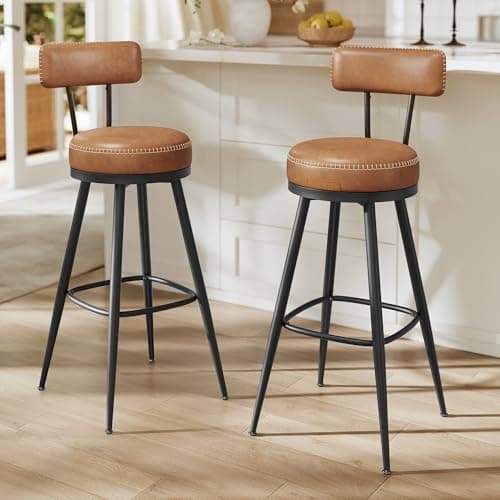
Best bar stools
The best bar stools
Five bar stools across counter and bar height, ranked on seat height range, swivel, footrest and weight rating — plus the height formula.
Updated October 2026 · Stephen V.
Our top pick
Where people sit and where the bottles live. The seat-height arithmetic that decides whether a stool fits your counter, and the carts that hold more than three bottles and a shaker.
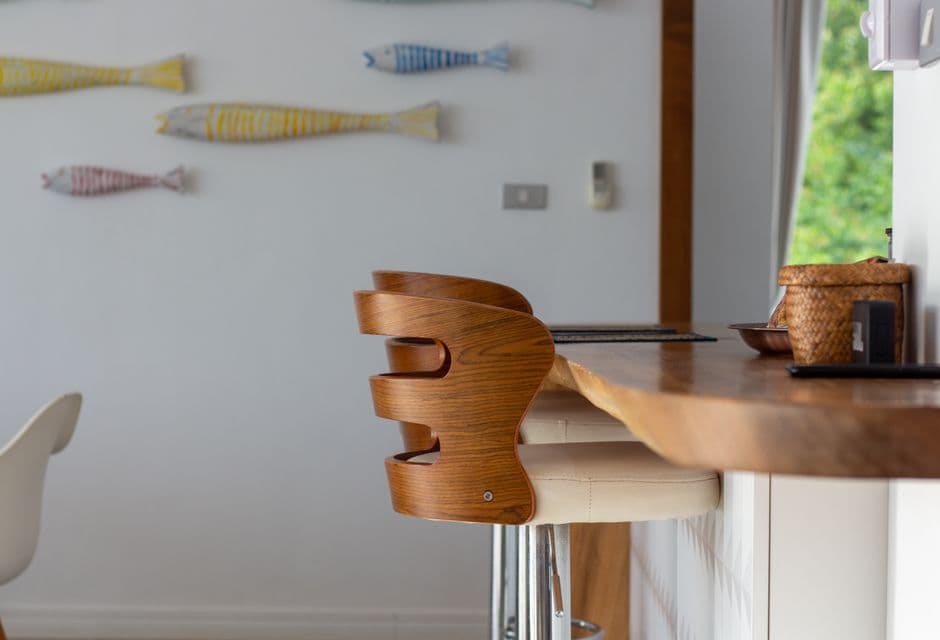
Furniture is where a home bar either becomes somewhere people linger or stays somewhere people fetch a drink from. It is also the category with the single most returned product in this niche, for one entirely avoidable reason: stool height. There is a formula, it takes thirty seconds, and most people buy without doing it.
Measure from the floor to the underside of your counter or bar top, then subtract 10 to 12 inches. That is your seat height. Ten inches is snug, twelve is roomy, under nine and your knees hit. The three standard tiers:
Adjustable gas-lift stools cover a range and are the safe answer when you are not certain or the bar is not built yet. Fixed-height stools are sturdier and usually cheaper at the same quality. Get the measurement before you shop; there is no styling decision on this page that matters half as much. The height guide has the full table including odd-sized tops.
Swivel is worth paying for at a bar where people turn to talk; a 360° swivel seat makes a narrow bar feel twice as sociable. A footrest is not decoration — on any stool over about 26 inches, dangling feet become uncomfortable within twenty minutes, and a ring or bar footrest is the difference between a stool people sit on and one they stand next to. A back likewise: backless stools tuck fully under a counter and look cleaner, and nobody sits on one for two hours. Weight rating is published on most listings and worth reading; it also tells you something about the frame. And floor protection — stools get dragged, and plastic glides on a hardwood floor will mark it.
Most bar carts photograph beautifully and hold embarrassingly little: three bottles, two glasses, and a shaker you have to move to reach anything. The specs that decide whether a cart is useful are shelf clearance (a 750 ml bottle is roughly 12 inches tall, so you need 13 inches of vertical clearance to stand bottles up), a real wine rack or stemware rail rather than a decorative one, and locking casters so it does not roll when you lean on it. A cart that holds eight bottles, six glasses and the tools is doing a job; one that holds four is a side table with wheels. For a fixed collection, a bar cabinet or a wall-mounted rack stores far more per square foot, and a wall rack costs very little.
The mistake buyers make: buying two stools for a bar that fits three, or four for a bar that fits two. Allow 26 to 30 inches of counter width per stool, measured along the bar — that is elbow room, not seat width. A 72-inch bar seats three comfortably, not four.
Each with live prices, our spec-scoring, and the models to skip.
Five bar stools across counter and bar height, ranked on seat height range, swivel, footrest and weight rating — plus the height formula.
Our top pick
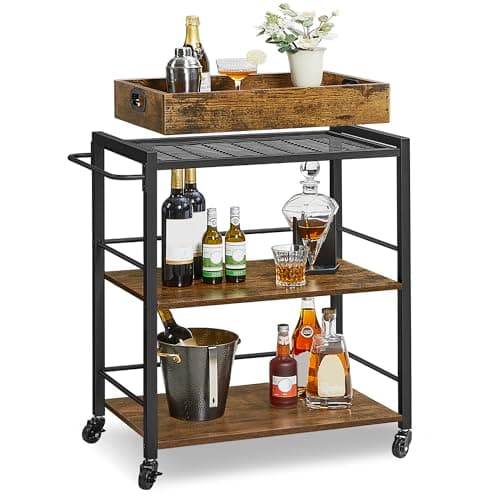
Five bar carts ranked on shelf clearance, bottle and glass capacity, caster quality and whether the wine rack is real or decorative.
Our top pick
These two pages put every category together — what to buy in which order, and the layouts that fit the floor space you actually have.
The complete home bar and game room build, ordered by how much each purchase changes the room — with live prices and a pick for each stage.
Our top pick
Five home bar layouts by available space — cart, wall, alcove, basement and garage — with the equipment and clearances each one needs.
Our top pick