Written for anyone whose bottles do not fit. Champagne and Burgundy bottles are wider than the Bordeaux bottle every capacity rating is based on — here are the fridges with room for them.
Updated October 2026 · By Stephen V.
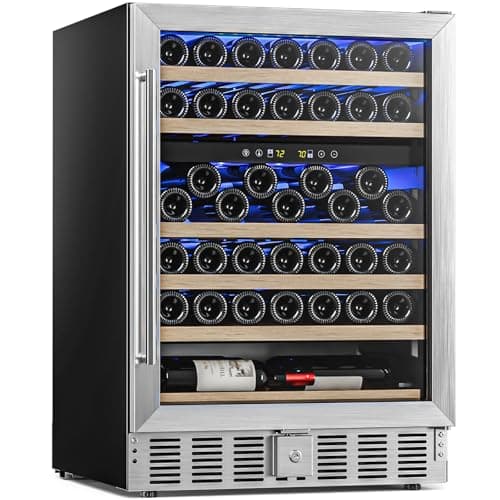
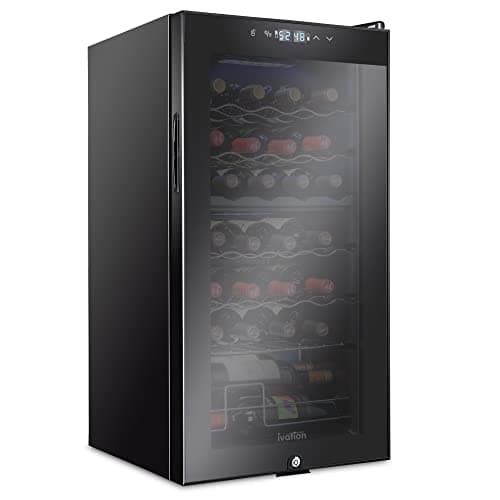
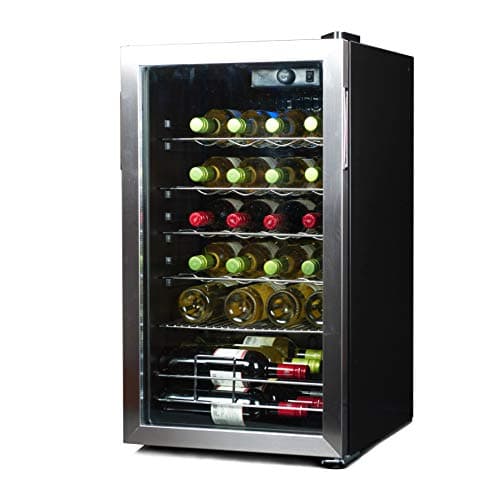
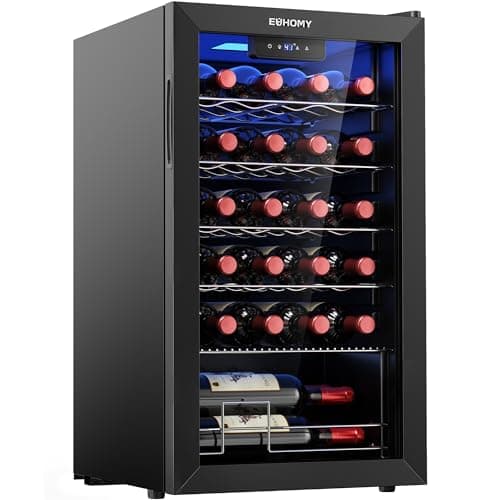
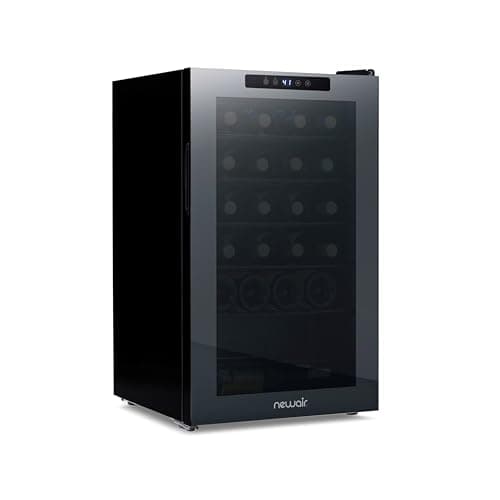
The best wine fridge for champagne is the Antarctic Star 24-inch 52-bottle dual-zone unit: a full-width cabinet with the shelf depth to take fat bottles and two zones so the champagne can sit colder than the reds. The Ivation 28-bottle dual zone is the lockable alternative; the BLACK+DECKER 26-bottle is the compressor pick for a warm room; the EUHOMY 25-bottle is the value option; and the NewAir 17-inch is the one that fits a narrow gap.
Here is the problem this page exists to solve. Every bottle count you see is calculated with a standard 750 ml Bordeaux bottle: about 3 inches across. A champagne bottle is roughly 3.5 inches across with thicker glass and a wider base, and a Burgundy or Pinot bottle is similar. Put champagne into a fridge rated for 28 Bordeaux bottles and you will fit somewhere around 18 to 20 of them — and on some racks, the top bottle in each row will not sit under the shelf above at all.
So the specification that matters is not capacity. It is shelf spacing, shelf depth, and whether the racks come out. A fridge with removable shelves can be reconfigured to give two or three tall bays for magnums and champagne while keeping tight racking for the rest. A fridge with fixed, closely-spaced wooden racks cannot, however big the number on the box.
We have not measured these cabinets with a tape. The ranking is built from published capacity, zone count, shelf type and cooling method, plus owner-review consensus reported as other people's experience — see how we pick. Check the manufacturer's internal dimensions against your own bottles before ordering. Prices come live from Amazon with the date we verified them.
The short answer
In a hurry? These are the picks we'd buy. Prices are live; tap a card below for the full reasoning.
Antarctic Star 24-in 52-Bottle Dual-Zone Wine Fridge
A full-width 24-inch cabinet with two independent zones — the most usable space for fat bottles here, and the champagne can be held colder than the reds.
A mixed cellar with champagne, Burgundy and reds in it
24 bottles in a 17-inch body — the one to buy when the space is fixed, with the honest warning that narrow cabinets are where big bottles struggle most.
Antarctic Star 24-in 52-Bottle Dual-Zone Wine Fridge
A full-width 24-inch cabinet with two independent zones — the most usable space for fat bottles here, and the champagne can be held colder than the reds.
Capacity
52 bottles (Bordeaux)
Width
24 in
Zones
Dual
Cooling
Compressor
Pros
A 24-inch cabinet is deep enough that a champagne bottle is not fighting the door
Two zones means serving-cold sparkling and cellar-cool reds in one appliance
Big enough that losing a third of the capacity to fat bottles still leaves plenty
Compressor cooling holds temperature in a warm room
Cons
Needs a full 24 inches of width, which rules out tight gaps
The 52-bottle figure assumes Bordeaux bottles — expect well under that with champagne
The largest and heaviest unit here
Best for: A mixed cellar with champagne, Burgundy and reds in it.
24 bottles in a 17-inch body — the one to buy when the space is fixed, with the honest warning that narrow cabinets are where big bottles struggle most.
Capacity
24 bottles (Bordeaux)
Width
17 in
Brand
NewAir
Type
Freestanding wine fridge
Pros
Fits a narrow gap where nothing else here will go
NewAir is one of the established names in this category
24 bottles is a lot for the width
Sensible choice for an apartment or a built-in run
Cons
Narrow racks are the hardest place to fit champagne — expect a big capacity hit
Single zone
Tall and narrow cabinets are more sensitive to being level
Best for: A 17-inch gap that still has to hold sparkling.
Skip this
The budget traps that look cheap and cost you twice. We'd skip these.
Buying on the bottle count
The number on the box is the manufacturer's count of standard 750 ml Bordeaux bottles stacked in the designed pattern, with nothing else in the cabinet. Load champagne, Burgundy or Pinot bottles and the real figure drops by roughly a third; load a magnum and you lose a whole shelf. If every bottle you buy is sparkling, read the rating as two-thirds of what it says and shop a size up. That single adjustment prevents nearly every disappointment in this category.
A thermoelectric cooler for sparkling wine in a warm room
Thermoelectric units are silent and cheap, but they can only pull the interior a fixed number of degrees below the room — so in a kitchen that hits 80 degrees in summer, they cannot reach the low 40s that sparkling wine is served at. Champagne held at 60 degrees because the cooler cannot keep up is not being stored badly, but it is not ready to drink either. For sparkling, in a room that gets warm, buy compressor cooling.
How to choose (and what to skip)
Measure your actual bottles, then the shelf spacing
A Bordeaux bottle is about 3 inches across; champagne and Burgundy are roughly 3.5 inches with wider bases and thicker glass. Take a tape to the bottles you actually buy, then check the manufacturer's internal dimensions — not the bottle count. The question is whether a fat bottle sits in the rack cradle and clears the shelf above, and that is a dimension, not a number of bottles.
Prioritize removable shelves over capacity
The single most useful feature for a mixed cellar is racks that come out. Pull one or two and you have a tall bay for magnums and champagne while keeping tight racking for standard bottles, which is how you get the full use of a cabinet. Fixed racking locks you into one bottle shape forever, however generous the spacing looks in the photographs.
Dual zone earns its money with sparkling
Champagne is served around 45 degrees and most reds around 60. One zone forces a compromise that suits neither, and sparkling is the one that suffers most because it is the one you want genuinely cold. If sparkling is a regular part of what you drink rather than an occasional bottle, dual zone is the upgrade to spend on before extra capacity.
Buy compressor cooling unless the room is climate controlled
Compressor units hold their setting regardless of the room; thermoelectric units work from the room temperature and give up when it is warm. For a cupboard, a kitchen that gets afternoon sun, or anywhere unconditioned, compressor is the only reliable answer. The trade is a faint hum and a slightly higher price, which is a good deal.
Think about bottle orientation for sparkling
Sparkling wine is under pressure and sealed with a cork held by a cage, so the cork-drying argument for laying bottles down is weaker than with still wine. What matters more is that fat bottles sit stably in the cradle and do not roll when the door shuts. If a cabinet's racks only hold a champagne bottle insecurely, that is a reason to pass on it regardless of how many it claims to fit.
Why champagne bottles do not fit
Three reasons, all physical. They are wider — about half an inch more diameter than a Bordeaux bottle, which is a lot when racks are cradled to fit the narrower one. The glass is thicker and the base is deeper, because the bottle holds several atmospheres of pressure, so the bottle is heavier and sits differently in a cradle. Some are taller. Put those together and a rack designed for a standard bottle either will not take a champagne bottle at all, or takes it with the neck proud so the shelf above cannot close over it. Burgundy and Pinot Noir bottles have the same problem for the same reason, which is why the two queries go together.
What capacity you really get
As a working rule, assume a cabinet rated for standard bottles will take about two-thirds that number in champagne or Burgundy bottles, and plan for a shelf or two to be given over to them entirely. A 52-bottle cabinet comfortably holds a mixed cellar with a dozen sparkling bottles in it. A 24-bottle cabinet holding mostly champagne is a 16-bottle cabinet. Neither is a fault in the appliance — the rating is honest about what it measures — but it is the arithmetic nobody does before ordering, and it is the whole reason these fridges get returned.
What temperature should champagne be stored at?
Store it in the same 50 to 55 degree band as other wine, and serve it at about 45. That is the practical answer: a stable cellar temperature for keeping, then an hour in the cold zone or a bucket before pouring. This is why dual-zone cabinets suit sparkling drinkers — the cold zone doubles as the serving zone, so a bottle is always ready. What you should avoid is storing it in a food fridge at 38 degrees for months, which is both too cold and too dry. Our wine fridge temperature guide has the full numbers for every style.
Magnums, and when to stop trying
A magnum is 1.5 liters and about 4 inches across. No standard wine fridge rack holds one, and the usual approach is to remove a shelf entirely and lay magnums on the floor of the cabinet or across the bottom rack. If you own more than a couple, the answer is a cabinet with removable shelving and the acceptance that the bottom third of it is magnum storage. If you own many, you want a cellar rather than a fridge — at which point the main wine fridge roundup covers the larger cabinets worth looking at.
Where to put it
Away from direct sun and away from heat, which means not beside an oven or a dishwasher, and ideally not in a conservatory. Freestanding units need clearance at the back and sides to reject heat — boxing one in makes it run constantly, which is both noisy and shortens its life. If the plan is to build it into cabinetry, you need a unit specifically described as built-in or front-venting; our undercounter wine fridge picks are the ones designed for that, and the garage wine fridge page covers the harder ambient conditions.
Frequently asked questions
What is the best wine fridge for champagne?+
The Antarctic Star 24-inch 52-bottle dual-zone cabinet. The full 24-inch width gives shelf depth that fat bottles need, and two zones let you hold champagne at serving temperature while the reds sit warmer. For a smaller footprint, the Ivation 28-bottle dual zone is the same idea with a lock.
Do champagne bottles fit in a wine fridge?+
Often not as well as the bottle count suggests. Champagne bottles are around 3.5 inches across against a standard Bordeaux bottle's 3 inches, with thicker glass and a deeper base, so racks cradled for standard bottles hold them badly or not at all. Look for removable shelves and check the internal dimensions rather than the rated capacity.
How many champagne bottles fit in a wine fridge?+
Roughly two-thirds of the rated capacity, as a working rule — a 28-bottle cabinet holds about 18 to 20 champagne bottles, and usually with one shelf given over to them. Ratings are calculated with standard 750 ml Bordeaux bottles stacked in the designed pattern, which is the best case rather than the typical one.
What temperature should champagne be stored at?+
Store at 50 to 55 degrees like other wine, and serve at about 45. A dual-zone fridge handles both at once: the cold zone doubles as the serving zone so a bottle is always ready. Avoid long-term storage in a food fridge at 38 degrees — it is too cold and the dry air shrinks corks.
Will a wine fridge take Burgundy bottles?+
The same answer as champagne: Burgundy and Pinot bottles are wider than Bordeaux bottles, so they take more rack space and may not clear the shelf above. A cabinet with removable shelves solves it — pull a shelf and create a tall bay for the fat bottles while keeping standard racking elsewhere.
Can you store magnums in a wine fridge?+
Not in a standard rack — a magnum is about 4 inches across. The usual approach is to remove a shelf and lay magnums across the bottom of the cabinet. If you keep more than a couple, buy a cabinet with removable shelving and plan for the bottom section to be magnum storage.
Prices and availability shown here come from Amazon's live data and change often; we re-verify them regularly. Bar Bumper is an Amazon Associate and earns a commission on qualifying purchases at no extra cost to you. Read our full disclosure.