A combo fridge is two appliances sharing one carcass, and the split is fixed when you buy it. Six units compared on the bottle-versus-can ratio you are actually committing to, the opening they need, and whether they can be built in.
Updated October 2026 · By Stephen V.
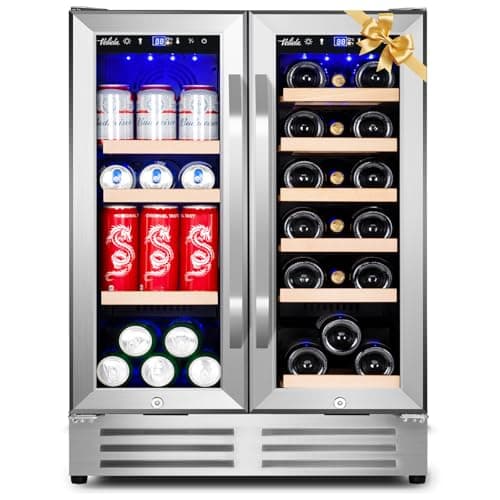
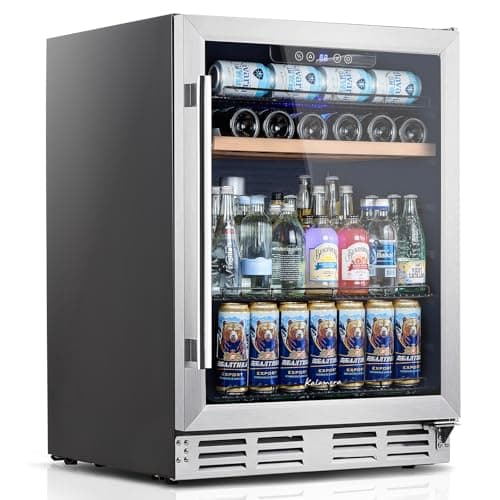
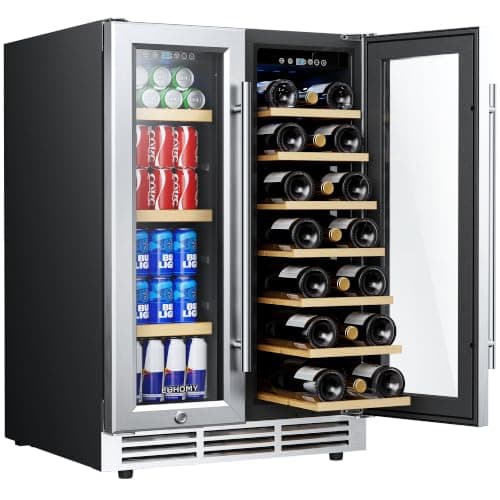
For most home bars the Velieta 24-inch dual-zone is the combo fridge to buy — 18 bottles on one side, 88 cans on the other, in the 24-inch width that fits a standard undercounter opening, and rated for a built-in install so it does not have to stand proud of the cabinet run. If you drink more beer and soda than wine, the Kalamera flips the ratio to 118 cans and 15 bottles. If your opening is 15 inches rather than 24, the Friduo is the only unit here that fits it. And if the budget is the constraint, the DOGHLY does the same job for substantially less.
A wine and beverage combo refrigerator is one cabinet divided into two independently cooled compartments: a wine zone held somewhere around 50-60°F, which is serving temperature for red and cellar temperature for white, and a beverage zone held down near 38-42°F, which is where a can of beer or a bottle of soda actually wants to be. The reason the category exists is that those two numbers are irreconcilable. A single-zone wine fridge set cold enough for beer will dull red wine; a wine fridge set right for wine serves warm beer.
How we judged these
This is a once-a-decade purchase that gets built into cabinetry, so the criteria are about fit and commitment rather than features. In order:
The split, and whether it is the split you want. This is the decision that cannot be undone. A combo fridge arrives with its divider in a fixed place: the wine side holds what it holds and the can side holds what it holds, and no amount of shelf-shuffling changes the ratio by much. A 20-bottle / 80-can unit is a different appliance from a 15-bottle / 118-can unit, and buying the wrong one means living with it. Work out what you actually keep cold today, then buy for that.
Cabinet width, and the opening it needs. Undercounter appliances come in two real widths: 15 inches and 24 inches. If you are retrofitting into an existing cabinet run, the opening decides the appliance, not the other way round. Measure the opening width, the depth from the back wall to the face of the cabinet, and the height under the counter before you look at a single listing.
Built-in rating versus freestanding only. A unit that vents out of the back needs air behind it and will overheat in a closed cabinet. A unit that vents through the front grille can be enclosed on three sides. Every pick on this page publishes a built-in or freestanding rating, and we say which — because installing a freestanding-only fridge into a tight opening is the most common way these appliances die early.
Published temperature range per zone. A dual-zone unit is only useful if the cold zone actually gets cold. A spread of roughly 41-64°F across both zones is enough to serve wine properly and chill cans; a unit whose lower bound is 50°F is a two-zone wine fridge wearing a beverage label, which is a different product and is covered in our dual-zone wine fridge roundup.
We have not installed and measured these cabinets ourselves. Every figure below is the capacity, width, cooling type or install rating the maker publishes on the listing, cross-checked against the specification the retailer shows, with owner-review consensus reported as other people's experience — see how we pick. Prices come live from Amazon with the date we verified them, and we do not write a number into the copy that could go stale.
Is a combo fridge actually the right appliance for you?
Often it is not, and it is worth being honest about that before spending several hundred dollars. A combo makes sense when you have exactly one opening and two needs — one undercounter slot in an island or a bar run, and both wine and cans to keep cold. That is a very common situation in a home bar, which is why the category sells.
It makes much less sense if you have the wall space for two 15-inch units, because two single-purpose appliances give you more total capacity, a split you can change later by swapping one of them, and a failure mode that only takes out half your storage. It also makes less sense if you are 90% wine or 90% cans: in that case buy the dedicated appliance and keep the overflow in the kitchen fridge. Our wine fridge versus beverage fridge comparison works through that decision in full, and the undercounter beverage fridge roundup covers the can-only route.
The short answer
In a hurry? These are the picks we'd buy. Prices are live; tap a card below for the full reasoning.
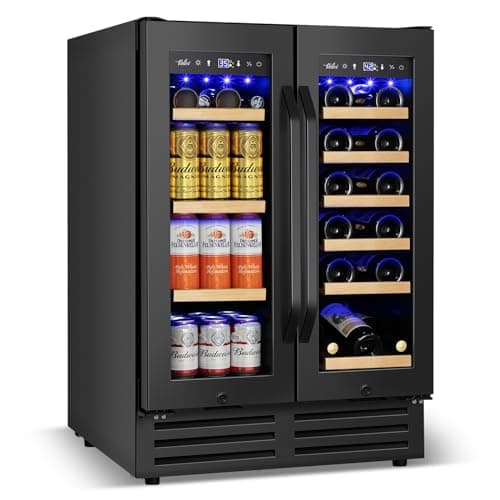
Eighteen bottles and 68 cans behind a locking glass door — the only pick here that solves the problem of a bar fridge in a house with other people in it.
A basement bar or game room where the fridge should not be self-service
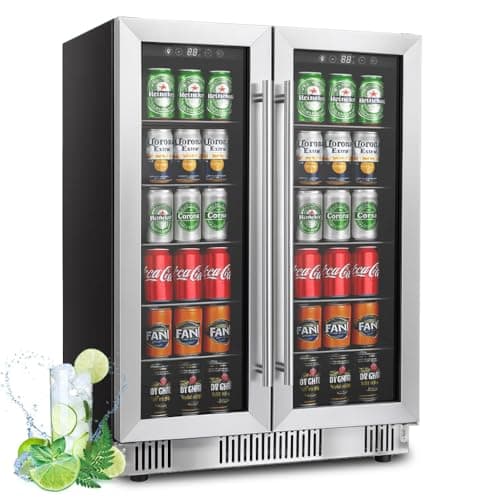
A 210-can dual-zone 24-inch cabinet at a price well under the rest of this page — the cheapest honest route into the category, with the brand risk that implies.
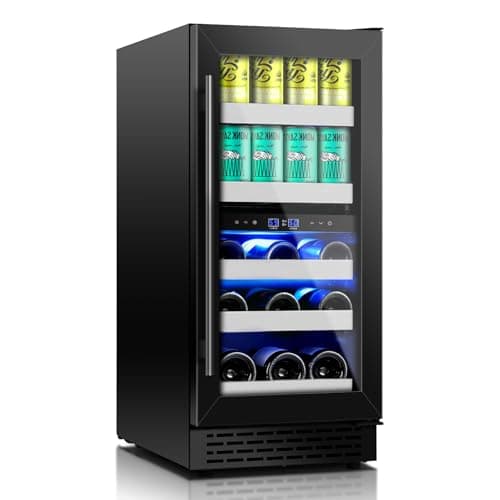
Thirteen bottles and 48 cans in a 15-inch cabinet — the only pick here that fits the narrow opening, and the right answer when 24 inches is not available.
A 15-inch cabinet opening, which is the other standard undercounter width
Eighteen bottles and 68 cans behind a locking glass door — the only pick here that solves the problem of a bar fridge in a house with other people in it.
Capacity
18 bottles + 68 cans (published)
Width
24 in
Zones
Dual
Install
Built-in or freestanding
Security
Door lock
Pros
A keyed door lock, which almost nothing in this category offers and which matters in a family house
Same 18-bottle wine side as our top pick, so the wine storage is not the compromise
Built-in or freestanding rated, with a glass door and the usual LED interior
Black finish reads less like an appliance and more like cabinetry in a dark game room
Cons
68 cans is 20 fewer than the Velieta for the same width and roughly the same money
Velivi is an unfamiliar brand even by this category's standards — treat the warranty as the whole of your recourse
A lock on a glass door is a deterrent, not security; the glass is the weak point
Only sold in black, so it will not match a stainless appliance run
Best for: A basement bar or game room where the fridge should not be self-service.
A 210-can dual-zone 24-inch cabinet at a price well under the rest of this page — the cheapest honest route into the category, with the brand risk that implies.
Capacity
210 cans (published)
Width
24 in
Zones
Dual
Cooling
Compressor
Install
Built-in or freestanding, undercounter glass door
Pros
The lowest price here by a clear margin, for a full-width built-in-rated dual-zone cabinet
210 cans is the biggest raw capacity on this page if cans are what you actually store
Compressor cooling rather than thermoelectric, so it holds temperature in a warm room
Front-vented and undercounter rated, which is the part cheap units usually get wrong
Cons
The listing publishes a can figure but not a bottle count, so the wine side is an unknown quantity — the single biggest reason this is not our top pick
DOGHLY is a new brand with no track record and no service network
At this price the compressor and door seal are where the savings come from, and both are what fail first
A 210-can rating assumes perfect stacking of standard 12 oz cans; real-world capacity will be well below it
Best for: Filling a 24-inch opening for the least money.
Thirteen bottles and 48 cans in a 15-inch cabinet — the only pick here that fits the narrow opening, and the right answer when 24 inches is not available.
Capacity
13 bottles + 48 cans (published)
Width
15 in
Zones
Dual
Install
Under counter, glass door
Controls
Front control panel
Pros
A genuine 15-inch combo, which is a thin category — most 15-inch units are single-purpose
13 bottles plus 48 cans is a usable split at this width, not a token gesture in each zone
Front control panel means you can change the setpoint without reaching into a cold cabinet
The cheapest way into a dual-zone combo if your opening is narrow
Cons
Half the total capacity of the 24-inch units, which is the unavoidable cost of the width
Friduo is an unknown brand with no service footprint at all
Stock was low when we verified it, so availability on this exact model is not dependable
A 15-inch cabinet with two zones means two small compartments, and the wine side will not take a Burgundy bottle lying down
Best for: A 15-inch cabinet opening, which is the other standard undercounter width.
Skip this
The budget traps that look cheap and cost you twice. We'd skip these.
Thermoelectric combo units
Thermoelectric cooling can only pull the interior a fixed number of degrees below the room, which is fine for holding wine at 55F in an air-conditioned dining room and useless for getting cans to 38F in a basement in August. Every pick on this page is compressor-cooled for exactly that reason. If a listing does not say compressor, assume thermoelectric and walk away.
Freestanding-only units in a built-in opening
A rear-vented fridge enclosed on three sides recirculates its own hot air, runs the compressor continuously, and fails years early. The listing has to say built-in or front-vented. If it says freestanding only, it needs clearance behind and above it — which means it is no longer undercounter.
Single-zone fridges sold as wine and beverage coolers
One compartment cannot be at 55F and 38F simultaneously. A single-zone unit with a wine rack and a can shelf is a compromise at one temperature, which means warm beer or dull wine. Read the listing for the words dual zone and two independent temperature controls.
Buying on can count alone
The published can figure assumes perfectly stacked standard 12 oz cans and nothing else in the compartment. Tall seltzer cans, 16 oz pints, bottled mixers and anything with a label facing out cut the real number by a third or more. Treat the can rating as a comparison between models, not as a promise.
Measure the opening before anything else
Undercounter appliances do not negotiate. Before you compare a single model, get three numbers with a tape measure: the width of the opening between the cabinet sides, the height from the floor to the underside of the countertop, and the depth from the back wall to the front edge of the cabinet face. Then check a fourth thing most people miss — whether the door, when fully open, clears the cabinet, the island overhang and anything in the walkway.
Width is the one that decides the purchase. The category is built around 15 inches and 24 inches, and there is very little in between worth buying. A 24-inch opening gives you roughly double the capacity of a 15-inch one for well under double the price, which is why it is the better buy whenever the cabinetry allows. If you are building the bar rather than retrofitting it, frame for 24 inches. Our 15-inch beverage refrigerator roundup covers the narrow case in depth.
What temperature should each zone be set to?
The wine zone wants roughly 50-60°F. Red wine serves best around 60-65°F and white around 45-50°F, so a single wine zone is always a compromise — the usual approach is to hold the whole zone around 55°F and give whites twenty minutes in the beverage side before serving. That trick is one of the quiet advantages of a combo unit over a dedicated wine fridge.
The beverage zone wants 38-42°F, which is ordinary refrigerator temperature. Colder than that and you are into the range where beer can freeze against the back wall and where carbonation stops coming out of solution properly. Our wine fridge temperature guide works through the full set of numbers for different wine styles, and the short version is that a combo fridge lets you stop arguing with the compromise.
The split is the part you cannot change later
Everything else about one of these appliances is replaceable or livable. The ratio between the two compartments is not. A combo fridge is manufactured with the divider in one place, and while shelves move within a zone, the zone boundary does not. This is why the specification sheet matters more here than in any other fridge category.
The honest way to pick is to count what you keep cold now. If you have two or three bottles of wine open or waiting at any time and a case of beer, you want the can-heavy Kalamera split. If you buy wine by the case and keep a few beers for guests, you want the bottle-heavy EUHOMY. Most people are somewhere in between, which is why the 18-bottle / 88-can Velieta is our overall pick: it is the split that is least likely to be wrong.
Built-in versus freestanding, and why it kills fridges
A refrigerator removes heat from inside the box and dumps it somewhere. Where it dumps it is the difference between a unit that lasts a decade and one that dies in two years. A freestanding fridge vents out of the back and needs several inches of air behind it plus clearance above. A built-in unit vents forward through a grille at the bottom of the door, so it can be enclosed on three sides and still breathe.
Install a freestanding-only unit into a tight cabinet and the compressor runs against its own exhaust, which means it never reaches setpoint, runs continuously, and burns out. Every pick on this page publishes a built-in or undercounter rating, which is deliberate — the models that do not are exactly the ones that generate the one-star reviews about a fridge that stopped cooling in year two. If you are putting this under a counter, the rating is not optional.
Noise, and where you are putting this
All six picks here are compressor fridges, which is the right choice for cooling performance and the wrong one for silence. A compressor cycles, and in a quiet basement den you will hear it. Published decibel figures in this category are measured optimistically and are not comparable between brands, so we have not used them to rank. What is reliable: a compressor unit in a closed cabinet is quieter than the same unit standing in the open, because the cabinetry absorbs it, and a fridge on a hard floor transmits more than one on a mat.
If the bar is in a room where people watch television, put the fridge in the cabinet run rather than freestanding beside the seating. If it is in a game room with a bumper pool table in it, noise is a non-issue and you should buy on capacity.
What to put around it
A combo fridge handles the cold storage for a home bar, which leaves ice, glassware and the bar surface itself. Ice is the gap people notice first: a fridge with a 55°F wine zone and a 38°F can zone still cannot make a cube, and the freezer tray upstairs produces small wet ice that dilutes a drink in minutes. Our home bar ice maker roundup covers the countertop machines, and the undercounter ice makers are what goes in the slot next to this fridge if you have two openings.
For the rest: a bar cabinet or a run of bar-height stools turns the appliance into a bar, and the glassware is the cheap half of the project — highball glasses for everything built over ice and wine glasses for what comes out of the left-hand zone. If a keg is in your future instead of cases of cans, read the kegerator roundup before you commit the opening to a combo unit, because those two appliances compete for the same 24 inches.
Our verdict
Buy the Velieta 24-inch dual-zone. It is the most balanced split in the standard width, built-in rated, and the least likely of these to be the wrong appliance in three years. Buy the Kalamera instead if cans are most of what you store and you want the established brand, the EUHOMY if the wine side is the point, the Velivi if the fridge needs a lock, and the DOGHLY if the price is the deciding factor and you accept the brand risk. If your opening is 15 inches, the Friduo is the only one of these that will go in it — and if the opening is still a drawing rather than a cabinet, frame it for 24.
Frequently asked questions
What is a wine and beverage combo refrigerator?+
One cabinet with two independently cooled compartments: a wine zone held around 50-60F and a beverage zone held around 38-42F. It exists because those two temperatures cannot coexist in one compartment — a fridge cold enough for beer dulls red wine, and a wine fridge serves warm beer.
Can you change the bottle-to-can ratio after you buy one?+
No, and this is the single most important thing to understand before buying. The divider between the two zones is fixed in manufacture. Shelves move within a zone, but the boundary does not, so a 15-bottle / 118-can unit can never become a 21-bottle unit. Count what you keep cold today and buy for that.
What width do I need — 15 inch or 24 inch?+
Whatever your cabinet opening is. The category is built around those two widths and there is little worth buying in between. A 24-inch unit holds roughly double what a 15-inch one does for well under double the price, so if you are framing new cabinetry rather than retrofitting, build for 24 inches.
Can a combo fridge be built into a cabinet?+
Only if the listing says built-in, undercounter or front-vented. A freestanding-only fridge vents out of the back and will recirculate its own hot air in a closed opening, which means it never reaches setpoint, runs constantly and fails years early. Every pick on this page publishes a built-in or undercounter rating.
What temperature should each zone be set to?+
Roughly 55F for the wine side, which splits the difference between red at 60-65F and white at 45-50F, and 38-42F for the beverage side, which is ordinary refrigerator temperature. A useful trick with a combo unit is to hold whites in the wine zone and give them twenty minutes in the cold zone before serving.
Are these quiet enough for a basement den?+
They are compressor fridges, so they cycle and you will hear them in a silent room. That is the correct trade: thermoelectric cooling is quieter but cannot pull a compartment down to can temperature in a warm room. A compressor unit set into a cabinet run is noticeably quieter than the same unit standing in the open.
Is a combo fridge better than two separate appliances?+
Only if you have one opening. Two 15-inch units give you more total capacity, a split you can change later by replacing one of them, and a failure that only costs you half your storage. The combo wins when cabinetry gives you a single slot and you have both wine and cans to keep cold.
How accurate are the published can capacities?+
Treat them as a comparison between models, not a promise. The figure assumes perfectly stacked standard 12 oz cans and an otherwise empty compartment. Tall seltzer cans, 16 oz pints, bottled mixers and labels facing outward all cut real capacity, often by a third.
Prices and availability shown here come from Amazon's live data and change often; we re-verify them regularly. Bar Bumper is an Amazon Associate and earns a commission on qualifying purchases at no extra cost to you. Read our full disclosure.