A bar is the one room where the shape of the ice changes the drink. Six machines and one tray ranked on cube size, clarity and melt rate — plus what actually fits behind a bar top.
Updated October 2026 · By Stephen V.
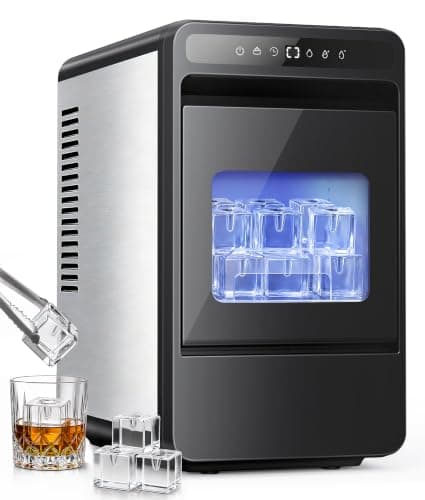
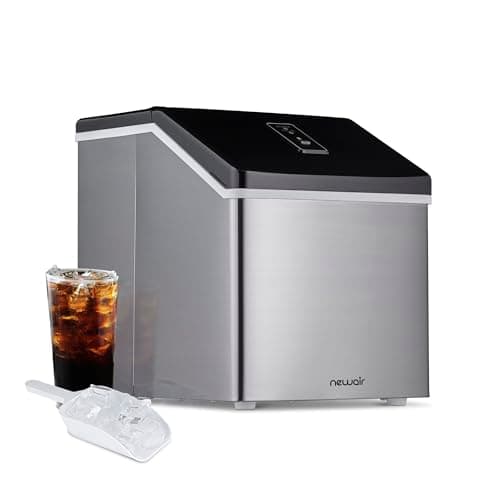
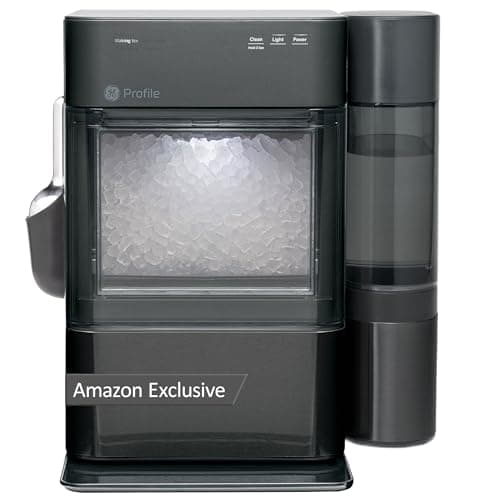
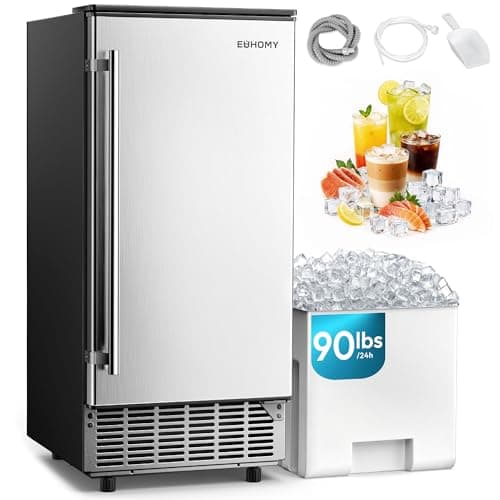
The best ice maker for a home bar is the Oylus clear cube maker, because it is the cheapest countertop machine that produces a genuinely large, genuinely clear cube. A 1.6-inch clear cube is the only ice shape that survives a stirred drink, and almost every other countertop machine on the market makes small cloudy bullets that dilute good bourbon in four minutes. If you want more output and a sturdier machine, the Newair clear ice maker is the step up; if your bar serves soda and mixed drinks more than spirits, the GE Profile Opal Ultra and its nugget ice is the right answer instead; and if you want ice on tap in a cabinet rather than on the counter, the EUHOMY 15-inch undercounter machine is the one that belongs in a built bar.
This page exists because the ice-maker market is built around a different buyer. Most countertop ice makers are designed for a kitchen that wants a lot of ice fast, and the fastest ice to make is small, thin and full of trapped air. That is fine in a glass of lemonade. In a rocks glass it is a problem, because surface area is what melts and small cloudy cubes have an enormous amount of it relative to their mass. A home bar is the one application where the ice is an ingredient, so the specification that matters is not pounds per day. It is cube geometry.
Large clear cubes (1.5 in and up) — what a cocktail bar uses. Slow to make, slow to melt, and clear because the water freezes directionally instead of all at once. The right default for whiskey, an old fashioned or anything stirred.
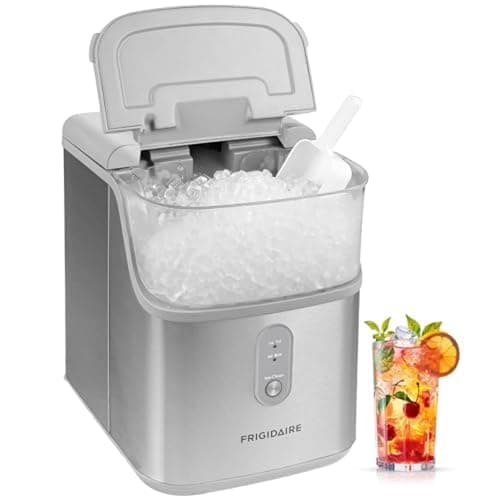
Nugget / pebble ice — soft, chewable, absorbs flavor. Brilliant for soda, mixers, frozen drinks and anyone in the house who eats ice. Melts fast, so it is wrong for spirits served over a single rock.
Bullet and half-moon ice — the cloudy hollow cylinders nearly every cheap countertop machine makes. Cheapest to produce, fastest to melt, and the reason people assume countertop ice makers are not worth buying.
Full cube from an undercounter machine — a proper square or gourmet cube, made continuously, stored in an insulated bin. The highest-volume answer and the one that disappears into a bar build.
We have not run these machines side by side on a melt test. The ranking is built from published cube dimensions and ice type, rated daily output, reservoir and bin capacity, drain and plumbing requirements, and owner-review consensus reported as other people's experience — see how we pick. Prices come live from Amazon with the date we verified them. Where a cheaper product does the job, it wins: the last entry on this page costs about thirty dollars and makes better cocktail ice than anything above it.
The short answer
In a hurry? These are the picks we'd buy. Prices are live; tap a card below for the full reasoning.
$37.9920% offPrice as of October 13, 2026·#addisclosure
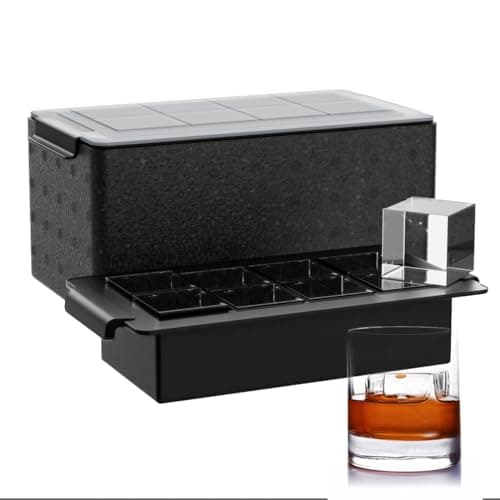
FDDBI 2-in Clear Ice Cube Tray
A directional-freezing tray that makes better cocktail ice than any machine on this page, for roughly a tenth of the price.
Ice type
Clear 2 in cube
Cube size
2 in
Install
Freezer, no power
Method
Insulated directional freeze
Pros
A 2-inch cube, larger than anything a countertop machine makes, which is the slowest-melting shape you can get
Insulated walls force the water to freeze from the top down, pushing cloudy air and minerals out — the same principle a bar uses
Costs roughly a tenth of the cheapest machine on this page
Nothing to descale, nothing to break, and it stores flat
Cons
Slow: a full freeze is overnight, so you plan a day ahead or you have no ice
Yield is a handful of cubes per cycle, not a basket
Takes up real freezer space, which a small bar fridge does not have
You have to demold the cubes by hand, and the first few attempts are messy
Best for: Anyone who drinks whiskey and does not want an appliance.
Skip this
The budget traps that look cheap and cost you twice. We'd skip these.
A bullet-ice countertop machine, for a bar
These are the most common and cheapest countertop ice makers, and in a kitchen they are fine. In a bar they are the wrong tool, because a hollow cloudy cylinder has enormous surface area for its mass and the hollow core collapses as it melts. Pour two ounces of bourbon over three of them and you are drinking something meaningfully weaker inside five minutes. If budget is the constraint, the clear-ice tray lower down this page is a better use of thirty dollars than a bullet machine is of a hundred and thirty.
Assuming the ice basket keeps ice frozen
Nearly every countertop ice maker stores ice in an insulated plastic basket sitting above the water reservoir, not in a freezer. Meltwater drains back down and gets re-frozen, which is efficient but means ice left in the basket overnight fuses into one block or simply disappears. Only a handful of machines genuinely hold ice frozen in storage — we cover the ones that do in the <a href="/ice-makers/ice-maker-that-keeps-ice-frozen">ice makers that keep ice frozen</a> roundup. For a bar, make the ice before service and use it.
A built-in machine without checking the drain
Undercounter ice makers are the right answer for a finished bar, and the single most common way people get burned is buying one with a gravity drain for a basement bar with no floor drain. Gravity drainage needs a downhill run to a waste line. If your bar sits below the sewer line or has no drain within reach, you need a model with a built-in drain pump or a separate condensate pump, and that decision has to happen before the cabinetry goes in. Our <a href="/ice-makers/best-undercounter-ice-maker">undercounter ice maker picks</a> list the drain type on every unit.
How to choose (and what to skip)
Decide on the ice shape before anything else
Everything else is secondary. If your bar is spirits-led — whiskey, an old fashioned, a negroni — you want large clear cubes, and you should buy the machine that makes the biggest clear cube you can afford even if it is slow. If your bar is mixers-led — gin and tonics, sodas, frozen drinks, a house full of people who chew ice — nugget is better, and a nugget machine will make you happier than a clear-cube machine at twice the price. Choose the ice, then shop. Choosing on pounds per day first is how people end up with a machine whose ice they do not like.
Why clear ice melts slower, in one paragraph
Cloudy ice is cloudy because the water froze from all sides at once, trapping dissolved air and minerals in the middle. That trapped material is a weak point: the cube cracks along it, which multiplies the surface area touching your drink and accelerates melting. Clear ice is frozen directionally, from one face, so the air and minerals are pushed ahead of the ice front and out. The result is a denser cube with no fracture plane. Size compounds the effect — a 2-inch cube has roughly four times the volume of a 1.25-inch cube but only about two and a half times the surface area, so bigger is slower almost regardless of clarity.
Rated output is a laboratory number
Daily output figures on countertop machines assume an ideal ambient temperature, cold inlet water and continuous operation with the basket emptied. In a warm basement bar in July, filled from a room-temperature jug, expect meaningfully less. The practical question is how much ice you need in the two hours before guests arrive, not over 24 hours. A machine making four large cubes every 25 minutes gives you roughly twenty cubes in two hours, which is about six drinks. If that is not enough, you want an undercounter machine with a bin, or you want to be making ice the night before.
Measure the bar top and the cabinet opening
This is the sizing trap, and it catches bar builders worse than anybody. Countertop machines need clearance above for the lid and behind for the vent — a unit that fits the footprint can still be unusable under a shelf or a wall cabinet. Built-ins are specified by opening width, almost always 15 inches for a bar, and the published depth usually excludes the hinge and the power cord. Check the opening width, the finished depth with the door closed, and whether the door swing clears whatever sits next to it before you commit to cabinetry.
Plan the water and the drain early
Three honest arrangements. Reservoir fill: no plumbing, but someone carries water. Plumbed in with a gravity drain: ice is simply always there, but you need a cold supply line and a downhill drain run. Plumbed in with a drain pump: the same convenience where gravity will not work, at extra cost and with one more component that can fail. For a basement bar, confirm the drain route before you buy anything. For a bar on a cart or against an existing wall, reservoir fill is usually the right compromise and nobody minds.
Factor in cleaning, because it is what kills these machines
Ice makers run water over metal continuously, and in hard-water areas scale builds up fast enough to choke output within a year. Nugget machines are the worst of it because the auger and the evaporator cylinder are tight-toleranced. A self-cleaning cycle helps but does not replace descaling with a proper solution on the schedule in the manual. Budget for descaler as a running cost, and if the machine is going into a bar you use rarely, prefer one you can drain fully and leave dry between sessions.
What a bar actually needs from ice
A bar uses ice for two jobs and they pull in opposite directions. The first is chilling, which happens fast and wants maximum contact area — which is why shaking with lots of small ice chills a drink in seconds. The second is holding, which wants the opposite: the cube in the glass should keep the drink cold for twenty minutes without turning it into water. A machine that is excellent at the first job is usually bad at the second. The practical answer for a home bar is to buy for the holding job, because you can always crush or break big cubes for shaking, and you cannot do the reverse.
Countertop, undercounter, or neither
If the bar is a cart, a sideboard or a corner of a room, a countertop machine is right and the only real question is which ice it makes. If the bar is built — a run of cabinetry with a top, which is what most people mean by a home bar project — then an undercounter machine in a 15-inch opening is the upgrade that makes the whole thing feel finished, and it sits naturally next to a beverage fridge or a built-in kegerator in the same bank of cabinets. And if you drink two whiskeys a week, neither is necessary: a clear-ice tray in the freezer gives you better ice than either, and the home bar essentials list has better places for the money.
Why your countertop machine's ice vanishes overnight
Because the basket is a cooler, not a freezer. The compressor's job is to make ice, and once a batch drops into the basket the machine's only concern is whether the basket is full. Melt runs back into the reservoir and gets re-frozen, so nothing is wasted, but ice you made at 11pm is water by morning. This is the single biggest complaint in the whole category and it is a design decision rather than a fault. Work with it: run the machine two hours before you need ice, decant the batch into an insulated bucket if you want a reserve, and read the keeps-ice-frozen roundup if this is a deal-breaker for you.
Nugget ice in a bar: when it is right
Nugget ice gets dismissed by cocktail people and it should not be. It is the correct ice for anything tall and carbonated, for frozen drinks, and for a house where someone will eat half a basket a day — which, honestly, is most houses that buy a nugget machine. What it is not is ice for a short spirits drink, because soft compacted ice has huge surface area and dilutes quickly. If your bar does both, the honest answer is that no single machine serves both well; a nugget machine plus a clear-ice tray costs less than a premium clear-cube machine and covers both jobs properly. We go deeper on the trade in what nugget ice is and whether nugget makers are worth it.
Where the ice maker fits in a bar build
In the order that gets a working bar fastest: somewhere to put bottles and glasses, cold storage, then ice, then the gear. That means a bar cabinet or a cart first, a beverage fridge or wine fridge second, the ice maker third, and shakers and glassware last. Ice goes third rather than first for a reason: a freezer tray covers you until the bar is built, and an ice maker bought before the cabinetry is decided is an ice maker that may not fit the opening you end up with. If you are at the planning stage, the home bar ideas page is the place to start and the setup guide covers the order in detail.
A note on filtered water
Clarity and taste both come off the water you put in. Dissolved minerals are what makes a cube cloudy in a machine that freezes from all sides, and they are also what scales up the evaporator. Running filtered water through a countertop machine will not turn bullet ice clear — that is a geometry problem, not a purity problem — but it noticeably improves ice that is already made directionally, it reduces the mineral taste a spirit will pick up, and it meaningfully extends the time between descales. It is the cheapest upgrade available to any machine on this page.
Frequently asked questions
What is the best ice maker for a home bar?+
For a bar that pours spirits, the Oylus clear cube maker — it is the cheapest countertop machine that makes a real 1.6-inch clear cube, which is the ice shape that holds a drink cold without watering it. For a bar that mostly serves soda and mixed drinks, the GE Profile Opal Ultra and its nugget ice is the better buy. For a built bar with cabinetry, a 15-inch undercounter machine such as the EUHOMY is the right class of appliance.
Do I need a special ice maker for cocktails?+
You need one that makes large clear cubes, which most countertop machines do not. Standard bullet or half-moon ice is cloudy and hollow, so it cracks, melts fast and dilutes a short drink within minutes. A clear-cube machine or an insulated directional-freezing tray both solve it: the tray makes the bigger, better cube, the machine makes more of them.
Why is my ice maker's ice cloudy?+
Because it freezes the water from all sides at once, which traps dissolved air and minerals in the center of the cube. Clear ice is made by freezing directionally from one face so the air and minerals are pushed out ahead of the ice. Filtered water helps with taste and scale but will not make a bullet-ice machine produce clear ice — the cloudiness comes from how the machine freezes, not from what is in the water.
Does a home bar ice maker need a water line?+
Only if it is an undercounter or built-in model. Every countertop machine on this page is reservoir-filled: you pour water in and it recycles the meltwater. Undercounter machines are plumbed, need a cold supply and a drain, and that drain is the detail to check first — gravity drains need a downhill run to a waste line, which basement bars often do not have.
How much ice does a home bar need?+
Plan on about a pound of ice per guest for a drinks party, which is roughly ten to twelve large cubes each once you account for refills and spillage. A countertop clear-cube machine making four cubes every 25 minutes covers a quiet evening for two or three people but not a party, which is why entertaining pushes you toward either a higher-output machine or making ice the day before and storing it in an insulated bucket.
Will the ice stay frozen in the machine?+
In nearly all countertop machines, no. The storage basket is insulated rather than refrigerated, so ice left in it fuses or melts back into the reservoir to be re-frozen. Make ice shortly before you need it, or move a batch into a cooler or insulated bucket. A small number of machines genuinely keep stored ice frozen, and those are covered in our ice makers that keep ice frozen roundup.
Is a clear ice tray as good as a machine?+
For ice quality, better — an insulated tray makes a 2-inch directionally frozen cube that is larger and denser than anything a countertop machine produces. For convenience, much worse: a cycle takes overnight and yields a handful of cubes. If you drink a couple of whiskeys a week, the tray is genuinely the smarter purchase. If you entertain, you want the machine and can keep the tray for your own pours.
Prices and availability shown here come from Amazon's live data and change often; we re-verify them regularly. Bar Bumper is an Amazon Associate and earns a commission on qualifying purchases at no extra cost to you. Read our full disclosure.