A highball glass is a measuring tool disguised as a tumbler. Get the capacity wrong and every gin and tonic you pour is either weak or short. Seven sets compared on published capacity, construction and whether they survive a dishwasher.
Updated October 2026 · By Stephen V.
Buy the Libbey 12 oz highball set of six. Twelve ounces is the capacity a highball is supposed to be, Libbey is the glass most American bars actually pour from, and six is the number you need so that the fourth guest does not get the water tumbler. If you want the same job done for less, the JoyJolt Faye set is the value pick; if you want glasses that will still be in the cupboard in ten years and can go in the dishwasher without going cloudy, the Zwiesel Glas Paris long drink set is the one to spend on.
The highball is the most-used glass in any home bar, and almost nobody chooses one deliberately. It is the glass for everything built in the glass over ice — gin and tonic, whiskey highball, rum and coke, Paloma, Tom Collins, mojito, and about half of what anyone actually drinks at home. Which means the glass is doing arithmetic on your behalf, and the capacity decides the answer.
How we judged these
Four criteria, in this order. They are the ones that change how the glass performs rather than how it photographs.
Published capacity. A highball is built in the glass: 2 oz of spirit, ice to the top, topped with mixer. At 10-11 oz you are pouring a short, strong drink. At 12-14 oz you get a standard highball with room for the ice to do its job. At 16-17 oz you are into cooler and Collins territory, which is the right size for a long drink but will make a plain gin and tonic taste thin unless you scale the pour. We list only the capacity the maker publishes — where a listing does not state one, we say so.
Set size. Four is not enough for a home bar. Any round of drinks needs identical glasses, and the moment one breaks a set of four becomes a set of three. Six is the useful minimum; the two-glass sets on this page are bought for looks, not for hosting.
Dishwasher rating. The practical failure mode for drinking glasses is not breakage, it is clouding — etching from hard water and detergent that never comes off. Some of these sets are explicitly rated dishwasher safe and some are not, and the ones that are not will spend their lives in the sink or slowly going hazy.
Base and wall construction. A heavy base is what stops a tall, narrow glass from going over when someone sets it down hard, and thicker walls survive being stacked in a cabinet with other glassware. The trade-off is weight and a less elegant profile, which is a real cost if you care how the glass looks in your hand.
We have not run these through a lab. The ranking is built from published capacities, stated materials and dishwasher ratings, set sizes, country of manufacture where the maker states it, and owner-review consensus reported as other people's experience — see how we pick. Every price on this page is pulled live from Amazon with the date we checked it, and no number is written into the copy.
Highball, Collins, cooler: the names are about height, not shape
All three are straight-sided tumblers taller than they are wide. The distinction is capacity and proportion, and it matters because the same drink behaves differently in each. A highball is the shortest of the three, usually around 8-12 oz. A Collins glass is narrower and taller for the same or slightly greater volume, which is why a Tom Collins looks the way it does. A cooler is the biggest, 15-17 oz and up, and exists for drinks with a lot of mixer or a lot of ice. Several of the sets below are sold under two of these names at once, because the categories overlap and the marketing does not care. Read the published ounces and ignore the word.
The other dimension worth checking before you buy is the one almost nobody checks: height against your cabinet shelf. A 17 oz cooler glass can be six inches tall, which is taller than the gap in a lot of kitchen wall units. If your glassware lives behind a door rather than on an open bar cart, measure the shelf first.
The short answer
In a hurry? These are the picks we'd buy. Prices are live; tap a card below for the full reasoning.
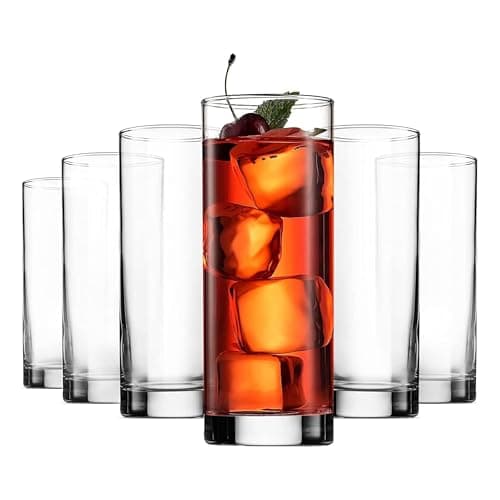
Twelve ounces, six glasses, and the brand most American bars actually stock — the default highball glass, and there is no good argument for paying more unless you want crystal.
Any home bar that pours gin and tonics, highballs or rum and cokes
Zwiesel Glas Paris Long Drink Glass, 11 oz (set of 6)
German Tritan crystal, dishwasher safe by design, in the 11 oz long-drink size the Paris range was cut for — the set here most likely to outlive the bar it sits on.
A home bar you are building once, with a dishwasher you intend to use
$63.0030% offPrice as of October 28, 2026·#addisclosure
5
Best big cooler glass
Libbey Paneled Highball Cooler Glasses, 17 oz (set of 6)
A 17 oz paneled cooler from Libbey with a published dishwasher rating — the right glass for long drinks, and the wrong one for a straight gin and tonic.
Palomas, Collinses, iced tea and anything with a lot of mixer
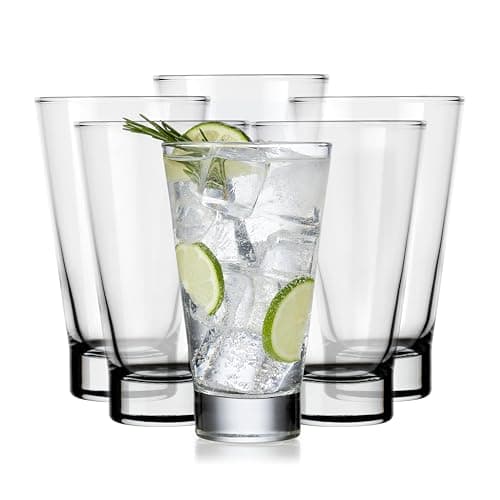
Twelve ounces, six glasses, and the brand most American bars actually stock — the default highball glass, and there is no good argument for paying more unless you want crystal.
Capacity
12 fl oz (published)
Set size
6 glasses
Material
Clear glass
Listing note
Sold as restaurant-quality hi-ball glassware
Pros
12 oz is the capacity the standard highball build was designed around — 2 oz spirit, ice, topped up
Libbey is the glass a very large number of US bars pour from, so the shape is a known quantity
Six glasses, so a round of drinks for four still leaves a spare
Plain, straight-sided and unbranded — it does not date and it matches whatever else is in the cupboard
Cons
The listing does not publish a dishwasher rating, so treat it as hand-wash until you know your water
No heavy base — these will go over if knocked, same as any thin-walled tumbler
Visually unremarkable, which is the point, but it is not the glass you buy to impress anyone
Costs more per glass than the JoyJolt set below, for a smaller capacity
Best for: Any home bar that pours gin and tonics, highballs or rum and cokes.
$63.0030% offPrice as of October 28, 2026·#addisclosure
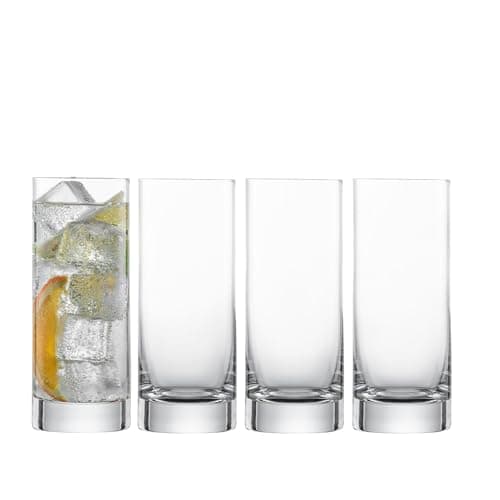
Zwiesel Glas Paris Long Drink Glass, 11 oz (set of 6)
German Tritan crystal, dishwasher safe by design, in the 11 oz long-drink size the Paris range was cut for — the set here most likely to outlive the bar it sits on.
Capacity
11 fl oz (published)
Set size
6 glasses
Material
Tritan crystal
Dishwasher
Rated dishwasher safe
Made in
Germany (stated on the listing)
Pros
Tritan is reinforced crystal built specifically to resist dishwasher clouding and rim chipping
The thinnest, clearest glass on this page by a wide margin — it reads as a bar glass, not a tumbler
Dishwasher safe and actually meant for it, which is the whole reason to pay this much
Made in Germany per the listing, with the finish and rim consistency that implies
Cons
Roughly double the price per glass of the Libbey set, for one ounce less capacity
11 oz is on the short side for a long drink — you will pour less mixer or use less ice
Thin walls mean no heavy base, so they are easy to knock over on a crowded table
Replacing a broken one means ordering a six-pack or hunting a single, which is its own annoyance
Best for: A home bar you are building once, with a dishwasher you intend to use.
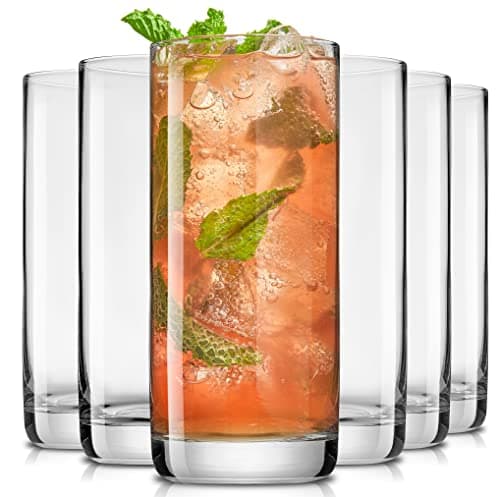
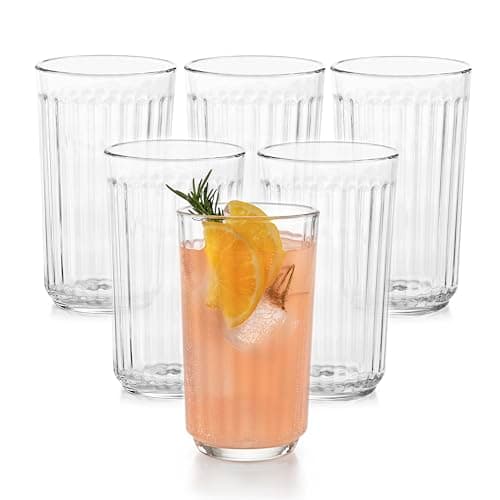
Libbey Paneled Highball Cooler Glasses, 17 oz (set of 6)
A 17 oz paneled cooler from Libbey with a published dishwasher rating — the right glass for long drinks, and the wrong one for a straight gin and tonic.
Capacity
17 fl oz (published)
Set size
6 glasses
Design
Paneled exterior
Dishwasher
Rated dishwasher safe
Pros
17 oz is genuinely useful for Collinses, Palomas and anything served over a full glass of ice
Paneled sides give you grip on a wet glass, which plain tumblers do not
Dishwasher safe per the listing, unlike most of the plain sets here
Doubles as the everyday iced-tea and water glass, so the set earns its shelf space
Cons
Too big for a standard 2 oz highball build — you will either over-pour or drink something weak
The tallest glass on this page, and the one most likely not to fit a kitchen wall cabinet
The paneled design is a look, and it will not suit a plain modern bar
Panels and the thicker base make these heavier in the hand than the 12 oz set
Best for: Palomas, Collinses, iced tea and anything with a lot of mixer.
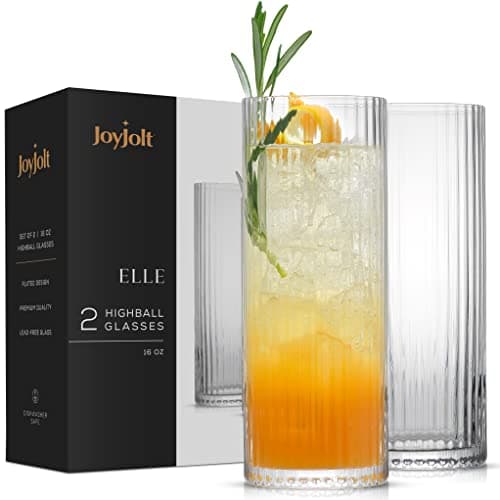
JoyJolt Elle 16 oz Fluted Highball Glasses (set of 2)
Ribbed 16 oz fluted tumblers sold in pairs — the only set here bought for how it looks, and priced accordingly per glass.
Capacity
16 fl oz (published)
Set size
2 glasses
Design
Fluted / ribbed exterior
Sold as
Vintage-style highball tumbler
Pros
The ribbing catches light in a way plain glass does not — these photograph and display well
16 oz handles a long drink with a full glass of ice without topping out
Fluting gives real grip, which is more useful on a tall glass than it sounds
Sold in twos, so it is a cheap way to test whether you like the look before committing
Cons
Two glasses per set — stocking a bar of six means buying three sets and paying the most per glass here
No published dishwasher rating, and ribbed exteriors trap detergent film in the grooves
The vintage look is strongly styled and will clash with plain glassware on the same shelf
16 oz is cooler-sized, so a standard highball recipe comes out noticeably diluted
Best for: A bar cart where the glassware is part of the display.
Skip this
The budget traps that look cheap and cost you twice. We'd skip these.
Four-glass sets, for a bar you actually host from
A set of four is one breakage away from a set of three, and three identical glasses will not serve a round of drinks for four people. Buy six, or buy two sets of four and accept that you now own eight glasses that do not stack neatly.
Plastic or acrylic unbreakable highballs for indoor use
They scratch, they hold smell, and they make a cold drink feel warm because the wall does not conduct. There is a real case for them beside a pool or on a boat. There is none on a bar cart.
Mixed-size glassware sets that bundle highballs with rocks glasses
You end up with four of each when you wanted six of one, and the two shapes are rarely both good. Buy the highballs you want, then buy the rocks glasses you want — our whiskey glass roundup covers the other half.
Anything that does not publish a capacity
A tall tumbler with no stated ounces is being sold on looks. You cannot build a repeatable drink in a glass whose volume you do not know, and a listing that hides the number is usually hiding a small one.
What capacity should a highball glass be?
Twelve ounces, if you want one answer. The standard highball is 2 oz of spirit, ice to the rim, and mixer to fill — and in a 12 oz glass packed with ice that lands at roughly a 1:3 spirit-to-mixer ratio, which is what the drink is supposed to taste like. Drop to 10 oz and the same pour reads strong and short. Go up to 16-17 oz and you either pour more spirit, which changes the drink, or you get something closer to a soft drink with a splash in it.
This is why we rank capacity first and ignore almost everything else. Highball glasses are not where the design decisions live — they are a straight-sided cylinder, and the only meaningful variables are how much goes in, whether the thing survives a dishwasher, and whether the base keeps it upright. If you want one set, make it 12-13 oz. If you want two, add a 16-17 oz cooler for long drinks and keep the recipes separate.
Why clouding, not breakage, is what kills a set of glasses
Most people lose glassware to haze rather than to shattering. The haze is etching: hard water minerals plus dishwasher detergent slowly attacking the glass surface, and once it has happened it is permanent — no amount of vinegar brings it back. Thin soda-lime glass etches fastest, which is why the cheapest sets look tired within a year or two of dishwasher use and the Tritan crystal set does not.
Three things help. Use less detergent than the dispenser suggests, because dishwasher dosing is calibrated for baked-on food, not for glasses that held tonic water. Skip the heated dry cycle. And if your water is hard, hand-wash the sets that are not explicitly rated dishwasher safe — on this page that means the Libbey 12 oz set, the Bormioli Cortina and both JoyJolt sets. The three with a published dishwasher rating are the LEMONSODA Collins glasses, the Libbey paneled cooler and the Zwiesel Paris long drink.
Ice matters more than the glass
A highball is mostly ice by volume, and the ice is doing two jobs: chilling the drink and displacing mixer so the ratio stays right. Small, wet, cloudy cubes from a freezer tray melt fast, dilute the drink in minutes, and leave you with half a glass of tepid tonic. Large clear cubes melt slowly enough that the last mouthful tastes like the first. If your highballs go flat and watery before you finish them, the glass is not the problem — our clear ice maker roundup covers both the countertop machines and the directional-freezing trays, and the home bar ice maker picks cover the machines that keep up with a party.
A practical note on fit: fill the glass with ice before you pour anything. A highball built on three cubes and topped with mixer is a different drink from the same recipe built on a full glass of ice, because the ice you did not add becomes mixer you did. This is the single most common reason a home-made gin and tonic tastes weaker than a bar one.
How many highball glasses does a home bar need?
Six of one capacity, and that is the whole answer for most people. Six covers a round of drinks for four with two in the cupboard against breakage, and it means every drink you pour comes out the same. The failure pattern we see on home bars is four glasses in three different sizes, which guarantees inconsistent drinks and a cupboard that never quite has the right glass in it.
If you host more than four regularly, buy two identical six-packs rather than twelve mismatched glasses — and think about where they live before you buy, because twelve tall glasses take real shelf space. A bar cart with a glass rail handles six to eight; a bar cabinet takes more and keeps the dust off. Either way, measure the shelf height against the glass you are buying, especially for the 17 oz cooler.
What to pour in them
The highball earns its place because the drinks built in it need nothing else: a jigger from a bar tool set to measure the spirit, ice, and a bottle of mixer. No shaker, no strainer, no technique. That is also why the glass is worth getting right — it is the only piece of equipment in the drink.
If you are stocking from scratch, the useful pairing is six highballs and six rocks glasses, which between them cover nearly everything served at home. Our home bar glassware guide works through the full list in buying order, and the home bar equipment pillar covers what goes around it. For drinks that are stirred or shaken and served up, you want coupe or Nick and Nora glasses instead, and for whiskey poured neat a nosing glass does a job no tumbler can.
Our verdict
Buy the Libbey 12 oz set of six. It is the right capacity, from the brand whose shape most bars already use, in the quantity a home bar actually needs. Buy the JoyJolt Faye set instead if you want the same job done for noticeably less and will hand-wash them, and the LEMONSODA Collins set if your glasses get knocked about and you want a heavy base plus a dishwasher rating. Spend up on the Zwiesel Paris set only if you intend to use a dishwasher for the next decade, which is exactly the case where it pays for itself. Add the 17 oz paneled cooler as a second set for long drinks, not as your only one.
Frequently asked questions
What is a highball glass?+
A straight-sided tumbler taller than it is wide, used for drinks built in the glass over ice — gin and tonic, whiskey highball, rum and coke, Paloma. Most sit between 8 and 12 fluid ounces. It is the most-used glass in a home bar because it needs no shaker, no strainer and no technique: spirit, ice, mixer.
What is the difference between a highball glass and a Collins glass?+
Proportion more than volume. A Collins glass is narrower and taller for a similar or slightly larger capacity, which is why a Tom Collins is served in one. In practice the terms are used interchangeably on retail listings, and several sets are sold under both names at once. Ignore the name and read the published ounces.
How many ounces should a highball glass be?+
Twelve is the figure to aim for. The standard build is 2 oz of spirit, ice to the rim, mixer to fill, and a 12 oz glass packed with ice lands that at about a 1:3 ratio. At 10 oz the drink comes out short and strong; at 16-17 oz you are into cooler territory and a standard pour tastes diluted unless you scale it up.
Are highball glasses dishwasher safe?+
Some are and some are not, and the listing is the only reliable guide. On this page the LEMONSODA Collins set, the Libbey paneled cooler and the Zwiesel Glas Paris long drink glasses all publish a dishwasher rating; the Libbey 12 oz set, the Bormioli Cortina and the JoyJolt sets do not. The risk is not breakage, it is permanent clouding from hard water and detergent.
How many highball glasses do I need for a home bar?+
Six of a single capacity. Six serves a round of drinks for four with two spare against breakage, and identical glasses mean identical pours. A set of four is one breakage away from being unusable for hosting, and a cupboard of mismatched sizes guarantees inconsistent drinks.
Can I use a highball glass for whiskey?+
For a whiskey highball — whiskey, ice, soda — it is the correct glass, and that drink is the reason the category exists. For whiskey over ice or neat, no: you want a rocks glass or a nosing glass, because you are not adding volume and the tall shape does nothing for you.
Why do my highballs taste weaker than the ones at a bar?+
Almost always the ice. Bars fill the glass with ice before pouring, so the ice displaces mixer and keeps the ratio right while chilling the drink fast. A home pour on three cubes leaves room for extra mixer, and small wet cubes then melt quickly and dilute what is left. Fill the glass, and use larger, denser ice if you can make it.
Does a heavy base actually matter?+
On a tall narrow glass, yes. It lowers the center of gravity, which is the difference between a nudged glass rocking and a nudged glass going over — and a tall glass full of ice and mixer makes a mess when it does. The trade-offs are weight in the hand, a less refined look, and more sensitivity to sudden temperature changes.
Prices and availability shown here come from Amazon's live data and change often; we re-verify them regularly. Bar Bumper is an Amazon Associate and earns a commission on qualifying purchases at no extra cost to you. Read our full disclosure.