Fifteen inches is the cabinet standard, and the unit has to be slightly under it. Six undercounter beverage fridges judged on the clearances the listing does not advertise.
Updated October 2026 · By Stephen V.
For most built-in home bars the Icyglee 15-inch is the one to buy: 127 cans, a 36-61°F range that goes properly cold, a stainless door, three removable shelves and a quoted 38 dB — the quietest figure on this page, which matters because this cabinet sits in the room you are sitting in. The Feelfunn is the same purchase with a glass door, the Antarctic Star holds the most cans, the Electactic is the one to buy if the bar is on a patio, and the NewAir dual-zone is the pick if you need wine and cans in the same 15 inches.
The reason this is a page of its own, rather than a size filter on our undercounter beverage fridge roundup, is that 15 inches is a cabinet dimension before it is a product dimension. A 15-inch undercounter opening is the narrow standard in American cabinetry, and a fridge sold as a 15-inch unit has to be slightly under 15 inches wide to go into it. Measure your opening at the narrowest point — usually where a face frame or a trim strip intrudes — and not across the gap at the front.
Three numbers decide whether a unit fits, and only one of them is in the headline. Width: the cabinet opening must be a true 15 inches, not 14 and three-quarters. Depth: a 24-inch-deep counter leaves roughly 23 inches of usable depth once you account for the back wall, and the door handle lives outside that. Height: standard undercounter height is about 34 inches to the countertop, and a unit with adjustable feet needs clearance to be leveled. Get all three before you shop and this becomes an easy decision.
The fourth thing — and the one that sends units back — is venting. A beverage fridge that is only rated freestanding exhausts heat out the back or the sides. Build that into a sealed cabinet and it runs hot, works harder, gets louder and fails early. Every unit below is listed as built-in or freestanding capable, which means it vents through the front. We have not installed these ourselves: the ranking comes from published capacity, temperature range, noise figures, door material and install rating — see how we pick. Prices come live from Amazon with the date we checked them.
The short answer
In a hurry? These are the picks we'd buy. Prices are live; tap a card below for the full reasoning.
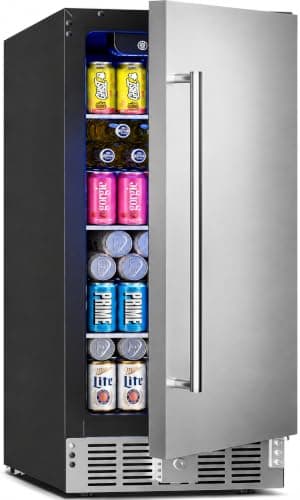
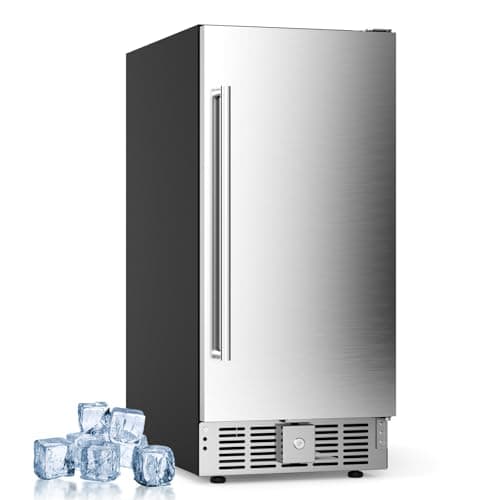
127 cans, a 36-61°F range and a quoted 38 dB in a stainless-door 15-inch cabinet — the quietest figure here, and the one that disappears into a finished bar.
A built-in home bar in a room people are sitting in
$369.998% offPrice as of October 20, 2026·#addisclosure
3
Most cans in the opening
Antarctic Star 15-in Undercounter Beverage Refrigerator (135 can)
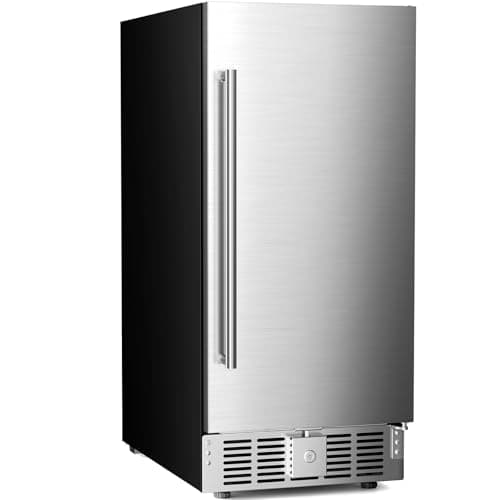
135 cans behind a stainless door, rated for built-in or freestanding use and listed as suitable for a patio — the highest headline capacity on this page.
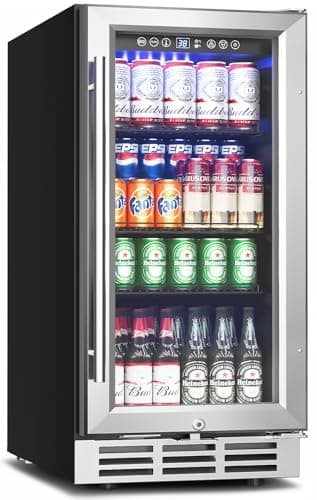
130 cans behind a lockable glass door with interior LED — the pick when the beverage fridge is in a basement den that kids and guests both walk through.
A game room where the fridge is not supposed to be self-service
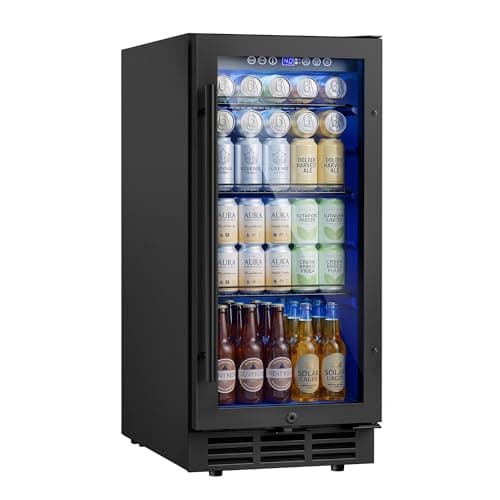
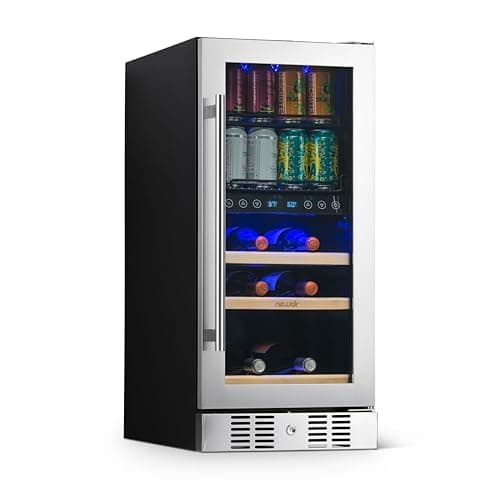
A dual-zone 15-inch unit holding 9 bottles and 48 cans at two different temperatures — far less capacity than the single-zone units, and the only way to do both in one opening.
One 15-inch cabinet that has to serve beer and wine at once
127 cans, a 36-61°F range and a quoted 38 dB in a stainless-door 15-inch cabinet — the quietest figure here, and the one that disappears into a finished bar.
Capacity
127 cans
Temperature range
36-61°F
Noise (quoted)
38 dB
Install
Built-in or freestanding
Door
Stainless steel
Shelves
3, removable
Pros
38 dB is the lowest quoted figure on this page, and a beverage fridge in a den is heard far more often than it is opened
36°F at the bottom of the range is properly cold — plenty of units in this class stop in the low 40s
Stainless door matches undercounter appliances, so it reads as cabinetry rather than as a mini fridge
Three removable shelves, which is what lets you fit tall bottles alongside cans
Rated for built-in installation, so it vents at the front
Cons
A stainless door means you cannot see what is inside — no good if the display is half the point
Quoted noise figures are measured by the maker, not independently, so treat 38 dB as a comparative number
127 cans assumes standard 12 oz cans packed to the shelf plan; tall cans and bottles cut that sharply
Shelf layout is fixed by the shelf positions, so very tall bottles still mean removing a shelf entirely
Best for: A built-in home bar in a room people are sitting in.
Antarctic Star 15-in Undercounter Beverage Refrigerator (135 can)
135 cans behind a stainless door, rated for built-in or freestanding use and listed as suitable for a patio — the highest headline capacity on this page.
Capacity
135 cans
Install
Built-in or freestanding
Door
Stainless steel
Rated for
Patio, home, kitchen
Width class
15 in undercounter
Pros
135 cans is the largest claimed capacity here, which in a 15-inch cabinet is the number that matters
Stainless door and an outdoor-capable listing, so it suits a covered patio bar as well as an indoor one
Built-in rating means front venting and a flush cabinet install
Solid door keeps the light out of a dark room
Cons
No published noise figure, which in this class usually means it is not a selling point
No published temperature range on the listing, so you cannot confirm how cold it goes before buying
Solid stainless door, so no visibility into the stock
Headline can counts assume a perfect packing plan — expect well under 135 in real use
130 cans behind a lockable glass door with interior LED — the pick when the beverage fridge is in a basement den that kids and guests both walk through.
Capacity
130 cans
Door
Glass, lockable
Lighting
Interior LED
Install
Built-in or freestanding
Width class
15 in undercounter
Pros
A door lock is genuinely uncommon in this class and it is the whole reason to pick this one
130 cans puts it near the top of the capacity range here
Interior LED plus a glass door makes it the most display-oriented unit on the page
Built-in or freestanding rating, so it drops into a 15-inch opening
Cons
No published noise figure on the listing
Glass door and interior lighting both add heat load, so the compressor cycles more
A lock is one more small part to lose, and a lost key on a built-in unit is a problem
Stock has been thin on this listing, so confirm availability before you plan a cabinet around it
Best for: A game room where the fridge is not supposed to be self-service.
A dual-zone 15-inch unit holding 9 bottles and 48 cans at two different temperatures — far less capacity than the single-zone units, and the only way to do both in one opening.
Capacity
9 bottles + 48 cans
Zones
Two, independently set
Door
Stainless steel
Install
Built-in or freestanding
Brand
NewAir
Pros
Two independent zones is the only honest way to serve wine at 55°F and cans at 38°F from one cabinet
Purpose-built bottle racking rather than a shelf you lay bottles on
NewAir is an established name in this category with a real support path, which most brands here do not have
Built-in rated and stainless, so it finishes like an appliance
Cons
48 cans against 127 in the single-zone units — you are trading most of the capacity for the second zone
The highest price on this page by a wide margin
Two zones in 15 inches means both are small; nine bottles is a shelf, not a cellar
Stock on this listing has been intermittent
Best for: One 15-inch cabinet that has to serve beer and wine at once.
Skip this
The budget traps that look cheap and cost you twice. We'd skip these.
A freestanding-only beverage fridge built into a cabinet
This is the single most expensive mistake in the category. A freestanding-only unit vents heat from the back or sides; seal it into a cabinet and it has nowhere to put that heat. It will run constantly, get loud, fail to reach its set temperature in summer, and shorten its own life. The listing has to say <strong>built-in</strong> or <strong>front venting</strong> — and "can be used freestanding or built-in" is the phrase you want. If it only says freestanding, it is a standalone fridge and belongs beside the bar, not in it.
Buying to the headline can count
Every can count in this class is a best-case packing figure using standard 12 oz cans laid out to the maker's own shelf plan. Put in tall 16 oz cans, a few bottles, or a mix of both and you will lose a third of it. Treat 126 and 135 as the same number for practical purposes, and decide on temperature range, noise and door material instead — those are the specs you live with.
A 15-inch unit for a 15-inch opening you have not measured at the narrowest point
Cabinet openings are rarely the dimension on the plan. A face frame, a filler strip, a baseboard return or an out-of-plumb side wall all reduce the real opening, and a 15-inch appliance needs the opening to be a true 15 inches. Measure at the top, the middle and the bottom, take the smallest number, and compare it to the unit's published width — not to the nominal size in the product name. If you are at 14.75 inches, you are shopping for a different appliance or trimming the cabinet.
How to choose (and what to skip)
Measure the opening three times before you compare anything else
Width at the narrowest point, depth from the back wall to the front edge of the cabinet, and height from the floor to the underside of the countertop. Then subtract for the things that are not on the plan: the door handle projects beyond the cabinet face, the power cord needs an inch or two behind the unit, and adjustable feet need room to level it on an uneven basement floor. A unit that technically fits and cannot be slid in is a return.
Built-in versus freestanding is a venting spec, not a marketing word
A built-in rated beverage fridge exhausts through a grille at the front, usually under the door. A freestanding unit exhausts through the back or sides and needs air gaps all round. The two are not interchangeable and no amount of cabinet ventilation fixes a freestanding unit buried in a run of cabinetry. Every unit on this page is rated for both, which is what makes them candidates for a 15-inch opening in the first place.
Check the bottom of the temperature range, not the top
Beverage fridges are not refrigerators and plenty of them stop in the low 40s, which is fine for wine and disappointing for beer. The two units here that publish a range go to 36°F and 37°F respectively, and that is the number worth paying for — a can at 36°F is the temperature a pub serves at. If a listing does not publish a range at all, assume it is not a strength of the product.
Door swing decides where the unit goes in the run
A 15-inch door that opens the wrong way into a corner or against the next cabinet makes the fridge annoying for a decade. Most units in this class have a reversible door, but reversing it is a job rather than a flip of a switch, and some have a fixed hinge. Work out which way the door needs to open before you choose the position in the cabinet run, and check the listing for a reversible hinge if you cannot put the unit where the hinge wants to be.
Noise matters more here than in a kitchen
A beverage fridge in a game room is three feet from where you sit, and it runs when the room is quiet. Of the six units here only two publish a figure — 38 dB and under 42 dB — and that difference is clearly audible in a quiet den. Maker-measured noise figures are not independent, so use them to compare rather than to predict; but a brand that publishes one has at least thought about it. If the room is for watching a game or playing <a href="/game-tables/best-bumper-pool-table">bumper pool</a>, pay for the quieter cabinet.
Decide between cans and wine before you buy, not after
Fifteen inches is not enough space to do both well. A single-zone can fridge in that width holds around 127 cans; the dual-zone unit that also takes wine holds 48 cans and nine bottles. If you genuinely need both temperatures, the dual-zone is the only honest answer in one opening — otherwise buy the single-zone and keep wine in a separate <a href="/bar-fridges/best-undercounter-wine-fridge">undercounter wine fridge</a>, or read our <a href="/bar-fridges/wine-fridge-vs-beverage-fridge">wine fridge versus beverage fridge comparison</a> first.
Why 15 inches is the number
Undercounter appliances come in a handful of widths, and 15 inches is the narrow standard — the width a cabinet maker leaves when a run has to take an ice maker, a trash pullout or a beverage fridge without giving up a 24-inch bay. It is also the width that makes a home bar possible in a basement alcove or at the end of a kitchen island. The practical consequence is that there are far more 15-inch beverage fridges than there are 15-inch openings they actually fit, because the opening has to be a true 15 inches and cabinets are built to the nearest convenient number.
If your opening measures a hair under, you have three options and none of them is "it will go in". Trim the cabinet, which on a face-frame cabinet usually means taking a quarter inch off a stile. Move to a freestanding unit placed beside the cabinetry rather than in it — our small beverage fridge roundup covers those. Or step down a size class entirely and accept a smaller cabinet. What does not work is forcing a 15-inch unit into a 14.75-inch hole: the door will not clear the frame, and the venting grille at the front needs to sit proud of the cabinet face.
Can capacity, and what it really means
The units here claim 126, 127, 130 and 135 cans. Those are not meaningfully different numbers. All of them are derived the same way: standard 12 oz cans, arranged on the maker's shelf plan, with no bottles, no tall cans and no gaps. Real-world loading — a few 16 oz cans, a couple of mixer bottles, a bottle of white wine lying on its side — will cost you a third of the headline figure in any of them. A 15-inch undercounter cabinet holds roughly four to five cases of cans if you pack it properly, and that is true across the whole page.
The specs that genuinely separate these units are the ones people skip: how cold it goes at the bottom of its range, whether the door is glass or solid, whether it locks, whether it publishes a noise figure, and whether it is rated for the ambient temperature where it is going. That last one is why the Electactic exists as a separate product — a standard beverage fridge is rated for a conditioned room, and a garage in August is not one. Our garage beverage fridge page goes into the ambient-range problem in detail.
Glass door or solid door
A glass door is the reason most people want a beverage fridge rather than a mini fridge: you can see the stock, and a lit shelf of bottles looks like a bar. The costs are real but small. Glass conducts more heat than an insulated panel, so the compressor runs more often and the unit works harder in a warm room; interior lighting adds a little more; and in a dark game room a glass door is a light source whether you want one or not. A solid stainless door is quieter, more efficient and completely anonymous in a run of cabinetry. Neither is wrong. Decide whether this cabinet is furniture or an appliance.
What else goes in a 15-inch opening
If you are planning a bar run rather than a single cabinet, 15 inches is also the standard width for an undercounter ice maker and for a built-in kegerator, which is why a two-bay bar usually ends up as cans plus ice or cans plus a keg. The ice maker needs a water supply and a drain in addition to power, so it changes the rough-in; the beverage fridge needs only an outlet — and an ice maker also needs descaling on a schedule, which a can fridge does not. If you are deciding what goes where, do it before the cabinets are built — our home bar setup guide covers the order of operations, and the cost breakdown shows what each bay adds.
Our verdict
Buy the Icyglee unless you want to see the cans. It goes to 36°F, it publishes the quietest noise figure here, the door is stainless so it finishes like cabinetry, and the three removable shelves mean bottles can share the cabinet. If the display is the point, take the Feelfunn and accept a slightly warmer floor temperature and a noisier cabinet for a glass door. Buy the Electactic if the bar is on a patio or in an unheated garage, the ICEVIVAL if you need the lock, and the NewAir dual-zone only if wine genuinely has to live in the same fifteen inches — it costs the most and holds the fewest cans, and both of those are the price of the second zone.
Frequently asked questions
Will a 15-inch beverage fridge fit a 15-inch cabinet opening?+
Only if the opening is a true 15 inches at its narrowest point. Measure at the top, middle and bottom and use the smallest figure, because face frames, filler strips and out-of-plumb walls all eat into the nominal size. Compare that number to the unit's published width rather than to the size in the product name, and leave room for the power cord behind it.
How many cans does a 15-inch beverage fridge hold?+
The units on this page claim 126 to 135 standard 12 oz cans, which works out to roughly four or five cases. Those figures assume a perfect packing plan with no bottles and no tall cans. Load it the way you actually would — a few 16 oz cans, some mixers, a bottle of white — and expect to lose about a third of the headline number.
What is the difference between built-in and freestanding?+
It is a venting specification. A built-in rated unit exhausts heat through a grille at the front, so it can be enclosed in cabinetry. A freestanding unit vents from the back or sides and needs air gaps around it. Building a freestanding-only unit into a cabinet makes it run constantly, get louder and fail early. Look for a listing that says built-in or front venting.
How cold does a beverage fridge get?+
It varies much more than people expect. Of the units here that publish a range, the coldest goes to 36°F and the next to 37°F, which is proper serving temperature for beer. Plenty of beverage fridges in this class stop in the low 40s, which is fine for wine and disappointing for a can. If the listing does not publish a bottom-of-range figure, treat that as a warning.
Can I put a beverage fridge in a garage?+
Only if it is rated for the ambient temperature range your garage actually reaches. Standard beverage fridges are specified for a conditioned room, and a hot garage in summer or a freezing one in winter will push a standard unit outside its design envelope. The outdoor-rated unit on this page is built for that, and our garage beverage fridge page covers the ambient-range problem in more detail.
Are 15-inch beverage fridges noisy?+
Quieter than a mini fridge, but you will hear them, and that matters because this cabinet sits in a room you relax in. Only two of the six units here publish a figure — 38 dB and under 42 dB — and that gap is audible in a quiet den. Maker-measured figures are not independent, so use them to compare units rather than to predict a decibel reading.
Should I get a glass door or a solid door?+
A glass door lets you see the stock and looks like a bar, at the cost of slightly more compressor runtime and a light source in a dark room. A solid stainless door is quieter, more efficient and blends into a run of cabinetry. If the fridge is meant to be furniture, take the glass; if it is meant to be an appliance, take the stainless.
Can one 15-inch fridge hold both wine and cans?+
Yes, but you give up most of the capacity. The dual-zone unit here holds 9 bottles and 48 cans with two independently set temperatures, against about 127 cans in a single-zone cabinet of the same width. If you really need wine at 55°F and cans at 38°F from one opening, that is the trade. Otherwise buy the single-zone unit and keep wine separately.
Prices and availability shown here come from Amazon's live data and change often; we re-verify them regularly. Bar Bumper is an Amazon Associate and earns a commission on qualifying purchases at no extra cost to you. Read our full disclosure.