Three times the ice of a countertop machine, and it actually stores it. The drain requirement is what decides whether you can have one — here is how to check.
Updated October 2026 · By Stephen V.
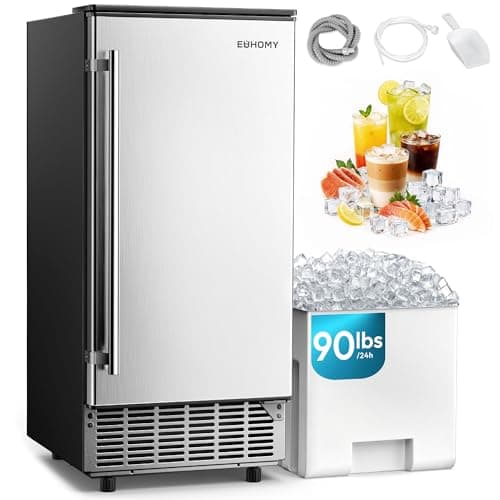
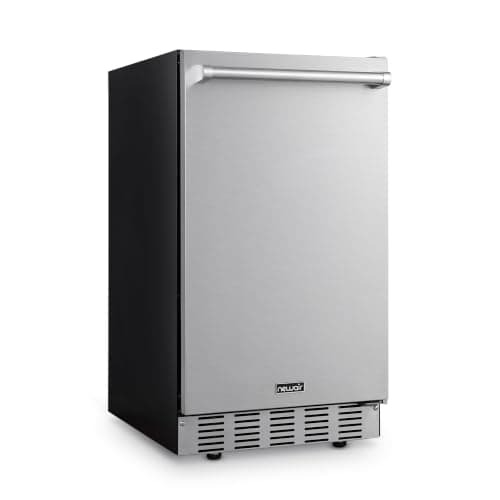
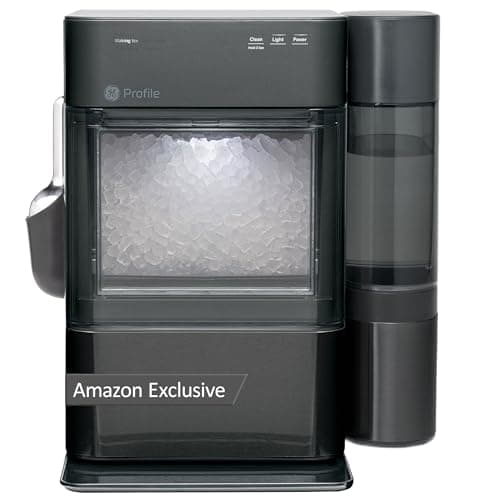
The EUHOMY 15-inch is the undercounter ice maker to buy for a home bar. It makes 90 lb a day into a 24 lb storage bin, fits a standard 15-inch cabinet opening and drains by gravity, which keeps both the price and the installation reasonable. The Newair 18-inch is the step up in output and flexibility if your bar is being built around it. If neither drain arrangement works in your space, the honest answer is a countertop machine — and the GE Profile Opal Ultra is the one we would pick.
An undercounter ice maker is the difference between a bar that makes ice and a bar that has ice. Countertop machines produce continuously into an unrefrigerated basket; built-in machines produce into an insulated, cooled bin, so when you open it at 8pm there is ice in it. For a permanent bar that is the whole argument, and it is a large one.
It is also an installation rather than a purchase, and one specification decides feasibility before any other: the drain. Read that section before you choose a model, because it is the most common reason an undercounter ice maker gets returned.
We have not installed these machines. The ranking draws on published output and bin capacities, cabinet dimensions, drain and water-line requirements, and owner-review consensus reported as other people's experience. Prices come live from Amazon with the date we verified them.
The short answer
In a hurry? These are the picks we'd buy. Prices are live; tap a card below for the full reasoning.
$549.0029% offPrice as of October 7, 2026·#addisclosure
GE Profile Opal Ultra Countertop Nugget Ice Maker
The countertop machine to buy instead: 38 lb a day of nugget ice with a 1-gallon side tank, no plumbing and no drain.
Install
Countertop, no plumbing
Output
38 lb / 24 h
Water
1 gal XL side tank
Ice
Nugget
Pros
No water line, no drain, no cabinet work — plug it in
Nugget ice, which no undercounter machine here makes
A fraction of the installed cost of a built-in
Can move house with you
Cons
Under half the daily output of a built-in
Unrefrigerated basket — it does not store ice
Occupies counter space permanently
Best for: A bar with no water line or no viable drain.
Skip this
The budget traps that look cheap and cost you twice. We'd skip these.
Putting a freestanding-only ice maker in a cabinet
Freestanding units reject heat out of the back and need clearance. Enclosed, they run constantly, make less ice and fail early. You need a unit specified as built-in or front-venting for a cabinet opening — exactly the same rule as beverage fridges.
Assuming a gravity drain will work anywhere
Gravity drainage only works if the machine sits above the drain point, which frequently rules out basement bars. If your drain is level with or above the cabinet floor, you need a model with a built-in drain pump, and that needs deciding before you buy.
How to choose (and what to skip)
Settle the drain before anything else
Ice makers produce meltwater continuously and must drain it. Gravity-drain models rely on the machine sitting above the drain point and are cheaper and simpler. Drain-pump models can push water upward to a sink waste or a stack, cost more, and add a component that can fail. Work out where your drain is relative to the cabinet floor first; it eliminates half the market immediately.
Measure the opening, including depth and clearance
Standard undercounter widths are 15 and 18 inches, but depth and height vary, and a built-in needs its specified clearance at the front grille to breathe. Measure the opening's width, depth and height, confirm the door can swing fully, and confirm the water line and drain can reach without kinking behind the unit.
Output versus bin capacity
Both numbers matter and they do different jobs. Daily output is how fast the machine replaces ice; bin capacity is how much is waiting when you open it. A 90 lb/day machine with a 24 lb bin gives you 24 lb on demand and refills it quickly. For a home bar, bin capacity is the figure you feel, and a bigger bin matters more than the last 10 lb of output.
Remember the bin is not a freezer either
Undercounter bins are insulated and cooled but are not held at freezer temperature, so ice slowly fuses and some melts back. That is normal. The practical consequence is that ice left for days clumps; break it up with a scoop rather than assuming the machine has failed. Never store anything other than ice in the bin.
Water quality and filtration
A built-in ice maker is plumbed, so it gets whatever your supply delivers, continuously. Fitting an inline filter on the supply line is inexpensive and significantly slows scale build-up on the evaporator — which is the main thing that reduces output over the years. On a machine at this price, the filter is the cheapest insurance you can buy.
What the installation actually involves
Three connections: power, water in, water out. Power is a standard outlet inside or adjacent to the cabinet. Water in is a 1/4-inch supply line teed off a nearby cold feed, exactly as a refrigerator ice maker is fed, ideally with its own shut-off valve so you can isolate the machine. Water out is the drain, by gravity or pump as above. None of it is exotic, and all of it is far easier to do while a bar is being built than afterwards.
If you are planning a built-in bar and are not certain you want an ice maker, run the water line and the drain to the cabinet anyway and cap them. The cost at build time is trivial and it preserves the option; retrofitting a drain into a finished bar is the expensive part.
Undercounter against the countertop alternative
The real comparison is not output, it is availability. A countertop machine makes 26 to 38 lb across a day into a basket that does not keep it, so ice exists when the machine has recently been running. An undercounter machine makes 90 to 100 lb a day into a cooled bin, so ice exists when you want it. For a bar you use most evenings, that difference is the entire purchase.
Against that: a built-in costs several times as much before installation, cannot be moved, needs plumbing, and makes cube ice rather than nugget. For a household that entertains a few times a year, a countertop machine plus the habit of bagging ice into the freezer is the better value by a wide margin, and we would say so even though the built-ins are the more impressive appliance.
Where it fits in a bar build
A 15-inch ice maker next to a 15-inch beverage fridge under a 30-inch run of counter is the standard home-bar pairing, and it is a genuinely complete setup: cold drinks, ice on demand, and a working surface above both. If you only have one 15-inch opening, the fridge is the more useful of the two, because ice can come from a countertop machine and cold storage cannot come from anywhere else.
Leave the ice maker at the end of the run rather than the middle if you can. It is the appliance most likely to need servicing, and the one whose drain and supply connections you will want to reach.
Frequently asked questions
Do undercounter ice makers need a drain?+
Yes. They produce meltwater continuously and have to get rid of it. Gravity-drain models must sit above the drain point; drain-pump models can push water upward to a sink waste and cost more. Establishing where your drain sits relative to the cabinet floor is the first step in choosing a model.
What size undercounter ice maker should I buy?+
Fifteen inches is the standard opening and covers most home bars, typically at 90 lb a day or so. Eighteen inches buys more output and a bigger bin but is a non-standard opening in existing cabinetry. For a home bar, bin capacity matters more than the last few pounds of daily output.
Can I put an undercounter ice maker in a cabinet if it says freestanding?+
No. Freestanding units vent out of the back and need clearance; enclosing one makes it run constantly, produce less ice and fail early. You need a model specified as built-in or front-venting, which exhausts through the front grille. Some models are rated for both and say so clearly.
Does the ice in an undercounter bin stay frozen?+
Mostly. The bin is insulated and cooled but is not held at freezer temperature, so ice left for days will fuse into clumps and some will melt back into the drain. That is normal behaviour rather than a fault — break clumps with a scoop. For long storage, bag ice into an actual freezer.
Prices and availability shown here come from Amazon's live data and change often; we re-verify them regularly. Bar Bumper is an Amazon Associate and earns a commission on qualifying purchases at no extra cost to you. Read our full disclosure.