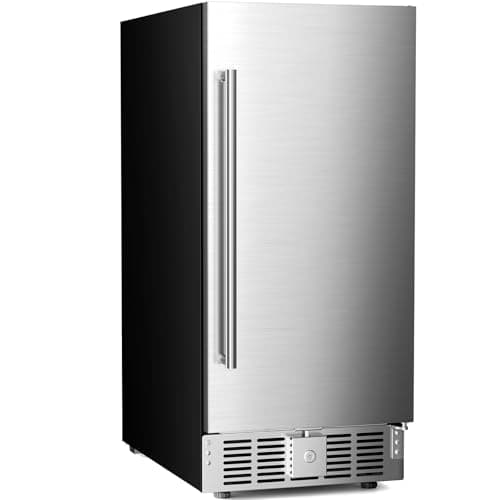
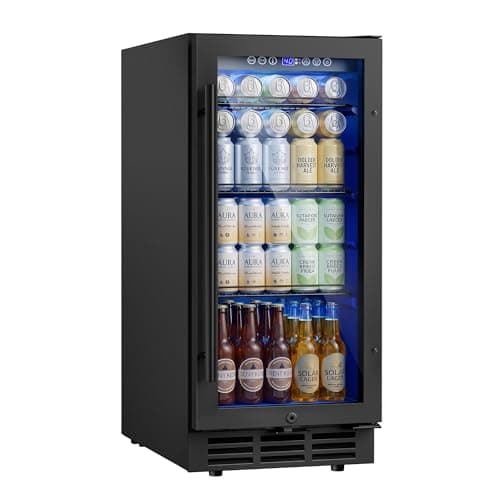
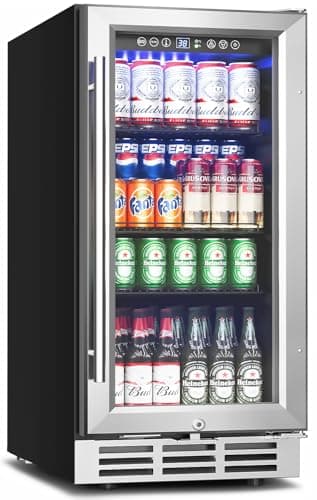
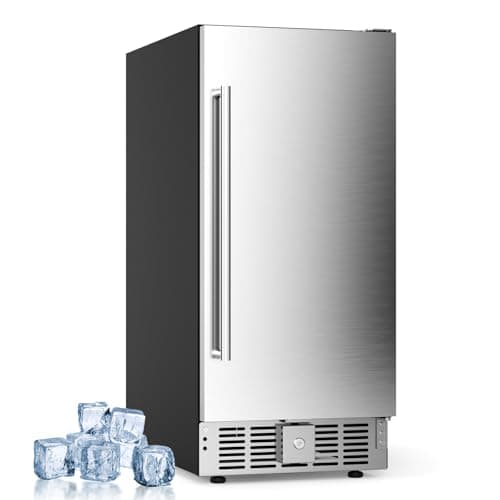
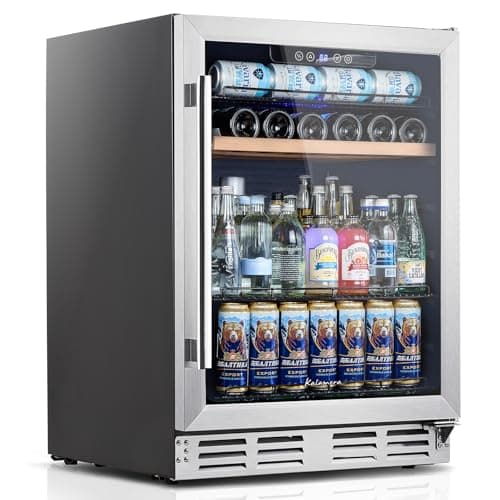
A built-in beverage fridge has to vent out of the front or it dies in the cabinet. Five 15-inch undercounter coolers, chosen on that spec first.
Updated October 2026 · By Stephen V.
The Antarctic Star 15-inch undercounter beverage refrigerator is the best built-in beverage fridge for a home bar: front-venting, a 135-can rating, and a standard 15-inch cabinet opening. The ICEVIVAL 15-inch is the alternative at a similar capacity, the Feelfunn 15-inch is the value pick, the Electactic 15-inch is the one to buy for an outdoor bar, and the Kalamera 24-inch is the step up for a wider opening.
There is one specification on this page that is not negotiable, and getting it wrong is the single most common reason a bar fridge fails early. A built-in fridge must exhaust through the front, not the back. Freestanding units vent out of the rear and need several inches of air behind and above them; push one into a cabinet cutout and the compressor runs constantly, never holds temperature and dies young. Front-venting units exhaust through the toe grille and are designed to sit flush with zero clearance. Our main beverage refrigerator roundup is freestanding-first; this page is the built-in answer.
The second number to settle is the opening. Standard undercounter cabinet cutouts are 15 inches and 24 inches wide, and "15-inch" models are built to drop into the former with the door proud of the face frame. Measure the cutout width, height and depth before anything else — a fridge that is an inch too tall is a joinery job, not a delivery.
Treat published can capacities as a best case. The figure assumes standard 12 oz cans packed to the shelves' full depth with nothing else inside; mix in tall cans, bottles or a shelf of mixers and the real number drops by a third. We have not installed these units — the ranking is built from published venting type, dimensions, capacity, temperature range, door and shelf configuration and installation notes, plus owner-review consensus reported as other people's experience. See how we pick. Prices come live from Amazon with the date we verified them.
The short answer
In a hurry? These are the picks we'd buy. Prices are live; tap a card below for the full reasoning.
A 24-inch undercounter cooler that holds both bottles and cans — the step up when the cabinet opening is wider than 15 inches.
Width
24 in
Holds
Cans + wine bottles
Install
Built-in / undercounter
Brand
Kalamera
Pros
Takes bottles as well as cans, which a can-only unit cannot
Kalamera is the most established name on this page
24 inches is a standard cabinet width, so no custom joinery
Cons
Needs a 24-inch opening — it will not fit a 15-inch cutout
Dearer than every 15-inch unit here
Shared compartment is a compromise versus true dual-zone
Best for: A wider cutout, or a bar that needs wine and cans in one unit.
Skip this
The budget traps that look cheap and cost you twice. We'd skip these.
Any freestanding beverage fridge put into a cabinet cutout
This is the mistake that kills bar fridges. A rear-venting unit in an enclosed cutout cannot reject its heat, so the compressor runs continuously, the cabinet never reaches temperature and the unit fails in a year or two. If the listing does not say built-in or front-venting, it is freestanding, and it needs several inches of air behind and above it.
Buying on can capacity without checking shelf layout
A 135-can rating assumes 12 oz cans filling every shelf to full depth. Put in tall cans, long-neck bottles, mixers or a carton and the usable number drops by a third or more. Look at the shelf spacing and whether shelves are removable — that tells you what the fridge will really hold for your drinks.
How to choose (and what to skip)
Confirm front venting before anything else
The listing must say built-in, front-venting, or both. This is the one spec with no workaround: a rear-venting fridge in a cabinet cutout will run hot and fail. Units labeled for both freestanding and built-in use do both, and they are the safe choice if you are not certain yet where the fridge will end up.
Measure the cutout in three dimensions
Width, height and depth, plus the depth of the toe kick and where the power outlet is. Standard undercounter openings are 15 and 24 inches wide and around 34 inches high. A unit an inch too tall means cutting the counter support, which is a joinery job — far better to find out with a tape measure than with a delivery on the driveway.
Check the door swing and whether it reverses
A fridge at the end of a bar run with a door that opens into the wall is unusable. Reversible-door models solve it; many budget units are not reversible. Decide which way the door must open, then confirm the model supports it before ordering.
Temperature range tells you what it can actually chill
Beverage coolers typically run around 38 to 50 F, which is right for cans and beer and too warm to serve as a freezer or a cellar. If you want wine stored properly as well, you want either a wider range or a dual-zone unit — our <a href="/bar-fridges/best-undercounter-wine-fridge">undercounter wine fridge page</a> covers that side, and <a href="/bar-fridges/wine-fridge-vs-beverage-fridge">wine fridge vs beverage fridge</a> explains the difference properly.
Think about noise, because you will be sitting at this counter
A compressor cooler is more effective than a thermoelectric one and it is also audible. Under a bar counter where people sit and talk, a budget compressor is noticeably louder than a mid-range one. If the bar is in a quiet basement room, it is worth paying up a tier for a quieter unit.
Built-in versus freestanding, in practical terms
A built-in beverage fridge is a different appliance from a freestanding one, not a placement of the same appliance. The compressor and condenser are arranged to pull air in and push it out through the front toe grille, so the unit can be surrounded on three sides by cabinetry. A freestanding fridge takes air in and rejects heat at the back, so an enclosed cutout traps that heat around the coil. Everything about the failure mode follows from that one difference.
There is a middle category worth knowing about: units labeled for both freestanding and built-in installation. They are front-venting but also happy in the open, and they are the right choice if the bar is being built in stages and the fridge might move.
15-inch or 24-inch?
Fifteen inches is the standard narrow undercounter opening and it is what most home bars are built around — 120 to 135 rated cans, which is realistically eighty to ninety mixed drinks' worth of cold stock. Twenty-four inches doubles the width, takes wine bottles laid down as well as cans, and is the right choice if the bar run has the space. The thing not to do is buy 24 inches and plan to pack out the gap; the fridge needs its own structural opening.
How many cans do you actually need cold?
For a household of two to four, a 15-inch unit at 120-plus rated cans is more than ample — you will never fill it. For a bar that hosts a dozen people regularly, the useful planning figure is three to four drinks per person for an evening, so forty to fifty cold cans plus mixers. A 15-inch fridge covers that comfortably. The reason to go to 24 inches is almost always bottles, not volume.
Installing it
Three things decide whether the installation is clean. The outlet should be inside the cabinet run and not behind the unit where the fridge will press the plug. The toe grille needs to stay clear — no kick board across it, no rug against it. And the fridge needs to sit level, which on a basement floor usually means adjusting the front feet rather than assuming the floor is flat. Get those three right and a front-venting unit will behave exactly as specified.
What goes next to it
In a built-in bar run, the usual order is beverage fridge, ice maker, then storage. An undercounter ice maker is the other appliance worth a 15-inch opening, and it has a harder requirement: a water line and a drain. If you are planning the run now, decide the ice maker's drain route before the cabinetry goes in, because that is the one thing that cannot be retrofitted easily.
Frequently asked questions
What is the best undercounter beverage fridge?+
For a standard 15-inch cabinet opening, a front-venting unit rated around 130 cans — front venting is the spec that matters, because it is what allows the fridge to sit flush in cabinetry without overheating. If the opening is 24 inches, a wider unit that takes bottles as well as cans is the better buy.
Can you put a freestanding beverage fridge under a counter?+
Not in an enclosed cutout. A freestanding unit vents from the back and needs several inches of clearance behind and above it; boxed in, the compressor runs continuously, the cabinet never holds temperature and the fridge fails early. You need a unit labeled built-in or front-venting, or one labeled for both.
What size opening does an undercounter beverage fridge need?+
Standard openings are 15 inches and 24 inches wide, around 34 inches high. Measure width, height and depth, check where the outlet is, and confirm the door swing — a unit an inch too tall turns a delivery into a joinery job. Always measure before ordering rather than trusting a cabinet standard.
How many cans does a 15-inch beverage fridge hold?+
Rated at 120 to 135 standard 12 oz cans, which assumes every shelf packed full with nothing else inside. In real use with tall cans, bottles and mixers mixed in, expect roughly two-thirds of the rated figure. That is still far more cold stock than a household of four will get through.
Do undercounter beverage fridges need a drain?+
No — beverage coolers manage their own condensate and need only power. It is undercounter ice makers that need a water line and a gravity drain or pump, which is the harder plumbing decision in a built-in bar and the one to plan before the cabinetry is installed.
Should I get a beverage fridge or a wine fridge for a built-in bar?+
A beverage fridge if you mostly chill cans and beer, because it runs colder and its shelves are spaced for cans. A wine fridge if bottles are the point, because it runs warmer and holds them on their sides. A dual-zone unit does both at the cost of some capacity in each — our wine fridge vs beverage fridge comparison goes through the trade in detail.
Prices and availability shown here come from Amazon's live data and change often; we re-verify them regularly. Bar Bumper is an Amazon Associate and earns a commission on qualifying purchases at no extra cost to you. Read our full disclosure.