Five hundred dollars is the band where beverage fridges stop being dorm appliances and start being furniture — including the cheapest genuine 15-inch built-ins.
Updated November 2026 · By Stephen V.
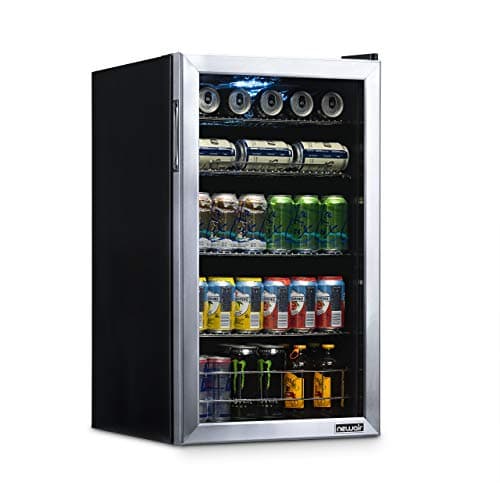
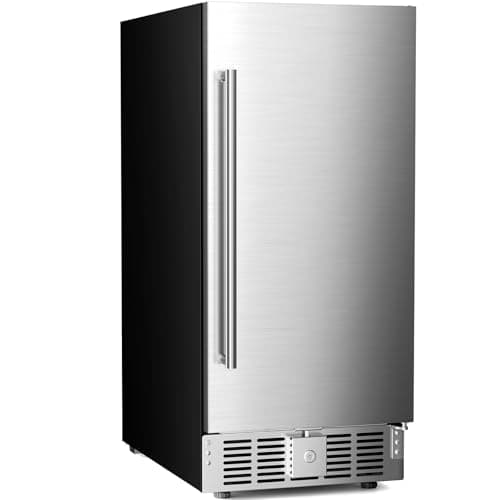
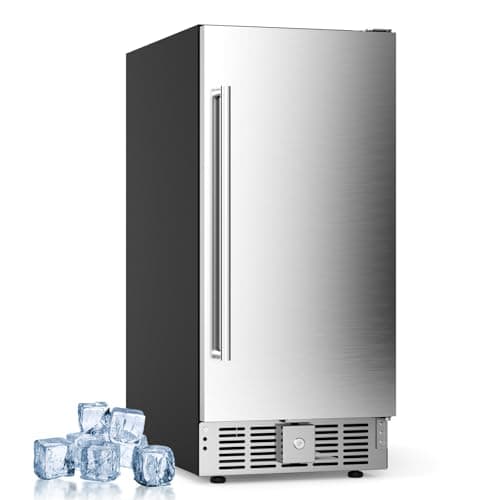
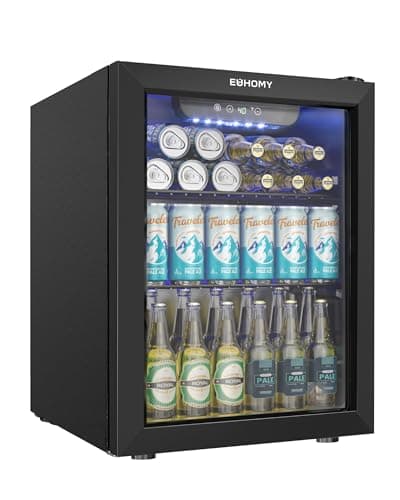
Under $500 the beverage fridge to buy is the NewAir 126-Can Beverage Refrigerator: it is the most capacity you can get at this price from a brand that builds nothing but drinks fridges, and it is a freestanding glass-door unit you can put anywhere. If the fridge has to disappear into a cabinet run, the Antarctic Star 15-in Undercounter is the cheapest genuine built-in here. The budget pick is the Erivess 60-Can, which is a fraction of the price and still keeps 60 cans cold.
Every price on this page is read at request time from Amazon's live data and stamped with the date we read it, directly under each button. That matters on a price-capped page: the $500 ceiling is only meaningful if the numbers are current. If a listing has no buyable offer when you load the page, the button says Check price on Amazon rather than showing you a number we cannot stand behind. Prices in this category move, and a unit that was comfortably inside the cap last month can cross the line.
The reason $500 is the interesting band is that it straddles two different products. Below about $200 you are buying a countertop or freestanding can cooler — useful, but a box you put somewhere. Between roughly $300 and $500 you reach real 15-inch undercounter cabinets with front venting, reversible doors and the dimensions to sit flush in a bar run. That second group is the reason to spend the money, and it is why four of the picks below are built-ins rather than boxes.
What you still do not get under $500 is a 24-inch dual-zone cabinet with a stainless door, a lock and a proper rack system; those start higher, and our main beverage refrigerator roundup covers them. What you do get is the full 15-inch built-in category, which for most home bars is the fridge that actually fits.
The short answer
In a hurry? These are the picks we'd buy. Prices are live; tap a card below for the full reasoning.
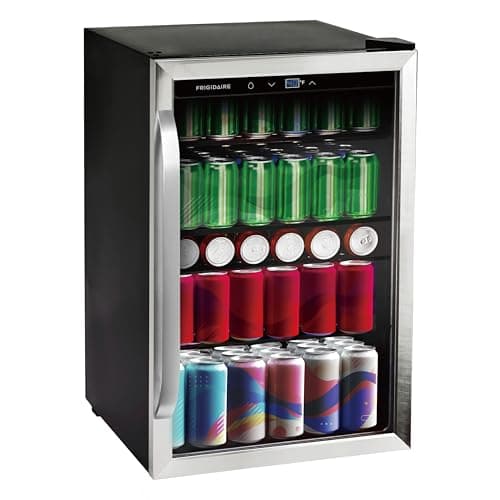
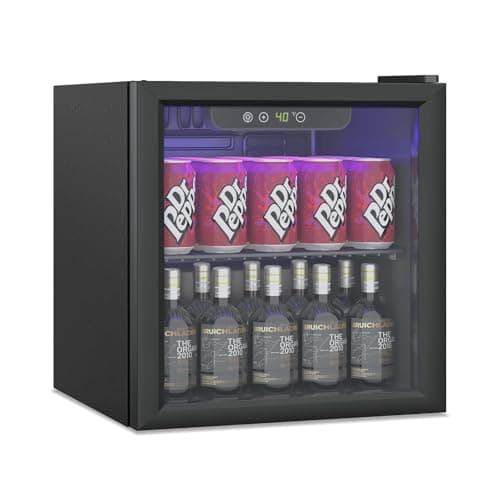
Erivess 60-Can Beverage Refrigerator (1.3 cu ft, glass door)
The cheapest fridge here that does the job: 1.3 cu ft, 60 cans, glass door, and nothing you do not need.
Capacity
1.3 cu ft / 60 cans
Install
Freestanding
Door
Glass
Controls
Dial thermostat
Pros
A small fraction of the price of the 126-can cabinets, for half the capacity
Dial thermostat — nothing to learn, nothing to fail
Glass door and light, so it still looks like a bar fridge
Light enough for one person to move
Cons
60 cans assumes tightly packed 12 oz cans and nothing else
Shallow shelves are poor for bottles lying down
No zone control, no built-in install
Best for: The cheapest way to get 60 cans properly cold.
Skip this
The budget traps that look cheap and cost you twice. We'd skip these.
A freestanding fridge sealed into a cabinet to save money
This is the most expensive mistake in the band. A freestanding unit vents out of its back and sides; built into a sealed bay it runs continuously, gets loud, and the compressor fails years early. The small saving over a front-venting 15-inch built-in buys you a fridge you replace twice. If the fridge has to sit flush, buy a built-in — our <a href="/bar-fridges/best-undercounter-beverage-fridge">undercounter beverage fridge roundup</a> is the page for that decision, and <a href="/bar-fridges/best-15-inch-beverage-refrigerators">15-inch beverage refrigerators</a> covers the fit numbers.
A price cap applied to a stale number
Beverage fridges are discounted hard in November, and the list price in a comparison article written in March tells you nothing now. Every figure on this page is read live and carries the date we read it; if a unit has crossed $500 since, the button will show you that rather than the number we hoped for. Treat any under-$N page without a dated price — including ours, if the stamp looks old — as a starting point rather than a quote.
How to choose (and what to skip)
Built-in or freestanding decides the whole purchase
Everything else is negotiable; this is not. A built-in vents forward through the door grille and can sit flush in a cabinet. A freestanding unit vents backward and needs air around it. Under $500 you can have either, so decide before you shop: flush in a cabinet run means 15-inch built-in, anywhere else means freestanding and more cans for the money.
Can ratings are a ceiling, not a plan
A 126-can rating is measured with identical 12 oz cans packed edge to edge. Add tall mixers, a few bottles and anything in a box and you will land near two thirds of it. If you need a specific real capacity, size up one step from the number you calculated.
Single zone is fine unless wine lives in there too
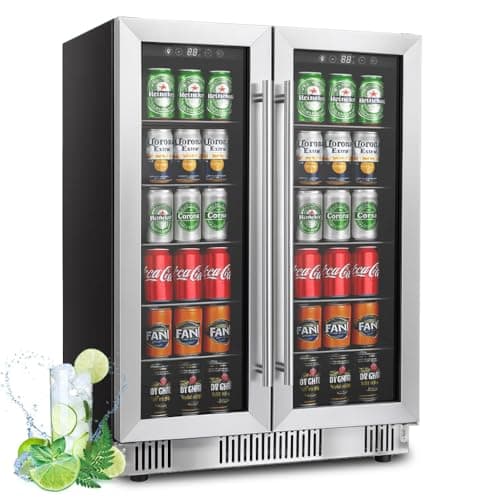
Cans want to be properly cold; red wine wants to be around cellar temperature. One zone cannot do both, so a single-zone beverage fridge full of wine is a wine fridge set wrong. If the same cabinet has to do both jobs, dual zone is the only honest answer, and the DOGHLY is the one that fits under $500. Otherwise single zone buys you more cans for less money.
Outdoors is a different appliance
An indoor fridge outside fails on humidity and on ambient temperature, usually in its first summer. Outdoor-rated units are sealed and specified for higher ambient ranges, and they cost more for the same capacity. If the bar is on a patio, pay for the rating — and still put it under cover.
Check the door swing before you buy
A fridge door that opens into the only path behind the bar is a permanent irritation. Most units in this band list a reversible door; the built-ins almost always do. Work out which way the door needs to open and confirm the listing supports it.
What $500 buys that $200 does not
Three things. First, a front-venting cabinet, which is the difference between a fridge that fits your bar and a fridge that sits next to it. Second, real capacity: the jump from 60 cans to 126 or 135 is the jump from topping up to hosting. Third, a compressor sized for the cabinet, which is why these units hold temperature in a basement or a garage while cheap thermoelectric coolers drift with the room. If you only ever chill a dozen drinks at a time, the extra money is wasted and our small beverage fridge page is the better list.
Why 15 inches keeps coming up
Fifteen inches is the standard undercounter appliance bay, and it is the width home bar cabinetry, kegerators and ice makers are all designed around. That means a 15-inch beverage fridge is interchangeable later with a 15-inch ice maker or a 15-inch wine cabinet, which is a real advantage if you are building the bar in stages. It is also why four of the picks here are 15 or 24 inches wide rather than some arbitrary size: the market standardised, and buying inside the standard keeps your options open.
How the price cap changes the ranking
On an open-ended roundup the 24-inch dual-zone cabinets win on capability and the 15-inch built-ins win on fit. Cap the budget at $500 and the ranking inverts in one specific way: the freestanding 126-can units become the value answer, because you are not paying for the venting engineering you may not need. That is why the NewAir leads this page while a built-in leads our undercounter roundup. Same category, different question.
What to check on the listing before you buy
Four numbers and one word. The numbers: external width, external depth, external height, and the can rating. The word: whether the listing says built-in or front venting. A listing that only says freestanding is telling you it must not be boxed in, and a listing that says can be built in without mentioning venting is worth a second look. Then check the door — reversible or not — and whether the shelves adjust, because fixed can shelves make a fridge useless for bottles.
Our verdict
If the fridge can stand anywhere, buy the NewAir 126-Can and spend the difference on bar tools. If it has to sit flush in a cabinet, buy the Antarctic Star 15-inch, which is the cheapest unit on this page that is a genuine built-in. If wine and cans share the cabinet, the DOGHLY dual-zone is the only real answer under the cap. And if the whole point is to spend as little as possible, the Erivess 60-Can keeps sixty cans cold for a fraction of all of the above. Need the fridge to be a solid-door workhorse instead? See the mini fridges for a home bar.
Frequently asked questions
Can you get a built-in beverage fridge for under $500?+
Yes. The 15-inch front-venting undercounter class starts inside the $500 band, and the Antarctic Star 15-inch on this page is a genuine built-in rather than a freestanding unit sold optimistically. What you cannot get under $500 is a 24-inch stainless dual-zone cabinet with a lock and a full rack system.
How many cans does a $500 beverage fridge hold?+
The best value at this price is around 126 to 135 cans. Treat that as a ceiling measured with identical 12 oz cans; with mixers and bottles in there too, plan on roughly two thirds of the rating.
Is a beverage fridge under $500 good enough for wine?+
Only in a dual-zone cabinet. Cans want to be properly cold and red wine wants cellar temperature, and a single-zone fridge cannot do both. If wine has to live in the same appliance, buy dual zone; otherwise a dedicated wine fridge is the better answer.
Can I put a beverage fridge in my garage?+
A compressor unit, yes — within its stated ambient range. Thermoelectric coolers cannot hold temperature in a hot garage because they only cool a fixed number of degrees below the room. Check the listed ambient range, and for anywhere genuinely hot look at outdoor-rated or garage-rated models.
Why do the prices on this page change?+
Because they are real. Every price here is read from Amazon's live data when the page loads and stamped with the date under the button, rather than typed into the article. If a model has moved above $500 since we last checked, the button shows the current state instead of a stale number.
Prices and availability shown here come from Amazon's live data and change often; we re-verify them regularly. Bar Bumper is an Amazon Associate and earns a commission on qualifying purchases at no extra cost to you. Read our full disclosure.