Written for a small room. Six mini beverage coolers judged on footprint and real can capacity, from a 15-can personal fridge to a 68-can glass-door unit.
Updated October 2026 · By Stephen V.
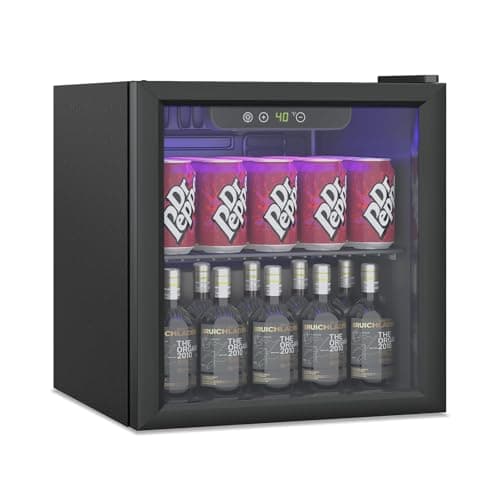
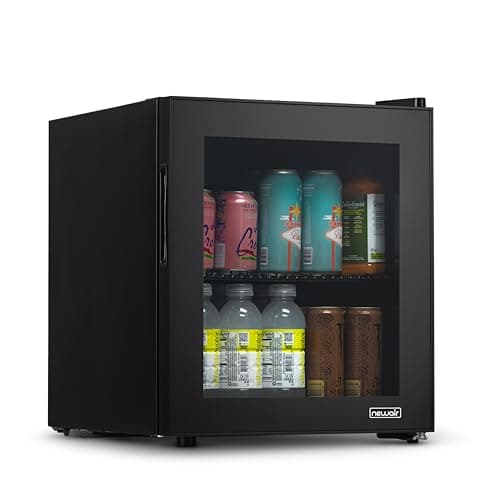
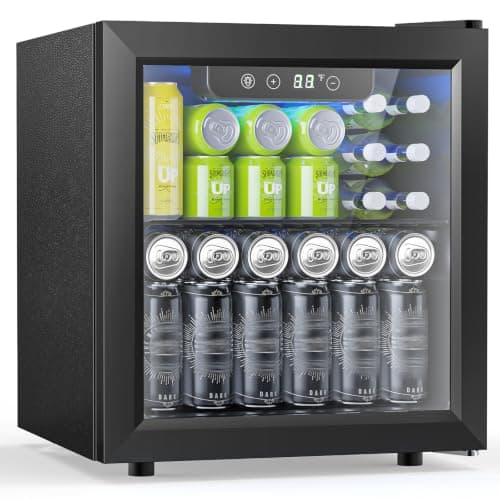
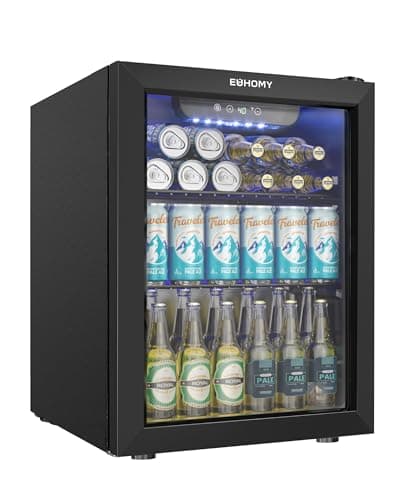
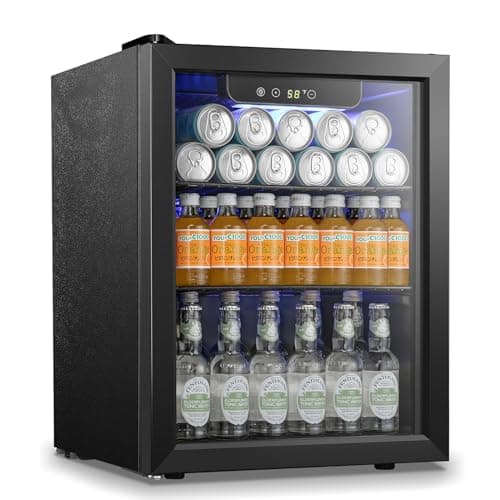
The Erivess 60-can beverage refrigerator is the best small beverage fridge for most people: 1.3 cubic feet, a glass door, and sixty cans in a footprint that fits under a desk or at the end of a counter. The Electactic 50-can countertop unit is the pick if it has to sit on a surface, the NewAir 60-can is the better-built version of the same idea, the EUHOMY 68-can is the largest unit here that still counts as small, and the Frigidaire 15-can personal cooler is the smallest thing on this page that is still a real fridge.
A small beverage cooler is the single highest-value appliance in a small home bar, and the reason is simple: it moves cold drinks out of the kitchen and into the room where people are. Our main beverage refrigerator roundup ranks on capacity and build across the whole category. This page is written for a room that does not have space for those — a studio, a dorm, a games corner, an office, a bar cart alcove.
Two honest warnings about the numbers. Can capacities are a best case — a "60-can" rating assumes standard 12 oz cans filling every shelf, and a real mix with tall cans, bottles and mixers holds roughly two-thirds of that. And cubic feet is the spec to compare, not the can rating, because it is measured the same way by everyone: 1.3 cu ft is the common compact size, 1.7 is the step up, and under 0.5 is a personal cooler rather than a bar fridge.
We have not installed these units. The ranking is built from published external dimensions, cubic capacity, rated can counts, cooling type, door glazing and shelf layout, plus owner-review consensus reported as other people's experience — see how we pick. Prices come live from Amazon with the date we verified them.
The short answer
In a hurry? These are the picks we'd buy. Prices are live; tap a card below for the full reasoning.
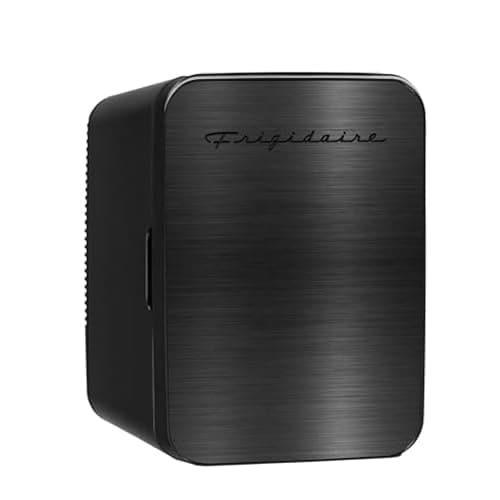
Frigidaire Mini Personal Fridge Cooler (10 L / 15 cans)
A 10-liter personal cooler that holds fifteen cans — not a bar fridge, and the only thing here that fits on a bar cart.
Volume
10 L
Capacity
15 cans
Placement
Countertop / desk
Brand
Frigidaire
Pros
Small enough to sit on a bar cart shelf or a desk
Frigidaire name at a low price
Fifteen cans covers an evening for two people
Cons
This is a personal cooler, not a bar fridge
Thermoelectric-class performance — it depends on a cool room
No glass door
Best for: A desk, a bedside table or a bar cart shelf.
Skip this
The budget traps that look cheap and cost you twice. We'd skip these.
Buying on the can rating instead of the cubic capacity
Can ratings are marketing arithmetic: standard 12 oz cans, every shelf full, nothing else inside. The moment you add tall cans, long-neck bottles or a carton of mixer, the usable number drops by about a third. Cubic feet is measured the same way by every manufacturer — compare that, and treat the can figure as an upper bound.
Putting a compact beverage fridge in an enclosed cabinet
Every unit on this page vents from the back and needs a few inches of air behind and above it. Boxed into a cabinet cutout it runs continuously, never reaches temperature and fails early. If the fridge must be enclosed, buy a front-venting built-in unit instead — our <a href="/bar-fridges/best-undercounter-beverage-fridge">undercounter beverage fridge picks</a> cover those.
How to choose (and what to skip)
Compare cubic feet, not cans
0.35 to 0.5 cu ft is a personal cooler for 10 to 20 cans. 1.3 cu ft is the standard compact size and holds 50 to 60 rated cans. 1.7 cu ft is the step up at 68. Anything above about 2.5 cu ft has left the small category. Cubic capacity is consistent across brands; can ratings are not.
Decide floor or counter before you shop
A countertop unit costs no floor and takes prime working surface. A floor-standing unit does the opposite. In a studio or a games corner the countertop option usually wins; at the end of a bar run the floor-standing one does. Both need rear clearance either way, which is the detail people forget when they plan to push one against a wall.
Glass door or solid door
Glass looks like bar equipment, shows the stock and loses more cold every time the room is warm. Solid doors insulate better and hide what is inside. For a bar, glass is the right answer because seeing the drinks is half the point. For a bedroom or an office, solid is the more efficient choice.
Check the shelves come out
The single most useful feature on a small beverage fridge is removable shelving, because it is what lets you fit a 2-liter bottle, a wine bottle or tall cans. A fridge with fixed can-spaced shelves holds its rated number of 12 oz cans and nothing else, which in a small bar is a real limitation.
Expect noise, and place it accordingly
Compact compressors in budget units are audible — a low hum with cycling. That is unremarkable in a kitchen or a games room and intrusive beside a bed. If the fridge is going in a quiet room, pay up a tier for a better-insulated unit, or put it somewhere appliance noise is already normal.
How many cold cans does a small bar actually need?
Three to four drinks per person for an evening is the useful planning figure. For a household of two, fifteen cold cans is a week. For a bar that hosts six to eight people, forty to fifty cold cans plus mixers covers the night comfortably — which is exactly what a 1.3 cubic foot, 50-to-60-can unit delivers once you discount the rating. That is why that size is the default recommendation rather than the biggest thing that fits.
The exception is a bar that keeps bottled beer rather than cans. Long-neck bottles use shelf height badly, and a 60-can fridge holds far fewer of them — look for removable shelves and plan on roughly half the rated figure.
Beer fridge, beverage cooler, mini fridge: what is the difference?
A beverage cooler runs around 38 to 50 F with shelves spaced for cans and usually a glass door. A mini fridge is a small general refrigerator: colder, solid door, often with a tiny freezer compartment that is not much use for anything. A beer fridge is a marketing term for either. For a bar you want the beverage cooler, because the shelf spacing and the glass door are both built around drinks rather than groceries.
Small beverage fridge for a dorm or an office
Both are cases for a solid door and a quieter unit. A dorm fridge gets opened constantly, so insulation matters more than visibility; an office fridge sits in a room where a cycling compressor is noticeable. The 1.3 cubic foot class is still the right size — it is the shape that fits under a desk — but the glass-door bar aesthetic is working against you in both rooms.
Where it goes in a small home bar
The highest-value position is wherever people are standing, which usually means at the end of a counter or under a bar cabinet. Keep a few inches behind it, keep it out of direct sun, and do not put it next to a radiator or an oven — neighboring heat is what makes a compact compressor run constantly. If the only spot is enclosed cabinetry, buy a front-venting built-in unit instead.
What to pair it with
In a small bar, the beverage fridge and a countertop ice maker between them handle almost everything. A compact ice maker takes about the same counter space and solves the one bar supply you cannot stock up on. If wine is also part of the picture, a small wine fridge is a separate appliance for a reason — beverage coolers run too cold for bottles.
Frequently asked questions
What is the best small beverage fridge?+
For most small bars, a 1.3 cubic foot glass-door unit rated around 60 cans — it holds a genuine evening's cold stock and fits under a desk or at the end of a counter. If it has to sit on a surface, a countertop 50-can unit is the same idea without using any floor.
How many cans does a mini beverage fridge hold?+
A 1.3 cubic foot unit is rated at 50 to 60 standard 12 oz cans, and a 1.7 cu ft unit around 68. Those figures assume every shelf packed with 12 oz cans and nothing else inside — with bottles, tall cans and mixers mixed in, expect roughly two-thirds. Compare cubic feet rather than can ratings.
What is the difference between a beverage fridge and a mini fridge?+
A beverage cooler runs around 38 to 50 F with shelves spaced for cans and usually a glass door. A mini fridge is a small general refrigerator — colder, solid door, often with a token freezer compartment. For a bar, the beverage cooler is the right appliance because everything about it is designed around drinks.
Can a small beverage fridge go in a cabinet?+
Not the compact freestanding units — they vent from the back and need a few inches of air behind and above. Enclosed, the compressor runs continuously and the fridge fails early. For an enclosed installation you need a front-venting built-in model designed to sit flush in a cutout.
Are small beverage fridges noisy?+
Budget compact units are audible — a low hum with regular cycling. That is fine in a kitchen, a bar or a games room and intrusive next to a bed. The better-built units are noticeably quieter, and placement helps more than anything: put it where appliance noise is already normal.
Can you put wine in a beverage fridge?+
You can, but it runs around 38 to 50 F, which is colder than wine wants and too cold for reds, and the shelves hold bottles upright rather than on their sides. For a bottle you will open soon it is fine; for anything resting more than a couple of weeks, a dedicated wine cooler is the right appliance.
Prices and availability shown here come from Amazon's live data and change often; we re-verify them regularly. Bar Bumper is an Amazon Associate and earns a commission on qualifying purchases at no extra cost to you. Read our full disclosure.