Written for a bar that runs out of ice at 9pm. Six commercial ice machines ranked on real daily output, storage bin size and what the install actually needs.
Updated October 2026 · By Stephen V.
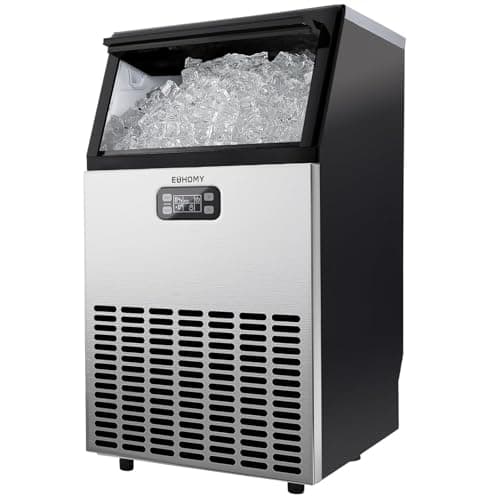
For most small bars the best commercial ice maker is the EUHOMY 100 lb-a-day undercounter machine: a stainless cabinet, a 33 lb insulated bin and an output that covers a busy evening service, at a fraction of what a foodservice-brand machine costs. Step up to the 150 lb version for a bar doing real volume, the Coolake 200 lb unit when a 50 lb bin is the constraint, and the Scotsman UC2024MA when you need a serviceable foodservice machine with a parts network behind it.
Commercial means three things that home machines do not have, and they are worth naming because they are what you are paying for. An insulated storage bin, so the ice that has been made stays made for hours instead of melting back into the tank. A plumbed water supply and a drain, so nobody fills a reservoir by hand. And duty-rated components — a compressor and pump designed to run most of the day, every day, rather than in short domestic bursts. A countertop machine in a bar does not fail because it is small; it fails because it was never built to run for sixteen hours.
Size it by peak, not by average. The useful planning figure for a bar is 1 to 1.5 lb of ice per customer per hour at the busiest point, plus whatever the kitchen or the beer wells take, and then add about 20% headroom. A machine at exactly your calculated output will be fine until the first hot Saturday. Remember too that published output figures are measured at favorable water and air temperatures: a machine in a hot back bar with warm supply water makes meaningfully less ice than the number on the box.
We have not installed or bench-tested these machines. The ranking is built from published output and bin capacity, cabinet dimensions, cooling and drainage requirements, listings and certifications where stated, and owner-review consensus reported as other people's experience — see how we pick. Prices come live from Amazon and carry the date we verified them.
The short answer
In a hurry? These are the picks we'd buy. Prices are live; tap a card below for the full reasoning.
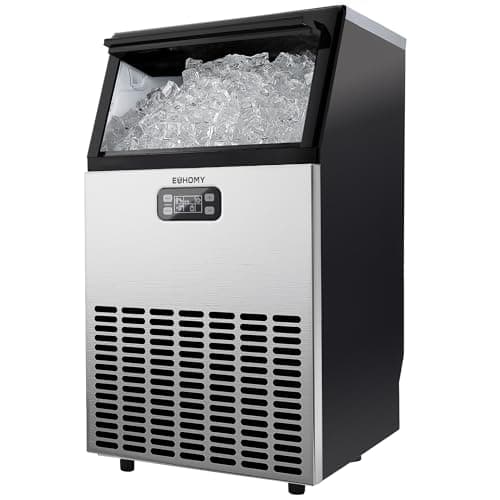
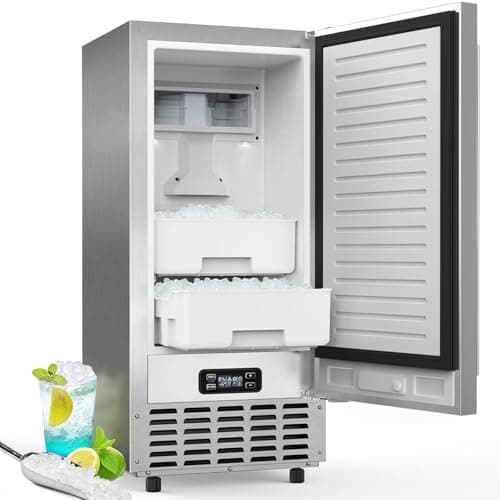
100 lb a day into a 33 lb insulated bin in a stainless undercounter cabinet — the output most small bars actually need, at a price that does not need a loan.
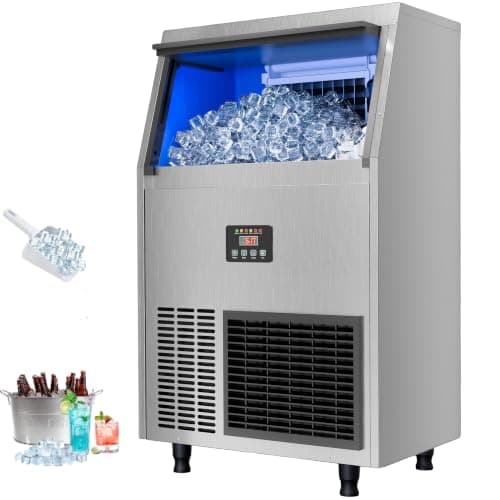
200 lb a day into a 50 lb bin, air cooled and self-cleaning — the pick when the problem is how much ice is ready at once rather than how much is made per day.
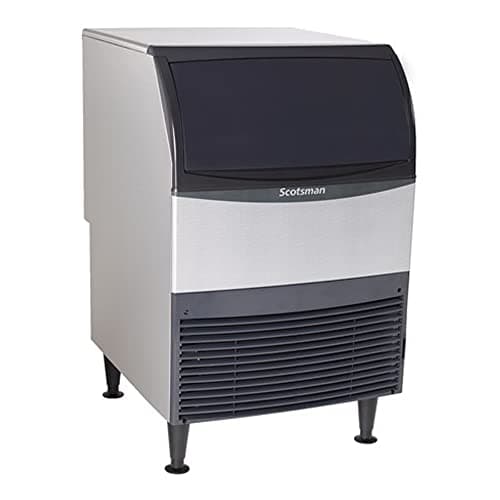
Scotsman's 24-inch air-cooled undercounter cube machine: 227 lb a day into an 80 lb bin, from the brand foodservice technicians actually stock parts for.
A commercial kitchen that needs parts and a service contract
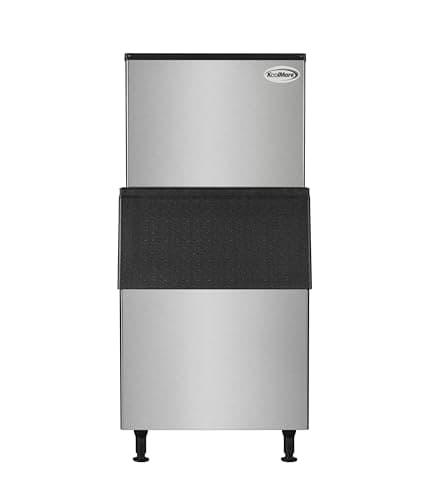
500 lb a day on a 375 lb bin, air cooled and ETL listed — the step into modular ice production, where the bin is bigger than most machines' daily output.
A restaurant, a function room or a venue with beer wells to fill
100 lb a day into a 33 lb insulated bin in a stainless undercounter cabinet — the output most small bars actually need, at a price that does not need a loan.
Output
100 lb / 24 h
Bin
33 lb insulated storage
Install
Undercounter or freestanding
Cabinet
Stainless steel
Pros
A real insulated bin, so ice is waiting when service starts
Stainless cabinet wipes down and belongs behind a bar
Fits under a standard counter or stands alone
The best output-per-dollar on this page by a wide margin
Cons
Not a foodservice brand with a nationwide service network
Needs a water line and a drain like any commercial machine
33 lb of storage empties fast on a busy Saturday
Best for: A small bar, a taproom or a serious home bar.
200 lb a day into a 50 lb bin, air cooled and self-cleaning — the pick when the problem is how much ice is ready at once rather than how much is made per day.
Output
200 lb / 24 h
Bin
50 lb storage
Cooling
Air cooled
Install
Undercounter
Pros
A 50 lb bin holds through a rush rather than through an hour
Self-cleaning cycle reduces the maintenance burden on staff
Air cooled, so no water-cooling supply to plumb
Still an undercounter footprint
Cons
Air cooling needs real clearance and a bar that is not an oven
Scotsman's 24-inch air-cooled undercounter cube machine: 227 lb a day into an 80 lb bin, from the brand foodservice technicians actually stock parts for.
Output
227 lb / day
Bin
80 lb storage
Width
24 in
Cooling
Air cooled
Pros
A genuine foodservice machine, with the service network that implies
80 lb of insulated storage, the most of any undercounter unit here
Built to run all day for years, which is the real definition of commercial
Standard 24-inch undercounter width for a commercial line-up
Cons
Many times the price of the import machines above
Overkill unless the business depends on the machine
Air-cooled commercial machines need proper ventilation clearance
Best for: A commercial kitchen that needs parts and a service contract.
500 lb a day on a 375 lb bin, air cooled and ETL listed — the step into modular ice production, where the bin is bigger than most machines' daily output.
Output
500 lb / 24 h
Bin
375 lb storage
Cooling
Air cooled
Listing
ETL listed
Pros
Holds 375 lb, which means ice is never the bottleneck
ETL listed, which matters for commercial inspection
Freestanding, so no cabinetry to build
Costs far less than the equivalent capacity from a legacy brand
Cons
Takes serious floor space and serious power
Needs genuine ventilation clearance and a floor drain
Nothing like this belongs in a home bar
Best for: A restaurant, a function room or a venue with beer wells to fill.
A commercial undercounter nugget machine — the format to buy when nugget ice is part of what you sell rather than a novelty at home.
Ice type
Nugget
Install
Undercounter, commercial
Water
Plumbed supply
Brand
Electactic
Pros
Commercial-duty nugget production, which home machines cannot sustain
Nugget ice is a genuine draw for soft-drink and cocktail service
Undercounter format keeps it behind the bar
Plumbed, so no hand filling during service
Cons
Nugget machines make less ice per hour than cube machines of the same size
More moving parts than a cube machine, so more to service
Costs more per pound of daily ice
Best for: A bar whose customers come for the chewable ice.
Skip this
The budget traps that look cheap and cost you twice. We'd skip these.
A countertop home machine used behind a bar
It is the cheapest way to solve the ice problem for about three weeks. Countertop machines have no insulated bin, no plumbed supply and no drain, so somebody fills them by hand all evening, the ice melts back into the tank between batches, and a compressor built for domestic duty runs sixteen hours a day until it does not. If the budget genuinely will not stretch to a commercial machine, buy bagged ice and a good insulated bin instead — it is cheaper than replacing countertop machines twice a year, and far less work during service.
A water-cooled machine in a small bar, by default
Water-cooled condensers reject heat into your water supply rather than into the room, which is genuinely useful in a hot, poorly ventilated space. The catch is that they consume a lot of water continuously, which costs money and is restricted or prohibited in some jurisdictions. For most small bars an air-cooled machine with proper clearance is cheaper to run and simpler to install. Choose water cooling deliberately, after checking local rules and your water costs — not because a listing offered it.
How to choose (and what to skip)
Size by peak hour, then add headroom
Plan on 1 to 1.5 lb of ice per customer per hour at your busiest point, plus kitchen and beer-well use, then add roughly 20%. Published outputs are measured at favorable water and air temperatures, so a machine in a hot back bar with warm supply water will produce less than its rating. A machine sized exactly to your calculation is a machine that fails on your best night.
Bin capacity is a separate decision from output
Production is how fast ice is replaced; the insulated bin is how much is ready at once. A bar that serves in bursts — a theater interval, a last-call rush — needs bin capacity more than production. A steady all-evening trade needs production. Where the two conflict, buy the bigger bin: ice you already have is worth more during a rush than ice arriving in twenty minutes.
Confirm the water line, the drain and the clearance before you order
Commercial machines need a cold water supply, a gravity drain or a drain pump, and air-cooled units need ventilation clearance at the specified panels. The drain is what catches people out in a retrofit: if there is no gravity fall to a floor drain, you need a machine with a pump or you need to add one. Measure the cabinet opening including the clearance, not just the cabinet.
Ask who services it before you need it serviced
This is the real argument for a foodservice brand like Scotsman at several times the price: parts availability and technicians who already know the machine. An import machine at a third of the cost is excellent value right up to the morning a board fails and nobody local stocks one. If ice is load-bearing for your business, factor serviceability into the purchase. If it is a home bar, it matters much less.
Plan the cleaning schedule into the rota
Commercial machines are cleaned and sanitized on a schedule — typically every one to three months depending on water hardness and local health requirements — and scale is the usual cause of falling output. Keep a water filter on the supply, write the clean into the closing rota rather than leaving it to memory, and keep the manufacturer's cleaner on the shelf. Our <a href="/guides/how-to-clean-a-kegerator">kegerator cleaning guide</a> covers the same discipline for draft lines.
What makes a machine commercial
Not the badge. Four concrete things: an insulated storage bin rather than a basket, a plumbed water inlet rather than a reservoir, a drain (gravity or pumped) rather than an overflow tray, and a duty-rated refrigeration system designed for near-continuous operation. Certifications are the fifth: an NSF or ETL listing is what an inspector looks for in a food business, and it is the one difference that cannot be worked around with good intentions. If you are buying for a licensed premises, check the listing requirements that apply to you before you choose the machine.
Commercial machines in a home bar
It is a more common purchase than you would think, and often a sensible one. A 100 lb-a-day undercounter machine in a basement bar means ice is simply always there, in quantity, without anyone carrying bags — and the import machines on this page cost no more than a mid-range appliance. The things to plan for are the same as in a bar: a water line to the cabinet, a drain or a pump, and clearance for an air-cooled condenser, which also means accepting that the machine rejects heat into the room. If that sounds like more than the project wants, our undercounter ice maker roundup covers the domestic versions, which are quieter, smaller and need less plumbing.
Cube, nugget or flake
Cube is the default for a bar: slow melting, clean looking, suits spirits and mixed drinks, and the cheapest ice per pound to produce. Nugget is soft and chewable, absorbs the drink, and has a genuine following — it is a reason customers choose one place over another, which is why soft-drink-heavy venues buy it. Flake is for displaying fish and chilling bottles rather than for drinks. Most bars want a cube machine and, if nugget matters to the offer, a second smaller nugget machine rather than a nugget machine doing all the work. Our nugget versus cube page sets the two out properly.
Air cooled versus water cooled
Air-cooled machines blow the heat they remove into the room through a condenser, which is simple to install and free to run, and which needs real clearance and an environment that is not already hot. Water-cooled machines send that heat into your water supply instead: they work well in cramped, hot back-bar spaces, cost more to run, and are regulated or banned in some areas because of the water they use. For most small venues, air cooled with proper clearance is the right default. Either way, a machine starved of ventilation makes less ice and dies younger, so the clearance figures in the manual are not advisory.
What it costs to run
Three ongoing costs, in order of size. Electricity: making ice is refrigeration work, and a commercial machine running most of the day is one of the larger loads in a small bar. Water: the ice itself plus whatever is flushed during harvest and cleaning cycles. Maintenance: filters, cleaner, and the scheduled sanitation. The two habits that most reduce all three are a water filter on the supply, which slows scaling and protects output, and not oversizing wildly, since a machine cycling to keep a huge bin full costs more than one sized to the trade. Against that, running out of ice during service costs more than any of it, which is why the 20% headroom rule exists.
Frequently asked questions
What is the best commercial ice maker?+
For most small bars, the EUHOMY 100 lb-a-day undercounter machine: a stainless cabinet with a 33 lb insulated bin at a fraction of foodservice-brand prices. Step up to the 150 lb version for real volume, the Coolake 200 lb unit for a bigger bin, and the Scotsman UC2024MA when you need a serviceable foodservice machine with a parts network behind it.
What size commercial ice machine do I need?+
Plan on 1 to 1.5 lb of ice per customer per hour at your busiest point, add kitchen and beer-well use, then add about 20% headroom. Published outputs assume favorable water and air temperatures, so a machine in a hot back bar produces less than its rating. A 100 lb-a-day machine suits a small bar; a restaurant with function trade needs several hundred.
Can you use a commercial ice maker at home?+
Yes, and a 100 lb-a-day undercounter machine is a reasonable home bar purchase at current prices. Plan for the same install as a bar: a cold water line, a gravity drain or a drain pump, and ventilation clearance for the condenser, which rejects heat into the room. If that is more plumbing than the project wants, a domestic undercounter machine is quieter and simpler.
What is the difference between a commercial and a home ice maker?+
Four things: an insulated storage bin instead of a basket, a plumbed water supply instead of a reservoir, a real drain, and refrigeration components rated for near-continuous running. A home countertop machine behind a bar fails not because it is small but because it was never built to run sixteen hours a day, and its ice melts back into the tank between batches.
Should I buy an air-cooled or water-cooled ice machine?+
Air cooled for most small bars: simpler to install, nothing extra to run, but it needs the clearance stated in the manual and a space that is not already hot. Water cooled suits cramped, hot back-bar spaces because the heat goes into the water supply instead of the room — at the cost of continuous water use, which is restricted in some jurisdictions.
How often do commercial ice machines need cleaning?+
Typically every one to three months, depending on water hardness and the health requirements that apply to you. Scale on the evaporator is the usual reason output falls. Keep a filter on the water supply, use the manufacturer's cleaner, and write the clean into the closing rota rather than leaving it to whoever remembers.
Prices and availability shown here come from Amazon's live data and change often; we re-verify them regularly. Bar Bumper is an Amazon Associate and earns a commission on qualifying purchases at no extra cost to you. Read our full disclosure.