Written for ice that has to move. Six portable ice makers ranked on output, first-ice time, how they drain and whether they run on anything but a wall outlet.
Updated October 2026 · By Stephen V.
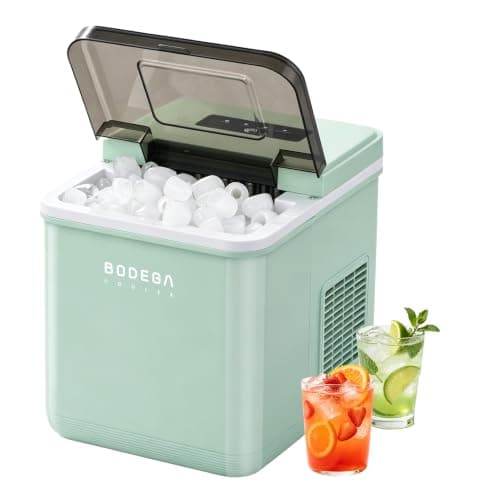
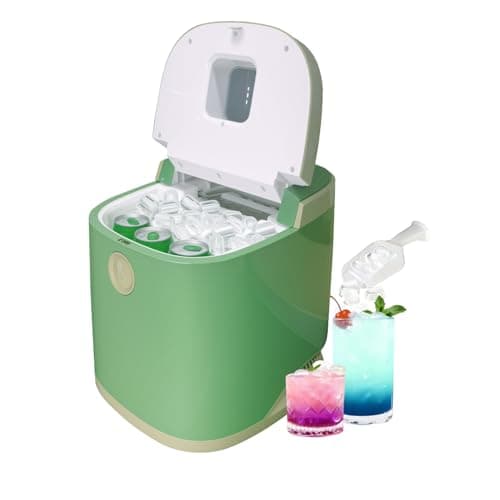
The best portable ice maker is the Silonn countertop machine: a carry handle, a self-cleaning cycle and no plumbing at all, which is the combination that makes a machine genuinely portable rather than just small. If you want chewable nugget ice, the EUHOMY nugget machine with a handle does 34 lb a day and still lifts with one hand. And if portable means an RV, a boat or a tailgate rather than a cupboard, the BODEGA and GSEICE 12 V machines are the only ones here that make ice without a wall outlet.
The word portable covers two very different buyers, so it is worth being clear which one you are. The first wants a machine that lives in a cupboard and comes out for parties: what matters is a carry handle, a weight one person can lift, and a drain plug that empties cleanly. The second wants a machine that travels — a camper, a boat, a trailer — and for them one specification outranks everything else: 12 V DC power, so the machine runs off the vehicle rather than needing an inverter or a hookup.
What every portable machine shares is the thing to understand before you buy: none of them keeps ice frozen. A countertop ice maker has an insulated basket, not a freezer, so the ice it has already made slowly melts, and the better machines return that meltwater to the tank and make it again. That is normal and it is not a fault. It means a portable machine is a device for making ice continuously on the day you need it, not a device for storing ice — so size it by how fast it produces, not by basket capacity.
We have not bench-tested these machines. The ranking is built from published daily output and cycle times, power source, carry features and drainage, plus owner-review consensus reported as other people's experience — see how we pick. Prices come live from Amazon and carry the date we verified them. Our main ice maker roundup covers the category as a whole.
The short answer
In a hurry? These are the picks we'd buy. Prices are live; tap a card below for the full reasoning.
$199.9930% offPrice as of October 13, 2026·#addisclosure
Quick picks
#
Product
Best for
Score
Price
1
Best portable ice maker overall
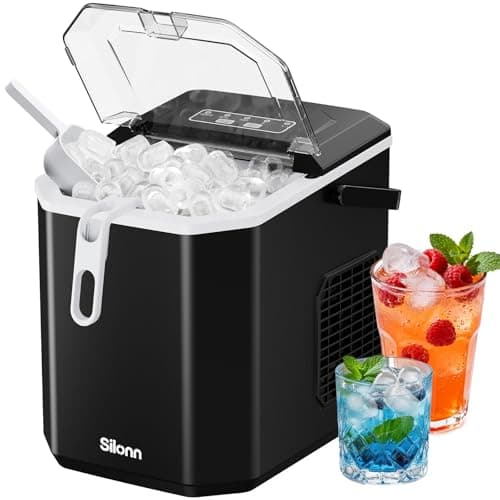
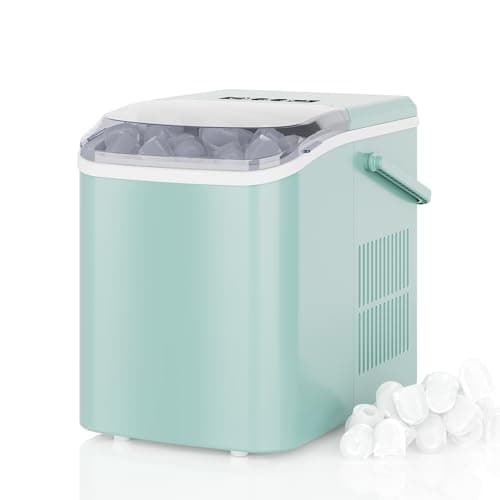
Silonn Countertop Ice Maker with Carry Handle
A self-cleaning countertop machine with a carry handle and no plumbing — the practical choice, given that neglected cleaning is what kills machines that live in cupboards.
A machine that comes out of a cupboard and goes back in
$109.9837% offPrice as of October 13, 2026·#addisclosure
Silonn Countertop Ice Maker with Carry Handle
A self-cleaning countertop machine with a carry handle and no plumbing — the practical choice, given that neglected cleaning is what kills machines that live in cupboards.
Ice type
Bullet cube
Cleaning
Self-cleaning cycle
Extras
Carry handle
Install
Countertop, no plumbing
Pros
Self-cleaning cycle, which matters most on a machine used intermittently
Carry handle and a weight one person can move
No plumbing, so it works anywhere there is an outlet
Bullet cubes are hollow, so they chill a drink fast
Cons
Mains power only — not a vehicle machine
Bullet ice melts faster than solid cubes
Needs emptying and drying before it goes back in the cupboard
Best for: A machine that comes out of a cupboard and goes back in.
$66.1410% offPrice as of October 13, 2026·#addisclosure
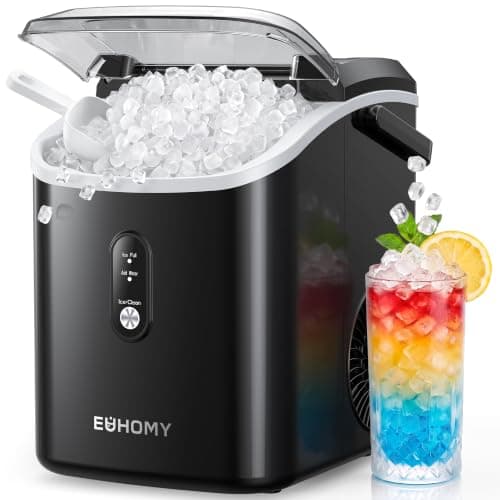
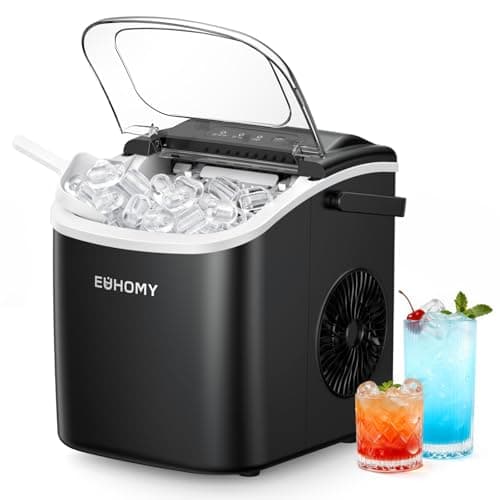
EUHOMY Countertop Ice Maker with Handle (26.5 lb/day)
26.5 lb a day, a carry handle and auto-cleaning at the bottom of the market — the value pick when the machine is used a few times a month.
Output
26.5 lb / day
Cycle
9 cubes in ~6 min
Feature
Carry handle
Cleaning
Auto-cleaning
Pros
The lowest price here for a machine with a handle and auto-clean
Compact enough for a dorm desk or a small apartment counter
Fast first ice for the money
Light to carry and simple to empty
Cons
Entry-level output and entry-level build
Small water tank means frequent refilling at a party
Mains power only
Best for: An apartment, a dorm or an occasional party machine.
Skip this
The budget traps that look cheap and cost you twice. We'd skip these.
A portable machine bought to keep a freezer stocked
This is the mismatch that produces most of the disappointed reviews in the category. A portable ice maker has an insulated basket, not a freezer compartment: ice sitting in the basket melts, the meltwater drains back to the tank, and the machine makes it again. Run continuously it will fill a cooler over a day, but it will never hold a stock of ice the way a freezer does. If you want ice waiting for you, buy an undercounter machine with an insulated bin and a drain — our <a href="/ice-makers/ice-maker-that-keeps-ice-frozen">page on ice makers that keep ice frozen</a> covers exactly that — or make ice in the portable machine and transfer it to the freezer in bags.
A mains-only countertop machine for an RV
Plenty of small machines are described as portable and work perfectly well on a kitchen counter, and none of them run on a vehicle's 12 V supply. Powering one off-grid means an inverter sized for the compressor's start-up draw, which is a bigger and more expensive job than buying a 12 V machine in the first place. If the machine is going in a camper, van or boat, treat 12 V DC as a filter rather than a feature, and check the published draw against your battery before you order.
How to choose (and what to skip)
Sort by power source first
Mains-only machines are cheaper, lighter and make more ice; 12 V machines are the only ones that work in a vehicle without an inverter. Decide which world you are in before comparing anything else, because it eliminates most of the market immediately. Dual AC and DC machines are the right answer for anyone who tows: the same unit works on a hookup and on the road.
Judge output, not basket size
Daily output in pounds is what decides whether the machine keeps up at a party; basket capacity just tells you how much ice sits there melting. Entry machines make 24 to 26 lb a day, good portable machines 30 to 35 lb. In practice a 26 lb machine produces around nine cubes every six to eight minutes, which is enough for a steady two or three drinkers and not enough for a crowd.
Check the drain, not just the handle
Portability is mostly about what happens when the machine is put away. Look for a bottom drain plug that empties the reservoir completely, because water left in a stored machine is how they grow mold and smell. If the machine travels, drain it before every move — water sloshing inside a compressor appliance in a vehicle is both a mess and a mechanical risk.
Prefer a self-cleaning cycle on an occasional-use machine
Machines that run every day get rinsed by use. Machines that live in a cupboard between parties are the ones that scale up and go musty, so an auto-clean or self-clean cycle is worth more here than on a permanent machine. Use filtered water if your supply is hard; scale on the evaporator is the most common reason a cheap ice maker stops producing well.
Think about ice shape for the drinks you make
Bullet ice is hollow, chills fast and melts fast, which suits soft drinks and highballs. Nugget ice is chewable and soaks up flavor, which is why it has a following. Neither is right for a slow whiskey, where you want a large solid cube — that is a tray-and-freezer job, not an ice maker one. Our <a href="/ice-makers/nugget-vs-cube-ice-maker">nugget versus cube comparison</a> covers the choice properly.
What portable really means here
Three things, and listings tend to claim the first and skip the others. No plumbing: you pour water into a reservoir, so the machine works anywhere with power. One-person weight with somewhere to hold: most countertop machines weigh in the twenties of pounds, which is manageable, but a machine without a handle is awkward enough that it stops getting moved. A full drain: a plug at the bottom that empties everything, so the machine can be stored dry. A machine with all three is portable. A machine with only the first is a small countertop appliance.
How much ice you actually need
A useful rule for planning: about 1 to 1.5 lb of ice per person for an evening of mixed drinks, and double that in hot weather or if people are drinking highballs with lots of ice. So a 26 lb-a-day machine covers a dozen guests comfortably if it runs through the day, and struggles if you switch it on an hour before they arrive. The fix is not a bigger basket, it is starting earlier and bagging the output: run the machine the morning of, transfer each basket into freezer bags, and let it make more. That single habit turns a modest portable machine into enough ice for a party.
Running one in an RV, a boat or a trailer
Four practical notes. Check the current draw against what your battery bank can give up; a 12 V compressor machine is one of the thirstier appliances in a camper. Run it while the engine or the solar is working rather than overnight. Drain it before every drive, every time — this is the single most common cause of a dead travel ice maker. And level it before switching on: ice makers need to be reasonably flat to cycle properly, which is a bigger deal on a pitch than in a kitchen. Our RV ice maker page goes deeper on the 12 V machines specifically.
Cleaning, which is the whole maintenance story
Two jobs. Descaling every month or two with a vinegar-and-water run or the manufacturer's solution, more often on hard water, because scale on the evaporator fingers is why a machine starts making thin, cloudy, slow ice. And drying before storage: drain the reservoir, leave the lid open overnight, and the musty smell that ruins stored machines never starts. If you know you will not keep up with the first job, buy a machine with a self-clean cycle — it is the single most useful feature in this category for a machine that lives in a cupboard.
When to buy something else instead
If the machine is going to live in one place and the bar is being built around it, a portable unit is the wrong purchase: an undercounter ice maker makes three to four times as much ice into an insulated bin and never has to be filled by hand. If the problem is counter space rather than mobility, our compact ice maker picks sort the same category by footprint. And if the appeal is chewable ice, read the nugget ice maker roundup before buying a bullet machine, because nugget ice is the one thing a cheap cube maker cannot imitate.
Frequently asked questions
What is the best portable ice maker?+
The Silonn countertop machine — a carry handle, a self-cleaning cycle and no plumbing, which is the combination that makes a machine genuinely portable. For chewable ice, the EUHOMY nugget machine with a handle makes 34 lb a day. For an RV or a boat, the BODEGA 12 V machine is the pick, because it runs off the vehicle rather than needing an inverter.
Do portable ice makers keep ice frozen?+
No. The basket is insulated but not refrigerated, so ice slowly melts and the meltwater drains back into the tank to be made again. A portable machine is for producing ice continuously, not storing it. If you need ice waiting for you, run the machine early and bag the output into a freezer, or buy an undercounter machine with an insulated storage bin.
Can you use a portable ice maker in an RV?+
Only if it runs on 12 V DC. Mains-only machines need an inverter sized for the compressor's start-up draw, which is more expensive and more trouble than buying a 12 V machine. Whichever you use, drain it before every drive and level it before switching it on — ice makers need to be reasonably flat to cycle properly.
How much ice does a portable ice maker make?+
Entry machines make 24 to 26 lb in 24 hours, better portable machines 30 to 35 lb, usually in cycles of about nine cubes every six to eight minutes. Plan on 1 to 1.5 lb of ice per guest for an evening, so a 26 lb machine covers a dozen people if it has been running through the day rather than switched on an hour before.
How do you clean a portable ice maker?+
Run a descaling cycle with a vinegar and water solution, or the manufacturer's cleaner, every month or two — more often on hard water. Then drain the reservoir completely and leave the lid open to dry before storing it. Scale on the evaporator is why machines start making thin cloudy ice, and water left in a stored machine is what makes them smell.
Are portable ice makers noisy?+
They are about as loud as a small fridge with a fan, with a distinct clatter each time a batch of ice drops into the basket. That drop is the noise people notice, and it happens every six to eight minutes while the machine is producing. It is fine in a kitchen or a bar, and worth thinking about if the machine will run in a room where someone is sleeping.
Prices and availability shown here come from Amazon's live data and change often; we re-verify them regularly. Bar Bumper is an Amazon Associate and earns a commission on qualifying purchases at no extra cost to you. Read our full disclosure.