Written for a buyer who wants ice, not an appliance. Six budget countertop machines, and the one feature that is worth paying a little more for.
Updated October 2026 · By Stephen V.
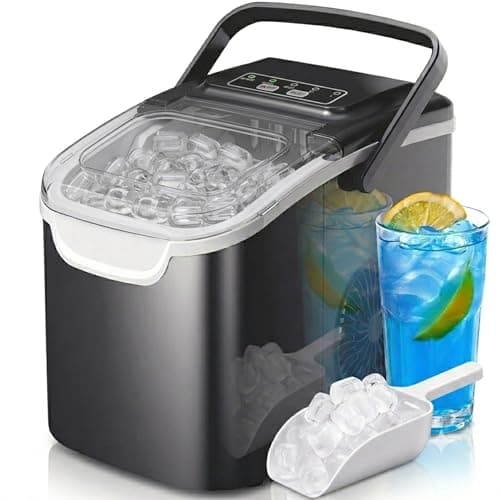
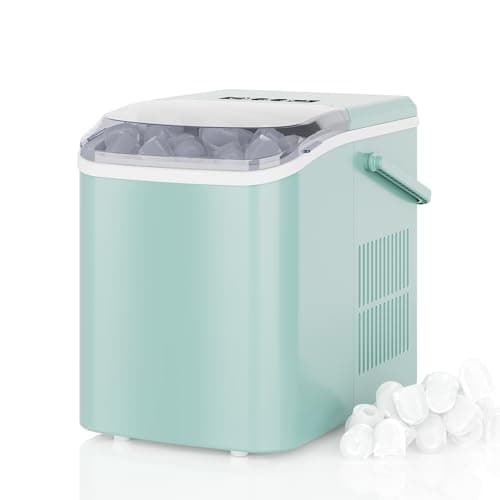
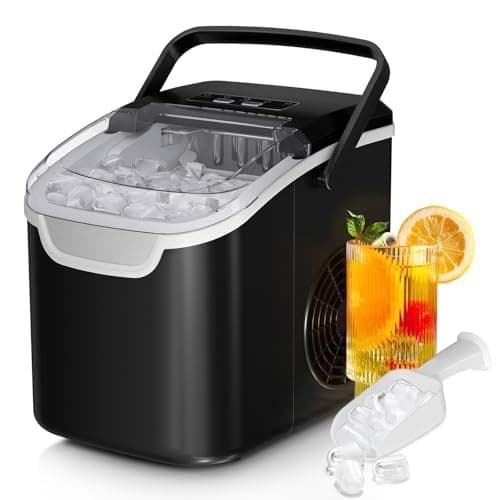
The best cheap ice maker is the EUHOMY 26 lb countertop machine: it makes nine cubes in about six minutes like everything else at this price, and it adds a self-cleaning cycle, which is the one feature that decides whether a budget ice maker lasts two years or two summers. If you want the lowest price, the Crzoe is it; the DUMOS adds a carry handle; the Antarctic Star is the middle option; and the two Frigidaires are the picks if you want a brand with a support line behind it.
Here is the thing that makes this category easy. Almost every cheap countertop ice maker is the same machine. They make bullet-shaped cubes, 26 lb a day, nine cubes per cycle in six to nine minutes, from a tank you fill by hand. The output figures barely move across the whole price range. So you are not shopping for more ice — you are shopping for the small differences that affect how long it keeps working.
Those differences come down to three things. A self-cleaning cycle, which matters because scale is what kills these machines. Build — a stainless or painted-metal shell versus bare plastic, which decides whether it still looks acceptable on a counter in a year. And brand, which decides whether anyone answers when it fails inside the warranty.
We have not run these machines side by side. The ranking is built from published output, cycle times, cleaning features, tank capacity and build materials, plus owner-review consensus reported as other people's experience — see how we pick. Prices come live from Amazon with the date we verified them, which matters in a category this discount-driven.
The short answer
In a hurry? These are the picks we'd buy. Prices are live; tap a card below for the full reasoning.
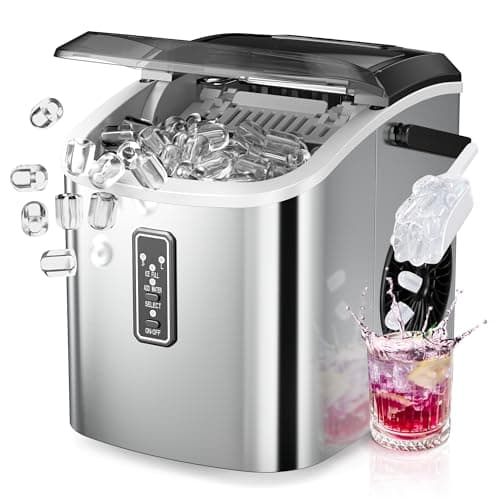
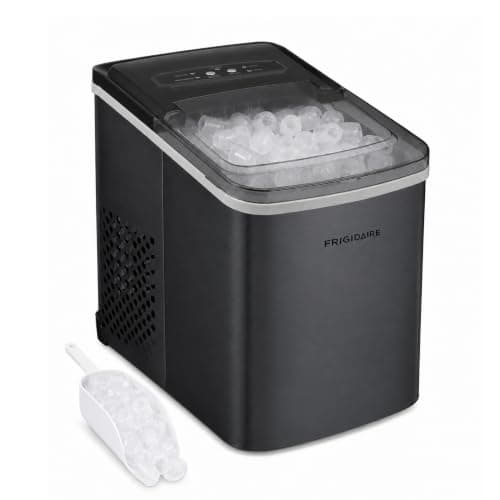
The same 26 lb a day from a recognized appliance name in a black stainless finish — you are paying for the badge and the support, and that is a reasonable thing to pay for.
The same 26 lb a day from a recognized appliance name in a black stainless finish — you are paying for the badge and the support, and that is a reasonable thing to pay for.
Output
26 lb / day
Finish
Black stainless
Brand
Frigidaire
Ice
Bullet cubes
Pros
An established appliance brand with a real support line
Black stainless looks far better on a counter than plastic
Realistic chance of warranty service actually happening
Holds resale and hand-me-down value
Cons
No more ice than machines costing half as much
Frigidaire-badged small appliances are not always built by Frigidaire
No self-cleaning cycle at this level
Best for: A buyer who wants somebody to call when it breaks.
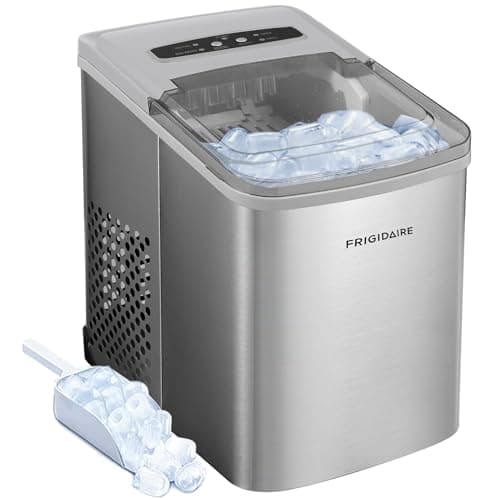
The stainless version of the same Frigidaire machine — at the top of the budget range, and the only one here that looks like a real appliance.
Output
26 lb / day
Finish
Stainless steel
Brand
Frigidaire
Size
Compact
Pros
Proper stainless shell rather than painted plastic
Wipes clean, which plastic bezels never quite do
Looks correct next to other kitchen appliances
Brand support behind it
Cons
The most expensive machine on this page for identical output
Stainless shows every fingerprint
Heavier to move or store
Best for: A machine that has to live on a visible counter.
Skip this
The budget traps that look cheap and cost you twice. We'd skip these.
Expecting a cheap ice maker to keep ice frozen
This is the complaint behind most one-star reviews in the category, and it is a misunderstanding rather than a fault. A countertop ice maker is not a freezer — the basket is barely insulated, so ice made in the morning melts back into the reservoir through the day and the machine remakes it. That is normal and it is why these machines run far more than people expect. Make ice an hour or two before you need it, or bag it and put it in the freezer.
Buying on daily output figures
Nearly every machine in this category is rated 26 lb per 24 hours and makes nine cubes in six to nine minutes, from the cheapest to the dearest. Output is not where the money goes and it is not a way to tell these machines apart. Compare the self-cleaning cycle, the shell material and the brand instead — those are the three things that actually differ, and the only ones that affect how long the machine lasts.
How to choose (and what to skip)
Pay the small premium for a self-cleaning cycle
Scale is what kills cheap ice makers. Hard water leaves mineral deposits on the evaporator fingers and in the water path, output drops, and eventually the machine stops making ice properly. A self-cleaning cycle does not remove the need to descale with a proper cleaner, but it reduces how often and it keeps the machine working between descales. It is the single best-value feature in this category.
Then decide between cheapest and branded
There is no middle ground worth much here. Either buy the cheapest machine with self-cleaning and treat it as semi-disposable, or pay for a brand with a support line and expect to still have it in five years. Paying slightly more for an unbranded machine buys nothing. Be honest about which buyer you are — both answers are legitimate.
Measure the height under your cabinets
These machines are taller than they look and most of them fill from a lid on top, so they need clearance above to open. Measure from the countertop to the underside of the wall cabinet, not just the footprint. This catches more buyers than any other specification in the category, and it is the most common reason one gets returned.
Check the drain plug if it will live on a counter
Every one of these machines has a drain plug underneath for emptying the reservoir, and on a counter that means lifting it to a sink. Some have a side or front drain that is far easier to use. If the machine will be emptied often — which it should be, rather than leaving standing water in it — this small detail matters more day to day than anything on the spec sheet.
Decide whether you actually want bullet ice
Everything here makes hollow bullet-shaped cubes, which chill fast, melt fast and dilute a drink quickly. For soft drinks and iced water that is fine. For spirits, clear cube ice is better and for chewing, nugget ice is what people actually want — both cost considerably more. Our <a href="/ice-makers/best-cheap-nugget-ice-maker">cheap nugget ice maker roundup</a> covers the budget end of that category.
Why cheap ice makers are all the same machine
Because they are built around the same mechanism. A set of metal fingers is chilled, water is pumped over them, a hollow bullet of ice forms on each finger, the fingers warm briefly and the cubes drop into a basket. That design is cheap, reliable and compact, and it is why every machine in this price range quotes the same nine cubes per cycle and the same 26 lb a day. Understanding this saves money: once you know the ice is identical, the only reasonable things to pay for are the shell, the cleaning cycle and the warranty.
What actually makes one last longer
Maintenance, mostly — and then build. Descaling is the big one: mineral scale on the chilling fingers is what gradually stops a machine making ice, and in hard-water areas that happens within months rather than years. Not leaving standing water in the reservoir between uses prevents both scale and the musty smell that is the second most common complaint. A metal shell resists the scuffing and yellowing that makes a plastic machine look ten years old after two summers. None of that is exciting, and it is the whole difference between a cheap machine that was a bargain and one that was a waste.
How much ice 26 lb a day really is
More than most households need, and less than it sounds, because the rating is per 24 hours rather than per hour. In practice a machine like this produces roughly a pound of ice every 15 to 20 minutes once it is up to temperature — so about 3 lb in an hour. For two or three drinks that is instant. For a party of twenty arriving at once, it is not: you need to start it a few hours early and bag the ice in the freezer as it comes. That is the honest limitation of every machine on this page and the reason a bigger undercounter machine exists.
Cheap ice maker or cheap nugget machine?
If what you actually want is the soft chewable ice from a drive-through, none of these machines make it — nugget ice needs a different mechanism with an auger, and the cheapest nugget machines cost roughly two to three times what the machines on this page do. People who buy a bullet machine hoping for nugget ice are reliably disappointed, and it is worth being clear with yourself about which you want before buying. The nugget versus cube comparison covers the difference, and the main ice maker roundup has the picks across every type.
Noise and placement
These machines run a compressor and a small pump, then drop ice into a plastic basket, and the drop is the loud part — a clatter every six to nine minutes for as long as the machine is running. In a kitchen that is background noise. On a bar counter in an open-plan room during a conversation, it is noticeable. Since these machines have to run for hours to fill a basket, put it somewhere that does not matter rather than somewhere convenient, and the single most common post-purchase complaint disappears.
Small spaces and vehicles
Two pages narrow this list further. If the problem is counter space rather than price, our compact ice maker roundup sorts the same category by footprint and lid clearance. And if the machine is going into a camper rather than a kitchen, the RV ice maker picks cover the 12 V machines that make ice without a hookup, which no machine on this page can do.
Frequently asked questions
What is the best cheap ice maker?+
The EUHOMY 26 lb countertop machine. It makes the same nine cubes in about six minutes as everything else at this price, but it adds a self-cleaning cycle — which is the one feature that genuinely affects how long a budget ice maker keeps working, since scale is what kills them.
Are cheap ice makers any good?+
Yes, with one caveat: they are not freezers. They make bullet cubes quickly and reliably from a tank you fill by hand, and the mechanism is the same across the whole budget range. What they cannot do is store ice — it melts back into the reservoir and gets remade — so make ice shortly before you need it or bag it into the freezer.
Why do all cheap ice makers make 26 lb a day?+
Because they share the same design: chilled metal fingers that water is pumped over, forming hollow bullet cubes that drop into a basket. That mechanism sets the cycle time and the daily output, which is why output figures barely move across the price range. The real differences are the cleaning cycle, the shell material and the brand support.
Is a self-cleaning cycle worth it on a cheap ice maker?+
It is the best-value feature in the category. Mineral scale on the chilling fingers is what gradually stops these machines working, and the self-clean cycle keeps that at bay between proper descales. It does not replace descaling with a dedicated cleaner, but on a machine this cheap it is the difference between two years of use and two summers.
How long does a cheap ice maker take to make ice?+
Nine cubes in roughly six to nine minutes once it is up to temperature, which works out to about a pound every 15 to 20 minutes, or 3 lb in an hour. That is instant for a few drinks and slow for a party — start it a few hours early and bag the ice into the freezer as it is made.
Do cheap ice makers make clear ice?+
No. They make hollow bullet-shaped cubes, which are cloudy and melt relatively fast. Clear ice needs a slower directional freezing process and the machines that do it cost several times more. If clear cubes for spirits are the point, that is a different purchase; if you just want ice in a glass, bullet cubes are fine.
Prices and availability shown here come from Amazon's live data and change often; we re-verify them regularly. Bar Bumper is an Amazon Associate and earns a commission on qualifying purchases at no extra cost to you. Read our full disclosure.