Written for a counter that has no room to spare. Five small-footprint machines compared on the two measurements that decide whether one fits: footprint and the clearance the lid needs.
Updated October 2026 · By Stephen V.
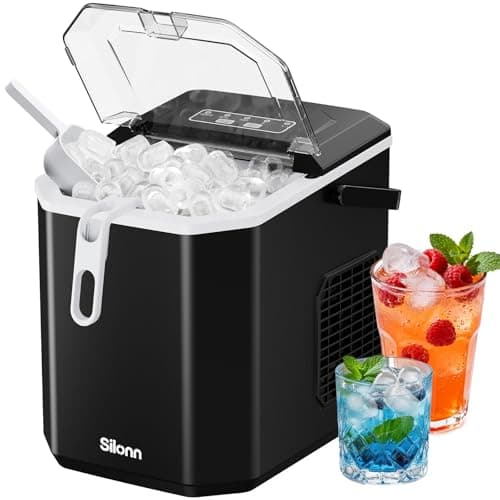
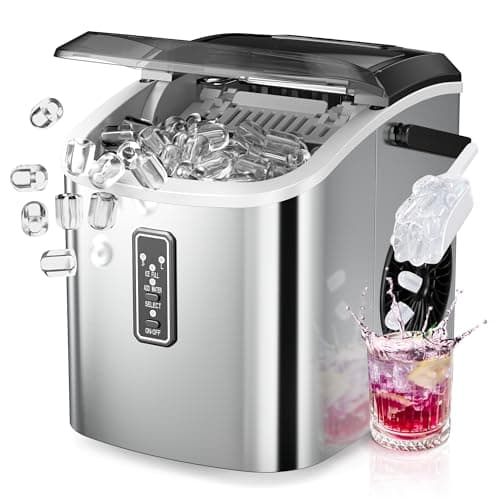
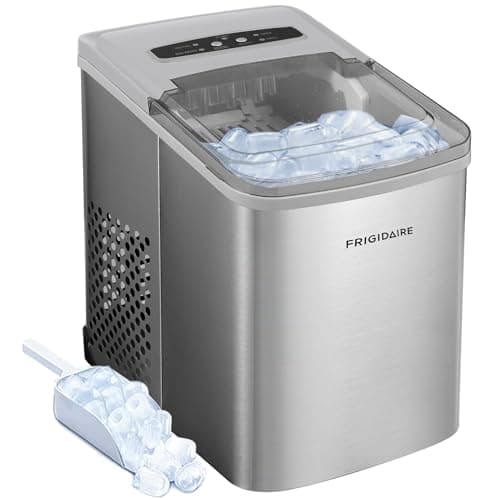
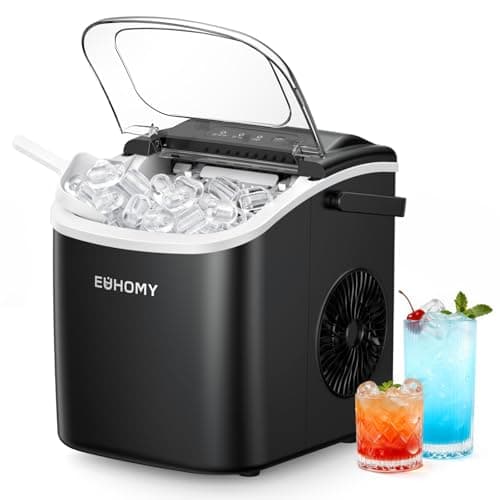
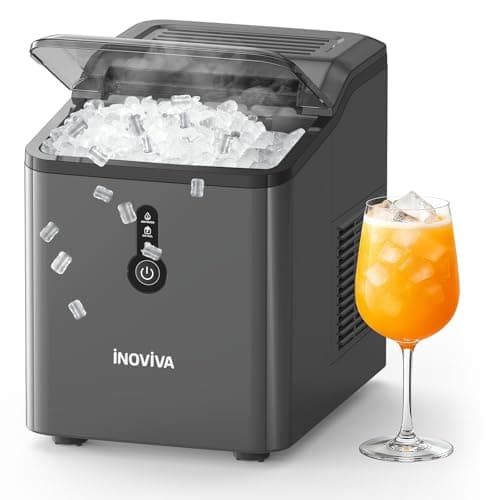
The best compact ice maker is the Silonn countertop machine with a carry handle: it has one of the smallest footprints that still makes a useful amount of ice, and the handle means it can live in a cupboard and come out when you need it. The EUHOMY 26 lb is the pick if it will stay on the counter and you want self-cleaning; the Frigidaire compact is the one that looks like an appliance; the EUHOMY 26.5 lb handle model is the cheapest of the portable ones; and the INOVIVA compact nugget machine is the small-footprint way to get chewable ice.
If you are shopping for a compact machine, your constraint is not ice — it is counter area and the space above it. Nearly every countertop ice maker makes the same 26 lb a day from the same mechanism, so output is not what you are choosing between. You are choosing between machines that fit under a wall cabinet and machines that do not.
Two numbers decide that, and only one of them is usually in the listing. Footprint is the easy one. Lid clearance is the one that catches people out: almost all of these fill from a hinged lid on top, so the machine needs its own height plus enough room above to swing the lid open. In a standard kitchen there are about 18 inches between countertop and wall cabinet, and a 14-inch machine with a lid that opens vertically does not work there.
We have not run these side by side. The ranking is built from published footprint, output, cycle time, cleaning features and the presence of a carry handle, plus owner-review consensus reported as other people's experience — see how we pick. Prices come live from Amazon with the date we verified them.
The short answer
In a hurry? These are the picks we'd buy. Prices are live; tap a card below for the full reasoning.
26.5 lb of nugget ice a day from the smallest footprint in the nugget category — the compromise to make if soft ice is the point.
Ice
Nugget (chewable)
Output
26.5 lb / day
Type
Compact countertop
Brand
INOVIVA
Pros
Nugget ice from a machine that fits a small counter, which is rare
Soft ice is what most people actually want in a drink
Compact enough to sit beside a coffee machine rather than replacing it
Far cheaper than the big-name nugget machines
Cons
Nugget machines use an auger and a gearmotor — more to go wrong
Taller than the bullet machines, so lid clearance is tighter
Slower to fill a basket than a bullet machine
Best for: Chewable ice from a machine that still fits.
Skip this
The budget traps that look cheap and cost you twice. We'd skip these.
Measuring the counter but not the cabinet above it
This is the single most common reason a compact ice maker goes back. These machines fill from a hinged lid on top, and the lid needs clear vertical space to open — on some models nearly as much again as the machine's own height. A standard kitchen has roughly 18 inches between countertop and the underside of the wall cabinets. Measure that gap, then check the machine's height plus lid swing against it, not just the footprint.
Expecting a compact machine to keep the ice it makes
The basket in a countertop ice maker is barely insulated and sits directly above the water reservoir, so ice made in the morning melts back down through the day and gets remade. That is normal operation rather than a fault, and it is why these machines run more than people expect. In a small apartment the practical answer is to make ice an hour before you need it, or bag it into the freezer as it comes.
How to choose (and what to skip)
Measure three dimensions, not one
Footprint, height, and lid clearance above. The third one is the one that fails. If the machine will live under a wall cabinet, prefer a model whose lid hinges back rather than straight up, or accept that you will slide it forward to fill it — which is fine if it has a handle and miserable if it does not.
A handle is the compact feature that matters most
In a small kitchen the machine often cannot have a permanent home, which means it gets moved — to fill, to empty, to clear the counter for cooking. A carry handle makes that a one-hand job and is the difference between a machine that gets used and one that lives in a cupboard unused. It costs nothing on these machines, so take it when it is offered.
Ignore daily output — compare cycle time instead
Almost everything in this category is rated 26 lb per 24 hours, which tells you nothing because nobody runs one for 24 hours. What matters in a small home is how fast the first basket arrives: six to nine minutes per nine-cube cycle, so roughly a pound every 15 to 20 minutes. That is the number to compare, and it barely varies — which is exactly why you should buy on fit instead.
Check how it drains if it lives near a sink
Every one of these has a drain plug for emptying the reservoir, and most are on the underside, which means lifting the machine over a sink. A few drain from the side or front, which is far easier and matters more day to day than anything on the spec sheet — especially in a small kitchen where you should be emptying it rather than leaving standing water.
Decide whether you want bullet or nugget ice first
Bullet cubes are what nearly every compact machine makes: hollow, fast to chill, fast to melt. Nugget is the soft chewable kind, and the compact nugget machines cost two to three times more and are taller. Both are legitimate; what you should not do is buy a bullet machine hoping for nugget ice. Our <a href="/ice-makers/nugget-vs-cube-ice-maker">nugget versus cube page</a> explains the difference properly.
What counts as a compact ice maker?
In practice: a countertop machine small enough that it can share a counter rather than own one. There is no official size class, which is why listings describe almost anything as compact. The useful test is whether it fits in the space you have with the lid open, and whether you can lift it one-handed. By that test a machine with a carry handle and a footprint around the size of a drip coffee maker is compact; a 15-inch-wide machine with a vertical lid is not, whatever the title says.
Why compact machines all make the same amount of ice
Because they share one mechanism. A set of chilled metal fingers sits in the water, a hollow bullet of ice forms on each finger, the fingers warm briefly and the cubes drop into the basket. The number of fingers — nine — and the time the cycle takes are what set the 26 lb figure, and almost every manufacturer buys the same core design. This is good news for a small-space buyer: you are not giving up ice by buying the smaller machine, so you can shop purely on fit, finish and whether it has a handle.
Living with one in an apartment
Three things are worth knowing before the first run. It is louder than you expect, because the cubes drop into a plastic basket every six to nine minutes — in a studio, that is in the same room as you. It needs to be emptied, not just switched off, since standing water in the reservoir is what causes the musty smell people complain about. And hard water will kill it faster than anything else, so a self-cleaning cycle plus an occasional descale is the difference between two years of service and two summers. None of that is a reason not to buy one; all of it is easier to handle if you know it up front.
When a compact machine is the wrong answer
If you entertain regularly, a countertop machine cannot keep up: it makes about 3 lb an hour and stores none of it, so twenty people arriving at once means starting hours early and bagging ice into the freezer. That is the point at which an undercounter machine starts to make sense — it is plumbed, insulated and holds a bin of ice. And if the machine is going into a camper or a car rather than a kitchen, the 12 V machines on our RV ice maker page are built for that and a mains-only compact machine is not.
Where compact machines sit in the range
Think of it as three tiers. Compact countertop: cheapest, smallest, bullet ice, no storage — this page. Full-size countertop and compact nugget: more money, soft ice or clear ice, same lack of storage — see the small nugget machines. Undercounter: plumbed, insulated, expensive, permanent. Most people buying for an apartment or a small bar belong firmly in the first tier, and the honest advice is to spend the saved money on a better machine in the same tier rather than stretching to the next one.
Frequently asked questions
What is the best compact ice maker?+
The Silonn countertop machine with a carry handle. It has a small footprint, makes the standard nine cubes per cycle, and the handle makes it genuinely practical to store between uses — which is the difference that matters in a small kitchen. If it will stay out on the counter, the self-cleaning EUHOMY 26 lb is the better buy.
How much space does a countertop ice maker need?+
Its footprint, plus clearance above for the lid to open — which is the measurement people forget. A standard kitchen leaves about 18 inches between the countertop and the wall cabinets, and a tall machine with a vertically hinged lid will not fit there even though the footprint does. Measure the vertical gap first.
Do compact ice makers make less ice?+
Barely. Almost every countertop machine, compact or not, uses the same nine-finger mechanism rated at about 26 lb per 24 hours with a six to nine minute cycle. That means you can shop on footprint, finish and whether it has a carry handle without giving up meaningful output.
Will a compact ice maker keep ice frozen?+
No. The basket is barely insulated and sits above the water reservoir, so ice melts back down and gets remade. That is normal operation, not a fault — it is also why these machines run far more than people expect. Make ice shortly before you need it, or bag it into the freezer as it is produced.
Are compact ice makers good for apartments?+
Yes, with two caveats: they are noisier than people expect, because cubes clatter into a plastic basket every few minutes, and they need emptying rather than just switching off, since standing water causes a musty smell. Put one somewhere the noise does not matter and empty the reservoir between uses.
Can you get nugget ice from a compact machine?+
Yes, but the compact nugget machines cost two to three times what a bullet machine does and are taller, because nugget ice needs an auger mechanism rather than chilled fingers. The INOVIVA compact is the smallest-footprint route to it. Do not buy a bullet machine expecting nugget ice — they are different mechanisms.
Prices and availability shown here come from Amazon's live data and change often; we re-verify them regularly. Bar Bumper is an Amazon Associate and earns a commission on qualifying purchases at no extra cost to you. Read our full disclosure.