Written for the buyer upgrading from a first table. Four specifications decide whether a pool table is still worth playing on in ten years, and only one of them is the price.
Updated October 2026 · By Stephen V.
A high quality pool table is defined by four things, in this order: a slate bed, K-66 profile gum-rubber cushions, worsted wool cloth, and a frame with enough cross-bracing to hold that slate level for years. Everything else — finish, pockets, leg carving, the brand plate — is appearance. If you are asking who makes the best pool tables or what a good quality pool table looks like, those four specs are the answer, and they are the reason a club table from 1985 still plays and a budget table from 2022 may not.
This page is for the second-table buyer: someone who has lived with a 7-foot MDF table and now wants one that will not be replaced. That is a different question from "which table should I start with". The upgrade buyer is paying for longevity and roll accuracy, and the specs that deliver those are specific and checkable.
Be clear about the honest ceiling on what you can order online. The genuinely high-end tables — three-piece slate, hardwood frames, professional installation and leveling — are dealer products. They are not flat-packed, and they do not carry a price you can look up. The tables below are the best-specified ones available as a normal purchase, and the guide sections tell you exactly what you are giving up versus a dealer table, so you can decide whether to make a call instead.
We have not tested these tables and we do not claim to have played on a slate bed next to an MDF one. This is built from published specifications, the standard dimensions and materials each game's governing bodies define, and owner-review consensus reported as other people's experience — see how we pick. Prices come live from Amazon with the date we verified them.
The short answer
In a hurry? These are the picks we'd buy. Prices are live; tap a card below for the full reasoning.
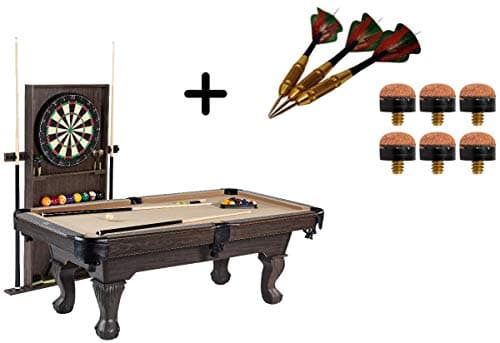
A 90-inch ball-and-claw-leg table with a cue rack and dartboard set — the heaviest-looking frame in the mail-order class and the one that reads as a permanent fixture.
A finished room where the table is furniture as well as equipment
A 90-inch ball-and-claw-leg table with a cue rack and dartboard set — the heaviest-looking frame in the mail-order class and the one that reads as a permanent fixture.
Size
90 in
Legs
Ball & claw
Included
Cue rack + dartboard set
Style
Traditional
Pros
Substantial ball-and-claw legs rather than thin panel-mounted ones
Comes with a cue rack and a dartboard set, which are real additions to a room
Traditional look suits a finished basement bar
Cons
Heavy to assemble and position
MDF bed
Traditional styling is not to every room's taste
Best for: A finished room where the table is furniture as well as equipment.
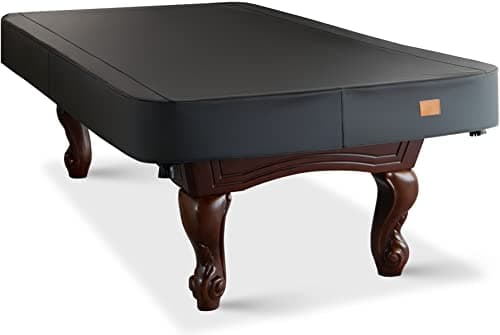
Dust and sunlight wear cloth faster than play does, and a heavy leatherette cover costs a fraction of re-clothing.
Type
Table cover
Material
Heavy-duty leatherette
Protects
Cloth, rails, pockets
Fits
Standard home table sizes
Pros
Cloth is the consumable on every table; a cover is the one thing that slows its wear
Also stops the table becoming a shelf, which is what damages rails
Cheapest item on this page by an order of magnitude
Cons
Only works if it actually gets put on
Check the size against your table before ordering
Does nothing for a bed that was never leveled
Best for: Protecting the cloth on any table, at any price level.
Skip this
The budget traps that look cheap and cost you twice. We'd skip these.
Any table described as having a 'slate-like' or 'slatron' bed when you are buying for quality
These are engineered-wood beds with a marketing name. They are not slate, they do not hold flat the way slate does, and the phrasing exists because the word slate sells tables. An honest MDF table is a reasonable purchase; a bed described in terms designed to be mistaken for slate is a warning about the rest of the listing.
Spending the quality premium on carving instead of on the bed
Ornate legs, inlaid rails and brass pockets are appearance. The bed, the cushions, the cloth and the bracing are play. Two tables at the same price where one has carved legs and the other has a thicker bed and better cushions are not a close call for an upgrade buyer — buy the one with the better specs and plainer looks.
How to choose (and what to skip)
The bed: slate or nothing, if quality is the question
Slate is a quarried stone bed, usually 3/4 to 1 inch thick, machined flat and shipped in one or three pieces. It does not absorb moisture, it does not sag under its own weight, and it can be re-leveled with shims indefinitely. MDF is engineered wood: cheaper, a third of the weight, and it will eventually take a set from humidity and its own span. An MDF table can play well for years and will never play like slate. This is the single biggest quality divide in the category, and it is also why high quality pool tables weigh 700 lb and up.
Cushions: K-66 gum rubber, and why the profile matters
The cushion is the rubber strip under the rail that the ball rebounds off. The standard profile for pool is K-66, and the material that holds its rebound is natural gum rubber. Cheap cushions are synthetic, harder, and go dead — a ball hits the rail and stops instead of coming off at a predictable angle. Dead cushions cannot be fixed, only replaced, and they are the most common reason an otherwise sound table stops being fun. If a listing specifies K-66 gum rubber, that is a real quality signal.
Cloth: worsted wool versus napped woolen blend
Worsted wool (the fast, smooth cloth you see on televised pool) has combed fibers and no nap, so the ball rolls further and truer and the cloth lasts longer. Napped woolen blends are fuzzier, slower, pill in the high-traffic areas and cost much less. Cloth is a consumable either way — a heavily played table wants re-clothing every few years — so this is the one quality spec you can upgrade later for a fraction of the table's price.
The frame: cross-bracing and leg construction
The frame's job is to hold the bed flat. On a slate table that means heavy timber beams running across the width, usually with multiple cross-members, and legs that bolt into the frame rather than screwing into a panel. On an MDF table the frame does the same job against a surface that is itself trying to sag. Look for the number of cross-braces and whether the legs are described as load-bearing — a table with four decorative legs and no mid-span bracing will develop a dip in the middle regardless of bed material.
Size and installation are part of quality
A 9-foot table is tournament size, 8 feet is the common home standard, and 7 feet is what most rooms fit. A properly leveled 7-foot table plays better than a badly leveled 9-foot one, so if you are spending on quality, spend some of it on installation. Professional installers level the slate with shims across the whole bed and stretch the cloth properly, and both are hard to do well on a first attempt — our <a href="/guides/how-to-set-up-a-pool-table">setup guide</a> covers what the job involves.
Is a high quality pool table worth the money?
If you play weekly, yes, clearly. The things a quality table buys — a bed that stays flat, cushions that rebound predictably, cloth that rolls true — are the things that make the game rewarding rather than approximate. On a table with dead cushions and a slight dip, good position play simply does not work, and the better you get the more you notice. If you play a few times a year with guests, a well-set-up MDF table from a good brand is genuinely enough, and the money is better spent on the room around it.
The practical middle path, and the one most upgrade buyers end up taking: buy the best-specified table your room and budget allow, then spend separately on leveling it properly and on worsted cloth when the original cloth wears out. Those two things close much of the gap for a small fraction of the price difference.
Who makes the best pool tables?
At the mail-order level, Barrington has the best-specified frames and the widest size range, and GLD Products' brands (Fat Cat, Mizerak) have the deepest long-term parts support — our pool table brands page goes through each. Above that level, the best tables are built by specialist makers, sold through dealers, delivered on a truck and installed by two people with a slate level and a stretching tool. Those are the answer to "best quality pool tables" without qualification, and they are not products you add to a cart.
How to judge a table from the listing alone
Read for four words and their absence. Slate — if it says MDF, that is honest; if it says slate-like, be suspicious. K-66 or gum rubber — a cushion profile and material named explicitly is a good sign. Worsted — named cloth type rather than just "billiard cloth". Cross-brace or a stated number of frame beams. A listing that gives all four is a better-made table than one that gives dimensions and a finish name, almost regardless of price.
What a good quality table costs to own
Budget for cloth every few years on a heavily played table, a set of decent cues and tips, chalk, and a cover. None of it is expensive next to the table. What can be expensive is re-leveling a slate bed after a house move or a floor settling, which is a job for someone with the right tools — one more reason a 7-foot table sitting level beats an 8-foot one that was never set up properly.
Room first, always
A quality table you cannot play every shot on is not a quality purchase. Tape out the footprint plus about 5 feet on every side for a 57-inch cue before you decide on a size: roughly 17 by 13 ft for a 7-footer, 18 by 14 for an 8, and over 20 by 15 for a 9. Our guide to how much space a pool table needs has the numbers, and the pool versus snooker comparison covers what happens when the ambition outgrows the room entirely.
Lighting it, and the other table worth buying well
Two pages pair with this one. A good table deserves to be seen: our pool table light roundup has the fixture length and hanging height that stop you playing in your own shadow. And if you apply the same buy-it-once thinking to the other classic game-room table, the best quality foosball tables covers the cabinet mass, rods and bearings that decide whether one lasts.
Frequently asked questions
What makes a high quality pool table?+
Four specs: a slate bed that stays flat, K-66 profile gum-rubber cushions that rebound predictably, worsted wool cloth that rolls true, and a cross-braced frame heavy enough to hold the bed level. Finish, leg carving and pocket hardware are appearance, not quality. A table with all four will still play in twenty years.
Is slate really better than MDF for a pool table?+
Yes, and it is the biggest single difference in the category. Slate is machined stone that does not absorb moisture or sag under its own span, and it can be re-leveled indefinitely. MDF is engineered wood that eventually takes a set. An MDF table can play well for years; it will never roll as true as slate, which is why every tournament table is slate.
Who makes the best quality pool tables?+
The best tables come from specialist makers sold through dealers with professional installation — they are not flat-packed and do not carry a price you can look up. Among tables you can order normally, Barrington has the best-specified frames and GLD Products' brands have the strongest long-term parts support.
How much should I spend on a good pool table?+
Enough to get the specs you need, then stop. If you play weekly and want a table for life, a dealer-installed slate table is the honest answer and costs several times a mail-order table. If you play occasionally, a well-specified MDF table from a known brand, properly leveled, is genuinely enough — and leveling it well matters more than the last few hundred dollars of table.
What cloth should a quality pool table have?+
Worsted wool: combed fibers, no nap, so the ball rolls further and truer and the cloth wears longer. Napped woolen blends are slower and pill in high-traffic areas. Cloth is a consumable, so this is the quality spec you can upgrade later for a small fraction of what the table cost.
How long should a good pool table last?+
The bed and frame on a slate table should outlive the room, with cloth replaced every few years on heavy use and cushions after a decade or two. On an MDF table the bed itself is the limiting part, and humidity is what shortens its life — which is why a dry, heated room matters more for an MDF table than for a slate one.
Prices and availability shown here come from Amazon's live data and change often; we re-verify them regularly. Bar Bumper is an Amazon Associate and earns a commission on qualifying purchases at no extra cost to you. Read our full disclosure.