Written for a table currently lit by whatever the ceiling happens to have. Six fixtures, plus the two numbers — fixture length and hanging height — that decide whether a light works.
Updated October 2026 · By Stephen V.
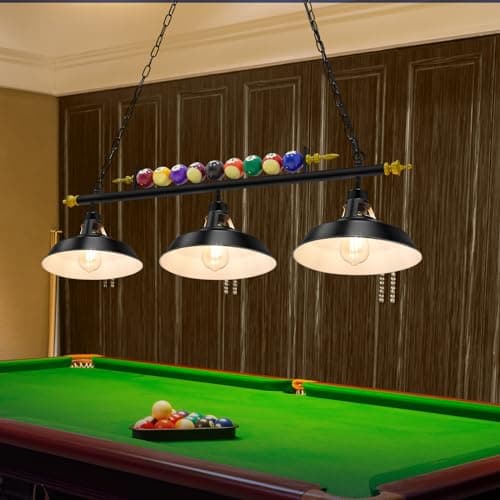
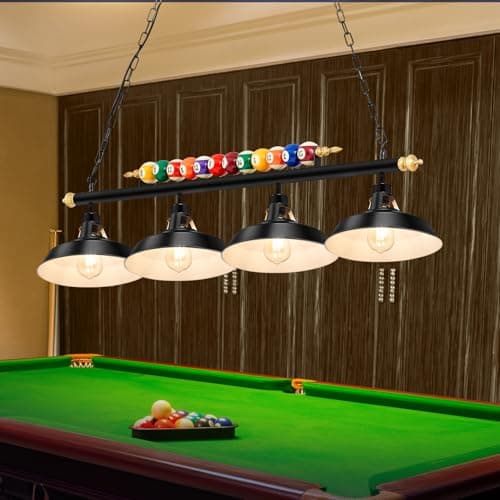
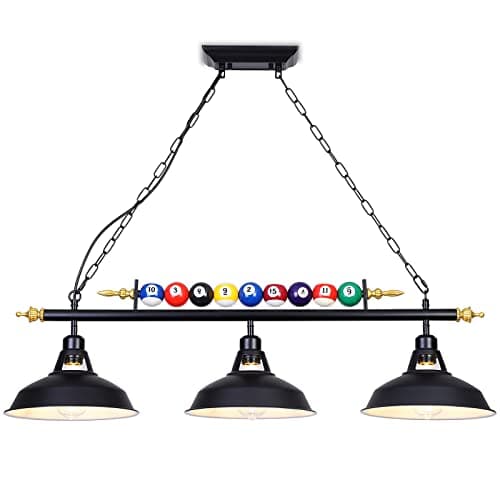
For most home tables the Rossesay 3-light adjustable fixture is the pool table light to buy: it is sized for 7 and 8-foot tables, the drop is adjustable so you can set the hanging height properly, and it is the cheapest fixture here that covers the whole bed evenly. If your table is 8 feet and the room is bright, the 4-light version puts more light over the long rails; the Wellmet is the decorative pick; and the Mcacggo is the value choice.
Two numbers decide whether a pool table light works, and neither is wattage. The first is fixture length: the light bar should run roughly two-thirds the length of the playing surface, so a 7-foot table wants a fixture around 36 to 48 inches and an 8-foot table wants 48 to 60. Too short and the ends of the table sit in shadow.
The second is hanging height, and it is the one people get wrong. The bottom of the shades should sit about 32 to 36 inches above the playing bed — roughly 62 to 66 inches off the floor. Higher than that and the light spreads and softens, leaving the cloth flat and shadowy. Lower and you get glare straight into the eyes of anyone shooting from the end, plus a fixture that cues hit.
We have not installed these fixtures. The ranking is built from published fixture lengths, shade counts, adjustability, shade material and the table sizes each is rated for, plus owner-review consensus reported as other people's experience — see how we pick. Prices come live from Amazon with the date we verified them.
The short answer
In a hurry? These are the picks we'd buy. Prices are live; tap a card below for the full reasoning.
$219.995% offPrice as of October 13, 2026·#addisclosure
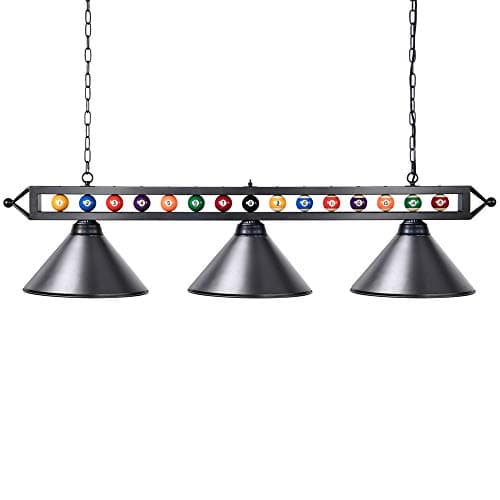
Wellmet 59-in Pool Table Light with Billiard Ball Decor
A 59-inch fixture with billiard ball detailing — the longest bar here, and the one that announces what the room is for.
Length
59 in
Detail
Billiard ball decor
Fits
8 ft tables well
Mount
Ceiling
Pros
At 59 inches it suits an 8-foot table's two-thirds rule exactly
The themed detailing does the decorating for you
Long fixture means genuinely even light end to end
A centerpiece rather than a utility
Cons
The most expensive fixture on this page
59 inches is too long for a 7-foot table
Themed decor is not to every taste
Best for: A game room that wants the light to be the decor.
Skip this
The budget traps that look cheap and cost you twice. We'd skip these.
Hanging the fixture at normal ceiling-light height
This is the mistake that wastes a good fixture. Hung at 7 feet like a dining pendant, the light spreads across the room and leaves the cloth flat, with shadows under every ball. The shades need to come down to about 32 to 36 inches above the bed — which looks startlingly low until you play under it, and then looks obviously correct. If the fixture's chain or rods will not reach that low, it is the wrong fixture.
A single pendant or a ceiling fan over the table
One light source in the middle of a 7-foot table puts every ball's shadow in the way of the shot it is involved in, and the player standing at the end blocks their own light. The whole point of a three or four-shade bar is that light arrives from several points along the table's length, which cancels the shadows. A single fixture, however bright, cannot do that.
How to choose (and what to skip)
Size the fixture to about two-thirds of the bed
A 7-foot table (roughly 78 inches of play) wants a fixture around 36 to 48 inches. An 8-foot table wants 48 to 60 inches. A 9-foot table wants 60 inches or more. Shorter than that and the end rails sit in shadow; longer and the light spills past the table into the room. This is the first spec to check and the one listings bury.
Set the hanging height at 32 to 36 inches above the bed
That is about 62 to 66 inches off the floor for a standard table. Buy a fixture with an adjustable drop — chains, rods or a cord that can be shortened — because a fixed-drop fixture that lands at the wrong height is unfixable without rewiring. This single measurement does more for playability than any other choice on this page.
Count the shades against your table length
Three shades is right for a 7-foot table. Four is better on an 8-foot table, and the difference shows most at the corners, where a tight shot against the rail needs light from two directions to avoid your own shadow. If your room also has bright windows or other fixtures competing, go up a shade count.
Choose metal shades for play, decorative ones for looks
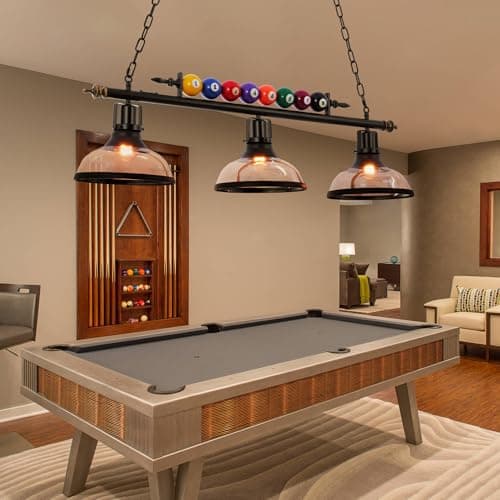
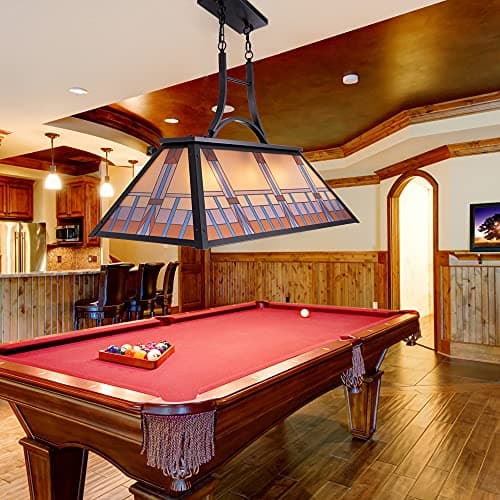
Metal shades throw a focused pool of light straight down, which is what the game wants. Glass and Tiffany-style shades scatter and absorb light, so the bed is softer and dimmer, in exchange for a fixture that looks like part of the room. Both are legitimate; just know which trade you are making before you order.
Confirm there is a ceiling box over the table
Nearly every fixture here is a hardwired ceiling mount, which means a junction box in the right place and, for most people, an electrician. If the ceiling has no box over the table, that is the real cost of this project rather than the fixture. Plug-in swag-chain options exist and are a legitimate workaround in a basement where running cable is awkward.
Why pool tables need their own light
Because of shadows, not brightness. On a pool table the thing you need to see is the contact point between cue ball and object ball, and that is a small area close to the cloth. Light from a single source — a ceiling fixture, a window, a lamp — puts a shadow beside every ball, and the player standing at the end of the table blocks the light they need most. A fixture running along the table's length delivers light from several points, so the shadows cancel and the balls sit in even light wherever they are. That is the entire design rationale, and it is why a brighter single bulb is not a substitute.
Fixture length, in plain numbers
The rule is roughly two-thirds the length of the playing surface. A 7-foot table has about 78 inches of play, so 36 to 48 inches of fixture. An 8-foot table has about 88 inches, so 48 to 60 inches. A 9-foot table has about 100 inches, so 60 inches and up. The fixture does not need to reach the ends, because light spreads outward as it falls — it needs to cover the middle well enough that the spread reaches the corners. Our guide to how much space a pool table needs has the playing dimensions for each size.
Bulbs: what to put in it
Most of these fixtures take standard screw-base bulbs, which means you choose the light rather than inherit it. Two things matter. Color temperature: somewhere around 3000K to 4000K is right — warm enough not to feel clinical, neutral enough that the cloth and balls look like their real colors. Daylight bulbs at 5000K and above make a games room feel like a garage. Even output: use the same bulb in every shade, because mismatched bulbs reintroduce exactly the uneven lighting the fixture exists to prevent. Avoid aiming for maximum lumens; glare off a cue ball is worse than slightly less light.
What to do when you cannot hardwire
Plenty of basement and garage tables sit under a ceiling with no junction box anywhere near them, and running a new circuit is often the largest cost in the project. There are two honest workarounds. A swag kit hangs the fixture from ceiling hooks and runs a cord to a wall outlet, which is how most rental and temporary installations are done. Or a pair of clamp or track lights aimed from opposite sides, which is less elegant and does genuinely reduce shadows. Neither is as good as a proper bar fixture at the right height, and both are far better than the single overhead bulb most tables start with.
Lighting the rest of the room
A pool table light should be the brightest thing in the room by a clear margin, with everything else dim enough that your eyes adapt to the table. That is why pool rooms feel the way they do. If the room has to do other jobs, put the surrounding lights on a separate switch or a dimmer so you can drop them when a game starts. Our game room decor guide covers the rest of the room, and the pool table gift guide lists a table light as the best present for an owner precisely because so few home tables have one.
Frequently asked questions
What is the best pool table light?+
The Rossesay 3-light adjustable fixture for most home tables — it is rated for 7 and 8-foot tables, the drop is adjustable so you can set the correct hanging height, and it is the cheapest fixture that lights the whole bed evenly. For an 8-foot table, or a room with bright competing light, the 4-light version covers the ends better.
How high should a pool table light hang?+
The bottom of the shades should sit about 32 to 36 inches above the playing surface, which is roughly 62 to 66 inches off the floor. Higher than that and the light spreads too much, leaving shadows beside the balls. Lower and you get glare in the eyes of anyone shooting from the end, and cues start hitting the fixture.
What size light do I need for a 7-foot pool table?+
A fixture around 36 to 48 inches long — roughly two-thirds the length of the playing surface. An 8-foot table wants 48 to 60 inches, and a 9-foot table wants 60 inches or more. A fixture much shorter than that leaves the end rails in shadow; much longer and the light spills off the table into the room.
How many lights does a pool table need?+
Three shades for a 7-foot table, four for an 8-foot table. The point of multiple shades is that light arrives from several points along the table, which cancels the shadow beside each ball. A single pendant, however bright, cannot do that — the shadows and the player's own body get in the way of the shot.
What color bulb is best over a pool table?+
Around 3000K to 4000K — warm to neutral white. That keeps the cloth and balls looking like their real colors without feeling clinical. Daylight bulbs at 5000K and above make a games room feel like a workshop. Use identical bulbs in every shade, since mismatched ones reintroduce the uneven light the fixture exists to prevent.
Can you put a pool table light up without hardwiring it?+
Yes. A swag kit hangs the fixture from ceiling hooks and runs a cord to a wall outlet, which is the standard approach in basements and rentals where there is no junction box over the table. It is not as tidy as a hardwired mount, but it gets the fixture to the right height, which matters far more than how the power arrives.
Prices and availability shown here come from Amazon's live data and change often; we re-verify them regularly. Bar Bumper is an Amazon Associate and earns a commission on qualifying purchases at no extra cost to you. Read our full disclosure.