A new pool table arrives with a kit that is almost right. These are the accessories that fix the gaps, in the order a full-size table actually needs them.
Updated November 2026 · By Stephen V.
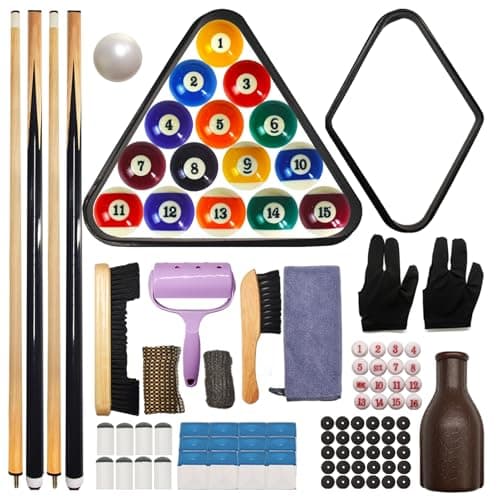
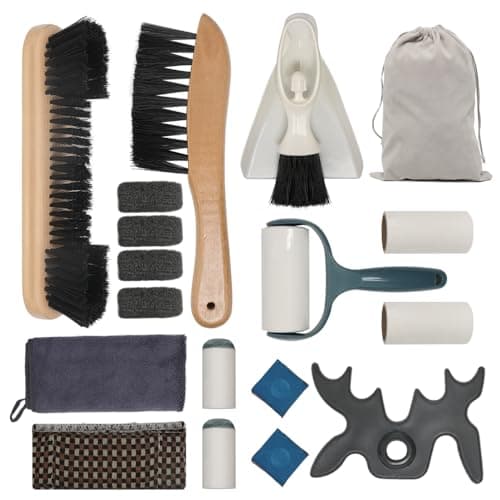
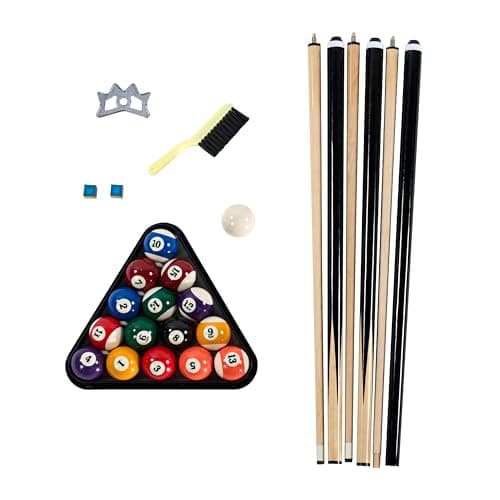
If you want one purchase that covers the gaps, buy the NIANRONGHUA 95-Piece Pool Table Accessory Set — it is the best-value way to get cues, a rack, chalk, a brush and the small parts a new table is short of in one box. It is for the owner of a new full-size table who does not want to assemble a kit piece by piece. If you only buy one thing, make it the Felson chalk box: it is the cheapest item here and the one that changes every shot.
Every full-size table ships with something — usually two house cues, a triangle, a brush and a block of chalk. The problem is never that nothing came with it. The problem is that the cues are 57-inch one-piece sticks with worn tips, the chalk is one cube for a whole table's life, there is nowhere to put any of it, and nothing protects the cloth when the table doubles as a surface for pizza boxes. That is the actual accessory list, and it is short.
This page is about full-size pool tables — 7 ft, 8 ft and up, with 2-1/4 inch balls and 57 or 58-inch cues. If you have a 54-inch bumper pool table, the gear is different: smaller balls, shorter cues, a different cover size. Our bumper pool accessories page covers that table specifically, and the two lists overlap less than you would expect.
Prices come live from Amazon with the date we checked them stamped under each button. Where a listing has no buyable offer right now, the button says so rather than showing a number we cannot stand behind.
The short answer
In a hurry? These are the picks we'd buy. Prices are live; tap a card below for the full reasoning.
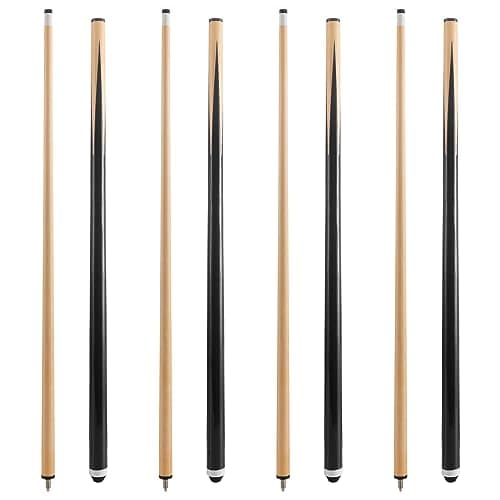
A pair of cues in 48-inch and 58-inch lengths — the 48-inch is the one that matters, because it is the shot against a wall that house cues cannot play.
Replacing the one-piece house cues a table came with
A pair of cues in 48-inch and 58-inch lengths — the 48-inch is the one that matters, because it is the shot against a wall that house cues cannot play.
Includes
2 cues
Lengths
48 in and 58 in
Suits
Full-size tables
Best use
Tight rooms and rail shots
Pros
A 48-inch short cue solves the shot nobody plans for: cue ball tight to a wall
Two-piece construction means you can store them in a rack rather than leaning them in a corner
Replacing worn house-cue tips with fresh ones changes how the table plays immediately
Cheap enough to keep as the guest pair while better cues stay in the case
Cons
These are good value cues, not enthusiast cues — a serious player will outgrow them
Weight is fixed; there are no interchangeable weight bolts
Two cues is right for a couple, short for a game room that hosts four
Best for: Replacing the one-piece house cues a table came with.
$6.9943% offPrice as of November 22, 2026·#addisclosure
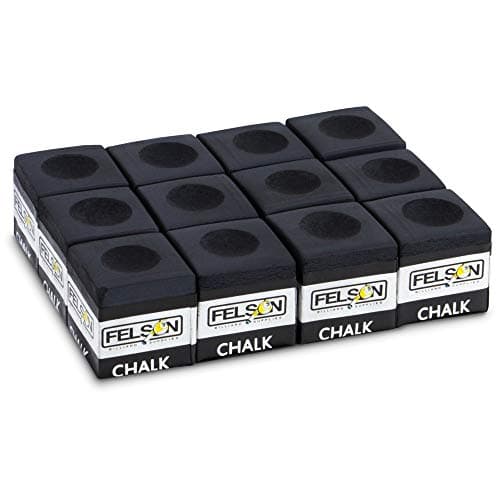
Felson Pool Cue Chalk (12 cubes, storage box)
Twelve cubes of chalk in a storage box — the cheapest item on this page and the one that changes how every shot plays.
Quantity
12 cubes
Includes
Storage box
Job
Tip grip
Replace
When cubes wear hollow
Pros
Chalk is the difference between a cue tip that grips and one that miscues; worn chalk is the most common cause of bad shots
Twelve cubes is a year or more of regular play
The storage box keeps chalk dust off the cloth, which is half the point
Costs almost nothing and improves play more than any cue upgrade at this price
Cons
Chalk colour transfers to cloth — match the cube colour to your cloth where you can
Cheap chalk is softer and wears faster than premium cubes
It is a consumable, so this is a repeat purchase
Best for: Every table, immediately.
Skip this
The budget traps that look cheap and cost you twice. We'd skip these.
Spray-on cloth cleaners and household polish
Pool cloth is wool or a wool-nylon blend and it does not want liquid. Anything sprayed on it mats the nap, changes how the ball rolls, and can leave a ring you cannot remove. The correct maintenance is a one-direction brush with a proper felt brush, and a vacuum on low with a brush head if there is real debris. If the cloth is past brushing, the answer is new cloth — see our <a href="/game-tables/best-pool-table-felt">pool table felt roundup</a> — not a chemical.
A cheap ball set to replace a worn one
Balls are the one accessory where the cheap option is false economy. Low-grade resin balls go out of round, pick up chips and polish unevenly, and an out-of-round ball rolls off line on a perfectly level table — which people then blame on the table. If a set is chipped or dull, buy a reputable set once. The same logic is why we rank balls separately for bumper pool, where the 2-1/8 inch size has very few good options at all.
How to choose (and what to skip)
Buy in this order: chalk, cues, rack, cover
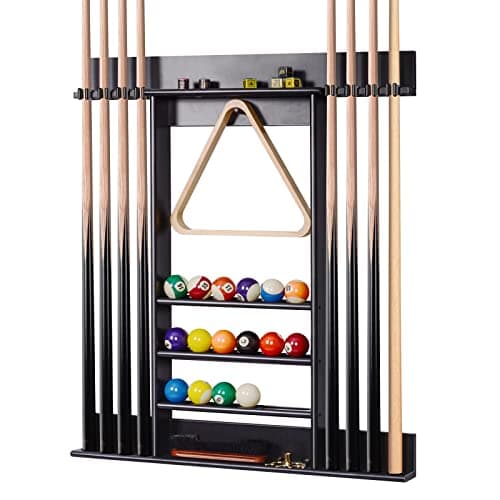
Chalk first, because it is almost free and it changes every shot. Then cues, because the sticks that came with the table are usually the weakest part of it. Then a wall rack, because leaning cues warp and warped cues cannot be fixed. Then a cover, because cloth is the expensive consumable and dust, sunlight and drinks are what kill it. Everything else is optional.
A 48-inch short cue is the accessory people forget
Almost every home table sits closer to a wall than the regulation five-foot clearance on at least one side. A 48 or 52-inch cue turns the shots on that side from impossible to normal, and it costs less than almost anything else on this page. If you have measured your room and found a tight side — see our guide on how much space a pool table needs — buy the short cue at the same time as the table.
Match the cover to the table length, not to 'pool table'
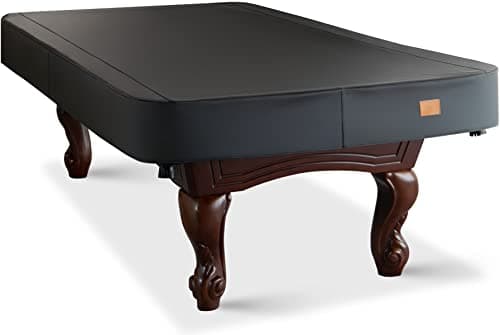
Covers are sold by table size and a 7 ft cover on an 8 ft table is useless. Measure the table from outside rail to outside rail, not the playing surface, and buy for that. A cover that is slightly oversized still works; one that is undersized will not reach the rails where the protection matters.
Kits are good value, but check what they omit
Multi-piece accessory sets are the cheapest way to cover a lot of small gaps, and they are genuinely worth it on a new table. What they generally omit is a ball set, a cover and a wall rack — the three biggest items. Read the piece list, then fill those gaps individually rather than buying a second kit.
What a full-size table is actually short of
New tables ship with a starter bundle because retailers know a table that cannot be played the night it arrives generates returns. What that bundle almost never includes: a second chalk cube, a short cue, anywhere to store cues, a cover, or a felt brush. Those five items are the whole list for a normal game room, and together they cost a small fraction of the table. The accessory industry sells a great deal more than that, and most of it is for commercial halls or for players with a case and a cue they travel with.
Why cue storage is not a cosmetic purchase
A cue is a long thin piece of wood under its own weight. Leaned against a wall at an angle, it bows, and the bow is permanent — the shaft has taken a set and rolling it on the table will show a wobble you cannot cue around. Stored vertically in a rack, or horizontally on supports at both ends, it stays straight. This is why every pool hall has a wall rack and no pool hall has cues in a corner. A rack is the cheapest way to protect the cues you just bought.
Chalk, and the one thing everyone gets wrong
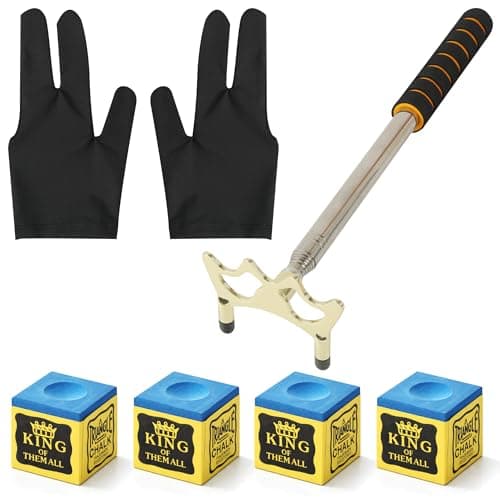
Chalk is not lubricant — it is grip. It roughens the cue tip so the tip can hold the ball for the fraction of a second needed to impart spin, which is what stops a miscue on an off-centre hit. Two practical notes. First, chalk the tip by brushing the cube across it, not by grinding the cue into the cube, which polishes the tip and compacts the chalk. Second, a cube worn into a deep hollow stops touching the edges of the tip at all; replace it. Twelve cubes in a box is a year of play and it is the best few dollars you will spend on the table.
Cloth care, in two sentences
Brush the cloth in one direction with a felt brush after a long session, from the head of the table to the foot, and empty the pockets. That is it — no sprays, no vacuuming on full power, no domestic cleaning products. If the cloth has gone shiny in the break area or is showing the slate through it, that is wear rather than dirt, and the fix is replacement cloth; our felt page covers what worsted versus woollen cloth actually changes about the roll.
Our verdict
A new table should get the 95-piece kit plus a wall rack and a cover, and it is then finished. A table you already own and play on probably needs just the chalk, the cleaning kit and a 48-inch cue for the tight side of the room. If the table in question is a 54-inch bumper pool table rather than a full-size, the bumper pool accessories list is the right page, and our pool table light roundup covers the other thing a finished table needs.
The cue is the accessory that matters most
A ball set, a cover and a rack all improve the table. The cue is the only one of these you actually hold, and it is the piece most people never replace — which is why a 95-piece kit's included sticks are usually the first thing to disappoint. Pool cues are commonly sold from 17 to 21 oz with 19 oz the most common weight, and our pool cue roundup ranks eight on that plus tip diameter, joint spec and whether the shaft is maple or composite.
What to spend on cues, and where to stop
A ball set, a cover and a rack all improve a table, but the cue is the only accessory you actually hold. Two hundred dollars is a sensible ceiling for a home table: it buys hard rock maple, a case and a published weight, and above it you are paying for a low-deflection shaft. Our best pool cues under $200 page ranks ten by what each step up the ladder changes, and the full cue roundup covers the cues above the cap.
Frequently asked questions
What accessories do you need for a pool table?+
Five things cover a normal game room: chalk, two decent cues including a short one, a wall rack to stop cues warping, a cover to protect the cloth, and a felt brush. A ball set and a triangle usually come with the table. Everything beyond that list is optional.
Is a 95-piece pool table accessory kit worth buying?+
On a new table, yes — it is the cheapest way to cover a lot of small gaps in one order, and it includes consumables like chalk and tip repair. What these kits generally omit is a ball set, a cover and a wall rack, so plan to buy those separately.
What length pool cue do I need at home?+
58 inches is standard, but buy a 48-inch short cue as well if any side of the table is closer than about five feet to a wall. The short cue turns the shots on that side from unplayable to routine and costs very little.
How do you clean pool table felt?+
Brush it in one direction with a proper felt brush, from head to foot, after long sessions, and brush the rails separately. Do not use sprays, liquids or household cleaners — they mat the nap and change how the ball rolls. Shiny or thin cloth is wear, and the fix is new cloth.
Do I need a pool table cover?+
If the table is in a room with sunlight, dust or people who put things on it, yes. Cloth is the part of the table that wears out, and a cover is far cheaper than re-clothing. Buy for your table's outside-rail length, not for 'pool table' generically.
Prices and availability shown here come from Amazon's live data and change often; we re-verify them regularly. Bar Bumper is an Amazon Associate and earns a commission on qualifying purchases at no extra cost to you. Read our full disclosure.