Every all-spirit cocktail is stirred, not shaken, and a mixing glass is the only vessel that lets you watch it happen. Eight picks compared on published capacity, seamless construction and how much base weight you get.
Updated November 2026 · By Stephen V.
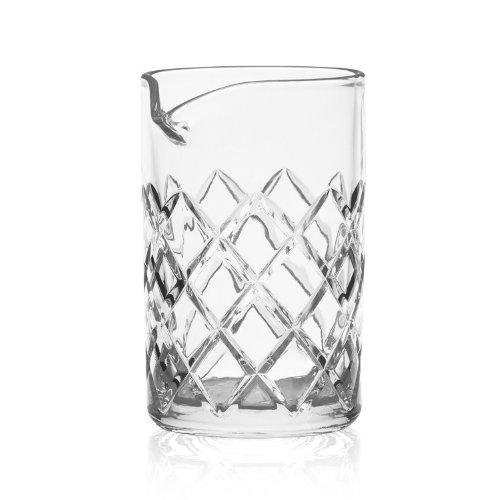
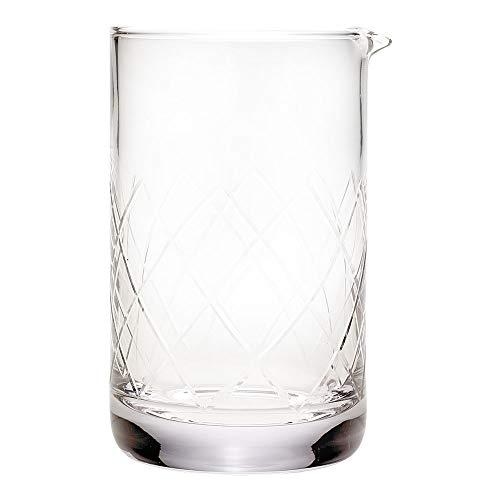
Buy the Cocktail Kingdom Yarai mixing glass. It is the 500 ml Yarai-pattern glass that bars actually use, the pattern is cut rather than molded so there is no seam running up the side, and Cocktail Kingdom is the bar-supply house most of the trade orders from. If you want the same job done by a kitchenware brand for less, the Barfly M37088 at 24 oz is the pick; if you want the cheapest honest version, the Hiware 24 oz costs a sixth of the Yarai and holds the same volume.
A mixing glass answers one question: what do you stir a Martini, a Manhattan, a Negroni or an Old Fashioned in? Drinks made only of spirits, vermouth and bitters are stirred rather than shaken, because shaking aerates and clouds them and chips the ice into the drink. Stirring chills with control and leaves the drink clear, and the point of a glass rather than a tin is that you can see the dilution happening.
You can stir in a pint glass, and plenty of people do. What you give up is base weight, so the vessel skates on the worktop; wall thickness, so the ice melts faster than you want; and a pour spout, so a third of the drink goes down the outside. None of those is a disaster. All of them are solved for under twenty dollars.
How we judged these
Four criteria, in this order. The first two change the drink; the last two decide whether the thing is a pleasure or a nuisance to use.
Published capacity, against the drink you are making. A single stirred cocktail plus the ice to chill it wants roughly 16 to 24 oz of vessel. Below about 16 oz you cannot get enough ice in to chill without over-diluting; above about 25 oz a single drink rattles around and you are stirring air. We quote the published capacity for every pick and say which size each one suits.
Seamless or seamed. A molded glass has a mold line running up the side, which is a thin spot and the place a glass cracks when it meets a cold cube hard. A seamless, cut or hand-blown glass has no such line. Several listings here publish the word "seamless" and we only use it where they do.
Base weight and wall thickness. A heavy base stops the glass walking across the counter as the spoon goes round, and thick walls slow the heat coming in from the room, which is the whole mechanism of a controlled stir. This is also the main thing you pay for: the expensive glasses here are heavier, not cleverer.
Pour spout and rim. A pulled or ground spout lets you decant a full glass of cold liquid into a coupe in one movement without a strainer sliding off. A plain rolled rim does not, and you will wear some of the drink. We say which each pick has.
We have not worked a service with each of these. The ranking is built from published capacities, stated construction (seamless, cut, hand-blown, double-walled), published materials, the maker's standing as a bar-supply or housewares brand, and owner-review consensus reported as other people's experience — see how we pick. Prices are pulled live from Amazon with the date we checked them.
Yarai, plain or steel: what the three styles are for
Yarai is the cut diamond or hobnail pattern you see on bar glasses. It is not decoration alone: the cut facets give wet hands something to hold, and the pattern is cut into a thick-walled blank, which is why Yarai glasses are heavy. It is the look the category is built around and the one most people are buying when they buy a mixing glass.
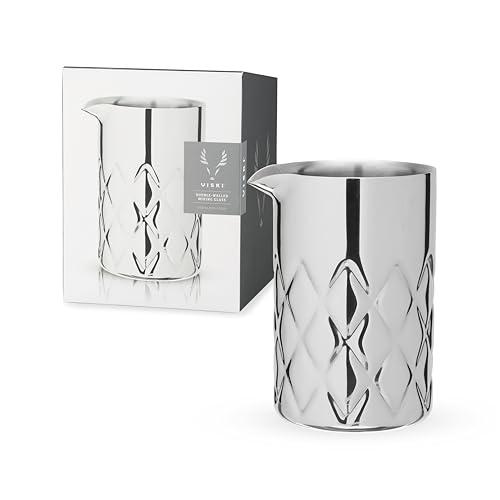
Plain glasses are cheaper to make and lighter to hold, and a good plain glass with a weighted base does the job identically. If you care about the drink and not the shelf, plain is where the value is. Double-walled steel is the outlier: you cannot see the dilution, which is a real loss, but it insulates far better than glass, it will not shatter, and it keeps a batch cold for a party in a way no glass does.
The short answer
In a hurry? These are the picks we'd buy. Prices are live; tap a card below for the full reasoning.
The 500 ml Yarai glass the trade orders, with a cut pattern rather than a molded one and the base weight to match - the reference point for the whole category.
Anyone who stirs a Martini or a Manhattan more than once a month
The 500 ml Yarai glass the trade orders, with a cut pattern rather than a molded one and the base weight to match - the reference point for the whole category.
Capacity
500 ml (published)
Pattern
Yarai, cut
Construction
Seamless
Brand
Cocktail Kingdom
Pros
Cocktail Kingdom is the bar-supply house most working bartenders order from, and this is its standard mixing glass
Seamless construction means no mold line, which is the thin spot where a cheap glass fails against hard ice
500 ml is the sweet spot - enough room for one drink plus a full charge of ice without stirring air
Heavy enough to stay put while you spin a spoon round it, which no thin glass does
Cons
Costs more than double the mid-price glasses here for a vessel that holds the same volume
500 ml is a single-drink glass; stirring two Manhattans at once needs the 750 ml version
A cut pattern traps syrup and citrus oil in the facets - it wants washing rather than rinsing
No lid, no measurements and no spoon in the box; this is the glass only
Best for: Anyone who stirs a Martini or a Manhattan more than once a month.
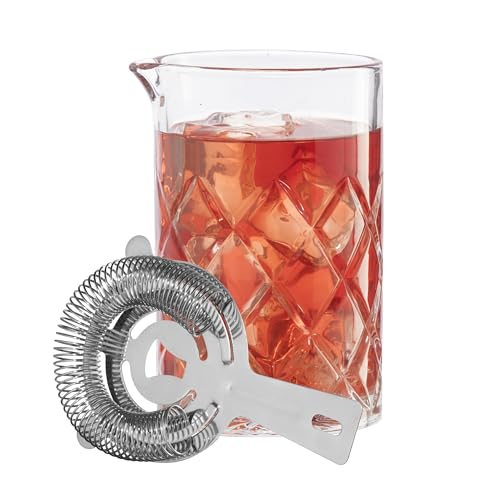
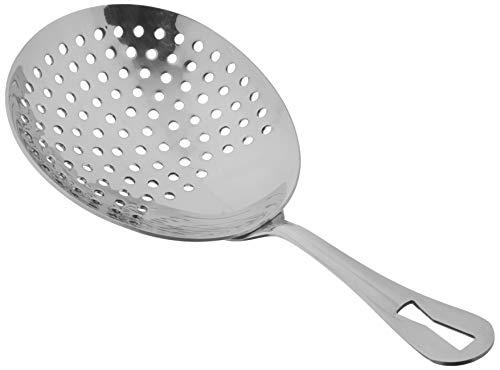
The correct strainer for a mixing glass: a perforated bowl that wedges into the glass at an angle and stays there while you pour.
Type
Julep strainer
Material
Stainless steel
Fits
Mixing glasses and shaker tins
Brand
Barfly (Mercer)
Pros
A julep strainer is the tool designed for a mixing glass - it seats inside the rim instead of balancing on it
Nothing to wear out: no spring to lose tension, unlike a Hawthorne
Costs less than a cocktail and finishes the stirring kit
Barfly sizing means it fits the Barfly glass on this page exactly
Cons
A julep strainer only fits glasses whose diameter it suits - check it against a narrow beaker before relying on it
The holes are larger than a Hawthorne's spring, so it will not hold back small ice chips or citrus pulp
Not the right tool for a shaken drink, where a Hawthorne is better
Plain stainless, with nothing to stop it looking exactly like a cheap sieve
Best for: Pouring a stirred drink off the ice without a Hawthorne sliding around.
Skip this
The budget traps that look cheap and cost you twice. We'd skip these.
Stirring in a cocktail shaker tin
It works and bartenders do it when they are busy, but you lose the only real advantage of a mixing glass, which is seeing how far the drink has diluted and how far the frost has climbed the outside. A tin also chills faster than glass, which sounds good and in practice makes it easier to over-dilute before you notice.
Mixing glasses under about 16 oz
The chill in a stirred drink comes from a lot of ice melting a little. In a small vessel you cannot fit enough ice around a two-ounce pour, so you stir longer against less ice and the drink ends up watery and not cold enough. 16 oz is the floor and 20 to 24 oz is comfortable.
Nine-piece mixing sets with a bamboo stand
The stand is the expensive part and the thing you throw away. The glass in a bundle like that is usually the lightest one the maker sells, and the tools are generic. A good glass, a 12-inch spoon and a julep strainer bought separately cost about the same and every piece is the one you would have chosen.
Lead crystal, for a glass you stir ice in
Genuine lead crystal is heavy and beautiful and the last place you want it is a vessel that holds acidic drinks and takes knocks from ice. Every glass on this page is lead-free. Keep the crystal for the serving glass, where the drink sits for ten minutes rather than all evening.
Stirred or shaken: the rule, and why it is a rule
Stir anything made only of spirits, vermouth, liqueurs and bitters. Shake anything with citrus, egg, cream or fruit in it. That one line covers almost every cocktail you will make at home. A Martini, a Manhattan, a Negroni and an Old Fashioned are all stirred; a Daiquiri, a Margarita, a Whiskey Sour and anything with lime in it are all shaken.
The reason is what each motion does to the liquid. Shaking drives air into the drink and chips the ice, which gives you a cloudy, slightly frothy, slightly more dilute result — exactly right when there is citrus or egg to emulsify. Stirring moves the liquid past the ice without aerating it, so an all-spirit drink stays clear, stays dense in the mouth and lands at the dilution you chose rather than the one the shaker gave you.
How long to stir, and what you are watching for
Roughly 30 seconds with a full glass of large, dense cubes, and the thing to watch is the outside of the glass rather than the clock. Frost climbing the outside of a thick-walled mixing glass tells you the whole volume has come down in temperature; a glass that is cold at the bottom and dry at the top has not. This is the practical reason to own a glass rather than a tin: the vessel reports on the drink.
Ice does most of the work here, and it is where home bars lose the drink. Small, cloudy, half-melted freezer-tray cubes have enormous surface area and a head start on melting, so they dilute far faster than they chill. Dense clear cubes do the opposite. Our ice ball mold and clear ice tray roundup covers the cheap freezer route and the clear ice makers cover the machines; either one changes a stirred drink more than upgrading from the budget glass to the Yarai would.
Julep or Hawthorne: which strainer goes with a mixing glass
A julep strainer is a perforated bowl with a handle that wedges into a mixing glass at an angle and holds the ice back while the drink pours past it. It was the first purpose-made cocktail strainer, patented in 1868 and modeled on European sugar-sifting spoons, and it is still the right tool for a glass. A Hawthorne strainer is a flat disc with a coiled spring around the rim and two ears that rest on the vessel; the spring is what filters, and it is designed for a shaker tin.
If you own one strainer, own a Hawthorne, because it works on a tin and more or less works on a glass. If you stir regularly, the julep strainer costs the price of a coffee and simply fits. Our cocktail shaker roundup covers the tins that the Hawthorne belongs to, and the bar tool set page covers buying both strainers and a spoon as a kit.
What else you need to make a stirred drink properly
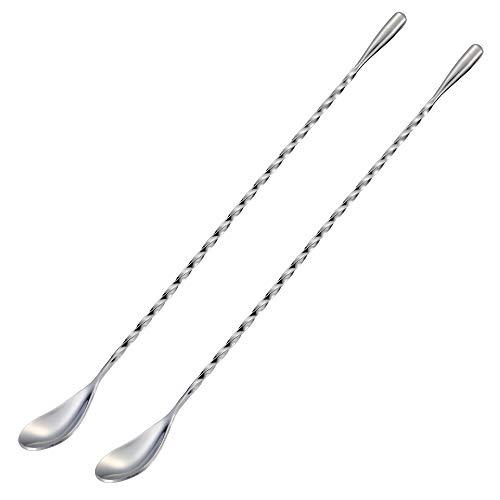
Four things, and the glass is only one of them. A jigger, because a stirred drink is a ratio and a free pour is wrong by a quarter-ounce in both directions — the jigger roundup ranks eight. A 12-inch bar spoon, because the twist is what lets the spoon spin between your fingers instead of being dragged. A strainer, as above. And the glass the drink lands in, which decides how it reads: our coupe and Nick & Nora roundup covers the stemmed glasses a Martini or Manhattan belongs in, and the whiskey glasses page covers the rocks glass an Old Fashioned wants.
Notice what is not on that list: a cocktail shaker. If the only drinks you make are stirred, a mixing glass, a spoon and a strainer replace a shaker entirely for about the same money. The reverse is not true, which is why a shaker set is usually the first purchase and this page is usually the second.
Where this sits on a home bar
A mixing glass is a worktop tool, not a display piece, and it wants to live where you make drinks rather than where you keep bottles. On a bar cart that means the top shelf next to the jigger and spoon, which is a crowded 4-and-a-half square feet — our guide to what to stock on a bar cart lays out what fits. If the bar is a cabinet or a built-in rather than a cart, the home bar equipment pillar covers the buy-in-order list this page is one line of.
Where the ice waits while you are pouring
A mixing glass wants a full charge of large, dense cubes, and the usual home-bar failure is that the ice has been sitting out melting since the first drink. A countertop ice maker's bin is insulated but not refrigerated, so it holds ice rather than keeping it frozen. A lidded double-wall bucket is the fix, and it costs about twenty dollars — our ice bucket roundup compares nine on published capacity, wall construction and whether the strainer plate that keeps the last cubes out of the meltwater is in the box.
Our verdict
Buy the Cocktail Kingdom Yarai if you stir often enough to care: seamless, cut, heavy, and the glass the trade uses. Buy the Barfly 24 oz for a trade-brand glass at a third less, the Hiware if you want the job done for the least money, and the Cork & Mill if a weighted base matters more to you than a brand. Buy the Viski steel vessel only if you stir rounds for guests or the floor is tiled. Whichever glass you choose, add the 12-inch bar spoon and the julep strainer: together they cost less than a cocktail and they are what turn a glass into a method.
Not a beer glass, and not a substitute for one
A mixing glass is a worktop vessel, and a pint glass is what people reach for instead. The reverse substitution works even less well: a 24 oz mixing glass has no spout for a beer, no shape to hold a head and a base weight you do not need. If beer is what you drink in quantity, buy glasses built for it — our beer glass roundup covers pints, pilsner shapes, tulips and stout glasses.
Frequently asked questions
What size mixing glass should I buy?+
Between 16 and 24 oz, with 20 to 24 oz the comfortable range. A stirred drink is chilled by a lot of ice melting a little, so you need room for a full charge of cubes around a two-ounce pour. Below 16 oz you run out of space for ice and the drink ends up dilute without being properly cold; much above 25 oz and a single drink is rattling around a part-empty glass.
Which cocktails are stirred rather than shaken?+
Anything made only of spirits, vermouth, liqueurs and bitters - a Martini, Manhattan, Negroni, Old Fashioned, Rob Roy, Boulevardier. Shaking those drives air into them and chips ice into the glass, which clouds a drink that is supposed to be clear. Shake anything with citrus, egg, cream or fruit instead.
What does seamless mean on a mixing glass?+
That the glass was cut or blown rather than pressed in a two-part mold, so there is no mold line running up the side. The seam on a molded glass is a thin spot, and it is where a cheap glass is most likely to crack when a hard cube hits it. Not every listing publishes the word; we only use it where the maker does.
How long should you stir a cocktail?+
About 30 seconds with a glass full of large, dense ice, but watch the glass rather than the clock. Frost climbing the outside tells you the whole volume has come down to temperature. The ice matters more than the timing: small cloudy freezer cubes dilute faster than they chill, so the same 30 seconds gives you a watery drink.
Do I need a julep strainer or a Hawthorne strainer?+
A julep strainer is the correct tool for a mixing glass - it is a perforated bowl that seats inside the rim at an angle and stays put while you pour. A Hawthorne is a disc with a spring that fits a shaker tin. If you only buy one, buy a Hawthorne, because it covers both jobs adequately. If you stir regularly, a julep strainer costs a few dollars and simply fits better.
Is a Yarai mixing glass worth the extra money?+
For the weight and the construction, yes; for the pattern alone, no. Yarai glasses are cut from thick-walled blanks, which is why they are heavy and why they hold still under a fast stir, and the cut facets give wet hands something to grip. A plain glass with a published thick base does the same job for a fraction of the cost, and the drink cannot tell.
Can I use a pint glass as a mixing glass?+
Yes, and it is how plenty of people start. You give up base weight so the glass skates around, wall thickness so the ice melts faster than you want, and a pour spout so some of the drink goes down the outside. Nothing about a pint glass ruins a cocktail - it just makes every part of the process slightly worse than a twelve-dollar fix would.
How long should a bar spoon be?+
12 inches covers every mixing glass and most tall tumblers, which is why it is the standard length. What matters as much is the twist: a spiral shaft lets you spin the spoon between two fingers so the bowl travels round the inside wall of the glass, rather than dragging it through the middle. The bowl of a bar spoon holds about 5 ml, the same as a teaspoon.
Prices and availability shown here come from Amazon's live data and change often; we re-verify them regularly. Bar Bumper is an Amazon Associate and earns a commission on qualifying purchases at no extra cost to you. Read our full disclosure.