Five tools make every standard cocktail. Judge a kit by its shaker and its jigger, because those are the two it will have cut corners on.
Updated October 2026 · By Stephen V.
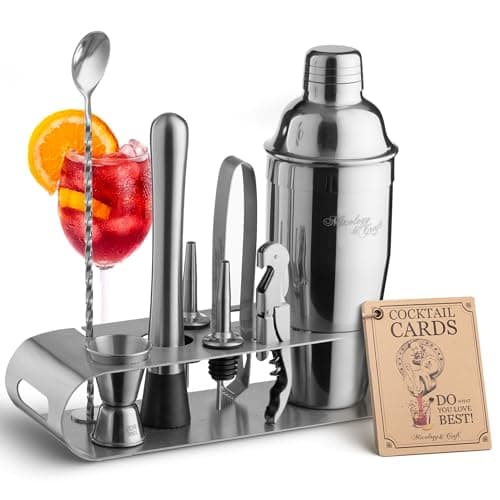
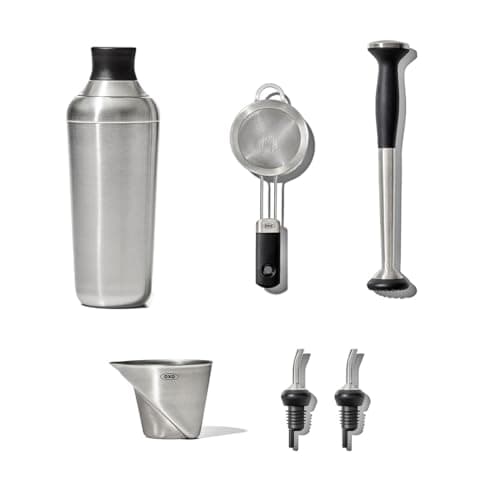
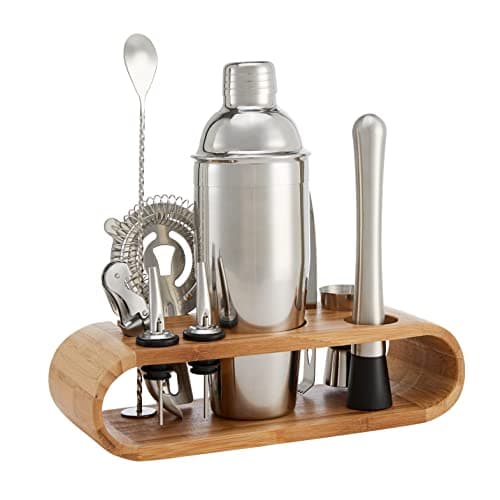
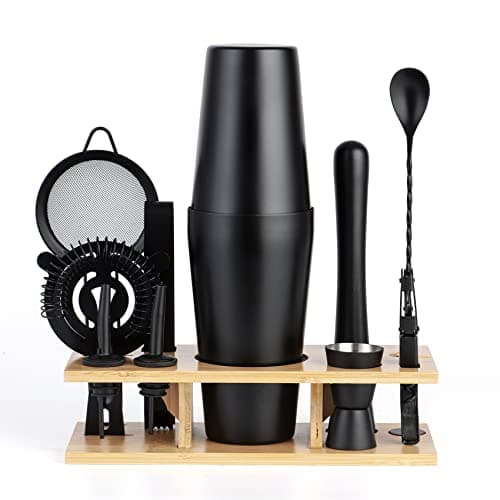
The Mixology & Craft set is the bar tool kit to buy for most home bars — it covers all five tools that matter, comes on a stand so they stay reachable, and costs roughly what a good shaker and jigger cost separately. If you want better individual pieces, the OXO Steel six-piece set is the quality option; the Amazon Basics ten-piece with a bamboo stand is the value pick; and the JNWINOG eleven-piece is the one to buy if you specifically want Boston tins rather than a cobbler shaker.
Bar kits are sold on piece count, which is the least useful number on the box. A "24-piece" kit is five tools plus pourers, picks, a recipe card and a bag. The list that actually makes every standard cocktail is short:
A shaker — two Boston tins, or a cobbler if you prefer self-contained.
A jigger — the tool worth being fussy about, because cocktails are ratios.
A Hawthorne strainer — the spring-edged one, for pouring out of a tin.
A bar spoon and a mixing glass — for stirred, all-spirit drinks, which is most of the classics.
A muddler — only if you use fresh herbs or fruit.
Judge any kit on items one and two. Everything else in a kit is either hard to get wrong or something you will not use. We have not tested these kits; the ranking draws on published contents, materials, jigger graduations and stand design, plus owner-review consensus reported as other people's experience.
The short answer
In a hurry? These are the picks we'd buy. Prices are live; tap a card below for the full reasoning.
JNWINOG 11-Piece Boston Shaker Bartending Kit (25 oz)
An eleven-piece kit built around a 25 oz Boston shaker rather than a cobbler, which is the right shaker choice for most people.
Pieces
11
Shaker
25 oz Boston
Material
Stainless steel
Pros
Boston shaker in a kit, which is uncommon and the better design
25 oz is enough for two drinks
Comprehensive contents at a mid-range price
Cons
Boston tins need the included strainer to be decent — check reviews
Eleven pieces includes some filler
Less established brand than OXO or Amazon Basics
Best for: Anyone who has decided they want tins rather than a cobbler.
Skip this
The budget traps that look cheap and cost you twice. We'd skip these.
Kits sold on piece counts above about 15
Beyond the five essentials, kits pad with pourers, picks, stoppers, a recipe booklet and a carry bag. None of that improves a drink, and the money came out of the shaker and jigger — which are the two pieces you will actually notice.
Copper-plated bar sets
They look superb in photographs and the plating wears off at every contact point within months, after which the tool looks worse than plain stainless ever would. Plated finishes are also harder to clean properly where the plating has lifted.
Plastic jiggers
The jigger is the one tool whose accuracy decides whether a drink tastes right. Plastic ones distort, stain and lose their graduation markings. A good stainless Japanese-style jigger costs very little.
How to choose (and what to skip)
Judge the kit by its jigger
Cocktails are ratios, and eyeballing measurements is the single biggest reason a home drink tastes wrong. A good jigger is Japanese-style — two tapered cones, typically 1 oz and 2 oz, with internal graduations for 1/2, 3/4 and 1 1/2 oz. A bad one is a plain two-sided cone with no internal marks, which forces you to guess every fractional measure. This is where cheap kits save money.
Then judge it by its shaker
Boston tins are better than a cobbler: they seal reliably, hold more and never seize shut when cold. Most kits ship a cobbler because it is self-contained and looks the part. If the kit has a cobbler and you would rather have tins, buy the tins separately — they cost very little — and treat the kit as a source of the other four tools.
A stand is not a gimmick
Tools in a drawer get used far less than tools on a stand. This sounds trivial and is the main practical difference between a bar that gets used on a Tuesday and one that comes out for parties. If the kit has no stand, plan where the tools will live where you can reach them.
Check for a mixing glass and bar spoon
Most kits include a spoon; many omit a mixing glass, because it is glass and adds shipping weight. Stirred all-spirit drinks — Manhattans, Negronis, old fashioneds — want a mixing glass, and shaking them clouds and bruises them. A heavy 24 oz crystal mixing glass is inexpensive and is the most common gap in a kit.
Stainless, not plated, and hand wash it
Solid stainless steel is the right material: it does not react, does not wear through, and is cheap. Avoid plated finishes. Wash everything by hand and dry it — dishwashers dull stainless finishes and leave water in the seams of nested tins, which eventually marks them.
What each tool is actually for
Shaker: anything with citrus, cream, egg or fruit. Shaking aerates and chills fast. Mixing glass and bar spoon: anything made only of spirits, where you want clarity and a silkier texture. Jigger: every drink, because ratios are the recipe. Hawthorne strainer: holding ice and solids back when pouring out of a tin. Muddler: pressing herbs and fruit to release oils and juice — and only ever pressing, never grinding, which shreds mint into bitter green confetti.
Two optional additions genuinely earn their place. A fine-mesh strainer, for double-straining anything with citrus pulp or egg white so the drink arrives smooth. And a channel knife or peeler for citrus twists, where the expressed oil on the surface of the drink is a real part of the flavour rather than decoration.
Buying a kit or buying individually
A kit is the better first purchase. It gets you working immediately, it is cheaper than the sum of its parts, and you discover which tools you reach for. The sensible path after that is to replace the two pieces you use most — shaker and jigger — with good ones when the kit versions annoy you, and keep the rest of the kit indefinitely, because a strainer and a bar spoon are hard to improve.
The exception is if you already know you want Boston tins. In that case buy the tins, a Hawthorne strainer and a Japanese jigger individually, add a mixing glass and a spoon, and you have a better bar than any kit for a similar total.
Where the tools live
A bar cart with a stand of tools on the lower shelf and bottles above is the standard arrangement, and it works because everything is visible. A bar mat under the working area is the most underrated accessory in this hub: it catches drips, stops glasses sliding, and gives you somewhere to invert washed tins to drain.
And the thing no kit includes that improves drinks most: good ice. Large, hard, dry cubes let you shake long enough to chill properly without the drink turning watery. Small wet freezer ice undermines every tool on this page.
Frequently asked questions
What bar tools do I actually need?+
Five: a shaker, a jigger, a Hawthorne strainer, a bar spoon with a mixing glass, and a muddler only if you use fresh fruit or herbs. Everything beyond that is specialisation or kit padding. Of the five, be fussiest about the jigger — cocktails are ratios, and inaccurate measuring is the main reason home drinks taste wrong.
Are bar tool sets worth buying over individual tools?+
As a first purchase, yes — a kit is cheaper than the sum of its parts and gets you making drinks immediately. The sensible approach is to buy a kit, then replace the shaker and jigger with good individual versions once the kit ones annoy you, and keep the strainer and spoon indefinitely.
How many pieces should a bar tool set have?+
Enough to cover the five essentials — so typically six to eleven real pieces. Kits advertising 20 or more are padded with pourers, picks and stoppers, and that money came out of the shaker and jigger. Count the useful tools rather than the pieces.
What is the most important tool in a bar kit?+
The jigger. A cocktail is a ratio, and a jigger with internal graduations for 1/2, 3/4 and 1 1/2 oz lets you hit the recipe. Kits save money here more often than anywhere else, so it is the first piece worth upgrading and the best single indicator of a kit's quality.
Prices and availability shown here come from Amazon's live data and change often; we re-verify them regularly. Bar Bumper is an Amazon Associate and earns a commission on qualifying purchases at no extra cost to you. Read our full disclosure.