A cocktail served up has no ice to keep it cold, so the glass has to be small enough to finish and stemmed enough to hold. Five to six ounces is the number.
Updated October 2026 · By Stephen V.
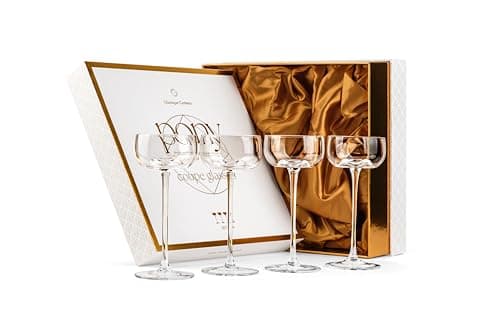
For a home bar that makes cocktails served up, buy the Glassique Cadeau 5 oz Nick & Nora glasses in a set of four. Five ounces is the right bowl for a stirred or shaken drink with no ice in it, the inward curve holds aroma over the glass instead of losing it to the room, and a set of four covers a table without committing to six of anything.
A drink served up — a martini, a daiquiri, a manhattan, a sidecar, a gimlet — arrives in the glass already cold and with nothing in it to keep it that way. Everything about the right glass follows from that one fact. It needs a stem, so your hand is nowhere near the liquid. It needs to be small, because a drink you take twenty minutes over is warm for fifteen of them. And it needs a bowl that curves inward at the rim, which concentrates aroma and makes the drink much harder to spill.
That is the case against the glass most people picture, which is the wide V-shaped martini glass. A 10-ounce V holds a 4-ounce drink in a shallow pool with an enormous surface area, dumps the aroma straight upward past your face, and tips if you set it down briskly. It is a beautiful object and a poor glass. The coupe — a shallow, broad, stemmed bowl — and the Nick & Nora — a smaller, taller, more closed bell — both fix all three problems, which is why every cocktail bar switched to them.
This is stage two of our home bar essentials order and one of the four shapes our glassware guide says a complete bar needs. Prices below come live from Amazon with the date we verified them.
The short answer
In a hurry? These are the picks we'd buy. Prices are live; tap a card below for the full reasoning.
$39.9919% offPrice as of October 17, 2026·#addisclosure
Quick picks
#
Product
Best for
Score
Price
1
Best coupe glasses overall
Glassique Cadeau 5 oz Nick & Nora Coupe Glasses (set of 4)
A 5 oz Nick & Nora coupe in a set of four — the size and shape a stirred or shaken drink actually wants, and the glass that makes a home-made cocktail look made.
A home bar making martinis, daiquiris and manhattans up
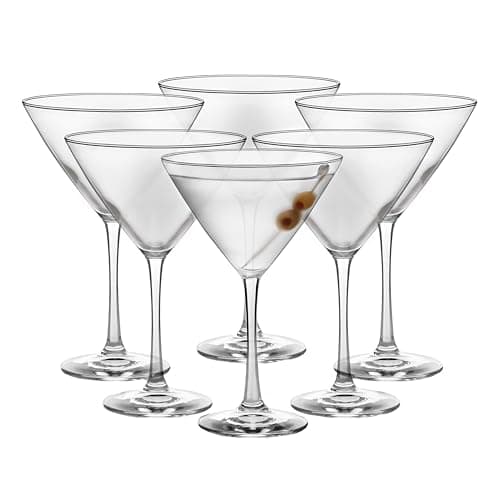
Libbey's triangular Vina martini glasses in a set of six — the V shape done by a commercial glassmaker, for anyone who wants the look and accepts the trade-offs.
Glassique Cadeau 5 oz Nick & Nora Coupe Glasses (set of 4)
A 5 oz Nick & Nora coupe in a set of four — the size and shape a stirred or shaken drink actually wants, and the glass that makes a home-made cocktail look made.
Shape
Nick & Nora coupe
Capacity
5 oz
Set
4 glasses
Suits
Drinks served up, no ice
Pros
5 oz is the correct bowl: a stirred martini finishes at about 4 oz and fills it properly
The inward curve at the rim holds aroma and makes it hard to spill
A set of four seats a table without buying six of a shape you use less often
The glass most responsible for a home cocktail looking like a bar cocktail
Cons
Too small for anything long — you still need highballs and rocks glasses
A delicate stem; these are not the glasses to hand round a game room
Four is a small set if you entertain six
Best for: A home bar making martinis, daiquiris and manhattans up.
#2Best value, and the one to buy if you break things
$39.9919% offPrice as of October 17, 2026·#addisclosure
Libbey Vina Triangular Martini Glasses (set of 6)
Libbey's triangular Vina martini glasses in a set of six — the V shape done by a commercial glassmaker, for anyone who wants the look and accepts the trade-offs.
Shape
V-shaped martini
Set
6 glasses
Brand
Libbey
Suits
Martinis served up
Pros
The classic silhouette, which is a legitimate reason to buy a glass
Six to a set, so it covers a full table on its own
Libbey is a commercial glassmaker — these are foodservice-grade, not ornamental
Cheapest per glass on the page
Cons
A wide open rim loses aroma and warms the drink faster than a coupe
V-shaped glasses spill far more easily, which matters on a bar cart
Fill it only two thirds or the drink is unwieldy — so usable capacity is less than it looks
Best for: Anyone who wants the classic silhouette, in six.
Skip this
The budget traps that look cheap and cost you twice. We'd skip these.
A 10 oz or larger martini glass
The oversized V-shaped martini glass is the most common glassware mistake on a home bar, and it is a mistake on three counts. A stirred martini finishes at roughly 4 ounces after dilution, so a 10-ounce glass holds it as a shallow puddle with a huge surface area and the drink warms fast. The wide rim releases aroma into the room instead of over the glass. And a tall glass with a wide, heavy top tips with very little provocation. If you want a big glass for a big drink, use a wine glass; if you want a cocktail served up, use a 5 to 6 ounce coupe.
Stemless coupes
Stemless glassware is a genuinely good idea for wine at a party and a bad one for drinks served up. The stem on a coupe is not styling — it is the only thing keeping your hand off a drink that has no ice to defend it. A stemless coupe holds a cold cocktail in your palm and the drink is noticeably warmer within a couple of minutes. The same argument applies to the handle-free “modern” coupes that are really small bowls.
How to choose (and what to skip)
Buy 5 to 6 oz, and judge by fill rather than by spec
The target is a glass that a finished drink fills to within half an inch of the rim. A stirred martini or manhattan is about 4 to 4.5 ounces after dilution; a shaken sour with citrus and egg white can reach 5 to 5.5. A 5 to 6 ounce bowl covers both. If a glass is so large that you have to decide how high to fill it, the glass is wrong.
Coupe or Nick & Nora, and what actually separates them
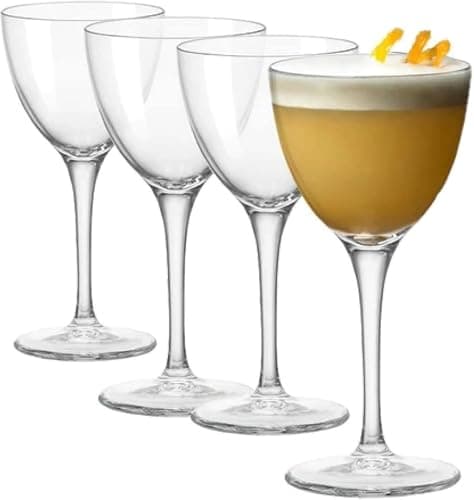
A coupe is wider and shallower with a broad, gently curved bowl — it shows a drink off, takes a garnish well, and is the more generous shape. A Nick & Nora is narrower and taller, a small bell on a stem, with a more closed rim that concentrates aroma further and spills least of anything on a tray. Both are correct. If you make aromatic stirred drinks, lean Nick & Nora; if you make shaken drinks with a citrus or a foam top, lean coupe.
Buy a pattern you can re-buy
Stemmed glassware breaks, and the most annoying way to lose a set is for the pattern to be discontinued when you are down to three. This is the real argument for a commercial glassmaker — Libbey and Bormioli Rocco keep patterns in production for years, where a one-off import set vanishes in a season. Buy four or six of something re-buyable rather than two of something irreplaceable.
Chill the glass, not just the drink
This matters more for coupes than for any other glass on a bar, because there is no ice in the drink to make up for a warm glass. Put the glasses in the freezer twenty minutes before you start, or fill them with ice water while you build the drink and dump it just before you strain. A chilled 5 oz coupe keeps a martini properly cold for the whole glass; a room-temperature one has given away a third of the chill before you sit down.
Four shapes, not twelve
Coupes are one of four glasses a complete home bar needs: a heavy rocks glass for spirits and short drinks, a tall highball for anything with soda, a stemmed coupe for drinks up, and a wine glass. Everything else — Nick & Nora versus coupe, Glencairn, snifter, tiki mug — is refinement on top of those four. Our <a href="/guides/what-glassware-do-you-need-for-a-home-bar">glassware guide</a> covers the full set and the quantities.
Where the coupe came from, and why it came back
The coupe was originally a champagne glass — the shallow saucer shape you see in old photographs — and it was abandoned for champagne for a good reason: a broad, shallow bowl kills the bubbles. It survived as a cocktail glass precisely because of the property that made it a bad champagne glass. A wide bowl on a stem with a gentle inward curve shows a drink, takes a twist or a cherry well, and keeps your hand well away from the liquid. When cocktail bars in the 2000s went looking for an alternative to the oversized martini glass, the coupe was already the answer, and the Nick & Nora — named for the martini-drinking couple in The Thin Man — came back with it.
Which drinks go in a coupe
Everything served up, which means chilled and strained with no ice in the glass: martini, manhattan, negroni if you take it up, daiquiri, gimlet, sidecar, aviation, last word, whiskey sour without ice, corpse reviver. The dividing line is simple — if the recipe ends with “strain into a chilled glass”, that glass is a coupe or a Nick & Nora. If it ends with “strain over fresh ice” it is a rocks glass, and a large clear cube is what you want in it. If it ends with “top with soda” it is a highball.
How many to buy
Four is the sensible starting number for coupes specifically, which is unusual advice on this site — we normally say six. The reason is usage: a home bar pours far more highballs and rocks drinks than drinks served up, so six coupes is often two more than ever come out of the cupboard at once, while six highballs regularly do. Buy four coupes, six highballs and six rocks glasses, and add the second set of coupes the first time you run out. And assume breakage: stemmed glassware in a room with a game table in it has a shorter life than stemware in a dining room.
What to make in them, and what to make them with
A drink served up needs to be measured and properly chilled, which is two tools rather than one: a shaker or a mixing glass, and a jigger. Shaken drinks — anything with citrus, juice or egg — go in the shaker; stirred drinks — all-spirit drinks like a martini or a manhattan — go in a mixing glass with a bar spoon, because shaking them clouds the drink and over-dilutes it. Our bar tool set roundup covers which kits include a mixing glass, and the Boston versus cobbler shaker guide covers the choice between the two shaker types.
Our verdict
Buy the Glassique Cadeau 5 oz Nick & Nora set if you want the best version of this glass on a home bar, and the Bormioli Rocco Novecento if you want the same shape from a glassmaker whose patterns you can re-buy in three years — which, for a bar that actually gets used, is the more practical choice of the two. Buy the Libbey Vina only if the V-shaped silhouette is the thing you want; it is a well-made glass and a compromised shape, and that is a fair trade if you know you are making it.
Frequently asked questions
What size should a coupe glass be?+
5 to 6 ounces. A stirred martini or manhattan finishes at roughly 4 to 4.5 ounces after dilution and a shaken sour at 5 to 5.5, so a 5 to 6 ounce bowl is filled properly by a finished drink. Anything much larger holds the drink as a shallow pool that warms quickly.
What is the difference between a coupe and a Nick & Nora glass?+
A coupe is wider and shallower with a broad curved bowl; a Nick & Nora is narrower and taller, a small bell on a stem with a more closed rim. Both hold about the same volume and both are correct for drinks served up. The Nick & Nora concentrates aroma more and spills least; the coupe shows a drink and a garnish better.
Are coupe glasses better than martini glasses?+
For almost every purpose, yes. A coupe's inward curve holds aroma over the glass, it is far harder to spill, and in a 5 to 6 ounce size a finished drink fills it properly. A big V-shaped martini glass has a wide rim that releases aroma, a large surface area that warms the drink, and a shape that tips easily.
What drinks are served in a coupe glass?+
Anything served up — chilled and strained with no ice in the glass. Martinis, manhattans, daiquiris, gimlets, sidecars, aviations, last words and whiskey sours served without ice. If the recipe says strain into a chilled glass, that glass is a coupe or a Nick & Nora.
Do you chill coupe glasses?+
Yes, and it matters more here than with any other glass, because a drink served up has no ice to defend it. Twenty minutes in the freezer, or fill the glass with ice water while you build the drink and dump it just before straining. A warm coupe gives away a noticeable share of the chill before the first sip.
How many coupe glasses do I need?+
Four is a sensible starting set. Most home bars pour far more highballs and rocks drinks than drinks served up, so four coupes usually matches real use while six highballs and six rocks glasses are the ones that come out together. Add a second set of four the first time you run short.
Can you drink champagne from a coupe?+
You can, and it is where the shape came from, but it is not a good champagne glass — a broad shallow bowl loses carbonation fast. If you want bubbles to last, use a flute or a white wine glass. The coupe survived as a cocktail glass because the property that ruins it for champagne is harmless for a cocktail.
Prices and availability shown here come from Amazon's live data and change often; we re-verify them regularly. Bar Bumper is an Amazon Associate and earns a commission on qualifying purchases at no extra cost to you. Read our full disclosure.