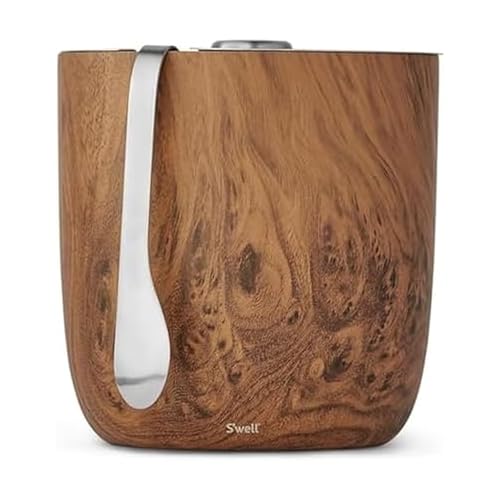
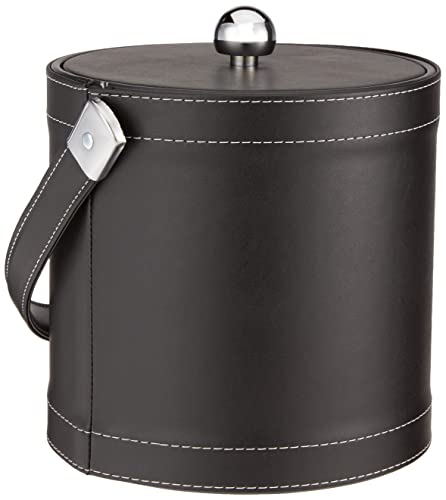
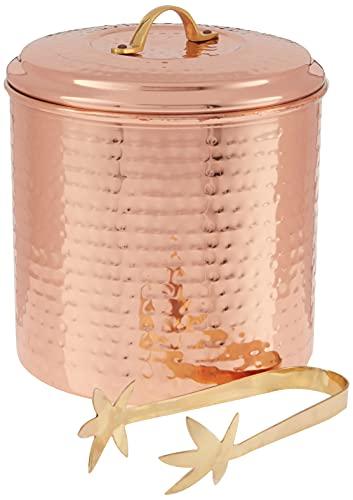
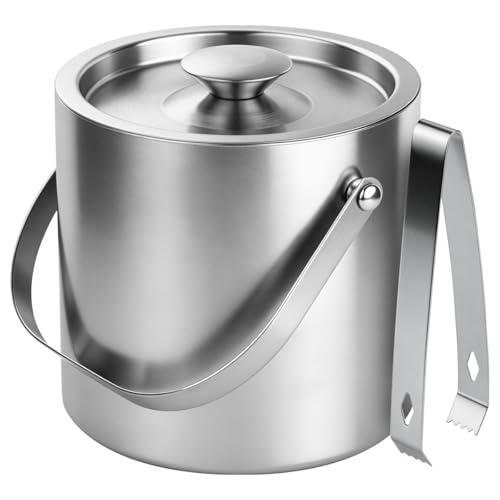
An ice maker makes ice; an ice bucket is what stops it turning into a puddle an hour into the evening. Nine compared on published capacity, wall construction, and whether the lid, scoop and strainer are in the box.
Updated November 2026 · By Stephen V.
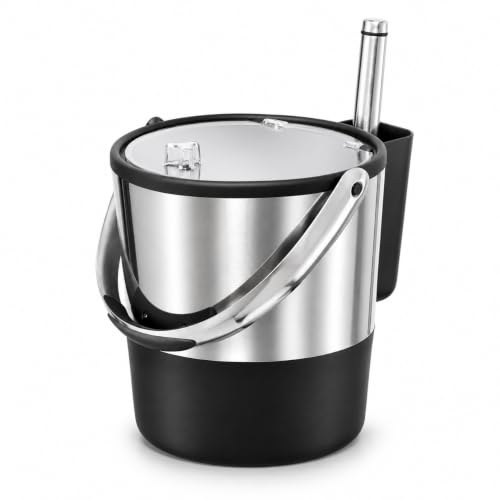
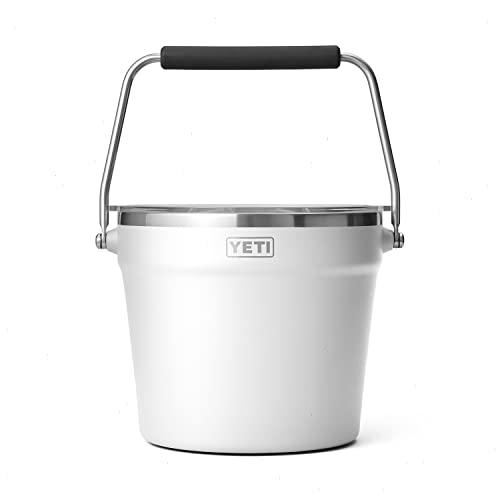
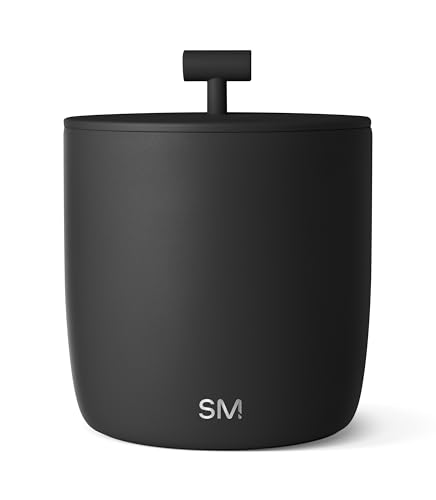
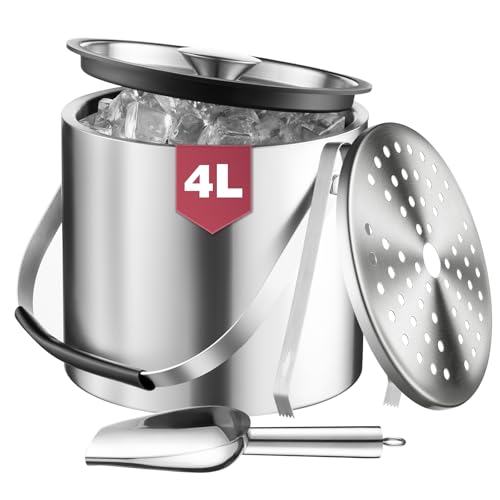
Buy the Oggi 4-quart insulated ice bucket. Four quarts is enough ice for an evening of drinks for a small group, it is double-wall stainless rather than single-skin, and Oggi has been making barware long enough that the lid still fits after a year. If you want ice to survive outdoors or a long party, the YETI Rambler Beverage Bucket is vacuum-insulated and in a different class; the Simple Modern gets most of the way there for a quarter of the price; and the ChefBee 3L is the budget pick that still has two walls.
This is the accessory that fixes the complaint everybody has about countertop ice makers. A countertop machine's bin is insulated, not refrigerated — it holds ice, it does not keep it frozen, so a batch made at six o'clock is a block of fused cubes and an inch of water by eight. The machine is not broken. It just needs somewhere better for the ice to wait, and that somewhere is a double-walled bucket with a lid.
The physics is dull and the result is not. Two steel walls with a gap between them cut conducted heat dramatically compared with one wall, and a lid stops the warm air of the room circulating over the surface. A single-wall metal bucket sweats, conducts room heat straight into the ice and drips on the bar top; a lidded double-wall one holds a batch for hours. The difference costs about fifteen dollars.
How we judged these
Four criteria, in this order. The first two decide how long the ice lasts; the last two decide whether the bucket is pleasant to use at a party.
Wall construction. Single wall, double wall, or vacuum insulated, in ascending order of how long ice survives. Double wall is the baseline worth paying for and most of this page has it. Vacuum insulation — two walls with the air evacuated between them — is a genuine step beyond double wall and is why one pick here costs four times the next one. We state what each bucket publishes.
Published capacity, against how you entertain. Three liters, roughly 3 quarts, is one evening for two or three people. Four liters covers a dinner party. Beyond about 7 quarts you are buying a party tub for bottles and cans rather than an ice bucket for drinks, and the right shape changes with it. We give the published figure for every pick in the unit the maker uses.
Lid, and whether there is one at all. A lid is not a styling choice; it is half the insulation. An open bucket loses ice to room air across the whole surface, and the ice at the top melts and refreezes the batch into a block. Every bucket on this page that we score well has a lid, and we say what the lid is made of.
What is in the box: scoop, tongs, strainer. A strainer plate or insert is the quietly important one — it lifts the ice clear of the meltwater, so the cubes sitting in the bottom are not sitting in a bath. Tongs and a scoop are convenience. We list what each one includes rather than assuming.
We have not run a melt test on these. The ranking is built from published capacities, published wall construction, what the listing says is in the box, published materials, each maker's standing in insulated drinkware, and owner-review consensus reported as other people's experience — see how we pick. Prices are pulled live from Amazon with the date we checked them.
Double wall, vacuum, or plastic: what you are choosing between
Double-wall stainless is the default and the right answer for most home bars. Two skins with an air gap between them, usually with a silicone-sealed lid, and the outside stays dry instead of sweating on the counter. Everything from about twenty dollars up on this page is built this way, and the differences between them are capacity, what is in the box and how they look.
Vacuum insulated is the same idea with the air pumped out of the gap, which removes conduction through the air as well. It is the technology in an insulated flask, and it is why one bucket here keeps ice for a day on a patio table. You pay several times over for it. Plastic tubs are the other end: no real insulation, but light, unbreakable, enormous and cheap, which is exactly right for icing down bottles and cans at a party and exactly wrong for keeping cocktail ice.
The short answer
In a hurry? These are the picks we'd buy. Prices are live; tap a card below for the full reasoning.
$39.9920% offPrice as of November 22, 2026·#addisclosure
Quick picks
#
Product
Best for
Score
Price
1
Best overall
Oggi Insulated Ice Bucket (4 qt, stainless steel)
A 4-quart insulated stainless bucket from an established barware brand - the right capacity, the right construction, and no money spent on anything else.
$44.9922% offPrice as of November 22, 2026·#addisclosure
Oggi Insulated Ice Bucket (4 qt, stainless steel)
A 4-quart insulated stainless bucket from an established barware brand - the right capacity, the right construction, and no money spent on anything else.
Capacity
4 qt / 3.8 L (published)
Construction
Insulated stainless steel
Finish
Black
Brand
Oggi
Pros
Four quarts is the sweet spot - enough ice for a dinner party without becoming a tub you store in a cupboard
Oggi has made barware for decades, and lids that still seal after a year are the reason to buy a known brand here
Insulated stainless construction, so the outside does not sweat onto a wooden bar top
Plain black finish goes with every bar cart and cabinet, which cannot be said for the copper or gold options
Cons
Tongs are not included, so budget a few dollars more if you do not already own a pair
No strainer insert, so the last cubes sit in their own meltwater
Insulated, but not vacuum insulated - this is an evening bucket, not an all-day one
The listing does not publish an insulation duration, so treat any claim about hours as unverified
Best for: A home bar that runs an evening at a time.
$45.9917% offPrice as of November 22, 2026·#addisclosure
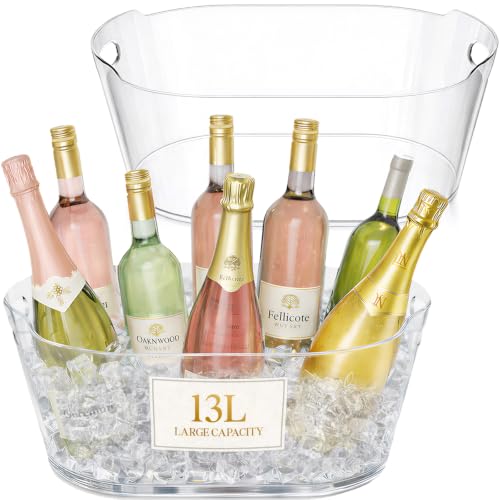
Lifewit 13L Party Ice Tubs (2-pack)
Two 13-liter plastic tubs - no insulation worth the name, and the only sensible way to ice forty cans for an afternoon.
Capacity
13 L each (published)
Quantity
2-pack
Material
BPA-free PET plastic (published)
Brand
Lifewit
Pros
13 liters each, so two of them hold enough ice and drinks for a real party
Plastic means light to carry full and unbreakable on a patio or a deck
A two-pack costs about what one mid-range metal bucket does
Shaped for bottles and cans standing up, which a round cocktail bucket is not
Cons
No meaningful insulation - this is a container, and the ice in it will melt at room temperature
No lid, so nothing slows the melt at all
Too big to live on a bar cart or a counter between parties
Clear plastic scratches and clouds, so it looks used quickly
Best for: Icing down bottles and cans, not keeping cocktail ice.
Skip this
The budget traps that look cheap and cost you twice. We'd skip these.
Single-wall metal ice buckets
One skin of steel conducts room heat straight into the ice and condenses the room's moisture on the outside, so you get a short-lived batch of ice and a wet ring on the bar top. Double-wall buckets start at about twenty dollars. There is no price argument for buying single wall.
Open ice buckets with no lid
A lid is half the insulation, because the biggest heat path into an open bucket is the warm air of the room circulating over the ice surface. It also stops the top layer melting and refreezing the batch into one solid block you then have to hit with the back of a spoon.
Buying a bucket instead of fixing the ice
A bucket slows melting; it does not improve the ice. If the cubes going in are small, cloudy and already half-wet from a freezer tray, they will melt faster than dense clear ones no matter what they are sitting in. Sort the ice first - the bucket is the second purchase.
Using the ice maker's own bin as overnight storage
A countertop ice maker's bin is insulated, not refrigerated, and the melt drains back to the reservoir to be made into ice again. Leaving a batch in there overnight gives you a fused block in the morning. Move each batch to the freezer or to a lidded bucket as it is made.
Why your ice maker's ice keeps melting
Because the bin is a cooler, not a freezer. Almost every countertop ice maker holds finished ice in an insulated basket above the water reservoir with no refrigeration on the storage side at all, and the meltwater drains back down to be frozen again. That is a sensible design — nothing is wasted — but it means ice made at six o'clock has been slowly melting and refreezing by eight, and what you lift out is a fused lump.
There are two fixes and they are not exclusive. The first is to move each batch into the freezer in a bag or a lidded container as the machine makes it, which costs nothing. The second is a lidded double-wall bucket on the bar, which is what you want at the moment you are actually pouring drinks. Our page on ice makers that keep ice frozen covers the machines with real freezer storage, and the undercounter ice makers are the built-in answer to the same problem.
What size ice bucket do you need?
Three quarts, or roughly 3 liters, is an evening for two or three people. Four quarts covers a dinner party of six without a refill. Beyond about seven quarts you have left the ice-bucket category and entered the party-tub one, where the job is icing bottles rather than serving cubes and the right product is plastic and cheap.
Capacity is also published in three different units across this category — quarts, liters and fluid ounces — which makes comparison harder than it should be. For reference, 3 liters is a little over 3 quarts, 100 fl oz is about 3 quarts, and 68 fl oz is about 2 quarts. We quote whichever unit the maker publishes and give the conversion rather than converting silently.
The strainer plate is the underrated feature
Ice in a bucket melts from the outside in, and the meltwater collects at the bottom, where it then sits against the remaining cubes and accelerates them. A strainer insert — a perforated plate that sits an inch off the floor of the bucket — lets that water drain away from the ice. The practical effect is that the last third of the batch is still usable cubes instead of a slush, and the drink you make at the end of the evening is not watered down before you pour it.
Only one pick on this page includes it, which is why the FrutPunch scores as high as it does despite being from an unknown brand. Strainer plates are also sold separately for a few dollars if the bucket you prefer does not have one.
Ice shape matters more than the bucket
A bucket slows melting. It cannot make bad ice good. Small, cloudy, half-wet cubes from a plastic freezer tray have a huge surface-area-to-volume ratio and a head start on melting, so they will turn to water in any bucket you put them in. A large dense clear cube or sphere has far less surface per unit of volume and melts slowly enough that a drink stays cold without becoming weak.
That is the whole argument for clear ice and for big formats, and it is cheap to act on: our ice ball mold and clear ice tray roundup covers the freezer route for under twenty dollars, and the clear ice makers cover the machines. If you are stirring or shaking drinks rather than pouring over ice, the mixing glass roundup explains why the ice decides the dilution more than the timing does.
Where the bucket sits on a home bar
On the top shelf, next to the jigger and the glasses, because it is the one thing you reach for on every drink. On a bar cart that is a crowded surface and a 3-quart bucket is about as large as fits — our guide to what to stock on a bar cart lays out the shelf-by-shelf plan. If the bar is a cabinet or a built-in, a 4-quart bucket on the counter next to the home bar ice maker is the normal arrangement, and the home bar equipment pillar covers the order to buy everything else in.
One practical note on surfaces: a single-wall or copper bucket will condense moisture from the room and leave a ring. If the bar top is wood, either buy a double-wall bucket or keep a tray under whatever you have. That is the entire argument against the copper pick, which is otherwise the best-looking thing on this page.
Our verdict
Buy the Oggi 4-quart: the right capacity, insulated construction, and an established barware brand behind the lid. Buy the FrutPunch 4L instead if you want the strainer plate and the tongs in the box for less money, and the ChefBee 3L if twenty dollars is the budget. Buy the Simple Modern for vacuum insulation at a sensible price, or the YETI Rambler if ice has to last an afternoon outdoors. The Kraftware and the Old Dutch copper bucket are bought for how they look, and the copper one costs you real insulation to get there. The Lifewit tubs are not ice buckets at all — they are the correct answer to a different question.
If the YETI is the one you are hesitating over
The YETI above is a pick on merit and it is also the most expensive thing on this page by a wide margin, which is why most people shopping for it end up comparing it with something cheaper. The honest answer depends on which of its three features you are buying: vacuum insulation is available far cheaper, hard-use outdoor build is not, and the badge is not. Our YETI Rambler Beverage Bucket alternatives page matches seven buckets against it on published insulation type, capacity, lid and included tools.
Frequently asked questions
Why does ice melt so fast in my ice maker?+
Because a countertop ice maker's bin is insulated but not refrigerated, and the meltwater drains back into the reservoir to be frozen again. The machine is working as designed - it makes ice, it does not store it cold. Move each batch into the freezer or into a lidded double-wall bucket as it is made, or buy a machine with real freezer storage.
Do insulated ice buckets actually work?+
Yes, and the jump from one wall to two is the big one. Two steel skins with an air gap between them cut the heat conducted into the ice sharply, and a sealed lid stops warm room air circulating over the surface. Vacuum insulation goes further by removing the air from the gap, which is why a vacuum-insulated bucket holds ice for an afternoon rather than an evening.
What size ice bucket do I need?+
About 3 quarts or 3 liters for two or three people for an evening, and 4 quarts for a dinner party of six. Above roughly 7 quarts you are buying a party tub for icing bottles and cans, which is a different product - usually plastic, usually cheap, and not insulated.
What is the strainer plate in an ice bucket for?+
It holds the ice an inch clear of the meltwater that collects at the bottom. Without one, the lowest cubes sit in water and melt much faster, so the last third of the batch is slush. With one, the water drains away and the ice stays usable - which also means the drink you pour at the end of the night is not diluted before it hits the glass.
Are copper ice buckets a bad idea?+
They are beautiful and they are poor insulators. Copper conducts heat extremely well, which is exactly the property you do not want around ice, and a copper bucket will also sweat on a wooden surface. Buy one because it matches your cart and your mugs, not because you expect ice to last in it - and keep a tray underneath.
Should an ice bucket have a lid?+
Yes. The lid is roughly half the insulation, because the main heat path into an open bucket is the room's warm air moving across the ice surface. A lid also stops the top layer melting and refreezing the batch into a single block that you then have to break apart with the back of a spoon.
Can I use an ice bucket as a wine chiller?+
A 3-quart bucket will take a single 750 ml bottle sitting in ice and water, which is how a wine bucket works - the water conducts the cold far better than ice alone. A taller, narrower dedicated wine bucket holds the bottle more securely and keeps the neck clear. For long-term storage at a serving temperature, a wine fridge is the right tool.
What ice lasts longest in an ice bucket?+
Large, dense, clear cubes or spheres. Melting happens at the surface, so a shape with less surface area per unit of volume lasts longer - a single 2-inch cube will outlast the same volume as small freezer-tray cubes by a wide margin. Clear ice is also denser than cloudy ice, which has trapped air and begins melting from inside.
Prices and availability shown here come from Amazon's live data and change often; we re-verify them regularly. Bar Bumper is an Amazon Associate and earns a commission on qualifying purchases at no extra cost to you. Read our full disclosure.