A silicone mold is the cheapest way to fix the worst ingredient in a home cocktail. Seven compared on published sphere and cube size, yield per freeze, and whether the clear-ice claim is a design or a hope.
Updated November 2026 · By Stephen V.
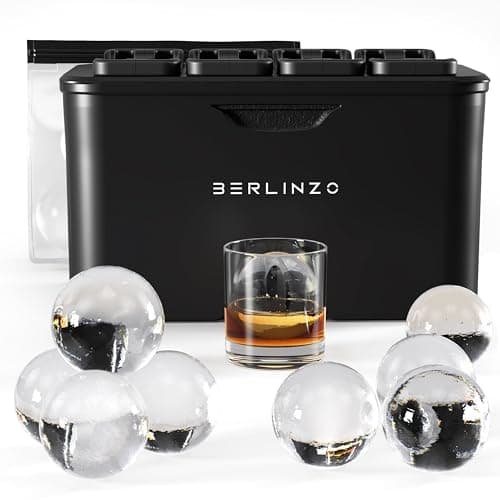
Buy the True Cubes clear ice cube maker if you want genuinely clear ice — it is an insulated directional-freezing mold that produces four 2-inch cubes, and the physics it uses is the only way to get clear ice in a domestic freezer. If you want spheres rather than cubes, the Berlinzo does the same trick in 2.4-inch balls. And if clarity is not the point and you just want ice that melts slowly, a plain silicone sphere mold like the Samuelworld six-sphere tray costs a fraction as much and gets you most of the benefit.
This page is about the molds, not the machines. An ice maker is a separate appliance that costs a hundred times as much; a tray goes in the freezer you already own. What a good mold buys you is one large, dense piece of ice instead of a handful of small wet ones — and because melt rate scales with surface area rather than volume, one 2-inch cube dilutes a drink several times slower than the equivalent volume of standard freezer cubes.
How we judged these
Three criteria, in order. The first one is the only thing that separates a $10 mold from a $40 one.
Does it use directional freezing, or just hold water in a shape? This is the whole clarity question. Water freezes from the outside in, pushing dissolved air and minerals ahead of the ice front until they are trapped in the middle — which is why a normal cube is cloudy in the center. A directional-freezing mold insulates every face except one, so the ice forms in a single direction and the air escapes into a reservoir at the back, leaving the usable part clear. A mold that does not do this will produce cloudy ice no matter what the listing photo shows. We say which route each pick takes.
Published size, and whether it fits your glass. A 2.5-inch sphere will not go into a 12 oz highball and is a tight fit in some rocks glasses. A 2-inch cube fits almost any rocks glass. The size is published on every pick here, and it is worth measuring the inside diameter of the glass you actually drink from before buying — this is the single most common reason one of these ends up in a drawer.
Yield per freeze, and how long the freeze takes. A directional mold typically needs 18-24 hours and produces a handful of pieces; a plain silicone tray freezes overnight and makes more. If you host, yield matters more than clarity, because four cubes is one drink for four people. We state the published count for each.
We have not frozen and photographed these side by side. The ranking is built from published sizes and yields, stated materials, whether the design is insulated for directional freezing, included lids and storage, and owner-review consensus reported as other people's experience — see how we pick. Prices are pulled live from Amazon with the date we checked them, and no price is written into the copy.
Why your freezer ice ruins drinks
Two reasons, and they compound. The first is size. Melt rate tracks surface area, and a given volume of water broken into many small cubes has far more surface area than the same water in one block. Small cubes therefore shed meltwater fast, which is why a drink built on freezer ice is noticeably watery by the time you are halfway down it. The second is what is in the ice: a standard freezer cube is cloudy because trapped air and dissolved minerals got pushed into the middle, and old ice in an open bin also absorbs whatever else is in the freezer, which is why a Negroni can taste faintly of last week's dinner.
A mold fixes the first problem outright for about ten dollars. Fixing the second needs either directional freezing or a machine. Both are covered below, and the honest summary is that size is most of the benefit and clarity is most of the cost. If you are going to buy one thing, buy a large mold and use filtered water.
The short answer
In a hurry? These are the picks we'd buy. Prices are live; tap a card below for the full reasoning.
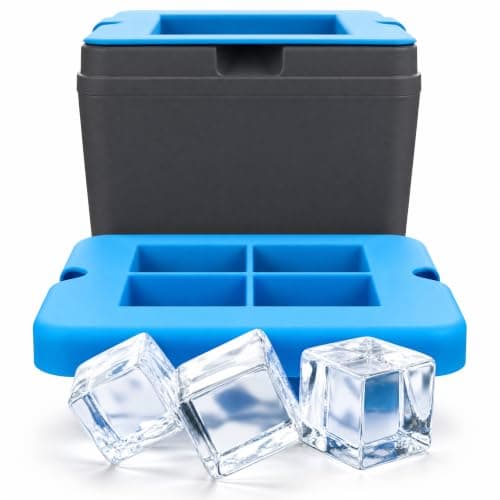
A directional-freezing mold that produces four genuinely clear 2-inch cubes per cycle — the design that actually works, at the size that fits a normal rocks glass.
Whiskey and stirred cocktails, where the ice sits in the glass and gets looked at
$37.9924% offPrice as of November 22, 2026·#addisclosure
5
Best cheap sphere tray
Samuelworld Large Ice Ball Maker with Lid (6 x 2.5-in spheres)
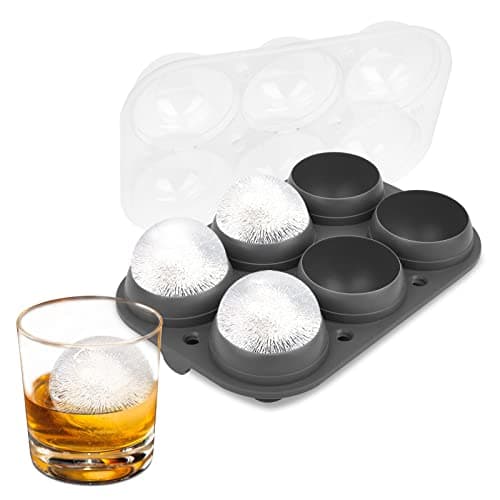
Six 2.5-inch spheres per freeze in a lidded food-grade silicone tray, for a small fraction of the clear-ice molds — most of the benefit for a tenth of the money.
Slow-melting ice for everyday drinks, where clarity is not the point
A directional-freezing mold that produces four genuinely clear 2-inch cubes per cycle — the design that actually works, at the size that fits a normal rocks glass.
Produces
4 cubes per freeze (published)
Cube size
2 x 2 x 2 in (published)
Method
Directional freezing, insulated body
Material
Silicone mold in an insulated shell
Pros
Directional freezing is the only domestic route to clear ice, and this is a purpose-built implementation of it
2-inch cubes fit a standard rocks glass, unlike the 2.5-inch spheres further down this page
Four cubes per cycle is enough for an evening of two or three drinks
Cubes rather than spheres, which stack in a bag and do not roll off a bar top
Cons
The cycle is long — a directional mold needs most of a day, so you cannot decide at 7pm to have clear ice at 8
Takes up a meaningful footprint in the freezer, and it has to sit level
Four cubes per freeze means hosting six people needs planning or a second mold
Roughly four times the price of a plain silicone tray for ice that is clearer but not colder
Best for: Whiskey and stirred cocktails, where the ice sits in the glass and gets looked at.
Samuelworld Large Ice Ball Maker with Lid (6 x 2.5-in spheres)
Six 2.5-inch spheres per freeze in a lidded food-grade silicone tray, for a small fraction of the clear-ice molds — most of the benefit for a tenth of the money.
Produces
6 spheres per freeze (published)
Sphere size
2.5 in (published)
Method
Plain silicone tray (not directional)
Lid
Yes
Pros
Six large spheres per overnight freeze, which beats every clear mold here on both yield and speed
Freezes overnight rather than over a day, so it keeps up with actual drinking
The lid keeps freezer smells out and lets you stack things on top
Cheap enough to own two and never run out of big ice
Cons
The ice will be cloudy in the middle — this is a plain tray, not a directional mold, and no listing photo changes that
2.5 inches is the biggest sphere here and will not fit a highball or a narrow rocks glass
Soft silicone trays flex when full, so getting one to the freezer without spilling takes care
Thin lids on this style of tray are the first part to warp
Best for: Slow-melting ice for everyday drinks, where clarity is not the point.
Ticent Ice Cube Trays, Sphere + Large Square (set of 2)
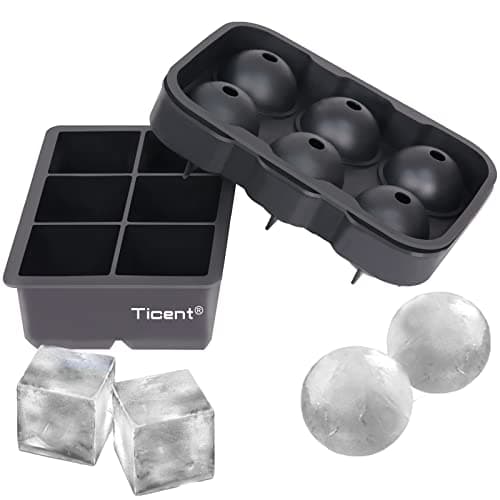
A two-tray set with one sphere mold and one large square mold, for under ten dollars — the cheapest way to test both shapes against your own glasses.
Format
Set of 2 trays — sphere + large square
Method
Plain silicone (not directional)
Material
BPA-free silicone (published)
Lids
Yes
Pros
Both shapes in one cheap purchase, which answers the sphere-versus-cube question with your own glasses
Cheapest pick on this page, and still large-format ice rather than standard cubes
Lidded, stackable and light enough to fit anywhere in a freezer
A sensible first purchase before committing to a $40 directional mold
Cons
Cloudy ice from both trays — there is no directional freezing here at all
The listing does not publish either the sphere diameter or the square dimension, so you are buying blind on size
Thin silicone and thin lids: this is a starter set, not a long-term tool
Two different shapes means two different fits, and one of them will probably go unused
Best for: Finding out which shape you actually like before spending real money.
Skip this
The budget traps that look cheap and cost you twice. We'd skip these.
Any plain tray whose listing promises crystal clear ice
If the mold is not insulated on five of its six faces, the water freezes inward from every side and the air has nowhere to go but the middle. That is physics, not quality control. A plain silicone sphere tray makes good slow-melting ice and cloudy ice, and the honest listings say so.
Aluminum ice presses, unless you already have clear ice
A press does not make clear ice — it melts a shape out of a block you already made. They cost more than every mold on this page combined, they need a freezer full of large blocks to feed them, and the result is a sphere you could have molded directly. Genuinely fun kit; terrible first purchase.
2.5-inch spheres for highball glasses
They do not fit, and a sphere wedged in the top of a Collins glass is worse than no ice at all because you cannot get mixer past it. Big spheres are for rocks glasses and short drinks. Measure the inside diameter of the glass you actually use.
Standard small-cube trays as your only ice
This is the problem the page exists to solve. Many small cubes have far more surface area than the same water in one block, so they dump meltwater into the drink fast. Keep a small tray for topping up a cooler, and use large-format ice in the glass.
How directional freezing actually works
Water freezes from the coldest surface inward. As the ice front advances it rejects whatever is dissolved in the water — air, minerals, chlorine — and pushes it ahead into the remaining liquid. In a normal tray, cold comes from all sides at once, so the impurities get driven to the center and trapped there. That cloudy core is not dirt; it is concentrated air and solids with nowhere left to go.
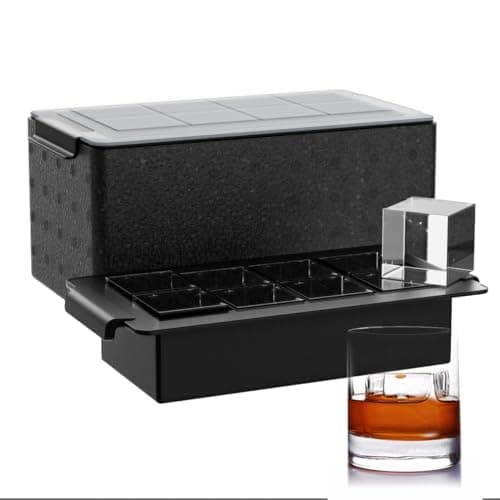
A directional mold insulates every face but one, usually the top. Cold enters from a single direction, the ice front moves one way through the mold, and the impurities are carried steadily ahead of it into a reservoir of water at the far end. You freeze, discard or trim off the last cloudy section, and the rest is optically clear. Nothing else achieves this in a home freezer — not boiling the water twice, not distilled water, not freezing slowly. Those help a little at the margins; the insulation is what does the work.
The practical cost is time and yield. A directional cycle needs most of a day because you are deliberately slowing the freeze to one axis, and you lose the cloudy end of every piece. That is the entire price difference between the clear molds and the plain trays on this page.
Spheres or cubes?
A sphere has the least surface area for a given volume of any shape, so it melts slowest — marginally. A 2-inch cube and a 2-inch sphere are close enough in practice that melt rate should not decide this. Three things that should:
Glass fit. Cubes drop into almost anything. A 2.5-inch sphere needs a wide rocks glass and will not go into a highball at all. This is the real constraint and it is the one people discover after buying.
Handling. Spheres roll off bar tops and out of tongs. Cubes stack in a storage bag and stay where you put them.
Look. A single clear sphere in a whiskey glass is the most striking piece of ice you can serve at home, and that is a perfectly good reason to buy one. Just buy it knowing that is what you are paying for.
Getting the most out of a mold
Use filtered water if you have it. It will not make a plain tray produce clear ice, but it removes the chlorine taste that a large slow-melting cube otherwise releases into the drink over twenty minutes.
Fill and carry the mold level, then set it on a flat shelf. A directional mold freezing at an angle produces a wedge with the cloudy section in the wrong place.
Leave a directional mold the full published time. Pulling it early is the most common reason people conclude clear ice does not work.
Demold by flexing the silicone gradually rather than twisting. A cracked sphere melts along the crack and splits in the glass.
Store finished ice in a sealed bag or box, not loose in the freezer bin. Large ice sits for days and absorbs odors; that is what makes old home ice taste stale.
Chill the glass before the ice goes in. A big cube dropped into a warm glass loses its outer layer immediately, which is both dilution and the start of a crack.
When a mold is not enough
A mold produces a handful of pieces a day. That is right for whiskey and stirred drinks, and it is nowhere near enough for a party, for anything built over a full glass of ice, or for a bar that serves highballs. Four 2-inch cubes do not fill one Collins glass properly, let alone four.
Above that volume you need a machine. Our home bar ice maker roundup covers the countertop units that keep up with hosting, the clear ice makers cover the machines that produce clear cubes rather than cloudy ones, and undercounter ice makers are the built-in option if the bar has a cabinet opening to spare. The useful combination for most home bars is a machine for volume and one mold for the drinks where the ice is on display.
One thing a mold does beat every countertop machine at: keeping ice. Most countertop ice makers have an insulated basket rather than a freezer, so the ice they make starts melting as soon as it lands — the complaint our ice maker that keeps ice frozen page exists to answer. A mold lives in an actual freezer, so its output keeps indefinitely.
What the ice goes into
Large-format ice earns its keep in short drinks where dilution is the enemy: whiskey over ice, an Old Fashioned, a Negroni. For those you want a heavy-bottomed rocks glass, which our whiskey glass roundup covers, and for whiskey poured neat a nosing glass and no ice at all. For long drinks, fill a highball glass with ordinary cubes instead — a full glass of small ice is correct there, because the ice is displacing mixer and holding the ratio.
And if you are measuring a drink carefully, the ice is part of the recipe: a cocktail stirred over dense clear ice picks up measurably less water than the same drink on wet freezer cubes. Our jigger roundup covers the other half of that arithmetic.
Our verdict
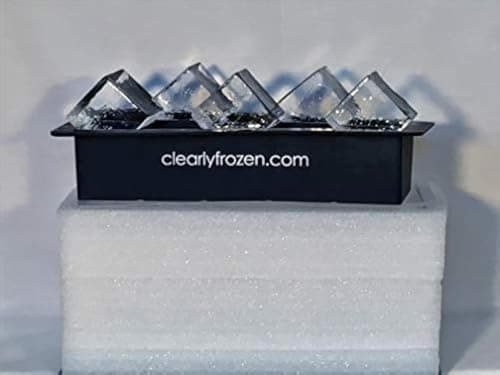
Buy the True Cubes mold if clear ice is the point — it is a real directional-freezing design producing 2-inch cubes that fit a normal glass. Buy the ClearlyFrozen tray instead if you host and need ten cubes rather than four, and the FDDBI tray if you want to test the clear-ice idea for the least money. If you do not care about clarity — and most drinks genuinely do not — the Samuelworld six-sphere tray is the best value on this page by a wide margin: six big slow-melting spheres overnight, for about a tenth of what the clear molds cost. Start there, and upgrade only if the cloudy centers bother you.
Where to keep the cubes once the mold has made them
A directional-freezing mold makes a handful of large clear pieces a day, which means you are storing them rather than using them immediately. In the freezer that is a bag or a container; on the bar during an evening it is a lidded double-wall bucket, because a big clear cube left in an open bowl starts giving back its advantage straight away. Our ice bucket roundup compares nine on insulation and on what is in the box.
Frequently asked questions
Do silicone ice ball molds make clear ice?+
Only if they are insulated for directional freezing. An ordinary silicone sphere tray freezes from every side at once, which drives dissolved air and minerals into the middle and leaves a cloudy core. A directional mold insulates all faces but one so the impurities get pushed ahead of the ice front into a reservoir. If the listing does not describe insulation or directional freezing, expect cloudy ice.
How do you make clear ice at home without a machine?+
Use a directional-freezing mold: an insulated body open on one face, so the water freezes in a single direction and the trapped air is carried into a sacrificial section you discard. Boiling the water, using distilled water or freezing slowly all help slightly at the margins, but the insulation is what actually produces clear ice.
What size ice ball should I buy?+
Measure the inside diameter of the glass you drink from first. A 2-inch cube fits almost any rocks glass. A 2.5-inch sphere needs a wide rocks glass and will not fit a highball or a Collins glass at all — this is the most common reason one of these ends up unused in a drawer.
Do big ice cubes really melt slower?+
Yes, and it is the main reason to buy a mold. Melt rate tracks surface area, and a given volume of water split into many small cubes has far more surface area than the same water as one block. One 2-inch cube therefore dilutes a drink several times slower than the equivalent volume of standard freezer ice.
How long does a clear ice mold take to freeze?+
Most need the better part of a day, typically 18-24 hours, because directional freezing deliberately slows the process to a single axis. Pulling the mold early is the usual reason people conclude clear ice does not work. A plain silicone sphere tray freezes overnight instead, which is why it keeps up better with actual drinking.
Is a mold or an ice maker the better buy?+
Depends entirely on volume. A mold makes a handful of large pieces a day for about ten dollars, which is right for whiskey and stirred cocktails. It is nowhere near enough for hosting or for long drinks built over a full glass of ice — four cubes will not fill one Collins glass. Above that you need a machine, and the useful setup is a machine for volume plus one mold for the drinks where the ice is on display.
Why does my homemade ice taste bad?+
Two causes. Tap water chlorine, which a large slow-melting cube releases into the drink over twenty minutes — use filtered water. And odor absorption: ice sitting loose in a freezer bin for days takes up whatever else is in there. Store finished large ice in a sealed bag or box rather than an open bin.
Do I need an ice press?+
No, and it is a poor first purchase. A press does not create clear ice — it melts a sphere out of a large clear block you already have to make, so it needs a freezer full of blocks to feed it and costs more than every mold on this page put together. Buy a directional mold that makes the shape you want directly.
Prices and availability shown here come from Amazon's live data and change often; we re-verify them regularly. Bar Bumper is an Amazon Associate and earns a commission on qualifying purchases at no extra cost to you. Read our full disclosure.