A bar cart is only mobile if its wheels are any good. Six rolling carts ranked on caster size and type, locks, handles and what they survive crossing a rug.
Updated October 2026 · By Stephen V.
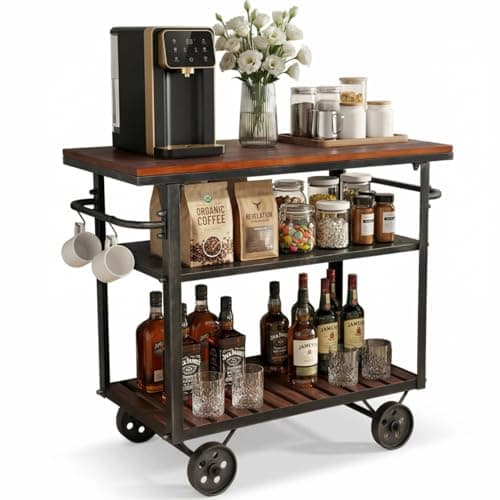
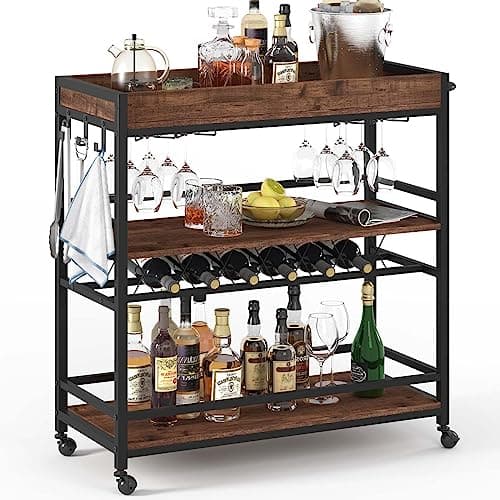
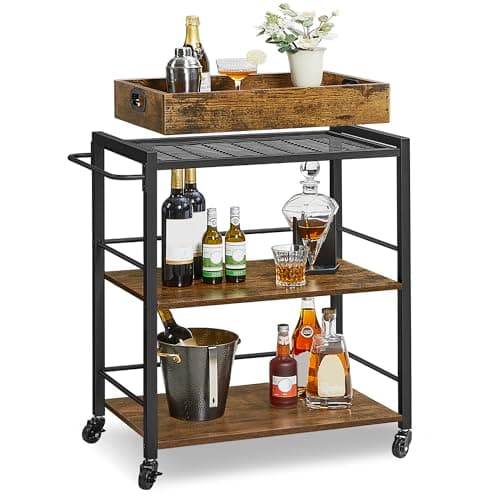
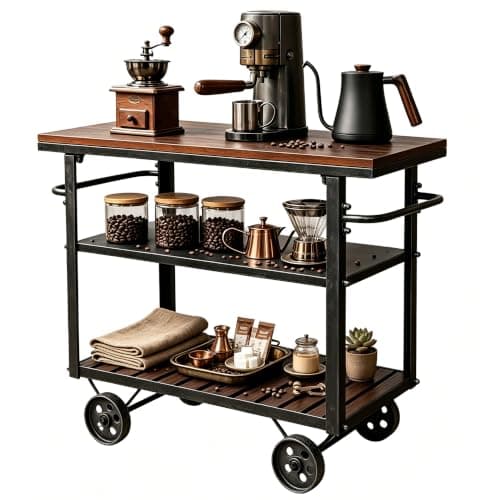
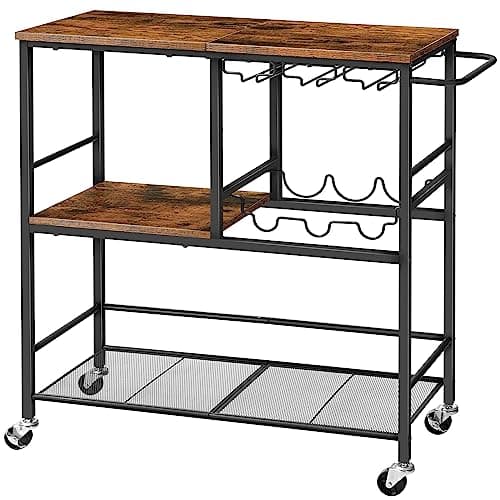
The best bar cart on wheels is the BOKKOLIK vintage rolling cart: a metal-and-wood industrial frame on real casters, built to be pushed loaded rather than nudged into place once and left. The BON AUGURE cart is the pick if you want a wine rack and a stemware holder on the same chassis, the VASAGLE is the value choice, and the LOKKHAN three-tier cart with its push handle is the one that doubles as a kitchen trolley.
Almost every bar cart has wheels, and that is exactly why this page exists: the wheels on most of them are an afterthought. Small hard plastic casters on a loaded cart dig into carpet, stall at a rug edge, and skate on a tile floor — and a cart that is awkward to move stops being moved, which defeats the whole point of buying one instead of a cabinet. The specifications that matter are caster diameter, whether the wheels are rubber or hard plastic, whether at least two of them lock, and whether there is anything to hold on to while you push.
Think about what a loaded cart weighs, too. A few bottles, a bucket of ice and a dozen glasses is 40 to 60 lb of top-heavy load sitting above small wheels. That is why rubber-tired casters of two inches or more roll so much better than the hard half-inch wheels on the cheapest carts, and why a cart with a handle is genuinely easier to steer than one you push by the frame. A locking caster matters too, since a cart that rolls away when someone leans on it is a spilled tray.
We have not loaded and pushed every cart here. The ranking is built from published caster and wheel specifications, frame material and load capacity, shelf dimensions and included racks, plus owner-review consensus reported as other people's experience — see how we pick. Prices come live from Amazon and carry the date we verified them. Our main bar cart roundup ranks the category on looks and storage rather than on mobility.
The short answer
In a hurry? These are the picks we'd buy. Prices are live; tap a card below for the full reasoning.
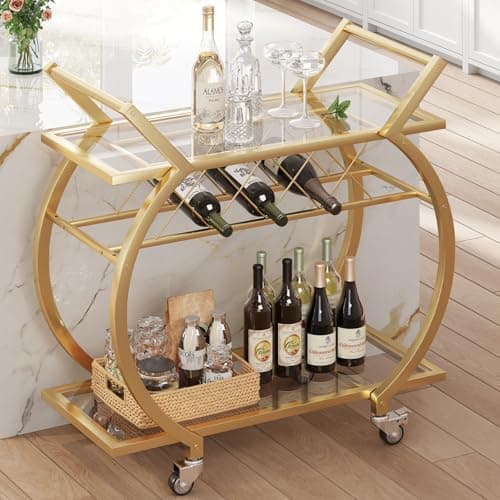
Gold frame, glass shelves, wheels that disappear visually — the cart to buy when it has to look like decor and still move for a party.
Shelves
Glass
Finish
Gold
Mobility
Wheels
Extras
Storage / wine section
Pros
The best-looking cart here, by a distance
Glass shelves wipe clean after a spill
Still genuinely mobile, unlike most decorative carts
Pairs with gold stemware racks and mirrored furniture
Cons
Glass shelves are heavier and less forgiving than wood
Decorative casters are small and prefer hard floors
Gold finish marks and shows fingerprints
Best for: A living room where the cart is on display.
Skip this
The budget traps that look cheap and cost you twice. We'd skip these.
A cart on hard plastic casters under an inch across
This is the specification that quietly ruins cheap carts. Tiny hard wheels concentrate the whole load onto four small contact points: on carpet they sink and stall, at a rug edge they stop dead, and on tile they skate and chatter. The cart still rolls beautifully in an empty showroom, which is why the problem only appears when it is loaded with bottles. Look for casters of about two inches with rubber or TPR tires, or plan on replacing the wheels — caster swaps are cheap and are the single best upgrade for an otherwise good cart.
A cart with no locking wheels, used on a hard floor
Four free-spinning casters on tile or polished wood make a cart that moves whenever anyone touches it, which is fine when you are pushing it and not fine when someone leans on the top shelf to open a bottle. At least two locking casters turns the cart into a stable surface when it is parked. If the cart you want has none, the cheap fixes are rubber wheel chocks or swapping two casters for locking ones — both are easier than replacing a tray of glasses.
How to choose (and what to skip)
Judge the casters before anything else
Look for two-inch or larger wheels with rubber or TPR tires, and at least two that lock. Larger soft wheels roll over rug edges, thresholds and carpet pile that stop small hard wheels dead. This single specification decides whether a bar cart is mobile furniture or a shelf that happens to have wheels, and it is the one most listings mention last.
Work out the route, not just the room
A cart is bought to travel: kitchen to living room, inside to a deck. Measure the narrowest doorway, note any thresholds and door saddles, and check the cart's width including the handle. A cart two inches too wide for the hallway it needs to cross is a cabinet. If the route includes a step, no cart will do it loaded — plan on carrying the tray and pushing the cart separately.
Match the surface to the load
Glass shelves look best and are heavier and less forgiving; wood takes a knock and absorbs a wet ring; metal mesh is the lightest and the least stable for a glass with a narrow base. For a cart that genuinely moves while loaded, wood or metal shelves with a raised lip or a gallery rail keep bottles from walking off at the first threshold.
Decide whether the bar lives on the cart
If the cart is the bar, buy one with a wine rack and a stemware holder so bottles and glasses travel with it. If the cart is a serving trolley that lives empty beside a cabinet, plain shelves hold more and look cleaner. Both are valid; buying the wrong one means either carrying bottles each time or owning racks you never fill.
Budget twenty minutes and a wrench for assembly
Nearly every cart in this price class arrives flat-packed, and the two things that decide whether it ends up solid are tightening the frame bolts in stages — snug everything, then tighten fully — and checking the casters are fully seated in their sockets. A wobbly cart is almost always an under-tightened frame rather than a bad design. Re-check the bolts after a month of use.
What makes a cart genuinely mobile
Four things, and the price tag predicts none of them. Caster diameter: two inches rolls over a rug edge, half an inch stops at it. Tire material: rubber and TPR grip and absorb floor texture, hard nylon transmits every grout line and skates on polished wood. Locks: two locking casters make a parked cart a stable surface. Something to push: a dedicated handle, or at least a frame upright you can grip, beats pushing a glass shelf. A cart with all four is mobile furniture. A cart with none is a trolley-shaped side table, and the reviews will say so.
Carpet, rugs and thresholds
This is where most carts are judged in real homes. On low-pile carpet, larger soft wheels are essential; small hard casters sink in and the cart has to be dragged. At a rug edge, the physics is simple — a wheel climbs an obstacle roughly a third of its diameter without complaint, so a two-inch wheel takes a half-inch rug edge and a tiny caster does not. At a door threshold, approach it straight rather than at an angle, and lift the leading end slightly if it is proud. If your house is all carpet and thresholds, buy the cart with the biggest wheels on this page and accept a plainer look.
Where a cart beats a cabinet, and where it does not
A cart wins when the drinks need to go to the people: a living room where guests sit, a deck in summer, a game room where nobody wants to leave the table. It also wins in a small home, because it stores against a wall and comes out when needed. A cabinet wins on capacity and tidiness — enclosed storage holds three or four times as much in the same floor area and hides the clutter. The answer for many bars is both: our home bar cabinet roundup covers the storage, with the cart carrying one evening's worth to where it is wanted.
Loading a rolling cart so nothing falls over
Bottles on the bottom shelf, glasses on the top: weight low keeps a tall narrow cart from tipping when a wheel catches. Keep bottles toward the center rather than the edges, and if the cart has a gallery rail or a lip, use that side for anything heavy. Ice goes in a bucket with a lid, not an open tray — the first threshold will teach you why. And push the cart from the end rather than the side, since a cart steered from its long edge wants to spin on its own casters.
Upgrading a cart you already own
Two cheap jobs transform most carts. Swap the casters for two-inch rubber-tired ones, with two locking: they are a few dollars each, they thread into the same sockets on nearly every cart, and the difference on carpet is dramatic. Then add a non-slip liner to the shelves — a sheet of rubber shelf liner cut to size stops glasses walking and absorbs the rattle. If the cart wobbles, tighten every frame bolt in stages before concluding it is badly made. Together that is under thirty dollars and an hour, which is a better deal than a new cart.
Frequently asked questions
What is the best bar cart on wheels?+
The BOKKOLIK vintage rolling cart — an industrial metal-and-wood frame on proper casters that still rolls easily when loaded. The BON AUGURE cart is the pick if you want an integrated wine rack and stemware holder, the VASAGLE is the value choice, and the LOKKHAN three-tier cart with a push handle is the easiest to steer through a doorway.
What size wheels should a bar cart have?+
About two inches in diameter, with rubber or TPR tires, and at least two that lock. A wheel climbs an obstacle roughly a third of its diameter, so a two-inch caster takes a half-inch rug edge while a tiny hard caster stops dead. Small hard wheels also sink into carpet and skate on polished floors once the cart is loaded.
Do bar carts roll on carpet?+
Only with large soft wheels. On low-pile carpet, two-inch rubber casters roll acceptably; the half-inch hard plastic wheels fitted to cheap carts sink in and have to be dragged. If your rooms are carpeted, prioritize caster size over looks — or plan to swap the casters, which costs a few dollars and is the single best upgrade for any cart.
Should a bar cart have locking wheels?+
Yes, on hard floors especially. Four free-spinning casters mean the cart moves whenever someone leans on it to open a bottle. Two locking casters turn a parked cart into a stable surface. If your cart has none, rubber chocks or swapping two casters for locking ones is far cheaper than replacing a tray of glassware.
How much weight can a bar cart hold?+
Most home bar carts are rated in the region of 20 to 40 lb per shelf, which is more than enough for bottles and glasses — a loaded cart is typically 40 to 60 lb in total. What fails first is rarely the shelf: it is an under-tightened frame or a small caster. Tighten the frame bolts in stages on assembly and re-check them after a month.
Where should you keep a bar cart?+
Against a wall out of the traffic route, within reach of where people sit, and off any rug edge it has to cross repeatedly. Keep bottles on the bottom shelf and glasses on top so the cart is not top-heavy when a wheel catches. If it lives on a deck in summer, bring it in — most carts are indoor furniture and the finish suffers outdoors.
Prices and availability shown here come from Amazon's live data and change often; we re-verify them regularly. Bar Bumper is an Amazon Associate and earns a commission on qualifying purchases at no extra cost to you. Read our full disclosure.