Written for a buyer who does not want to do this again. Six stools ranked on how they are joined, what they are made of and which parts can be replaced.
Updated October 2026 · By Stephen V.
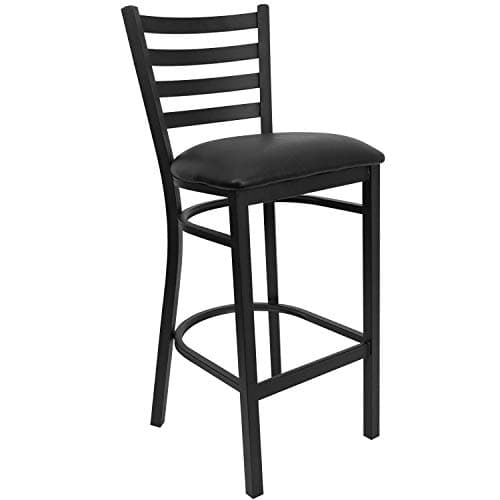
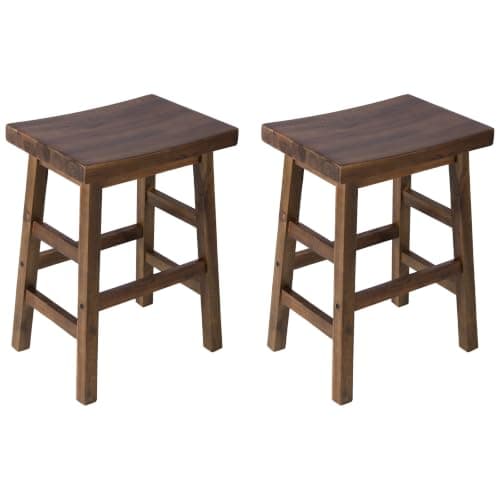
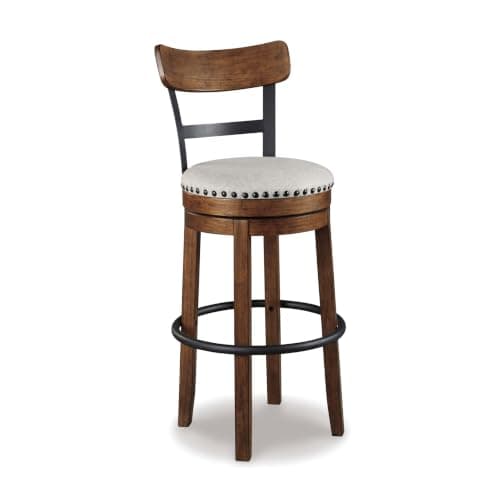
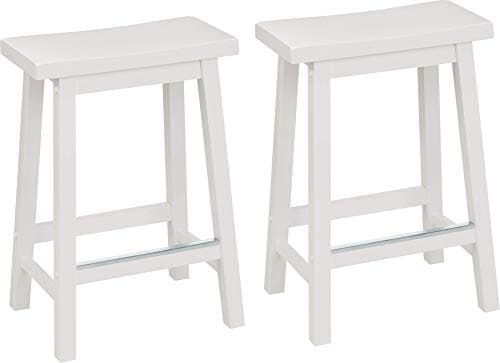
The best quality bar stools are Flash Furniture's Hercules commercial barstools: welded metal frames with replaceable upholstered seats, specified for restaurant use, which is a far harder brief than any home stool has to meet. If you want wood rather than metal, the Alaterre Durango solid-wood stools are the furniture-grade choice; the Ashley Valebeck is the pick from a conventional furniture brand; and the Amazon Basics solid wood saddle stool is the value route to a stool with no joints to loosen.
Quality in a bar stool is not about upholstery or finish. It is about how the thing is joined, because that is where stools fail. A welded steel frame has no joints to work loose. A mortise-and-tenon or dowelled hardwood stool has joints that are glued and mechanically interlocked. A stool bolted together through a thin seat pan has joints that rely entirely on the bolt staying tight and the board around it staying intact — and that is the construction behind nearly every stool that gets wobbly in a year.
Three more things separate a ten-year stool from a two-year one. A published weight capacity, because a manufacturer willing to commit to 300 or 400 lb has designed for it. Replaceable parts — commercial stools have swappable seat pads and glides, which is why restaurant furniture stays in service for decades. And no unnecessary mechanisms: every gas lift and swivel is a moving part at the point of highest load, which is why the plainest stool in a range is usually the one that outlives the rest.
We have not load-tested these stools. The ranking is built from published construction and materials, frame joinery, stated weight capacity, parts availability and owner-review consensus reported as other people's experience — see how we pick. Prices come live from Amazon and carry the date we verified them. Brands sold only through dealers are not listed, because we do not publish prices we cannot verify.
The short answer
In a hurry? These are the picks we'd buy. Prices are live; tap a card below for the full reasoning.
$198.9922% offPrice as of October 13, 2026·#addisclosure
Quick picks
#
Product
Best for
Score
Price
1
Best quality bar stool overall
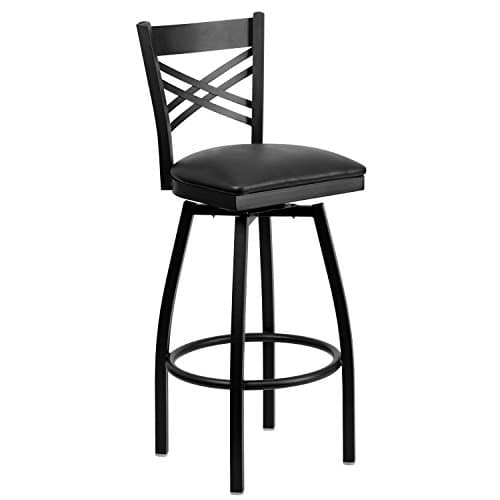
Flash Furniture Hercules Ladder-Back Commercial Metal Barstool
A welded commercial restaurant barstool with a replaceable upholstered seat — designed for constant public use, which is the toughest specification available to a home buyer.
$137.4927% offPrice as of October 13, 2026·#addisclosure
Flash Furniture Hercules Ladder-Back Commercial Metal Barstool
A welded commercial restaurant barstool with a replaceable upholstered seat — designed for constant public use, which is the toughest specification available to a home buyer.
Grade
Commercial restaurant
Frame
Welded metal, ladder back
Height
Bar height
Seat
Upholstered, replaceable
Pros
Welded frame has no bolted joints to work loose
Specified for commercial use, meaning hundreds of different adults a week
Replaceable seat pads and glides, as standard in commercial furniture
Hercules is Flash Furniture's heavy-duty line rather than a marketing word
Cons
Sold singly, so a four-seat bar is four orders
Commercial styling is plainer than home furniture
No swivel, which some buyers want at a bar
Best for: A bar that will be sat on by everyone, for years.
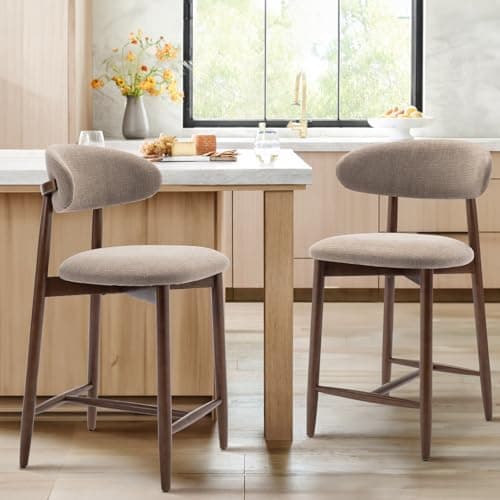
COLAMY Mid-Century Counter Height Bar Stools with Back (Set of 2)
Mid-century counter stools with a shaped upholstered back — the pick when the stool has to be comfortable and look designed rather than specified.
Height class
Counter height
Back
Shaped, upholstered
Style
Mid-century modern
Quantity
Set of 2
Pros
A properly shaped back, which is rare at this price
Upholstered seat is comfortable for a long sit
Sold as a pair in a matched finish
Styling suits a kitchen island as well as a bar
Cons
Upholstery cannot be swapped the way a commercial seat pad can
Bolted construction, so expect to re-tighten fixings
Fabric seats in a bar will eventually meet a drink
Best for: Comfort and a shaped back, without a commercial look.
Skip this
The budget traps that look cheap and cost you twice. We'd skip these.
Gas-lift stools, if longevity is the point
The adjustable office-chair arrangement is the least durable common design in bar seating. The whole load goes through one gas cylinder into a small-diameter hub, and the two failure modes — the seat sinking slowly under weight, or dropping suddenly — are both the cylinder rather than the frame. Cylinders can sometimes be replaced, but on consumer stools they are rarely sold as parts. If you want height adjustment in something built to last, look for a screw-lift mechanism on a wide base; if you want the longest-lived stool, buy four legs with a cross brace and no moving parts at all.
Veneered particle board sold as wood
Read the material field rather than the photograph. A wood-look stool with a particle board or MDF core behaves nothing like solid wood: the bolt holes in a board seat are the specific point that loosens and then splits, and once a board cracks there is no repair — you cannot re-glue a crumbling edge the way you can re-glue a timber joint. Listings that say solid wood, hardwood or a named species are telling you something; listings that say wood finish or engineered wood are telling you something different. Both exist at similar prices, which is the reason to read.
How to choose (and what to skip)
Buy welded metal or solid jointed wood
Those are the two constructions that last. A welded frame has no bolted joints to loosen; a solid timber stool has joints that can be re-glued when they eventually move. Bolted assemblies through a board seat are the construction behind most wobbly stools, and the failure is the board around the bolt rather than the bolt itself — which cannot be fixed.
Treat a published capacity as evidence of design intent
Most stool listings publish no weight capacity at all. One that states 300, 400 or 500 lb has committed to a figure, which means someone specified the frame for it. Commercial-grade stools often quote a grade rather than a number, which is equally good evidence. Silence in this category is not reassuring — it usually means nobody tested anything.
Prefer fewer mechanisms
Every swivel, gas lift and folding hinge is a moving part located exactly where the load is highest. Swivels are worth it if you want them and are reasonably reliable in a quality stool; gas lifts are the weakest common design. The plainest stool in any range — four splayed legs, a cross brace or footrest ring, no adjustment — is normally the one that is still in service in ten years.
Ask what can be replaced
This is what makes restaurant furniture last decades: seat pads unbolt and swap, glides pull out and push in, and both are stocked as parts. A stool with a replaceable seat can be reupholstered when the vinyl splits rather than thrown away. A stool with a molded one-piece seat cannot. Check the feet too — replaceable glides are a few dollars and are the first thing to fail under load.
Get the height right or none of it matters
Seat height should be 10 to 12 inches below the underside of the counter: 24 to 26 inches for a 36-inch kitchen counter, 29 to 32 inches for a 42-inch bar top. A beautifully built stool at the wrong height is unused furniture. Our <a href="/guides/bar-stool-height-guide">bar stool height guide</a> covers the arithmetic including the in-between counters builders seem to favor.
How bar stools actually fail
In rough order of frequency. Bolted joints working loose, which is a maintenance issue on every bolted stool and the reason welded frames last longer. Seat pans cracking where a thin board or plastic pan is bolted to a frame — this is the one that ends a stool's life, because there is nothing to repair. Gas cylinders sinking or letting go on pedestal stools. Foot caps splitting, which starts a rock that works every other joint loose faster. Notice that three of the four are joints and fixings rather than materials: buy the design with the fewest joints, then tighten the ones it has twice a year.
Why commercial stools are the quality answer
A restaurant stool is specified to be sat on by hundreds of different adults a week for years, which is a far harsher brief than a home stool ever meets. That shows up in the construction: welded rather than bolted frames, thicker-gauge tube, replaceable seat pads, and glides designed to be swapped. Commercial lines like Flash Furniture's Hercules often do not publish a consumer-style capacity figure because they are specified by grade instead — but a stool built to live in a bar is a stronger object than a home stool with a bold number on the box. If you want a published figure as well, our heavy-duty bar stool page covers the 400 and 500 lb-rated stools.
Wood, metal or upholstered
Solid wood can be refinished and re-glued, looks better as it ages, and needs its fixings checked periodically. Welded metal is the most durable structure available and the least forgiving to sit on without a pad. Upholstered is the most comfortable and the shortest-lived surface, because fabric meets drinks and vinyl eventually splits — unless the pad is replaceable, which is exactly why commercial stools are upholstered and still last. The quality combination, if you can live with the look, is a welded metal frame with a replaceable upholstered pad: durable structure, comfortable surface, renewable wear part.
What a quality stool costs
Commercial restaurant stools are typically sold singly in the region of a hundred dollars or so each, which is more than a flat-pack pair and less than a furniture-store stool — and they are the best value in this entire category if you can accept the plainer look. Solid wood pairs from real furniture makers sit a step above that. The arithmetic worth doing: a $60 stool replaced three times in ten years costs more than a $110 stool that is reupholstered once, and you spend three weekends assembling things instead of none. That is the whole buy-it-for-life argument, and in this category it genuinely holds.
Twenty minutes of maintenance a year
Tighten every fixing twice a year on any bolted or wooden stool — this is the single highest-value thing you can do, because loose joints destroy stools from the inside. Replace split foot caps promptly, since a rocking stool works its joints loose several times faster. Wipe upholstery rather than letting a spill soak in, and treat a vinyl split as a reason to reupholster rather than to replace. Re-glue wooden joints at the first sign of movement, while the joint still fits. None of that takes long, and together it is the difference between a decade and two years.
Frequently asked questions
What are the best quality bar stools?+
Flash Furniture's Hercules commercial barstools: welded metal frames with replaceable upholstered seats, specified for restaurant use. For wood, the Alaterre Durango solid-wood pair is the furniture-grade choice; the Ashley Valebeck is the pick if you want a back and swivel from a conventional furniture brand, and the Amazon Basics solid wood saddle stool is the value option.
What makes a bar stool high quality?+
How it is joined, first: a welded metal frame has no bolted joints to loosen, and solid jointed wood can be re-glued. Then a published weight capacity or a commercial grade, replaceable parts like seat pads and glides, and as few mechanisms as possible — every gas lift and swivel is a moving part at the highest-load point.
Are commercial bar stools better than home ones?+
Generally yes. A restaurant stool is specified for hundreds of different adults a week for years, which shows up as welded rather than bolted frames, thicker tube, and replaceable seats and glides. Commercial lines often quote a grade rather than a consumer capacity figure, but the construction is the evidence — and the price is often lower than furniture-store stools.
Are solid wood bar stools worth it?+
Yes, if the listing genuinely says solid wood or a named hardwood. Solid timber can be refinished and its joints re-glued, so it is repairable in a way veneered particle board is not: in a board seat, the bolt hole is what loosens and then splits, and a crumbling board edge cannot be fixed. Expect to re-tighten fixings a couple of times a year.
How long should bar stools last?+
A welded commercial stool, a decade or more with the seat pad replaced once. A solid wood stool, similar if the fixings are kept tight. A bolted stool with a board seat often starts to wobble within a year or two and the seat pan eventually cracks. The difference is mostly construction, with maintenance a close second.
Should you avoid gas-lift bar stools?+
If longevity is your priority, yes. The entire load passes through one gas cylinder into a small hub, and the failure modes are the seat sinking under weight or dropping suddenly. Consumer stools rarely offer the cylinder as a spare part. If you need adjustment, look for a screw-lift on a wide base; otherwise four legs with a cross brace is the longest-lived design.
Prices and availability shown here come from Amazon's live data and change often; we re-verify them regularly. Bar Bumper is an Amazon Associate and earns a commission on qualifying purchases at no extra cost to you. Read our full disclosure.