A backless stool buys floor space and sightlines and gives up lumbar support. Six ranked on published seat height, seat shape, how far they tuck under an overhang and what they are rated to hold.
Updated November 2026 · By Stephen V.
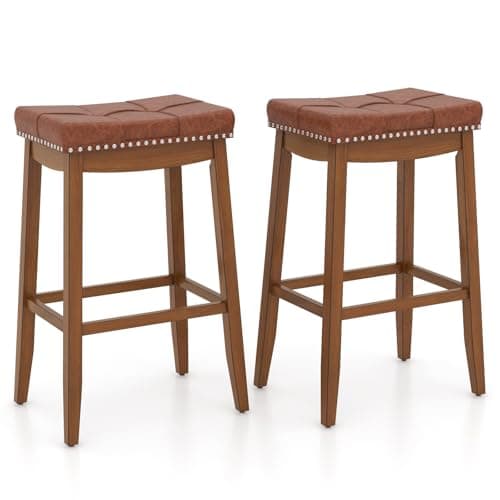
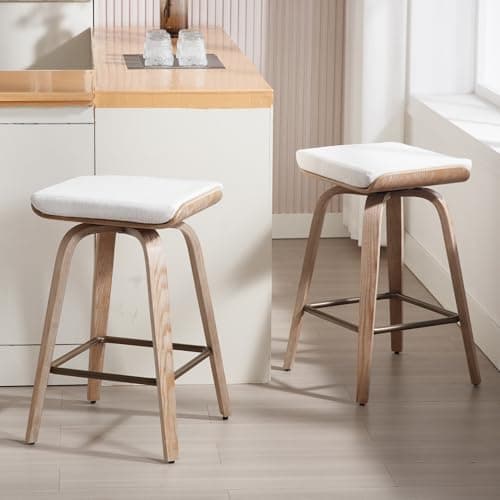
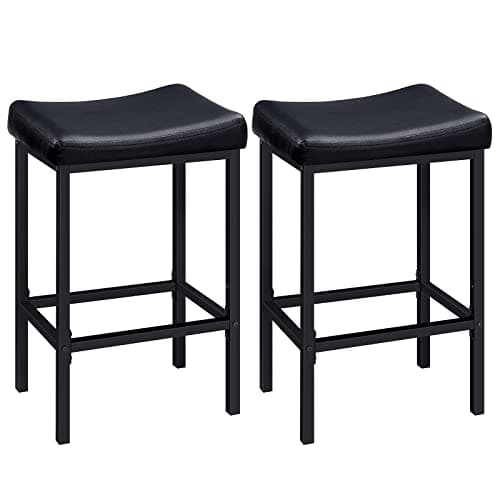
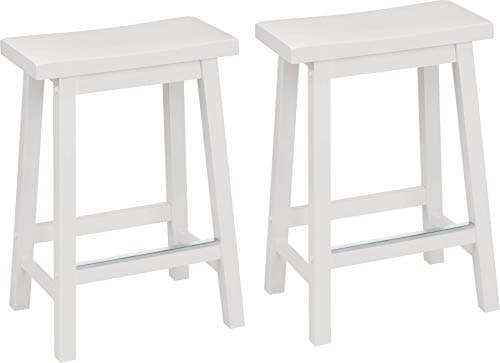
Buy the GIANTEX 29-inch saddle-seat stools. They are the only pick here with a published bar-height seat and a contoured saddle seat, which is the combination that makes a backless stool comfortable for more than twenty minutes - and they arrive as a pair, which is how bar seating is actually bought. If your counter is the standard 36 inches rather than a 42-inch bar, the BESTANO 26-inch swivel is the pick, because a swivel removes the one real annoyance of a backless stool: having to shuffle the whole stool to get out of it. The budget pick is the HOOBRO 24.8-inch saddle stools, the cheapest pair here that still publishes a seat height and a saddle seat shape.
Before anything else: backless is a fit decision, not a style decision. A backless stool slides completely under a counter overhang, so the room reads as open and nobody walks into a chair back. That is the whole case for it, and it is a strong one in a galley kitchen or a basement bar with a tight walkway. The cost is real too - there is nothing behind you, so your lower back does the work, and most people are honest about wanting a backrest after an hour. If your seating gets used for long sittings rather than drinks and a hand of cards, our bar stools with backs roundup is the right page.
How we judged these
Four criteria, and the first one settles more returns than the other three put together.
Published seat height, against your counter height. The rule is a 10 to 12 inch gap between the top of the seat and the underside of the counter. A 36-inch kitchen counter wants a 24 to 26 inch seat; a 42-inch bar wants a 29 to 30 inch seat. Those two numbers are not interchangeable and the single most common bar stool mistake is buying bar height for a counter. Every pick here publishes a seat height.
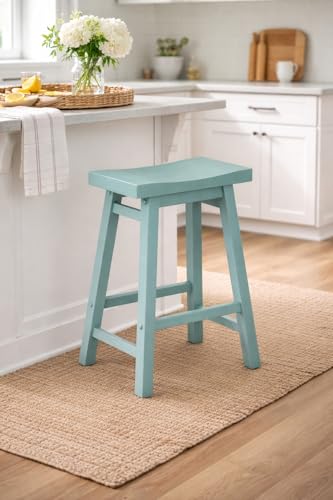
Seat shape. A flat disc seat is the cheapest thing to manufacture and the least comfortable thing to sit on without a back, because there is nothing stopping you sliding forward. A saddle seat - dished in the middle, lipped at the front - holds you in place and does the job a backrest would otherwise do. Four of the six picks here publish a saddle or contoured seat and they are ranked above the flat ones for that reason.
Tuck-under footprint. The reason to go backless is that the stool disappears. A square or round seat with a tight frame tucks fully under a 12-inch overhang; a wide saddle on a splayed four-leg frame does not. We note the published seat diameter or width on every pick, because that is the number that decides whether the stool actually clears.
Published weight rating and footrest. A backless stool puts all the load through the seat and the frame with no back to brace it, so the weight rating matters more here than on a chair-style stool. A footrest is not a detail either: with no back, your feet are the thing that stops you sliding, and a stool without a ring or bar at the right height is a stool you perch on.
We have not sat on all six of these for a month, and nobody can tell you from a listing whether a particular saddle fits your particular frame. The ranking is built from published seat heights, published seat dimensions and shapes, published weight ratings, frame and seat materials, assembly reports and owner-review consensus reported as other people's experience — see how we pick. Prices come live from Amazon with the date we verified them. For the height question on its own, our bar stool height guide has the measurements and the overhang math.
Backless or with a back? The honest version
Go backless when the stools live at a counter people pass behind, when you want the room to look bigger than it is, or when the stools need to disappear between uses. Go backless when you are seating four along a run that would only take three chairs. Do not go backless because it is cheaper - at this end of the market a backless stool and a low-back stool cost about the same, and the saving is not the reason to choose one.
Go with a back when the stools are where people eat dinner, when anyone using them has a bad back, or when the counter is the only seating in the room. A mixed answer is also allowed and often correct: two backed stools where people sit longest and two backless ones at the end of the run that mostly get used for ten minutes at a time.
The short answer
In a hurry? These are the picks we'd buy. Prices are live; tap a card below for the full reasoning.
$59.9925% offPrice as of November 22, 2026·#addisclosure
Quick picks
#
Product
Best for
Score
Price
1
Best overall
GIANTEX 29-in Saddle-Seat Bar Stools (set of 2)
A published 29-inch saddle seat on a four-leg frame, sold as a pair - bar height and a contoured seat together, which is the combination most backless stools skip.
A 41 to 43 inch home bar that needs two seats and open sightlines
A published 29-inch saddle seat on a four-leg frame, sold as a pair - bar height and a contoured seat together, which is the combination most backless stools skip.
Seat height
29 in (published)
Seat
Saddle, contoured (published)
Sold as
Set of 2
Frame
Four-leg with footrest
Pros
29 inches is true bar height, which suits a 41 to 43 inch bar top - the height most basement bars and kitchen peninsulas with a raised run are actually built to
A saddle seat is the single thing that makes a backless stool comfortable, because the dish and the front lip stop you sliding forward off it
Sold as a pair at a price most makers charge for one stool, which matters because bar seating is bought in twos and fours
A footrest on the frame means your feet have somewhere to brace, which is what a backrest would otherwise do
Cons
A wide saddle on a splayed frame does not tuck as far under a shallow overhang as a round flat seat does - measure your overhang before ordering
Four-leg frames rock on an uneven basement floor unless the glides are adjustable, and the listing does not say that they are
No swivel, so getting out means moving the stool rather than turning on it
At bar height only - if your counter is the standard 36 inches this is the wrong stool and you want the BESTANO or HOOBRO instead
Best for: A 41 to 43 inch home bar that needs two seats and open sightlines.
PayLessHere 30-in Stackable Backless Bar Stools (set of 4)
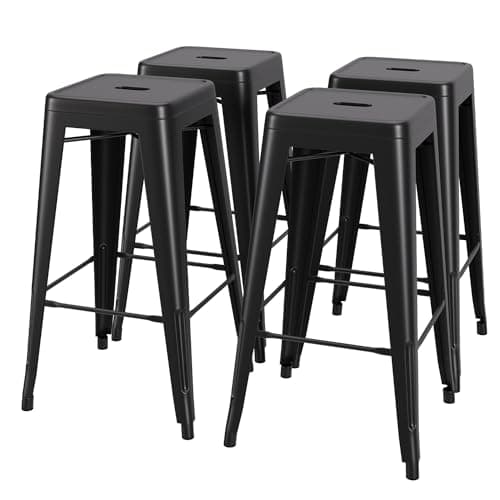
Four stackable backless stools at a published 30-inch bar height - the only pick here that solves storage as well as seating.
Seat height
30 in (published)
Sold as
Set of 4
Stackable
Yes (published)
Back
None (backless)
Pros
Four stools in one order, which is the cheapest route to a full bar run on this page by a wide margin
Stackable is the feature nobody shops for and everybody uses - four stools become one column when the room is needed for something else
30 inches is bar height, correct for a 42-inch bar top
Backless and stackable together means the stools can genuinely vanish, which is the best version of the backless argument
Cons
Stackable means a flat seat, and a flat seat without a back is the least comfortable combination here for a long sitting
Metal-on-metal stacking scuffs the finish over time; the scuffs land on the seat top where they show
The listing does not publish a weight rating
Bar height only, and a set of four is an expensive mistake if your counter turns out to be 36 inches
Best for: A long bar run that needs four stools and has nowhere to store them.
Skip this
The budget traps that look cheap and cost you twice. We'd skip these.
Bar-height backless stools for a 36-inch counter
This is the mistake, and it is the reason most bar stools get returned. A 29 or 30 inch seat under a 36-inch counter leaves about six inches of thigh clearance, which means your knees hit the cabinet and the stool is unusable. Measure from the floor to the underside of the counter, subtract 10 to 12 inches, and buy that seat height. Our <a href="/guides/bar-stool-height-guide">bar stool height guide</a> has the three standard counter heights and the seat height each one needs.
Flat disc seats where people sit for an hour
A flat seat with no back gives you nothing to brace against in either direction, so you slide forward and then sit up straight again every few minutes without noticing. It is fine for ten minutes with a drink and genuinely tiring over dinner. If the seats are where people eat, buy a saddle seat at minimum and a <a href="/bar-furniture/best-bar-stools-with-backs">stool with a back</a> if you are honest about it.
Backless stools with no footrest
With no back, your feet are the thing that holds your position. A stool whose only foot support is the floor is a stool you perch on with your legs dangling, which is exactly as uncomfortable as it sounds for anyone under about six feet. Every pick on this page has a footrest or a ring except where noted, and the one that does not is scored down for it.
What seat height do backless bar stools need?
Leave 10 to 12 inches between the seat top and the underside of the counter. That gap is the whole measurement, and it works out at three standard pairings: a 36-inch kitchen counter takes a 24 to 26 inch seat, a 42-inch bar top takes a 29 to 30 inch seat, and a 30-inch table takes an 18 to 20 inch seat. Measure to the underside, not the top, because a thick butcher block or a stone slab with a bullnose eats an inch and a half of that clearance before anyone sits down.
Backless makes this stricter rather than looser. On a stool with a back you can sit slightly further forward to buy knee room; on a backless stool you are already sitting as far forward as the seat allows. If you are between two sizes, go lower. A seat an inch too low is slightly odd; a seat an inch too high jams your thighs into the counter and the stool stops being used.
Saddle, round or square: what the seat shape actually does
A saddle seat is dished through the middle and lipped at the front, usually in shaped wood. The dish stops lateral slide and the lip stops forward slide, which together do most of what a backrest does for a short sitting. It is the shape to buy if comfort matters at all, and it is why four of the six picks here are saddles.
A round flat seat is the best tucker-under: no corners, tight frame, disappears under a 10-inch overhang. It is the right choice when the stools have to be invisible between uses. A square seat splits the difference and lines up neatly along a straight run, but the corners catch shins in a narrow walkway - which is usually the reason people went backless in the first place.
How many stools fit your bar
Allow 26 to 30 inches of counter run per stool, measured center to center. That means a 6-foot bar seats three comfortably and four if everyone is friendly; an 8-foot run takes four. Backless helps here, because there is no chair back widening the footprint and no need to leave walk-behind room for one - this is the most practical argument for the whole category and it is worth a seat on most runs.
Also check the overhang. A counter that overhangs its base by 12 inches gives you proper knee room; 10 inches is the minimum; under 8 inches and a backless stool will not pull in far enough to be comfortable regardless of its height. If your bar has no overhang at all, you are looking for a bar table and stool set instead, where the two are designed together.
A run of stools is the part of a home bar people touch most, and the part most often bought last and in a hurry. Two things are worth settling first: the seat height against your counter, and whether the same money is better spent on a matching set than on stools bought one at a time. If the stools are going around a steel-framed bar or a basement with a hard floor, the metal bar stools roundup covers the frames that survive it.
Frequently asked questions
Are backless bar stools comfortable?+
For short sittings, yes - and a saddle seat makes a large difference, because the dish and the front lip stop you sliding and do part of what a backrest does. For long sittings, honestly no: with nothing behind you, your lower back carries the load and most people want a backrest after about an hour. Buy backless where people sit for twenty minutes, buy a back where people eat dinner.
What height backless bar stool do I need?+
Leave 10 to 12 inches between the seat top and the underside of the counter. A standard 36-inch kitchen counter needs a 24 to 26 inch seat; a 41 to 43 inch bar top needs a 29 to 30 inch seat; a 30-inch table needs an 18 to 20 inch seat. Measure to the underside of the counter, because a thick stone or butcher-block top eats clearance. If you are between sizes, go lower.
Do backless bar stools save space?+
Yes, and it is the main reason to buy them. A backless stool slides fully under a counter with a 10-inch or deeper overhang, so it adds no footprint when nobody is sitting on it and nobody has to walk around a chair back. On a 6-foot run that is often the difference between three seats and four.
Is a saddle seat better than a flat seat?+
On a backless stool, clearly yes. A saddle seat is dished in the middle and lipped at the front, which stops both lateral and forward slide - the two things a backrest would otherwise handle. A flat disc seat is cheaper to make and tucks a little further under an overhang, which is the only argument for it.
How many bar stools fit a 6-foot bar?+
Three comfortably, four at a squeeze. Allow 26 to 30 inches of counter run per stool measured center to center. Backless stools sit at the tighter end of that range because there is no chair back widening the footprint, which is why a backless run will often take one more seat than a backed one on the same counter.
Should I buy swivel or fixed backless stools?+
Swivel if the stools are at a counter people use all day, because turning to get out is much easier than shoving a stool back with the backs of your knees when there is no back to grab. Fixed if the stools mostly get moved around the room, since a fixed stool has one fewer mechanism to loosen and will outlast a swivel of the same price.
Prices and availability shown here come from Amazon's live data and change often; we re-verify them regularly. Bar Bumper is an Amazon Associate and earns a commission on qualifying purchases at no extra cost to you. Read our full disclosure.