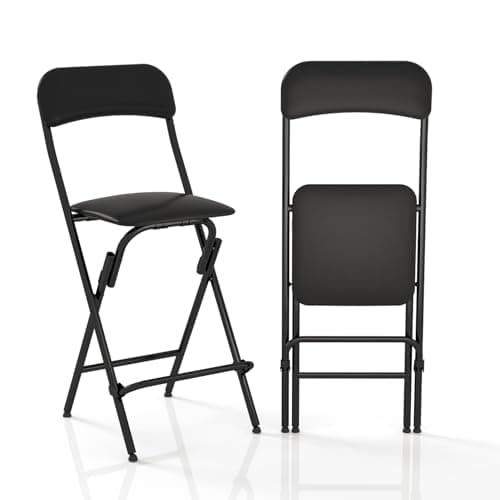
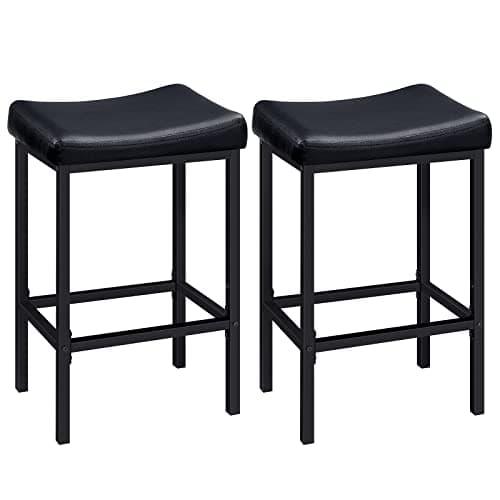
Written for an apartment kitchen where the stools have to disappear. Six counter stools ranked on tuck-under clearance, seat footprint and whether they fold.
Updated October 2026 · By Stephen V.
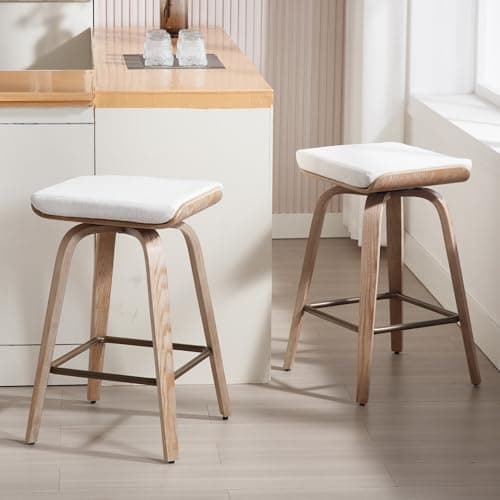
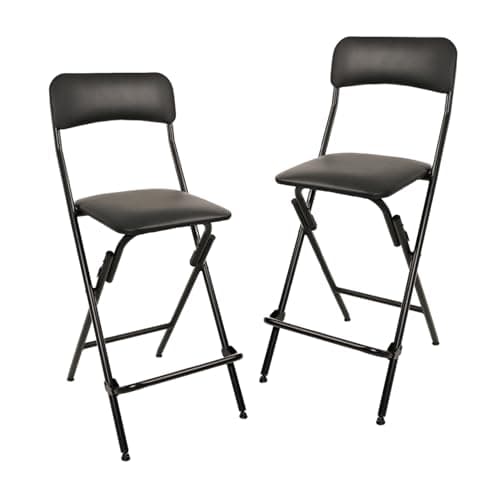
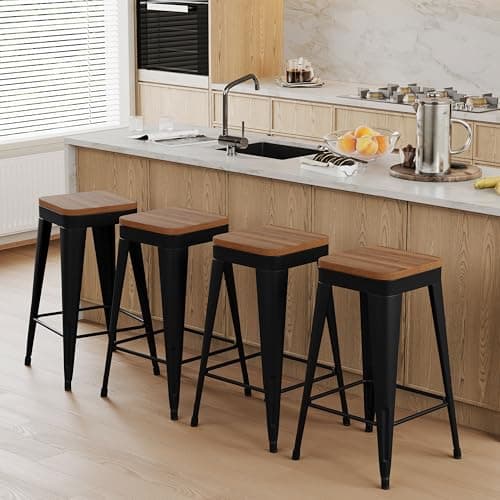
The best bar stools for a small space are the BESTANO 26-inch backless swivels: no back to stop them sliding fully under a counter, a compact wood seat, and a swivel so nobody has to shuffle the stool to get out. If the stools need to vanish completely between meals, the Amazon Basics folding stool is the one that stores flat in a closet; the Vellorise compact pair is the cheapest sensible small pair; and the POINTANT four-pack is how you seat a whole island in a tiny kitchen.
There is one rule that matters more than any other here: a stool with a back cannot tuck fully under a counter. The back stops against the countertop edge, so the stool sits proud by four to eight inches — and in a galley kitchen or a studio, those inches are the walkway. A backless stool slides until the seat meets the counter and disappears from the room entirely. That single difference is why this page is dominated by backless and folding stools, when nearly every other bar stool list is dominated by stools with backs.
The second rule is the one people get wrong at checkout: seat height is 10 to 12 inches below the underside of the counter. A 36-inch kitchen counter wants a 24 to 26-inch counter stool; a 42-inch bar top wants a 29 to 32-inch bar stool. In a small kitchen the island is almost always 36 inches, so counter height is almost always the answer — and a 30-inch bar stool bought by mistake is unusable, not merely tall. Our bar stool height guide has the full arithmetic including the awkward in-between counters.
We have not sat on every stool here. The ranking is built from published seat heights and dimensions, back and footrest design, folding and stacking capability, stated weight capacity and owner-review consensus reported as other people's experience — see how we pick. Prices come live from Amazon and carry the date we verified them.
The short answer
In a hurry? These are the picks we'd buy. Prices are live; tap a card below for the full reasoning.
$59.9915% offPrice as of October 13, 2026·#addisclosure
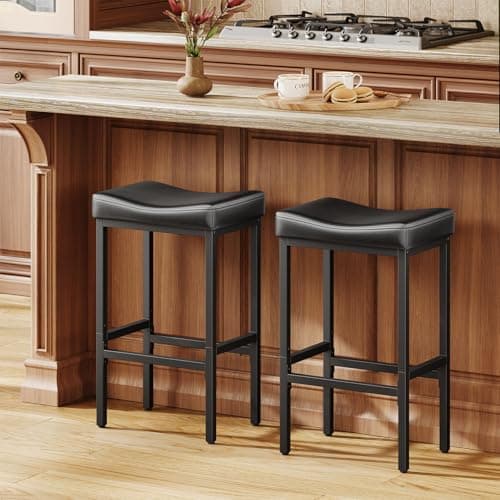
HOOBRO 24.8-in Saddle-Seat Counter Stools (set of 2)
A pair of 24.8-inch curved saddle stools with footrests — shallow seats that need less overhang than a flat round seat to tuck away.
Set
2 stools
Seat height
24.8 in
Seat
Curved saddle
Footrest
Yes
Pros
Saddle shape is more comfortable than a flat seat for a perch
Footrest included, which backless stools often skip
Shallow seat suits a counter with a small overhang
Wood seat and metal frame look deliberate rather than utilitarian
Cons
A saddle seat is shaped for one sitting position
No swivel, so you shuffle the stool to get out
Slightly taller than 24 inches — check your counter
Best for: A narrow counter overhang.
Skip this
The budget traps that look cheap and cost you twice. We'd skip these.
Stools with arms, in any small kitchen
Arms are the single worst feature for a tight space, and they fail twice. They stop the stool sliding under the counter — the arms hit the countertop edge before the seat gets close — and they widen the stool by three or four inches each side, so two stools need the space of three. They are genuinely more comfortable, which is why they sell; just not here. If comfort is the priority and space is not, our <a href="/bar-furniture/most-comfortable-bar-stools">most comfortable bar stools</a> page is the right list.
Gas-lift adjustable stools bought to solve an unknown counter height
The appeal is obvious: one stool fits any counter. In practice the adjustment range is often narrow, the lowest setting is frequently still too high for a 36-inch counter, and the gas cylinder is the part most likely to sink under weight or fail within a few years. Measure the underside of your counter and buy a fixed-height stool 10 to 12 inches below it — that is a two-minute job with a tape measure and it eliminates the whole problem.
How to choose (and what to skip)
Measure the counter, then subtract 10 to 12 inches
Measure to the underside of the countertop, not the top surface, and subtract 10 to 12 inches for seat height. A 36-inch kitchen island needs a 24 to 26-inch counter stool; a 42-inch bar top needs 29 to 32 inches. In small kitchens the island is almost always 36 inches, so counter height is almost always the answer — and a bar-height stool bought by mistake cannot be used at all.
Choose backless if the stools must tuck away
A back stops the stool four to eight inches proud of the counter, which in a galley kitchen is the walkway. Backless stools slide until the seat meets the counter edge and vanish. Accept the trade: a backless stool is a perch, comfortable for a coffee or a quick meal and tiring for a two-hour dinner. If meals are long, consider a folding stool with a back instead.
Check the overhang before choosing seat shape
Most islands overhang by 10 to 12 inches, which is enough for a stool to tuck under. If yours overhangs less, a shallow saddle or a small round seat tucks further than a wide flat one. Measure the overhang from the cabinet face to the counter edge, then compare it with the seat depth — this is the measurement that decides whether a stool genuinely disappears or just mostly does.
Allow 26 to 30 inches of counter per stool
Small-space buyers routinely try to fit three stools where two belong, and the result is elbows. Allow 26 to 30 inches of counter width per person, measured center to center. Two comfortable stools at a small island beat three cramped ones, and if you need occasional extra seating, one folding stool in a closet is a better answer than a permanent third.
Think about weight and floor protection
In a small kitchen the stools get moved constantly, so light ones win: metal and wood frames beat upholstered pedestals for everyday use. Add felt or rubber pads to the feet straight away, because dragging metal feet across vinyl or laminate is how small kitchens get scarred. Pads also quiet the scrape, which matters more in a studio than in a basement bar.
The tuck-under test
Before buying, do this with a tape measure. Measure the counter overhang — cabinet face to counter edge, usually 10 to 12 inches on an island. Measure the seat depth of the stool you are considering. If the seat is shallower than the overhang and there is no back or arms in the way, the stool disappears. If the stool has a back, add four to eight inches of permanent protrusion to your walkway and decide whether the room can afford it. In a kitchen with a 36-inch walkway, which is common in apartments, it usually cannot — and that is the whole case for backless.
Backless, folding, or narrow: choosing a format
Backless is the default for small spaces: cheapest, fully tuckable, and fine for everyday use. Folding is for rooms where even a tucked stool is too much — a studio where the island is also the desk, or a kitchen that doubles as a hallway. Narrow fixed stools with backs make sense only where the island has a deep overhang and the walkway is generous, which usually means the room was not that small to begin with. One hybrid worth considering: two backless stools for daily use plus a single folding stool in a closet for the occasional third guest.
Comfort you can still get in a small stool
A perch does not have to be unpleasant. Three features do most of the work. A footrest matters more than people expect: at counter height your feet do not quite rest flat, and a ring or bar takes real pressure off the backs of the thighs. A saddle or lightly dished seat holds you in position without the width of a bucket seat. And a swivel removes the most annoying part of a tucked stool — getting out without dragging it backward into a narrow walkway. None of those add footprint, which is why they are the features to pay for here.
Apartment-specific problems
Three that come up constantly. Noise: hard feet on a hard floor carry straight to the neighbor below, so felt pads are not optional in a rental. Marks: a dragged stool leaves lines on vinyl plank, and deposits come out of your pocket — pads again. Doorways and stairs: check the assembled stool fits the route into the apartment, which is a real problem for four-packs in older buildings with tight stairwells. And if the island is a rental fixture, measure it rather than assuming standard heights; apartment islands are often non-standard, which is exactly how people end up with unusable stools.
If the island itself is the problem
Sometimes the answer is not smaller stools but a different piece of furniture. A narrow bar table with two stools turns a corner into a dining spot and seats two in less floor area than a dining table, which our bar table and stools set page covers. A bar cart adds serving surface without permanent footprint. And in a small home bar rather than a kitchen, a compact home bar cabinet often beats extra seating, because it holds the bottles and glasses that otherwise occupy the counter the stools are pulled up to. Home bar ideas covers the small-room layouts.
Frequently asked questions
What are the best bar stools for small spaces?+
The BESTANO 26-inch backless swivels: no back means they tuck fully under a counter, and the swivel makes getting out easy in a narrow walkway. If the stools must disappear completely, the Amazon Basics folding stool stores flat; the Vellorise compact pair is the budget option, and the POINTANT four-pack seats a whole island cheaply.
Should bar stools for a small kitchen have backs?+
Usually not. A back stops the stool four to eight inches proud of the counter, and in a galley kitchen or an apartment those inches are the walkway. Backless stools slide until the seat meets the counter edge and vanish from the room. The trade is comfort: a backless stool is a perch, fine for everyday meals and tiring for long dinners.
What height bar stool do I need for a small kitchen island?+
Measure to the underside of the counter and subtract 10 to 12 inches. Small kitchen islands are almost always 36 inches tall, which means a 24 to 26-inch counter stool. A 30-inch bar stool is for a 42-inch bar top and is genuinely unusable at a kitchen island — this is the most common ordering mistake in the category.
How many bar stools fit at a small island?+
Allow 26 to 30 inches of counter width per stool, measured center to center. Most small islands take two comfortably. Trying to fit three where two belong produces elbow contact and nobody uses the middle seat. If you occasionally need a third, keep one folding stool in a closet rather than buying a permanent third.
Do folding bar stools work in an apartment?+
They are the best answer when even a tucked stool is too much — a studio where the island doubles as a desk, or a kitchen that is also a hallway. Expect slightly less rigidity than a fixed stool, and look for a published weight capacity: the Amazon Basics folding stool states 300 lb, which many folding stools do not.
How do you stop bar stools scratching an apartment floor?+
Fit felt pads on wood or laminate and rubber pads on vinyl plank, straight out of the box rather than after the first mark. In a small kitchen the stools get moved several times a day, which is what causes the damage. Pads also cut the scraping noise that carries to the apartment below, which matters in a rental.
Prices and availability shown here come from Amazon's live data and change often; we re-verify them regularly. Bar Bumper is an Amazon Associate and earns a commission on qualifying purchases at no extra cost to you. Read our full disclosure.