A back is the difference between a stool people perch on and a stool people stay on. It also costs you about 8 inches of walkway, permanently.
Updated October 2026 · By Stephen V.
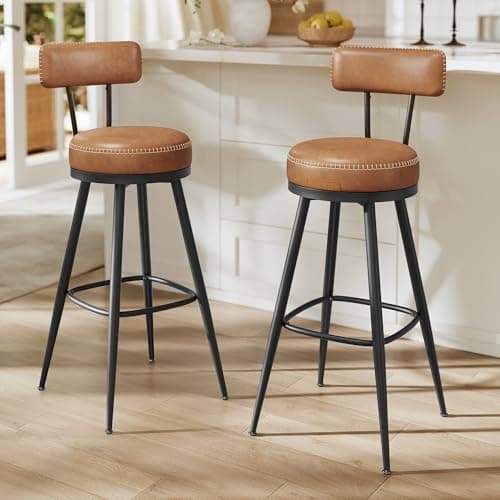
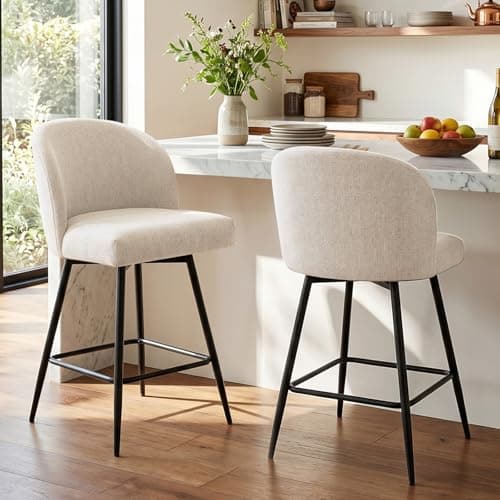
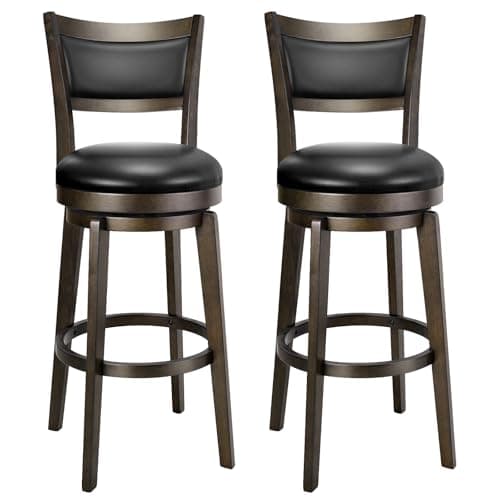
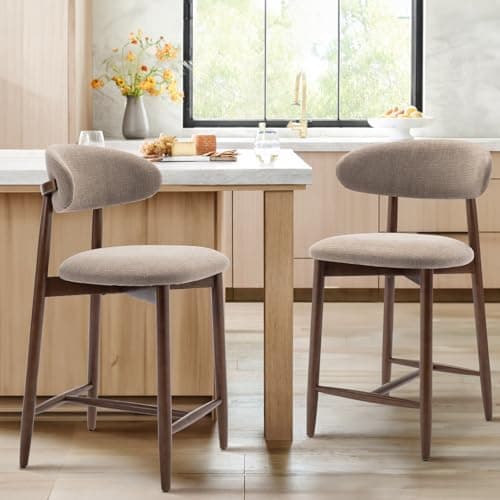
The VASAGLE 30-inch swivel pair is the best bar stool with a back for a raised bar top, and the VATROS swivel counter-height pair is the one to buy for a kitchen island. Both have the combination that actually matters — a back, a swivel and a footrest — at the two seat heights that cover almost every home. The PrimeZone pair is the comfort upgrade, the COLAMY mid-century pair is the one bought for how it looks in a room, the GRUSIGN chenille pair adds arms, and the Ashley Valebeck is sold singly for a bar that needs an odd number.
The case for a back is simple and worth stating plainly: nobody sits on a backless stool for two hours. If the stools at your bar are where people eat, play cards, watch a game or talk for an evening, a back is not a style choice, it is the feature that decides whether the bar gets used. The case against is equally concrete — a stool with a back cannot tuck fully under a counter, so it stands roughly 8 inches further into the room all the time, not just when somebody is sitting on it.
That trade-off, plus the seat-height formula, is the whole decision. Measure floor to the underside of your counter and subtract 10 to 12 inches: a 34 to 36-inch counter takes a 24 to 26-inch seat, a 40 to 42-inch bar takes 29 to 31. Then decide whether the walkway can afford the back.
We have not sat on these stools. The ranking draws on published seat heights, back heights and shapes, swivel and footrest provision, materials and assembly notes, plus owner-review consensus reported as other people's experience — see how we pick. Prices come live from Amazon with the date we verified them.
The short answer
In a hurry? These are the picks we'd buy. Prices are live; tap a card below for the full reasoning.
$149.9924% offPrice as of October 7, 2026·#addisclosure
2
Best counter height with a back
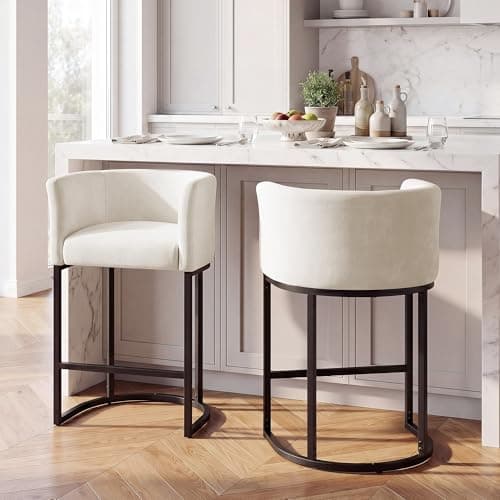
VATROS Swivel Counter Height Bar Stools with Backs (Set of 2)
An upholstered counter-height pair with a back, a full 360-degree swivel and a metal footrest — the complete feature set at the height most kitchens need.
$179.9926% offPrice as of October 7, 2026·#addisclosure
VATROS Swivel Counter Height Bar Stools with Backs (Set of 2)
An upholstered counter-height pair with a back, a full 360-degree swivel and a metal footrest — the complete feature set at the height most kitchens need.
Height class
Counter height
Suits top
34-36 in
Back
Yes
Swivel
360 degrees
Footrest
Metal ring
Quantity
Set of 2
Pros
Back, swivel and footrest together, which is uncommon at counter height
Correct seat height for the most common surface in a house
Also sold in sets of 3 and 4, so the bar can be extended with matching stools
Upholstered seat is comfortable enough to eat at
Cons
Too low for a raised 40 to 42-inch bar
Upholstery needs more care than vinyl at a bar where drinks spill
Does not tuck under the counter
Best for: A standard 34 to 36-inch kitchen island.
$198.9947% offPrice as of October 7, 2026·#addisclosure
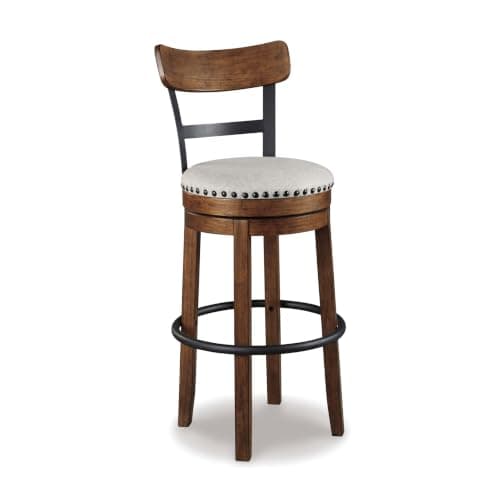
Signature Design by Ashley Valebeck 30-in Swivel Bar Stool with Back
A 30-inch swivel stool with a back sold as one rather than a pair — the answer when you need three seats, or one more.
Seat height
30 in (bar height)
Back
Yes
Swivel
Yes
Quantity
Single
Pros
Sold singly, so you can seat a 6 to 7-foot bar with exactly three stools
Back and swivel both included at bar height
A known furniture brand rather than an anonymous listing
Cons
Costs more per seat than any pair here
Bar height only
Buying three singly means three separate deliveries
Best for: Adding one seat, or a bar that needs an odd number.
Skip this
The budget traps that look cheap and cost you twice. We'd skip these.
Stools with backs in a walkway under about 36 inches
A stool with a back stands roughly 8 inches further into the room than a backless one, permanently, because it cannot tuck under the counter. In a galley kitchen or a narrow basement bar that is the difference between walking past and turning sideways. Measure the walkway with a stool-sized box before you buy.
Decorative low backs on a stool meant for long sitting
A 6-inch back that stops below the lumbar curve looks like a back in photographs and supports nothing. If the point of buying a back is that people stay, the back needs to reach the middle of the shoulder blade. Check the stated back height, not the silhouette.
Tall stools with a back but no footrest
On any stool over about 26 inches, feet that cannot reach the floor need somewhere to rest or the stool is uncomfortable inside twenty minutes regardless of how good the back is. A back without a footrest solves half the problem and people still stand up.
How to choose (and what to skip)
Full back, mid back or low back
A full back reaches the shoulder blade and is what lets someone sit through a meal or a game. A mid back stops at the lower ribs and is a reasonable compromise in a room where the stools need to look light. A low back below the lumbar curve is decoration — it will not keep anyone at the bar longer than a backless stool would. The stated back height in the specification tells you which you are buying; the photograph often does not.
Count the floor space the back costs you
A backless stool pushes fully under a counter and disappears. A stool with a back does not, so it occupies about 8 inches of walkway all the time. Multiply that by the number of stools along the run and decide honestly whether the room can carry it. In a tight space, two stools with backs beat three without; in a walkway, the reverse is true.
Swivel is worth more on a stool with a back
Getting off a backless stool is a sideways step. Getting off a stool with a back means either turning or pulling the whole stool out, and the back is in the way. A swivel seat removes that entirely, which is why back-plus-swivel is the combination worth paying for rather than either on its own.
Check the arm clearance if the stool has arms
Arms are the most supportive option here and the easiest to get wrong. Measure from the floor to the lowest point under your counter — an apron, a support rail, a cabinet frame — and compare it to the stated arm height. If the arms do not clear it, the stool cannot pull in and you have bought a chair that sits two feet from the bar.
Seat material at a bar, not a dining table
Faux leather and vinyl wipe clean and are the practical choice where drinks get spilled; they crack at the front edge of the seat eventually. Woven fabric and chenille are more comfortable and absorb everything. Solid wood lasts indefinitely and is the least comfortable. At a working bar the back is where a spilled drink runs down, so an upholstered back is a real maintenance commitment.
What a back actually does
It lets someone relax their core. On a backless stool the sitter holds their own torso up, which is fine for the ten minutes it takes to drink something and tiring after twenty. That is the entire reason people describe a bar as "somewhere you stand near" rather than somewhere you sit: the seating decided it.
Where the back reaches matters as much as whether there is one. A back that stops below the lumbar curve supports nothing — the sitter's lower back is still unsupported and they still shift about. A back that reaches the shoulder blade changes how long the stool stays comfortable by hours, not minutes. Low decorative backs on handsome stools are the commonest trap in this category.
The floor-space arithmetic
A stool pulled out from a bar occupies roughly 2 feet of depth, and someone sitting on it closer to 3. A backless stool gives all of that back when nobody is sitting on it, because it pushes flush under the counter. A stool with a back keeps about 8 inches of it forever.
This is the same arithmetic that governs everything in a home bar — the game room table you can walk around, the cart that does not block a doorway. If the room is tight and the stools are mostly used standing, go backless and spend the money on the bar itself. If the stools are the seating, buy backs and accept the 8 inches.
Counter height or bar height, with a back
Both exist and the listing title is unreliable, because "bar stool with back" is used for a 24-inch seat and a 30-inch seat alike. The stated seat height is the only thing to read. A 34 to 36-inch kitchen island takes a 24 to 26-inch seat; a raised 40 to 42-inch bar top takes 29 to 31 inches. Measure to the underside of your counter, because a thick butcher-block top can cost two inches of legroom and move you a whole size.
Backs are more common at bar height than counter height, which is the right way round — the taller the stool, the more a sitter needs something behind them. At counter height a back is closer to a dining-chair feature, and stools like the COLAMY and GRUSIGN pairs above are really dining chairs on tall legs. That is a compliment if the island is where people eat. The full height table is in our bar stool vs counter height guide.
How many stools with backs fit
Allow 26 to 30 inches of bar edge per stool, and widen that toward 30 if the stools have arms. A 72-inch bar seats three stools with backs comfortably; four touch at the shoulder. Because a back makes each stool harder to get out of, over-seating a bar with backed stools is worse than over-seating it with backless ones — the inside sitter genuinely cannot leave without the person beside them moving, unless every stool swivels.
If you need four or more matching stools with backs, buy them as one set rather than as pairs: our bar stool sets page covers sets of 4, 3 and 2 and the width each needs. And if the bar itself is not built yet, a bar table and stools set removes the height question entirely.
Frequently asked questions
Should bar stools have backs?+
If people will sit for more than about twenty minutes, yes — a back is what lets someone relax their torso, and without one they shift and then stand up. If the room is narrow and the stools need to tuck fully under the counter, buy backless: a stool with a back stands roughly 8 inches further into the walkway permanently.
What is the best bar stool with a back?+
For a raised 40 to 42-inch bar top, the VASAGLE 30-inch swivel pair — a full back, a swivel and the correct seat height. For a 34 to 36-inch kitchen island, the VATROS swivel counter-height pair, which adds a metal footrest and is also sold in sets of 3 and 4 so the bar can be extended with matching stools.
How tall should the back on a bar stool be?+
High enough to reach the middle of the shoulder blade if the stools are the main seating. A back that stops below the lumbar curve looks like a back in photographs and supports nothing. Read the stated back height rather than judging from the silhouette, because low decorative backs are common on otherwise good stools.
Do bar stools with backs still tuck under the counter?+
Not fully. The back stops the seat going all the way in, so the stool stands about 8 inches further out than a backless one — all the time, not just in use. Multiply that by the number of stools and measure the walkway before buying; in a galley kitchen it is the deciding factor.
Are swivel bar stools with backs better than fixed ones?+
At a bar with more than two seats, considerably. Getting off a backed stool means turning or pulling the stool out, and the back is in the way — a swivel removes that completely and lets the inside sitter leave without anyone moving. The bearing is one more part that can wear, which is a fair trade.
Prices and availability shown here come from Amazon's live data and change often; we re-verify them regularly. Bar Bumper is an Amazon Associate and earns a commission on qualifying purchases at no extra cost to you. Read our full disclosure.