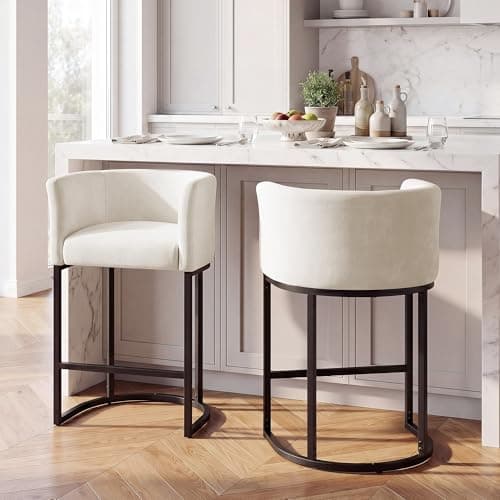
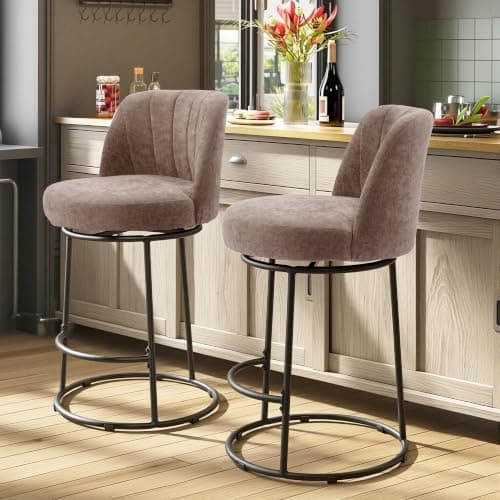
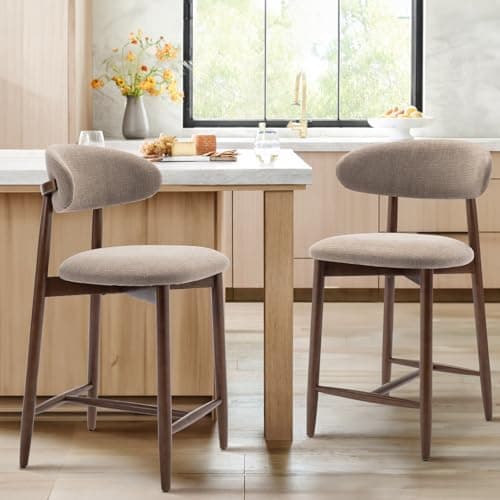
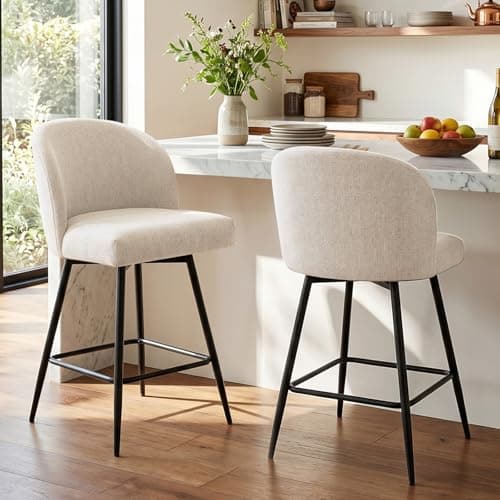
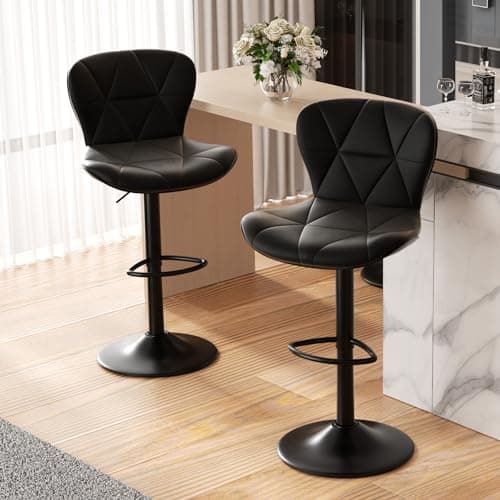
Comfort at a bar comes from four features, not from thicker foam. Six stools ranked on back shape, seat width and padding, footrest height and swivel.
Updated October 2026 · By Stephen V.
The most comfortable bar stools are the GRUSIGN 26-inch chenille counter stools: they have the full set — a back, arms, a padded seat and a footrest — which is the combination that makes a stool usable for a whole evening rather than a quick drink. At bar height, the VASAGLE 30-inch swivel with a back is the equivalent; the FREKEN upholstered swivel is the softest counter-height option; and the COLAMY mid-century stools have the best-shaped back here for the money.
Comfort on a stool is not a padding question, which is where most buyers go wrong. It comes from four things. A back with real shape, because a flat vertical back is almost as tiring as none. Seat width and dish — 17 inches is a minimum and a gently dished seat uses its width better than a deep bucket. A footrest, which matters more than people expect: at counter or bar height your feet do not reach the floor, and unsupported legs put all your weight on the back of the thighs. And a swivel, which sounds like a convenience and is really a comfort feature, since it lets you turn to talk without twisting your spine.
Get the height right or none of the above helps. Seat height should be 10 to 12 inches below the underside of the counter: 24 to 26 inches for a 36-inch kitchen counter, 29 to 32 inches for a 42-inch bar top. A stool that is an inch or two too tall forces your knees up and your weight back, which no amount of cushioning fixes — and a stool too low puts the counter at chest height. Our bar stool height guide has the full set of figures.
We have not sat on these stools for an evening each. The ranking is built from published seat dimensions and heights, back and arm design, footrest presence, padding and upholstery type, plus owner-review consensus reported as other people's experience — see how we pick. Prices come live from Amazon and carry the date we verified them.
The short answer
In a hurry? These are the picks we'd buy. Prices are live; tap a card below for the full reasoning.
$99.9920% offPrice as of October 13, 2026·#addisclosure
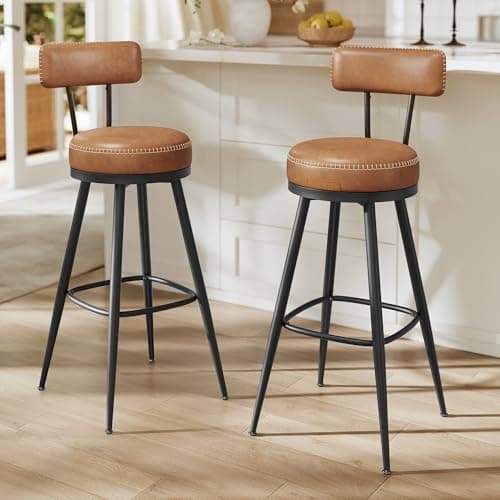
Nalupatio Faux-Leather Swivel Bar Stools (set of 2)
Faux-leather swivel stools with backs — the comfortable choice for an actual bar, because the one thing fabric cannot survive is a spilled drink.
Seat
Faux leather, padded
Swivel
Yes
Back
Yes
Quantity
Set of 2
Pros
Wipes clean, which fabric upholstery does not
Padded seat with a back and a swivel
Faux leather suits a bar better than a kitchen
Pair pricing in a matched finish
Cons
Faux leather cracks eventually, especially in sunlight
Less breathable than fabric on a warm evening
Padding compresses with heavy use
Best for: A bar where drinks get spilled.
Skip this
The budget traps that look cheap and cost you twice. We'd skip these.
Backless stools, if anyone is sitting for more than twenty minutes
A backless stool is a perch. It is excellent in a small kitchen because it tucks fully under a counter — our <a href="/bar-furniture/best-bar-stools-for-small-spaces">small-space stool page</a> is full of them for exactly that reason — and it is genuinely tiring for a long evening, because your lower back does all the work with nothing to lean against. If the stools are for a bar where people stay, a back is not a luxury. If space is the binding constraint, a folding stool with a back is a better compromise than a backless stool you stop using.
Thick foam on a narrow seat
Padding is the feature that sells stools and the one that matters least. A deeply padded seat only 15 inches wide is still a narrow seat, and a thick cushion on a hard pan bottoms out within minutes under an adult. Seat width and shape do far more for comfort than foam depth: look for at least 17 inches across, ideally 18 or more, with a flat or gently dished profile. Then look at whether there is a footrest, which does more for a two-hour sit than any cushion.
How to choose (and what to skip)
Insist on a shaped back for long sitting
A back that curves to meet the lower spine supports you; a flat vertical back just stops you falling off. If you can, look at the stool side-on in the product photos: a visible curve in the backrest, or a slight rearward tilt, is what you want. This is the single biggest comfort feature, and it is why a stool with a modest cushion and a good back beats a thickly padded backless one.
Measure the seat, not the padding
Seventeen inches wide is the minimum for an adult, 18 or more is better. Prefer a flat or gently dished seat over a deeply contoured bucket, which narrows the usable area and only suits one sitting position. Depth matters too: a seat so deep that the front edge presses into the back of your knees is uncomfortable regardless of how soft it is.
Do not skip the footrest
At counter height your feet barely reach the floor and at bar height they do not reach at all, so without a footrest your whole weight rests on the backs of your thighs and your legs go numb. A ring or a cross bar at roughly 8 to 10 inches below the seat is what you are looking for. On a tall bar stool this matters more than the cushion does.
Treat a swivel as a comfort feature
It is usually sold as convenience and it is really about your spine: a swivel lets you turn toward whoever is talking instead of twisting at the waist, and it lets you get out without dragging the stool backward. The cost is a mechanism that will eventually need re-tightening. If you want the longest-lived stool instead, our <a href="/bar-furniture/best-quality-bar-stools">high quality bar stools page</a> explains why fewer moving parts last longer.
Choose upholstery for the room, not the showroom
Fabric and chenille are the most comfortable and the least spill-tolerant. Faux leather and vinyl wipe clean and eventually crack, particularly in sunlight. Wood and metal are the most durable and the least comfortable without a pad. For a kitchen island, fabric is usually fine; for an actual bar where drinks are poured, wipe-clean material is the sensible choice even though it is slightly less pleasant to sit on.
Why bar stools are uncomfortable in the first place
Because of where your legs go. On a dining chair your feet are flat on the floor and your thighs are roughly horizontal, so your weight is spread between your seat and your feet. On a stool, the seat is 10 to 12 inches below a counter and your feet are somewhere in mid-air, which puts almost everything onto a small area at the back of your thighs and asks your lower back to hold you upright unaided. That is the whole problem, and it explains why the two features that fix it are a footrest (gives your legs somewhere to put the load) and a shaped back (stops your spine doing the work). Padding helps at the margin; those two change the experience.
The four features, ranked by how much they matter
1. A shaped back. Nothing else comes close for a long sit. 2. A footrest at the right height, roughly 8 to 10 inches below the seat — more important at bar height than counter height, because your feet are further from the floor. 3. Seat width and shape: 17 inches minimum, 18 or more better, flat or gently dished. 4. A swivel, which prevents the twisting that makes people fidget and get up. Padding is a fifth-place finisher that gets first-place marketing. If you are choosing between two stools and one has a better back and footrest while the other has a plusher cushion, buy the first one.
Arms: when they help and when they ruin the plan
Arms are a genuine comfort upgrade. They give you somewhere to rest your elbows and they make getting up easier, which matters for older guests. They also cost you two things: tuck-under, because the arms hit the countertop edge before the seat gets close, and width, since each stool takes three or four inches more counter. In a dedicated bar room with space, arms are the right call — the GRUSIGN stools above win this page largely because of them. In a galley kitchen or an apartment they are the wrong choice, and our bar stools with backs page covers the compromise position.
Comfort at bar height versus counter height
The taller the stool, the more the footrest matters, and the more a back is worth. At counter height (24 to 26 inches, for a 36-inch counter) most adults can rest their feet on a low rail or even the floor edge, so a plain stool is tolerable. At bar height (29 to 32 inches, for a 40 to 42-inch top) your feet are genuinely dangling, so a footrest ring is not optional and the stool feels tippier, which makes a back psychologically as well as physically useful. This is also why comfortable bar-height stools are a shorter list than comfortable counter stools — and why the VASAGLE pair above is on this page.
Making the stools you already own more comfortable
Three cheap fixes. A tie-on seat cushion adds padding and, more usefully, raises a stool that is slightly too low — but it also raises you, so do not use one on a stool that is already too tall. A footrest can be improvised with a sturdy box or a low stool if the bar has none, which genuinely helps at bar height. And felt pads on the feet stop the stool skating as you shift, which makes a backless stool feel noticeably more secure. If the stool is simply the wrong height, nothing on this list fixes it: check the figures in our height guide and replace it.
Frequently asked questions
What are the most comfortable bar stools?+
The GRUSIGN 26-inch chenille counter stools, which have the full comfort set: a back, arms, a padded seat and a footrest. At true bar height the VASAGLE 30-inch swivel with a back is the equivalent, the FREKEN upholstered swivel is the softest counter-height option, and the COLAMY stools have the best-shaped back for the money.
What makes a bar stool comfortable?+
Four things, in order: a back with real lumbar shape, a footrest roughly 8 to 10 inches below the seat, a seat at least 17 inches wide with a flat or gently dished profile, and a swivel so you can turn without twisting. Thick padding is the feature that sells stools and the one that matters least — it bottoms out on a narrow seat within minutes.
Are bar stools with backs more comfortable?+
Significantly, for anything longer than about twenty minutes. Without a back your lower spine holds you upright unaided, which is what makes a backless stool tiring. A shaped back that curves to meet the lower spine is far better than a flat vertical one. The trade is that a back stops the stool tucking fully under a counter.
Do bar stools need a footrest?+
At bar height, yes. Your feet do not reach the floor, so without a footrest your entire weight sits on the backs of your thighs and your legs go numb. At counter height most adults can reach a low rail, so it matters slightly less — but a footrest is still the second most valuable comfort feature after a shaped back.
How wide should a comfortable bar stool seat be?+
At least 17 inches, and 18 or more is better. Shape matters as much as width: a flat or gently dished seat uses its full area, while a deeply contoured bucket narrows the usable part and locks you into one position. A thickly padded 15-inch seat is still a narrow seat.
What is the best upholstery for bar stools?+
Fabric and chenille are the most comfortable and the least spill-tolerant; faux leather and vinyl wipe clean and eventually crack, especially in sun; wood and metal are the most durable and need a cushion. For a kitchen island, fabric is usually fine. For a bar where drinks are poured, choose a wipe-clean material even though it is marginally less pleasant.
Prices and availability shown here come from Amazon's live data and change often; we re-verify them regularly. Bar Bumper is an Amazon Associate and earns a commission on qualifying purchases at no extra cost to you. Read our full disclosure.