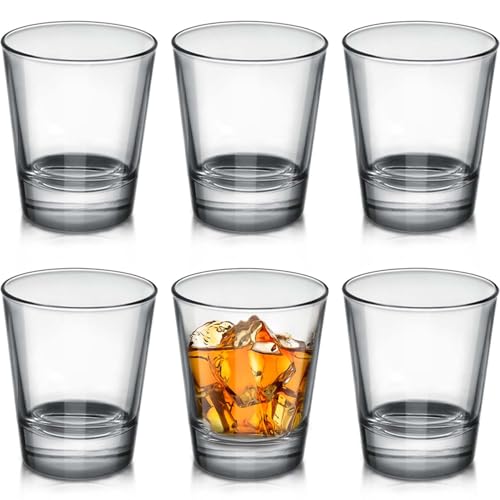
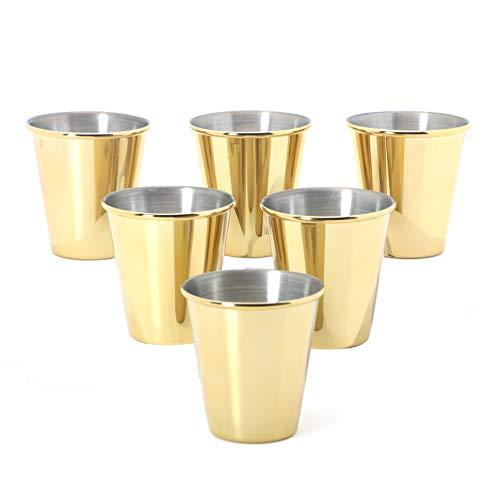
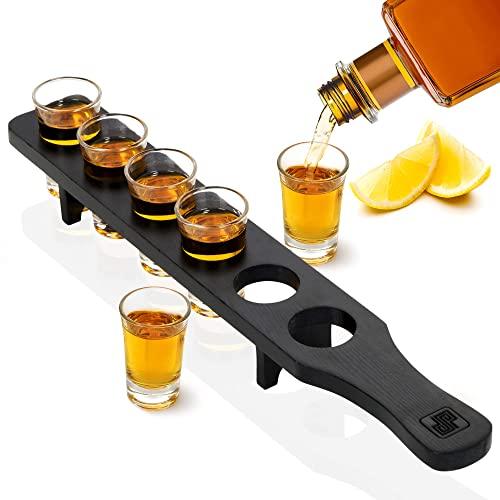
A shot is not a fixed amount, which is why the capacity printed on the box matters more than the shape. Eleven picks compared on published capacity, set size, base weight and material.
Updated November 2026 · By Stephen V.
Buy the Gmark 1.5 oz heavy-base set of twelve. Twelve glasses at the capacity most of the US treats as a standard shot, with a thick base that survives being put down hard, for less than two drinks cost in a bar. If you pour doubles or use shot glasses for dessert and espresso, buy the 2 oz version of the same set instead. If you want two glasses you will actually enjoy drinking good tequila from rather than twelve you will enjoy throwing, that is the Viski copita pair.
Here is the thing nobody tells you before you buy: a shot has no official size in the United States. Utah is the only state that defines one, at 1.5 US fl oz (44.4 ml). Everywhere else the convention is 1.25 to 1.5 US fl oz (37 to 44 ml), and in most of the country 1.5 oz is what people mean. A double may be 2 oz (59.1 ml) or more. So the number on the box is not a style choice - it decides whether a measured cocktail recipe fits in the glass.
That matters more than it sounds. If you buy 1 oz glasses because they looked elegant, every recipe calling for a 1.5 oz pour overflows them. If you buy 2 oz glasses and pour to the rim, you have served a double and called it a single. Pick the capacity around what you pour, then worry about how it looks. Compare that with the UK, where the Weights and Measures Act 1985 fixes a single at 25 or 35 ml - there a shot glass is a legal measure, and here it is just a glass.
How we judged these
Four criteria, in this order. The first decides whether the glass fits your pour; the rest decide whether you still own it next year.
Published capacity, against the pour you actually make. 1 to 1.3 oz for a small, traditional shot or a chilled spirit; 1.5 oz for the de facto American standard and for most cocktail recipes; 2 oz for doubles, layered shots, espresso and dessert service. We quote the published figure on every pick and say which pour it suits. A glass that publishes no capacity is one you cannot plan around.
Base weight and wall thickness. A shot glass gets put down harder than any other glass in the house, usually on a bar top, often by someone who is not being careful. A thick, weighted base moves the center of gravity down so the glass does not tip, and gives the impact somewhere to go that is not the rim. This is why 'heavy base' appears on nearly every pick here, and why the two thin crystal picks are the ones we recommend for sipping rather than for a party.
Set size, against how many you will break. Shot glasses are the most lost and most broken glass in a home bar. A set of two is a gift; a set of six is a household; a set of ten or twelve is a party you will not have to ration. We rank sets of twelve high for exactly this reason, and we are explicit about which picks are pairs.
Material, and what it is for. Soda-lime glass is roughly 90% of all manufactured glass - inexpensive, chemically stable, reasonably hard, Mohs hardness around 6 - and it is the right material for glasses you will break. Lead crystal is a different proposition: at least 24% lead oxide by mass to be sold as lead crystal in the EU, a refractive index of 1.7 to 1.8 against about 1.5 for ordinary glass, and roughly 3.1 g/cm3 against 2.4 or below for soda-lime. It is heavier in the hand and brighter to look at, and it is softer and chips sooner. Stainless steel is unbreakable and does not let you see the pour.
We have not run a drop test or a dishwasher-cycle test across these glasses, and no product page supports a claim that one heavy-base soda-lime glass survives a tile floor better than another. The ranking is built from published capacities, stated materials, set sizes, the maker's standing, and owner-review consensus reported as other people's experience - see how we pick. Prices come live from Amazon with the date we checked them.
Capacity, in the only terms that matter
1 to 1.3 oz (30 to 37 ml). The small end of the American range, and close to the single measures used across much of Europe - Germany pours 20 ml, the Netherlands 35 ml. Right for a chilled spirit you want to drink in one go, for a tasting flight, and for anywhere you want the glass to look full rather than half-empty. The Libbey Shots and Shooters sit here at a published 1.3 oz.
1.5 oz (44 ml). The de facto US standard, the Utah legal definition, and the capacity nearly every American cocktail recipe is written around. If you are buying one set of shot glasses and do not want to think about it again, buy this size. Most of the picks here are 1.5 oz for that reason.
2 oz (59 ml). A US double at the low end, and the most versatile size if the glasses do double duty. Two ounces holds a layered shot without the layers meeting, a double espresso, a dessert portion, or a 1.5 oz pour with headroom so nothing spills when it is carried. The trap is simple: filled to the rim, a 2 oz glass has served a double. If several people are pouring, buy 1.5 oz instead.
A shot glass is not a jigger
They are different tools and substituting one for the other is where home cocktails go wrong. A jigger is a measuring tool - you measure into it and then pour the measure into the glass or shaker. The double-ended stainless cone was patented in 1893 by Cornelius Dungan of Chicago, and one cone is typically a regulation single. Modern American jiggers are usually 1.5 US fl oz; before Prohibition the US jigger was about half a gill, or 2 US fl oz.
A shot glass is a serving vessel with no fill line, and eyeballing a measure in one is how a 1.5 oz recipe becomes a 2 oz pour. If you are building cocktails rather than serving shots, the jigger is the purchase that changes the drink - our jigger roundup covers the graduated and double-cone options, and our guide to home bar glassware sets out the whole glass collection and the order to buy it in.
The lead crystal question, answered honestly
Lead crystal looks better than soda-lime glass and that is not marketing - the lead oxide raises the refractive index from about 1.5 to between 1.7 and 1.8, which increases dispersion and gives crystal the brightness it is bought for. It is also heavier: around 3.1 g/cm3 against 2.4 or below. And it is softer and lower in viscosity, which is exactly why it can be wheel-cut into the patterns crystal is known for.
There is a real caution attached, and we would rather say it than sell around it: lead can leach out of lead crystal into what is stored in it. The documented problem is storage, not a drink held briefly - port left in a lead crystal decanter for four months has been measured in the thousands of micrograms per liter. A shot poured and drunk is a different exposure from a spirit stored for months, and the picks here described as crystal are glasses, not decanters. If storage is your use case, read our whiskey decanter roundup, where the same question matters far more.
The short answer
In a hurry? These are the picks we'd buy. Prices are live; tap a card below for the full reasoning.
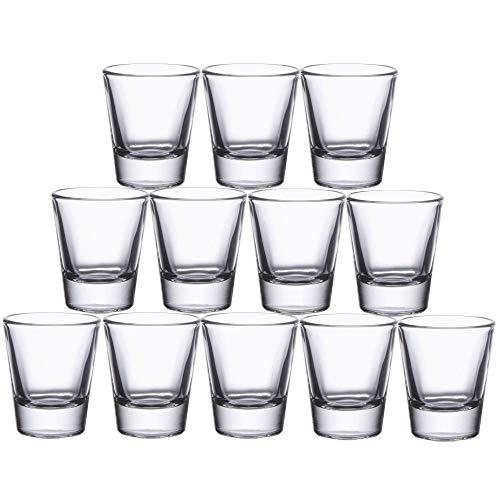
Twelve glasses at the de facto US standard 1.5 oz with a heavy base, from a commercial barware maker - the set to buy if you buy one.
Capacity
1.5 oz (published)
Quantity
Set of 12
Base
Heavy base (published)
Material
Clear glass
Pros
1.5 oz is the de facto US standard and the Utah legal definition, which means every American cocktail recipe and every bartender's instinct lines up with this glass
Twelve glasses is the number that stops shot glasses being rationed - enough for a party, enough to lose two, enough that a broken one is not an event
Heavy base is published rather than implied, and it is the spec that decides whether the glass tips when it is set down hard
Sold into commercial barware as well as homes, so the model is a repeatable production item rather than a seasonal listing
Cons
No published glass weight or wall thickness, so 'heavy base' is a description rather than a figure you can compare against another set
Plain and unmemorable - nothing here will impress anyone, which is the trade for twelve glasses at this price
Soda-lime glass, so the walls are thicker and duller than the crystal picks below and the rim feels blunt against the lip
No stated dishwasher rating on the listing, which for a glass that will be washed in batches is a gap
Best for: One set that covers the standard American pour and every cocktail recipe.
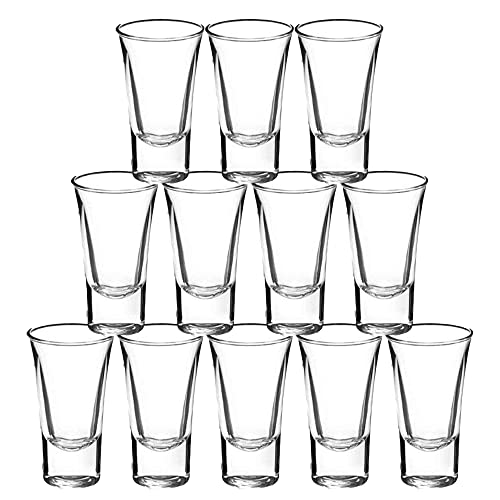
The same heavy-base set in 2 oz - the most versatile capacity here, with one honest caveat about what a full glass means.
Capacity
2 oz (published)
Quantity
Set of 12
Base
Heavy base (published)
Also used for
Espresso, mini desserts (per listing)
Pros
Two ounces is a US double at the low end and the most flexible size in the house - it holds a 1.5 oz pour with headroom, a layered shot without the layers meeting, or a dessert portion
Same twelve-glass set size and same published heavy base as our top pick, so the only variable between them is capacity
The headroom genuinely matters when glasses are carried across a room, which is when a filled 1.5 oz glass spills
Marketed for espresso and dessert use as well as spirits, which is a real second job rather than a stretch
Cons
Filled to the rim this is a double, and if several people are pouring you will serve doubles all evening without anyone deciding to
No fill line, so the headroom advantage only exists if whoever is pouring knows to leave it
Costs slightly more than the 1.5 oz set of the same size for the same construction
Same missing figures as the 1.5 oz version - no published weight, wall thickness or dishwasher rating
Best for: Shot glasses that also serve espresso, layered shots and dessert portions.
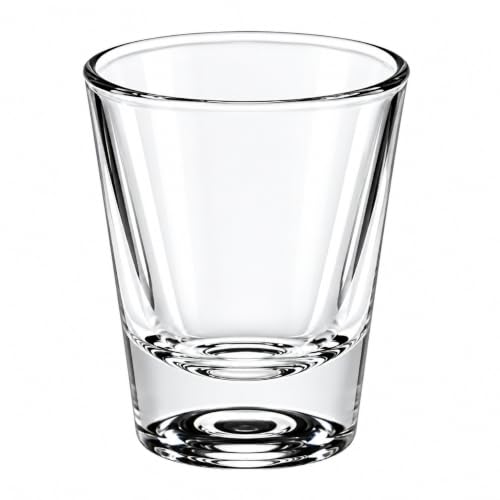
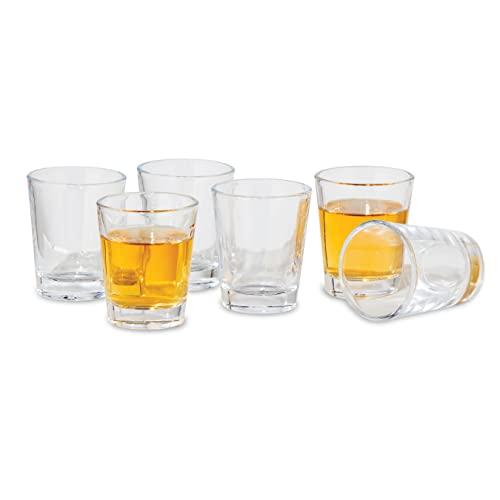
Libbey 70361 Shots and Shooters Shot Glass, 1.3 oz (set of 12)
A published 1.3 oz set of twelve from the big American glassware house - the smaller, more traditional pour, in a model that stays in production.
Capacity
1.3 fl oz / 37 ml (published)
Quantity
Set of 12
Model
Libbey 70361 Shots and Shooters
Brand
Libbey
Pros
Libbey is the big American glassware maker and keeps models in production for years under a part number - a broken glass here is a replaceable glass, not a gap in a set
Publishes capacity in both units (1.3 fl oz / 37 ml), which is more precision than most of this category offers
37 ml sits inside the lower American convention and close to European single measures, so a spirit looks like a full glass rather than a mean pour
A named model number rather than a description means you can match this set exactly years later
Cons
At 1.3 oz it is below the 1.5 oz most American cocktail recipes assume - a measured recipe will not fit, and that is a real limitation if you build drinks
Stock on this listing was thin when we checked it, so it is the pick most likely to be unavailable or to arrive from a third-party seller
The listing does not publish a base weight or describe the base as heavy, unlike most picks here
Plain commercial styling with no design intent at all
Best for: Small traditional shots, and glasses you can replace in five years.
$29.9933% offPrice as of November 24, 2026·#addisclosure
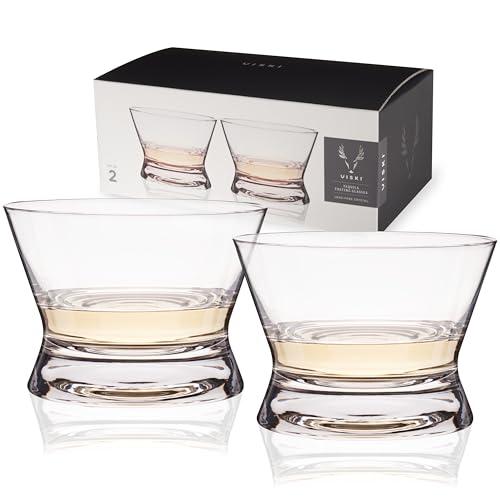
Viski Crystal Tequila Tasting Copita Glasses, 6 oz (set of 2)
A 6 oz crystal copita pair - the right glass for a spirit worth smelling, and the honest answer to 'what should I drink good tequila from?'
Capacity
6 oz (published)
Quantity
Set of 2
Material
Crystal (published)
Shape
Copita / tasting glass
Pros
A copita is a small stemless tasting bowl that narrows toward the rim, which collects aroma - and with an aged tequila or mezcal, aroma is most of what you paid for
6 oz of bowl for a 1 to 2 oz pour is the point: the empty space above the spirit is where the smell gathers, which a shot glass cannot do
Crystal rather than soda-lime, so the wall and rim are thinner and the glass reads clearly rather than thickly
The genuinely correct purchase for anyone who has started buying tequila above the mixing grade, and a pair is the right number for that
Cons
This is not a shot glass and will not do a shot glass's job - it is too large to serve a shot in and too nice to put down hard
A pair only, so it is a personal purchase rather than party glassware
Crystal is softer than soda-lime glass and chips sooner, and these have a thin rim that is the part that chips
Costs more than a twelve-glass heavy-base set, for two glasses
Best for: Good tequila or mezcal you want to taste rather than shoot.
$22.9913% offPrice as of November 24, 2026·#addisclosure
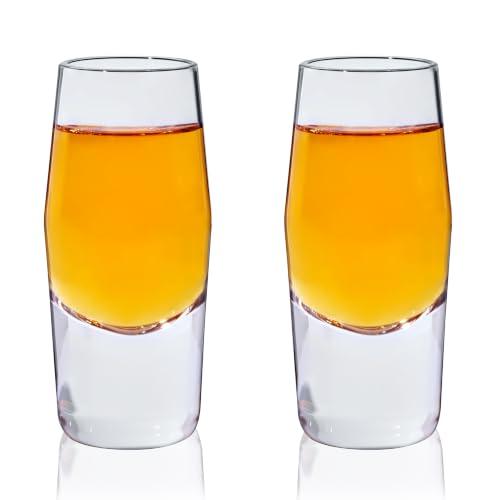
Viski Heavyweight Crystal Shot Glasses, 2 oz (set of 2)
A heavyweight 2 oz crystal pair - the weight in the hand is the product, and it is a genuinely different object from a soda-lime glass.
Capacity
2 oz (published)
Quantity
Set of 2
Material
Crystal, handmade (published)
Brand
Viski
Pros
Crystal is roughly 3.1 g/cm3 against 2.4 or below for soda-lime, and in a glass this small that density is the whole experience - it is why the glass feels expensive
Higher refractive index (about 1.7 to 1.8 versus 1.5) means the spirit genuinely looks brighter in it, which is not a trick of the photography
Heavyweight construction on a 2 oz glass means it sits where you put it rather than skating across a bar top
Viski designs barware as a range, so this pairs visually with the rest of a Viski-equipped bar
Cons
Two glasses at a price that buys twelve soda-lime ones - this is a gift or a personal pair, not party glassware
Crystal is softer and chips more easily, and lower in viscosity by nature, which is the same property that makes it cuttable
Lead can leach from lead crystal into what is stored in it; a poured shot is a brief contact and not the documented problem, but we would not store spirits in these
The listing does not state the lead oxide percentage, so you cannot tell whether it meets the 24% EU threshold for 'lead crystal' or is a crystalline glass
Best for: Two glasses that feel like something, for spirits you drink attentively.
Six glasses in a real pine board - the pick that solves a problem the other ten do not even acknowledge.
Quantity
6 glasses + board
Board
Real pine wood (published)
Use
Serving, tequila service (per listing)
Capacity
Not published on listing
Pros
A slotted board is the only way to carry six filled shot glasses across a room in one trip without spilling any of them
Real pine rather than a composite, which means it can be sanded if it gets marked and will not delaminate when something gets spilled on it
The glasses are held upright and separated, so they do not clink together in transit or tip when the board is set down
Doubles as storage - the board keeps the set together in a cupboard instead of six glasses migrating to the back of a shelf
Cons
The listing does not publish the capacity of the glasses, which on a shot glass page is the one specification that should never be missing
A wooden board is not dishwasher safe and should not be soaked, so cleanup is a wipe rather than a cycle
Six glasses tied to one board means a broken glass leaves an empty slot you probably cannot match
Pine is soft and will dent and stain with use, particularly from citrus and salt if it is used for tequila service as intended
Best for: Serving a round to a table without carrying six glasses in two hands.
Skip this
The budget traps that look cheap and cost you twice. We'd skip these.
Any shot glass that does not publish a capacity
Capacity is the only specification that decides whether the glass works. A shot has no official US size outside Utah, so 'shot glass' tells you nothing - the listing has to give you a number. One pick here, the serving board, omits it, and that is called out in its cons.
Plastic shot glasses, unless the venue requires them
They scratch opaque within a few washes, hold a smell, and the thin rim is unpleasant. If the problem is breakage rather than the law, stainless steel solves it permanently for a similar price, and you can put it in a freezer.
Novelty and souvenir sets as your only shot glasses
They are the sets that end up at four glasses from six, because the one you liked broke first and nothing matches it. Buy a repeatable production set as the working glasses and collect novelties separately.
Lead crystal for storing spirits
Lead leaches from lead crystal into what is kept in it, and the documented measurements involve months of storage, not a poured drink. Crystal shot glasses are fine as glasses. A crystal decanter holding whiskey for a year is the case worth thinking about.
A shot glass used as your measure
A shot glass has no fill line, so measuring in it is estimating. A jigger is a measuring tool with marked cones - that is the difference, and it is why a 1.5 oz recipe made in a shot glass ends up nearer 2 oz.
Our verdict
Buy the Gmark 1.5 oz set of twelve if you want one set and no further thought - correct capacity, heavy base, enough glasses that breakage stops mattering. Buy the 2 oz version if the glasses will also serve espresso and dessert, and the OBTANIM six if you want the standard pour for the least money. Buy the Libbey Shots and Shooters for a smaller, more traditional pour from a maker whose part numbers outlive the set. Buy the steel shots for outdoors, the board set if you serve rounds, and the Viski copita pair if the real question was what to drink good tequila from - because the answer to that is not a shot glass.
How many shot glasses does a home bar need?
More than you think, and the reason is attrition rather than guests. Shot glasses are the smallest, most-handled, most-often-put-down glass in the house, and they go missing as reliably as they break. Six is a household. Twelve is a household that does not have to count. If you have ever opened a cupboard and found three mismatched shot glasses, that is what a set of six becomes after two years.
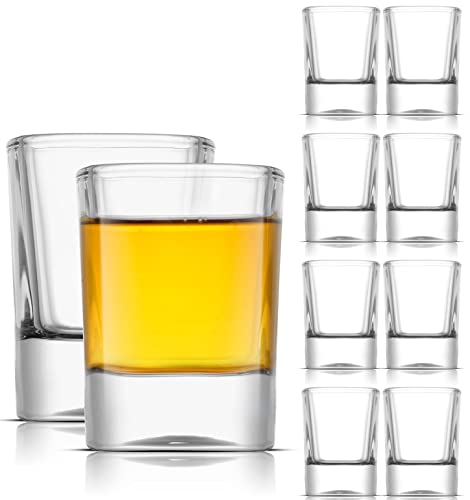
Storage is the counter-argument, and it is a real one - twelve shot glasses occupy a surprising amount of shelf for their volume, because they do not nest. The square JoyJolt set packs tighter than round glasses, and the board set stores itself. If shelf space is the binding constraint rather than money, our home bar cabinet roundup covers the units with real glass storage rather than a decorative rack, and what to stock on a bar cart works out what actually fits on a cart.
Washing and storing them
Soda-lime glass - which is what every glass pick here is, apart from the two crystal ones - is chemically stable and reasonably hard, with a Mohs hardness around 6, and it is roughly 90% of all manufactured glass for exactly those reasons. It tolerates a dishwasher well. The failure mode is not the detergent, it is the impact: glasses knocking together in a rack, or a thin rim against a plate.
Rack shot glasses so they are not touching, and do not wedge them inside each other. Two shot glasses stacked together form a vacuum seal as the air inside cools, and separating them is how they break. Crystal wants a gentler wash than soda-lime because it is softer, and steel wants nothing more than a rinse. Store them upright rather than inverted on a wooden shelf, where an inverted glass traps damp and takes on the smell of the shelf.
What a shot glass is for, besides shots
Most shot glasses in American homes spend more time on other jobs than on spirits, and buying for the second job is why the 2 oz size wins as often as it does. A 2 oz glass is a double espresso, a dessert portion, a sauce or dip vessel for a cheese board, a layered shot and a miniature cocktail. Both the Gmark 2 oz and the JoyJolt square sets are explicitly sold for that broader use, and the Viski copita is the only pick here with one job.
The one use we would push back on is measuring. A shot glass with no fill line is an estimate, and consistency is most of what separates a good home cocktail from a bad one. If the glasses are going to live next to a shaker, buy a jigger with them - our jigger roundup covers the graduated and double-cone types, and the bar tool set roundup covers the kits that include one.
Where shot glasses sit in the rest of the glassware
Shot glasses are the cheapest glass in a home bar and the last one worth agonizing over. The glasses that change a drink are the ones with a shape that does something: a rocks or nosing glass that collects aroma over a spirit, a coupe that holds a stirred cocktail without warming it, a highball built for a long drink with ice. A shot glass holds a measure and gets out of the way.
Which is why the honest advice on this page is to buy the right capacity in enough quantity, spend nothing extra, and put the money into the glasses where shape matters. If you are building the collection from zero, our guide to what glassware you need for a home bar sets out the whole set and the order to buy it in, and how to set up a home bar covers everything around the glasses.
If the bar and the game room are the same room
Shot glasses and dart tips are the two things a shared room runs out of, which is not a coincidence — both are cheap, both get handled constantly, and both are bought for a crowd rather than a person. If there is an electronic board on the wall, our soft tip darts roundup covers the twelve-dart four-color sets built for exactly that, and our ping pong paddle roundup does the same for a shared table.
Frequently asked questions
How many ounces is a shot?+
There is no official size in the United States except in Utah, which defines a shot as 1.5 US fl oz (44.4 ml). Everywhere else the convention runs 1.25 to 1.5 US fl oz (37 to 44 ml), and in most of the country 1.5 oz is what people mean. A double may be 2 US fl oz (59.1 ml) or more. This is why the capacity printed on the box matters more than the shape of the glass.
What size shot glass should I buy?+
1.5 oz if you are buying one set - it is the de facto US standard and the capacity American cocktail recipes are written around. 2 oz if the glasses will also serve espresso, layered shots or dessert, with the caveat that a full 2 oz glass is a double. 1 to 1.3 oz if you want a small traditional pour that fills the glass. Below 1.5 oz, a measured cocktail recipe will not fit.
Is a shot glass the same as a jigger?+
No. A jigger is a measuring tool with marked cones that you measure into and then pour from - the double-ended stainless version was patented in 1893 and one cone is typically a regulation single. A shot glass is a serving vessel with no fill line, so measuring in one is estimating. That is how a 1.5 oz recipe becomes a 2 oz pour.
Why do shot glasses have thick bases?+
Because a shot glass gets put down harder than any other glass in the house. A thick, weighted base lowers the center of gravity so the glass does not tip, and gives the impact somewhere to go that is not the rim. It is the one construction feature worth insisting on, and it is why nearly every pick here publishes 'heavy base'.
Are crystal shot glasses worth it?+
For two glasses you drink attentively from, yes. Lead oxide raises the refractive index from about 1.5 to 1.7 or 1.8, which is why crystal looks brighter, and lead crystal runs around 3.1 g/cm3 against 2.4 or below for ordinary glass, which is why it feels substantial. For party glassware, no - crystal is softer, chips sooner and costs several times as much per glass. Also worth knowing: lead leaches from lead crystal into anything stored in it, so crystal is for drinking from, not for storing spirits.
What is soda-lime glass, and is it any good?+
It is the ordinary glass used for windows, bottles and jars, and about 90% of all manufactured glass. It is inexpensive, chemically stable, reasonably hard at around 6 on the Mohs scale, and extremely workable. For shot glasses it is the right material: cheap enough that breakage does not matter and durable enough to live in a dishwasher. The trade against crystal is thicker walls and a blunter rim.
Can shot glasses go in the dishwasher?+
Soda-lime glass tolerates a dishwasher well, and most heavy-base sets are sold for commercial use where that is the only way they get washed. The risk is impact, not detergent - rack them so they are not touching and never wedge one inside another, because the two form a seal as the air inside cools and separating them is how they break. Crystal wants a gentler wash because it is softer.
What should I drink good tequila from?+
Not a shot glass. A copita - a small stemless tasting bowl that narrows toward the rim - collects the aroma that an aged tequila or mezcal was made for, and with a 1 to 2 oz pour in a 6 oz bowl the empty space above the spirit is doing the work. A shot glass has no headroom and no taper, so it delivers the spirit and none of the smell.
How many shot glasses should a home bar have?+
Six for a household, twelve if you would rather not count. The reason is attrition rather than guests: shot glasses are the smallest and most-handled glass in the house, and they go missing about as reliably as they break. Buy a repeatable production set so a broken glass can be replaced rather than leaving a gap.
Prices and availability shown here come from Amazon's live data and change often; we re-verify them regularly. Bar Bumper is an Amazon Associate and earns a commission on qualifying purchases at no extra cost to you. Read our full disclosure.