Written for a bar with one spare cabinet space. Why a kegerator cannot be much smaller than the keg inside it, and the five ways to get beer on tap without giving up a corner of the room.
Updated October 2026 · By Stephen V.
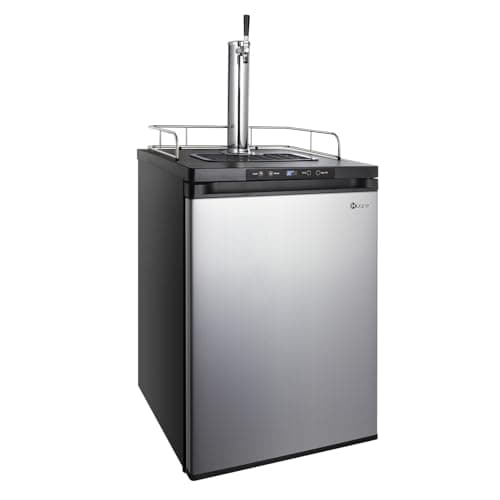
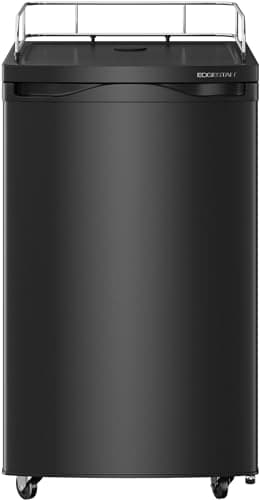
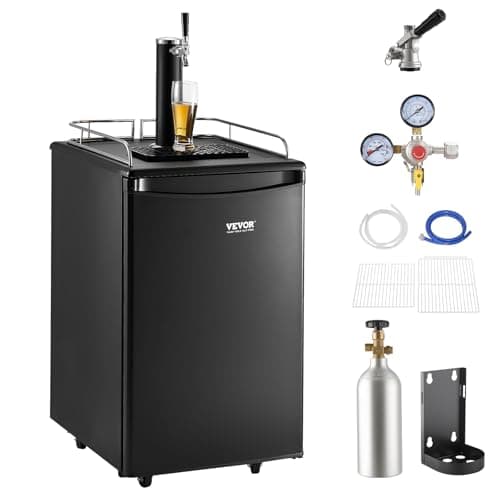
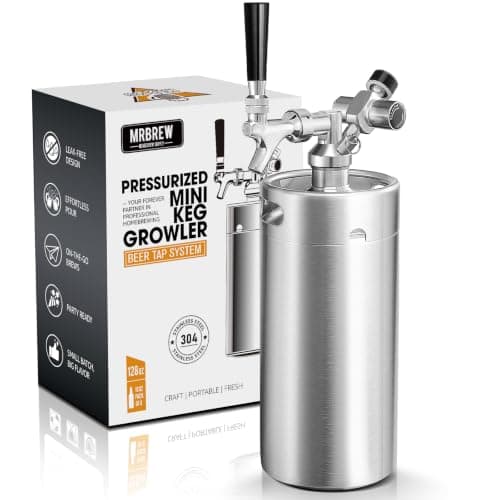
The best small kegerator for a home bar is the Kegco K309SS: a single-tap stainless dispenser from a draft specialist, which is as compact as a real kegerator gets and arrives ready to pour. The EdgeStar BR2001BL is the cabinet to buy if you want the taps coming through a bar front; the VEVOR single-tap is the cheapest complete unit; the MRbrew mini-keg system is the only genuinely small option if there is no floor space at all; and the Frigidaire is the one that takes any keg size.
Start with the thing nobody selling kegerators says out loud: a kegerator is a keg plus insulation plus a compressor, so the cabinet cannot be much smaller than the keg you want to put in it. A half barrel is about 23 inches tall and 16 inches across. A sixth barrel — a sixtel — is taller and narrower. A 5 gallon homebrew corny keg is narrower again. Once you have added cabinet walls and a cooling system, there is a floor on how small the box can be, and the single-tap units on this page are at it.
So “small kegerator” really means one of three things, and it is worth knowing which one you want. A compact single-tap cabinet sized for a sixtel or a corny keg, which is the normal answer. A conversion fridge, which is a compact refrigerator built to be converted — smaller and cheaper, but you add the tower, the regulator and the lines. Or a mini-keg dispenser for a 128 oz growler, which is the only option that fits on a counter and the only one that is not really a kegerator.
We have not installed these side by side. The ranking is built from published keg compatibility, tap count, what dispensing hardware is listed as included, and finish, plus owner-review consensus reported as other people's experience — see how we pick. Measure your own cabinet opening against the listing dimensions before ordering: kegerator returns are heavy and expensive. Prices come live from Amazon with the date we verified them.
The short answer
In a hurry? These are the picks we'd buy. Prices are live; tap a card below for the full reasoning.
$589.907% offPrice as of October 13, 2026·#addisclosure
Quick picks
#
Product
Best for
Score
Price
1
Best small kegerator overall
Kegco K309SS-1 Keg Dispenser
A single-tap stainless dispenser from a company that sells nothing but draft equipment — the compact unit we would buy, and the one whose parts you can still get in five years.
One beer on tap, ready to pour, from a draft specialist
A compact refrigerator built to be converted — the route to the neatest small installation, as long as you are happy to add the tower and the gas yourself.
Taps through a bar front, or the smallest possible cabinet
$589.907% offPrice as of October 13, 2026·#addisclosure
4
Smallest setup that pours
MRbrew 128 oz Mini Keg Growler Draft Dispenser
A 128 oz growler with a tap and gas — not a kegerator, but the only draft setup on this page that fits on a counter or inside a fridge you already own.
A single-tap stainless dispenser from a company that sells nothing but draft equipment — the compact unit we would buy, and the one whose parts you can still get in five years.
Type
Keg dispenser
Taps
Single
Finish
Stainless steel
Brand
Kegco
Pros
A single tap is the specification that keeps the cabinet small
Kegco is a draft specialist, so couplers, faucets and seals stay available
Stainless finish suits a bar front rather than a garage
Arrives as a working dispenser rather than a project
Cons
Costs more than the generic single-tap units
One tap means one beer until the keg is done
Still needs floor space — nothing here fits on a counter
Best for: One beer on tap, ready to pour, from a draft specialist.
A compact refrigerator built to be converted — the route to the neatest small installation, as long as you are happy to add the tower and the gas yourself.
Type
Conversion refrigerator
Taps
None — you fit them
Use
Build your own draft setup
Brand
EdgeStar
Pros
The base for the tidiest installation: taps through a bar front, cabinet hidden
Cheaper than a complete kegerator because the hardware is not included
Lets you choose your own coupler, faucet and regulator
A sensible buy if you already have draft hardware from a previous setup
Cons
You are buying a project, not a kegerator
Tower, lines, regulator and CO2 are all extra purchases
Drilling the cabinet is not reversible if you get it wrong
Best for: Taps through a bar front, or the smallest possible cabinet.
A 128 oz growler with a tap and gas — not a kegerator, but the only draft setup on this page that fits on a counter or inside a fridge you already own.
Type
Mini keg dispenser
Capacity
128 oz growler
Placement
Countertop or in a fridge
Brand
MRbrew
Pros
By far the smallest footprint — it is a growler, not a cabinet
Costs a fraction of any refrigerated kegerator
No installation, no drilling, nothing permanent
Good way to serve one beer at a party without owning an appliance
Cons
A gallon is about eight pints, so it is a party trick rather than a tap
No refrigeration of its own — it has to live somewhere cold
Refilling means a growler fill rather than a keg delivery
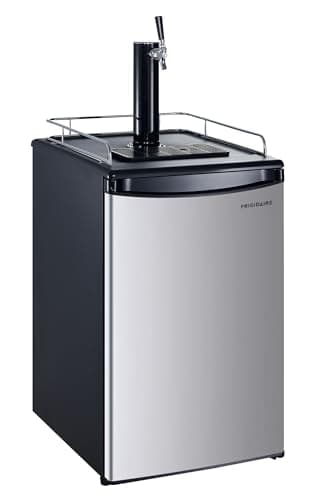
Frigidaire 5.3 cu ft Kegerator with Coupler and Tower Tap
A 5.3 cu ft cabinet listed as taking all keg sizes, with the coupler, tower tap and drip tray included — the brand-name complete package.
Capacity
5.3 cu ft
Keg sizes
All sizes per listing
Includes
Coupler, tower tap, drip tray
Brand
Frigidaire
Pros
Takes whatever keg your local supplier has, which matters more than it sounds
Coupler, tower and drip tray included, so it pours out of the box
A recognized appliance brand with a real support line
Drip tray included is a small thing you would otherwise buy separately
Cons
Larger cabinet than the single-tap specialists
Frigidaire-badged appliances are not always built by Frigidaire
Flexibility you may never use if you only ever buy sixtels
Best for: A bar that wants flexibility about what goes in.
Skip this
The budget traps that look cheap and cost you twice. We'd skip these.
Buying a small kegerator for a keg you cannot actually get
This is the mistake that wastes the most money in draft beer. A compact cabinet is usually sized for a sixth barrel or a 5 gallon corny keg, and those are what homebrewers and craft distributors deal in. If the only beer you actually want comes in a half barrel from a big distributor, a compact unit will not take it and no amount of shelf rearranging changes that. Call your nearest keg supplier and ask what sizes they stock before you buy the cabinet.
Forgetting that the CO2 tank also needs somewhere to live
Most compact kegerators put the CO2 cylinder inside the cabinet, which eats the space you were counting on for the keg. Some mount it externally, which keeps the inside usable but needs clearance beside or behind the unit. Either way the tank is part of the footprint, and so is the regulator sticking off it. Measure the cabinet opening with the tank arrangement in mind, not just the keg.
How to choose (and what to skip)
Pick the keg size first, then the cabinet
The keg decides everything. A 5 gallon corny or a sixth barrel lets you buy the smallest cabinets on this page; a half barrel does not. Find out what your local supplier actually stocks and what your favorite beers come in, and buy a cabinet that fits that. Working the other way round — buying a compact cabinet and then looking for kegs — is how people end up with an expensive fridge full of cans.
Check what hardware is really included
A kegerator is a cabinet plus a coupler, a regulator, a CO2 cylinder, gas and beer lines, a tower or a faucet, and a drip tray. Complete units list most of that; conversion bases list none of it; and some listings include the tower but not the gas. Price the whole setup rather than the box, because the gap between a conversion base and a complete unit is usually about the cost of the missing parts.
Single tap keeps it small; dual tap does not
Two taps need two kegs, and two kegs need a wider cabinet — there is no clever packaging that avoids it. If space is the constraint that brought you to this page, buy a single tap and accept that you drink one beer at a time. Our general <a href="/bar-fridges/best-kegerator">kegerator roundup</a> covers the dual-tap units for bars that have the room.
Leave ventilation space, especially under a counter
A kegerator rejects heat through a compressor and a condenser, and a cabinet that cannot breathe runs warm, runs constantly and dies early. Freestanding units need clearance at the back and sides; only units specifically described as built-in or front-venting can go into a tight cabinet opening. If the plan is to build it into a bar, check for that language in the listing before you frame the opening.
Budget for a cleaning kit at the same time
Beer lines grow things. A kegerator that is not cleaned between kegs starts pouring beer that tastes of the last one, and eventually of neither. A pump cleaning kit and a bottle of line cleaner are cheap and take fifteen minutes between kegs — our <a href="/guides/how-to-clean-a-kegerator">kegerator cleaning guide</a> walks through it. Buy the kit with the kegerator so there is no excuse.
How small can a kegerator actually be?
About the size of the keg plus four inches. A half barrel is roughly 23 inches tall and 16 inches in diameter; a sixth barrel is roughly 23 inches tall and 9 inches across; a 5 gallon corny keg is about 25 inches tall and 8.5 inches across. Add insulated walls, a compressor at the bottom or the back, and a CO2 cylinder, and you arrive at the compact cabinets on this page. Anything advertised as dramatically smaller than that is either a growler dispenser like the MRbrew, or a cooler that is not refrigerated. Both are legitimate purchases — just not kegerators.
Compact kegerator or conversion fridge?
A conversion base is the better answer when the cabinet is going to be hidden — inside a bar, under a counter, behind a panel — with just the tower or the faucets showing. It is cheaper, often smaller, and you choose the hardware. It is the worse answer if you want to be pouring beer this weekend, because you are buying a drill bit, a tower, a coupler, a regulator and a trip to get the CO2 cylinder filled. Our pick between them comes down to whether you enjoy that part. If the words “tower” and “coupler” mean nothing to you yet, buy the complete unit.
What a mini-keg system is really for
A gallon of beer, poured properly, with no appliance. That is about eight pints — one evening with friends, not a month of casual drinking. It earns its place in a small home bar in two situations: when there is genuinely no floor space for a cabinet, and when you want draft beer occasionally rather than permanently. The growler lives in the fridge you already own, and the gas is a small cartridge rather than a cylinder. What it will not do is replace a kegerator, and anyone telling you a 128 oz growler is a kegerator is stretching the word.
Running one in a small bar
Three practical things. Temperature and pressure go together: beer at the wrong temperature pours foam whatever you do to the regulator, so get the cabinet cold and stable before blaming the gas. Line length matters — short beer lines in a compact cabinet pour fast and foamy, which is why upgrading to a longer line is the standard first fix for a foaming tap. Clean between kegs, every time. Get those right and a small single-tap unit pours as well as a bar tap; get them wrong and you will spend the first month convinced you bought a bad kegerator.
Is a small kegerator worth it at all?
If you drink draft beer regularly, yes — a keg works out cheaper per pint than bottles or cans, and the beer is better. If you drink occasionally, a kegerator is an appliance that spends most of its life cooling a half-empty keg, and a beverage fridge full of cans is the better use of the same space and money. We have written that out honestly in is a kegerator worth it, including the arithmetic. If you only want one tap and the room is tight, this page is the shortlist; if the room is not tight, the full kegerator roundup has the dual-tap options.
Frequently asked questions
What is the best small kegerator?+
The Kegco K309SS. It is a single-tap stainless dispenser from a draft specialist, which is about as compact as a real kegerator gets, and it arrives ready to pour with parts support behind it. If you want the taps coming through a bar front instead, the EdgeStar BR2001BL conversion fridge is the smaller, cheaper base.
How small can a kegerator be?+
Roughly the size of the keg plus a few inches of insulation and a compressor. A sixth barrel is about 23 inches tall and 9 inches across, a 5 gallon corny keg about 25 by 8.5 inches, so compact cabinets land just above that. Anything much smaller is a mini-keg growler dispenser rather than a kegerator.
What size keg fits a small kegerator?+
Usually a sixth barrel (a sixtel) or a 5 gallon corny keg. Some compact units also take a quarter barrel. Check what your local supplier actually stocks before buying — if the beer you want only comes in half barrels, a compact cabinet will not take it, and that is not something you can work around.
Is a mini kegerator worth buying?+
For occasional draft beer in a bar with no floor space, yes. A 128 oz growler system holds about eight pints, needs no installation and lives in a fridge you already own. What it cannot do is replace a kegerator — the capacity is one evening, not one month, and refills mean a trip rather than a delivery.
Can you put a kegerator under a counter?+
Only if the listing says built-in or front-venting. A freestanding kegerator rejects heat at the back and sides, and boxing one into a tight opening makes it run constantly and fail early. Check for that language before you frame the opening, and leave the clearance the manufacturer specifies.
Do small kegerators come with everything you need?+
Complete units usually include the coupler, tower or faucet and a drip tray, and some include the CO2 hardware; conversion refrigerators include none of it. Read the included-items list and price the missing parts, because the gap between a conversion base and a complete unit is roughly the cost of the hardware it is missing.
Prices and availability shown here come from Amazon's live data and change often; we re-verify them regularly. Bar Bumper is an Amazon Associate and earns a commission on qualifying purchases at no extra cost to you. Read our full disclosure.